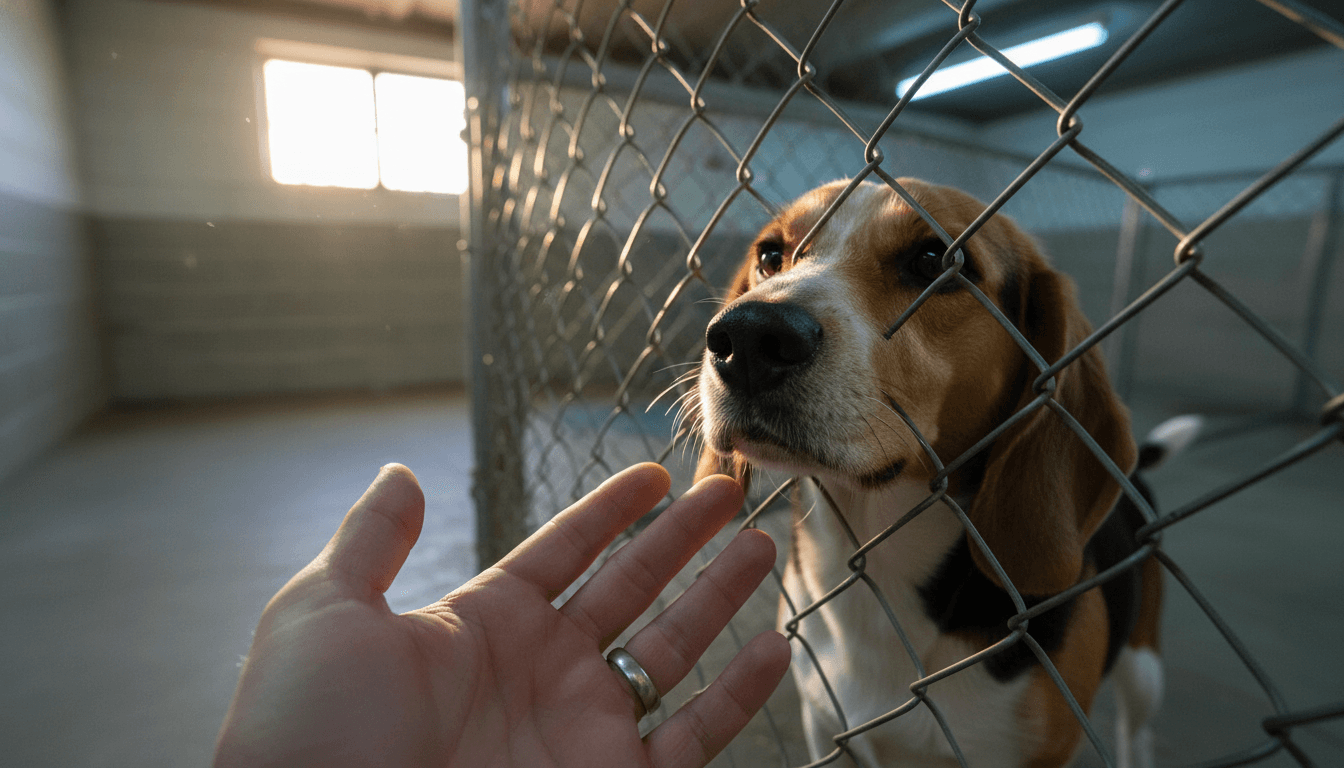

On April 13, Governor Abigail Spanberger signed Senate Bill 707 into law, making Virginia the sixth U.S. state to outlaw surgical "debarking" of dogs. The bill, sponsored by Senator J.D. "Danny" Diggs, takes effect July 1 and prohibits any veterinarian from performing devocalization on a dog unless the surgery is medically necessary to relieve injury, disease, or a congenital defect.
The procedure — also marketed as "bark softening" — is one most pet owners have never heard of. That's by design. It's rarely discussed publicly, performed by a shrinking number of veterinarians, and increasingly opposed by major welfare organizations. But it remains legal in 44 states, and Virginia's new law is the latest sign that the legal and ethical ground beneath it is shifting fast. It's part of a broader push — the federal government just launched a historic dog welfare crackdown, too.
What Debarking Actually Is
Devocalization is a surgery that removes parts of a dog's vocal cords to permanently reduce the volume of their bark. The dog can still bark — but the sound comes out as a hoarse, raspy whisper rather than a normal vocalization. According to Newsweek's reporting on the procedure, surgeons typically use one of two approaches: an oral approach, which is less invasive but tends to leave scar tissue that can regrow over time, and a laryngotomy, an open-throat surgery that gives the surgeon greater access but carries higher risk.
It's not a behavioral fix. It doesn't address why a dog is barking — separation anxiety, territorial stress, boredom, fear, or simple under-exercise. It just lowers the volume of the symptom.
The 25 Percent Number That Drove the Ban
The single statistic that comes up most often in legislative debates over debarking is its complication rate. Roughly one in four devocalization surgeries results in a complication, according to data presented to the American Veterinary Medical Association's House of Delegates. Those complications can be serious and lifelong:
- Laryngeal webbing and scarring — scar tissue can regrow across the airway, narrowing it and making future intubation difficult or dangerous.
- Chronic breathing problems — one study cited by AVMA reviewers found that 6 of 25 dogs experienced ongoing breathing difficulty after the surgery.
- Coughing, gagging, and aspiration pneumonia — common when the larynx no longer closes properly during swallowing.
- Bark return — the procedure often isn't even permanent. Dr. José Arce, then president of the AVMA, has noted that "there's a chance that the surgery won't work and the resumption of a near-normal bark may occur within months."
Dr. Emily McCobb, who chairs the AVMA Animal Welfare Committee, has described seeing post-operative cases with "laryngeal webbing, or scarring which can make intubation difficult" — a complication that becomes life-threatening if the dog ever needs anesthesia for an unrelated surgery later.
Why Welfare Groups Are Pushing for More State Bans
The American Animal Hospital Association formally opposes non-therapeutic debarking. The Canadian Veterinary Medical Association calls it inhumane. A growing number of U.S. veterinarians simply refuse to perform the procedure, even where it remains legal.
The argument from the welfare side isn't only about complications. It's about what barking actually is. Barking is communication — a dog's primary way of signaling distress, alerting their family, expressing excitement, or warning off a threat. Surgically muting that signal doesn't fix the underlying issue; it just makes it harder to hear. As one veterinary specialist quoted in Newsweek's reporting put it, devocalization "removes an irritation to humans without aiding the dogs."
That's a key part of why a small but growing number of states are making the procedure illegal in nearly all cases.
Where Debarking Is Already Banned
With Virginia's law taking effect this summer, six states will have non-therapeutic devocalization bans on the books, according to the Animal Legal & Historical Center at Michigan State University:
- Maryland
- Massachusetts
- New Jersey
- Pennsylvania
- Washington
- Virginia (effective July 1, 2026)
A handful of additional states — including California and Rhode Island — restrict the procedure in other ways, such as prohibiting landlords from requiring it as a condition of allowing a dog in a rental.
Not everyone supports the ban. The American Kennel Club opposed Virginia's SB 707, calling debarking "a non-invasive procedure" and urging members to lobby against it. That framing is at odds with the AVMA's own complication data, but it reflects a real divide inside the dog world: some breeders argue the surgery is a humane last resort that prevents dogs in noise-sensitive housing from being surrendered or euthanized.
What Actually Works Instead
If your dog's barking is straining your patience — or your neighbors' — there are evidence-based approaches that address the cause rather than the volume.
Most chronic barking is rooted in one of three things: under-stimulation, anxiety, or learned territorial behavior. The Sidewalk Dog team has covered each of these in depth: a step-by-step guide to stopping territorial barking, a breakdown of what dog anxiety actually looks like and how to address it, and a look at how interactive toys reduce destructive behaviors tied to boredom.
Veterinary behaviorists — board-certified specialists who can prescribe medication when needed alongside training plans — are the most reliable resource for severe cases. The American College of Veterinary Behaviorists maintains a public directory of certified providers. For mild-to-moderate barking, certified force-free trainers and structured environmental enrichment (more walks, more sniffing time, frozen food puzzles, social outlets like daycare or pack walks) usually move the needle within weeks.
The Bigger Picture
Virginia's debarking ban is part of a broader shift in how states are regulating elective procedures on companion animals. Colorado's recent puppy mill ban and a wave of breed-discrimination laws reflect the same underlying logic: more states are deciding that what's convenient for humans isn't always defensible for the animals living with them.
For most owners, the practical takeaway is simple. If you have a dog who won't stop barking, the answer was never the scalpel. It's a vet visit, a behavior plan, and probably a longer walk.
Want more dog news, training breakdowns, and stories about the policies shaping how Americans live with their dogs? Sidewalk Dog is built for owners who want the real story — sign up for our newsletter for the next one in your inbox.