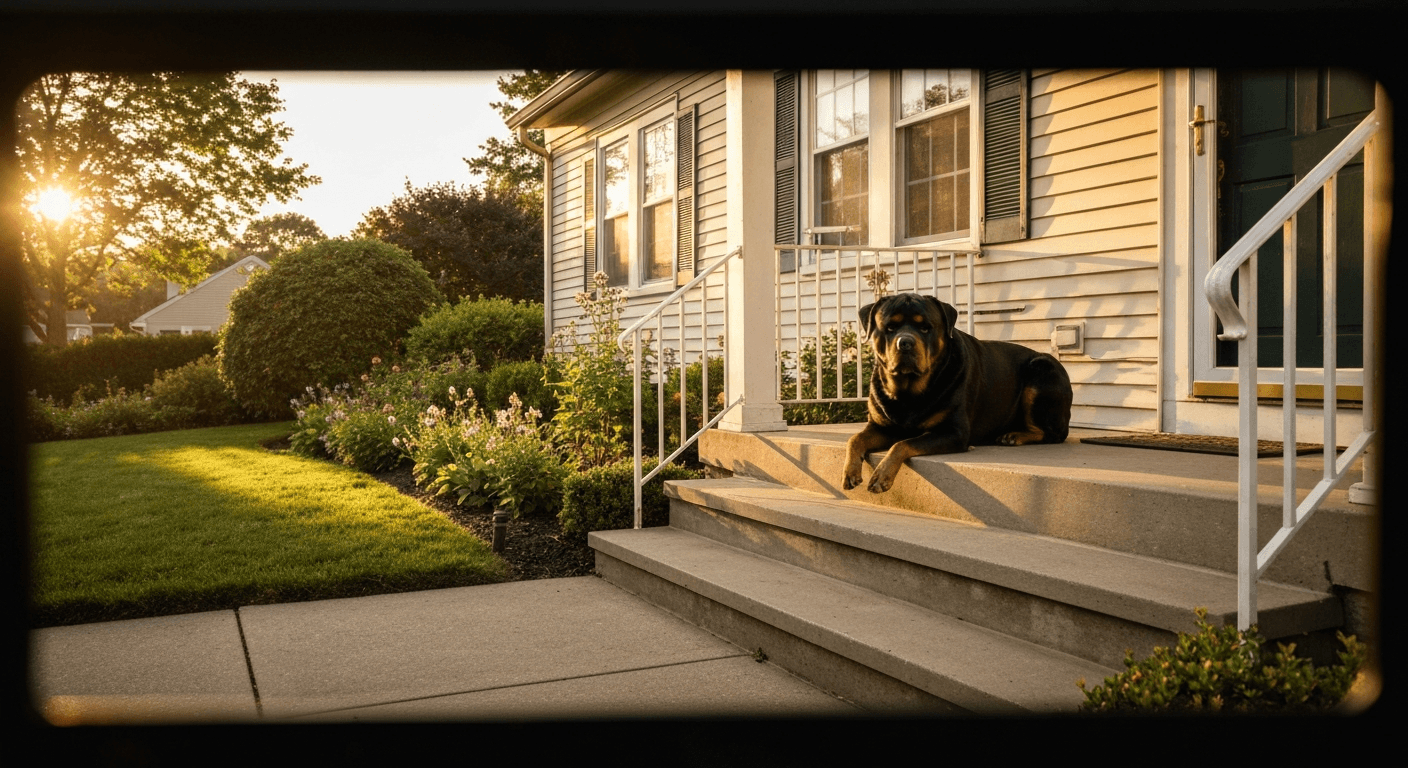

If you rent with a dog, you already know the drill: the listing says "pet-friendly," and then the fine print says "no pit bulls, no Rottweilers, nothing over 40 pounds." A bill now sitting in the Massachusetts House would blow up that fine print for state-aided public housing — and it's part of a national push that could change how millions of dog owners find a home and insure it.
The catch? Massachusetts lawmakers are racing a clock. The formal legislative session winds down at the end of July, and the housing and insurance provisions are tangled up in a Ways and Means Committee holding more than 1,050 other bills. Here's what's actually in the package, why it matters far beyond New England, and what dog owners everywhere should be watching.
What the PETS Act would actually do
The centerpiece is Senate Bill S.3014, formally titled An Act Promoting Pet Equity, Treatment, and Safety — the PETS Act. The Massachusetts Senate passed a version of it unanimously in March 2026, and it's now the House's turn.
For dog owners, three provisions stand out:
1. No more blanket pet bans in public housing
The bill directs the state's Executive Office of Housing and Livable Communities to write uniform rules that make pet ownership possible in state-aided public housing. Crucially, facilities could not impose blanket prohibitions on animals or discriminate based on a dog's breed or size. The office would also have to study how much landlords charge in pet-related fees — a quiet but meaningful nod to how "pet rent" and deposits price families out.
2. Insurers couldn't judge your dog by its breed
A companion measure, House Bill 1559 — sponsored by Representatives David Rogers and Samantha Montano — would bar homeowners and renters insurance companies from using a dog's breed when they set rates, offer coverage, renew a policy, or cancel one. Under the bill, insurers could only consider whether a specific dog has actually been declared dangerous or has a documented bite history — the behavior of the individual animal, not the reputation of its breed.
3. An end to the pet-shop puppy pipeline
The broader bill would also ban commercial pet stores from selling dogs and cats, steering shoppers toward shelters and rescues instead, and it expands cruelty protections to cover all household pets. Retail violations could carry civil penalties up to $5,000.
Advocates are careful to say this isn't a free-for-all. "It really does — in the language — have some guardrails to make sure that it's done well," Kara Holmquist, director of advocacy at the MSPCA, told Boston.com. Housing authorities would still be able to set reasonable rules around vaccination, licensing, and behavior.
Why a Massachusetts bill matters in every zip code
Here's the part that should get every renter's attention: the barriers this bill targets aren't a Massachusetts problem. They're everywhere.
Nearly 68% of rental operators now call themselves "pet-friendly," according to the 2026 State of Pets in Rental Housing report — but "pet-friendly" is doing a lot of work in that sentence. The same research found that two-thirds of operators (66.7%) still list breed as a restriction, and 59.8% impose weight limits. A "yes" to pets, in other words, often comes with an asterisk that quietly excludes the exact dog you own.
The result is a quiet ownership gap. While about 71% of U.S. households own a pet, only 43% of renters do — a divide that housing advocates say has less to do with wanting a dog and more to do with being allowed to keep one. And demand isn't cooling: 81% of rental operators report growth in pet ownership among their residents.
The breed blacklist is real — and it's an insurance issue too
The insurance side is just as consequential. A typical homeowners policy from a breed-restricting carrier won't cover certain dogs at all, and the same breeds show up again and again on those lists: pit bull–type dogs, Rottweilers, Dobermans, German Shepherds, Chow Chows, Akitas, Great Danes, Presa Canarios, Siberian Huskies, Alaskan Malamutes, and wolf-dog hybrids, according to a ValuePenguin analysis of insurer underwriting guidelines. Depending on the company, owning one of these dogs can mean higher premiums, an exclusion on liability coverage, a non-renewal, or an outright denial.
Some states have already decided that's unfair. Michigan, Nevada, New York, and Pennsylvania bar insurers from denying or canceling coverage based on a dog's breed alone. Several major carriers — including State Farm, USAA, and Chubb — have voluntarily dropped breed from their underwriting entirely, judging dogs by bite history instead. Massachusetts wants to make that the rule, not the exception.
The behavior science backs breed-neutral rules
There's a reason so many veterinary behaviorists and welfare groups favor judging the dog in front of you rather than a label. Breed is a notoriously poor predictor of whether an individual dog will bite. Temperament is shaped by socialization, training, health, and environment far more than by a name on a registration paper — which is exactly why breed-based bans tend to punish responsible owners of gentle dogs while doing little to improve public safety.
If you're a renter with a "restricted" breed, the practical takeaway is to build a paper trail that speaks to your individual dog: current vaccinations, a completed training course, a canine good citizen certificate, and references from previous landlords. It's the same evidence these laws are trying to prioritize — and it can quietly open doors that a breed label would otherwise close. (Our guides to navigating businesses' pet policies and finding dog-friendly spots near you lean on the same idea: knowing the rules is half the battle.)
What happens next
Momentum is real, but so is the calendar. The Senate has already acted, and advocates are optimistic about the House. "I do feel that the current Legislature is overall very supportive of animal issues," Holmquist told Agency Checklists. The sticking point is time: with the formal session ending soon and hundreds of bills competing for floor votes, the housing and insurance protections need to clear the House and reconcile with the Senate version before the gavel falls.
Even if it stalls, the direction of travel is clear. Between pending statehouse bills, insurers dropping breed rules on their own, and rental data exposing just how narrow "pet-friendly" really is, the pressure to judge dogs as individuals is building nationwide. Massachusetts may simply be the next domino.
Renting with a dog — or a "restricted" breed — shouldn't feel like a loophole you have to sneak through. At Sidewalk Dog, we'll keep tracking the laws, the leases, and the fine print so you and your pup can find a place to call home. Know a policy change brewing in your state? Tell us — it might be the next story we chase down.