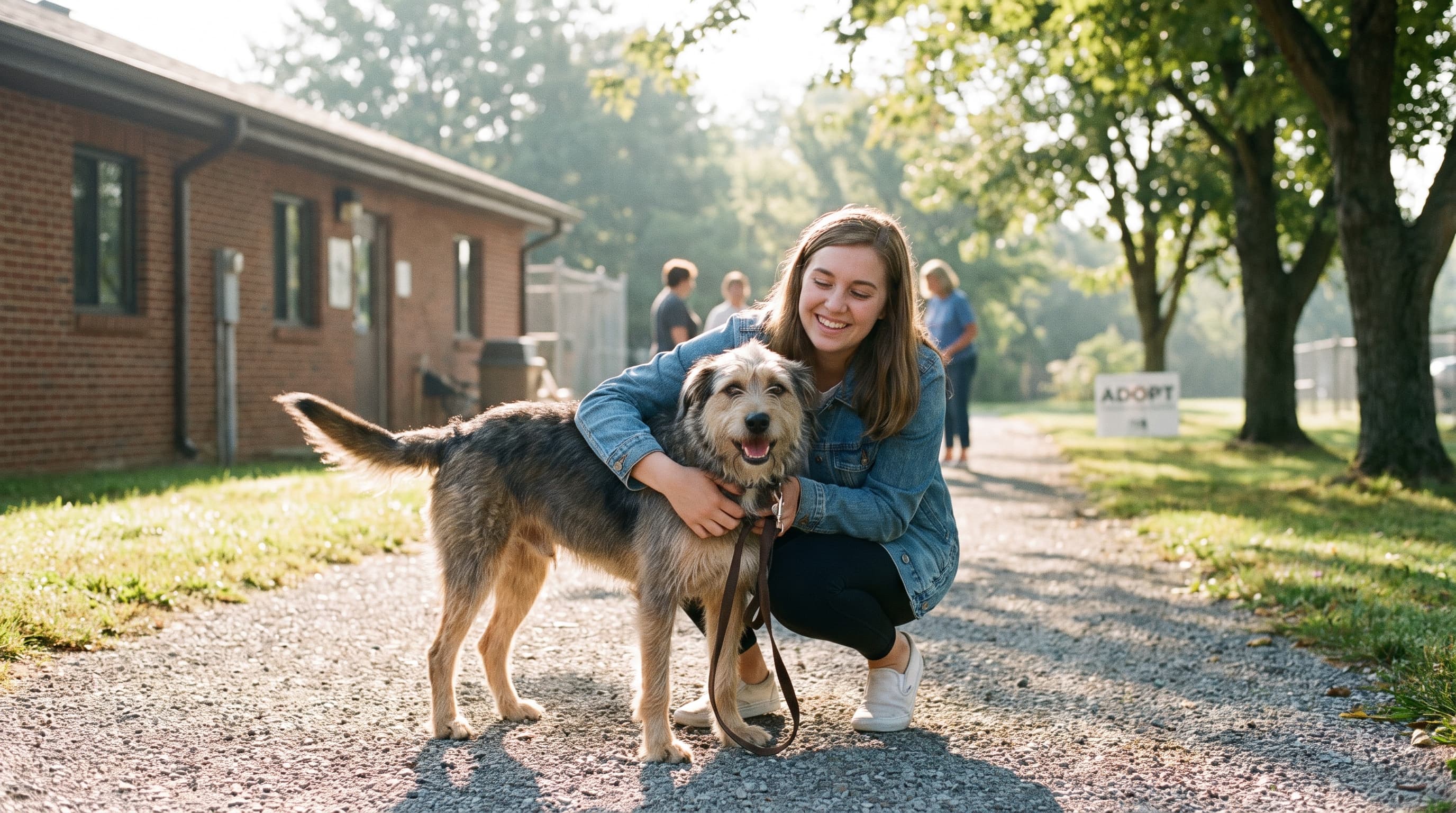

Every August, thousands of dogs walk out of American shelters on a new leash — and this month, the odds of one of them being yours have never been better. Clear the Shelters 2026, NBCUniversal Local's nationwide adoption drive, is running all through August, and it has already reshaped how families across the country meet their next best friend. Last year alone, more than 160,000 pets found new homes during the campaign. This year, with Hill's Pet Nutrition signing on as the first-ever presenting sponsor, the push is bigger still.
If you've been telling yourself "someday" about adopting a dog, someday has a date on it now. Here's exactly what Clear the Shelters 2026 is, why this particular August matters, what it costs, and how to make sure the dog you bring home actually thrives.
What Clear the Shelters 2026 Actually Is
Clear the Shelters launched in 2015 as a single-day event in North Texas. A decade later it's a coast-to-coast movement. Since that first year, the campaign has helped more than 1.3 million animals get adopted and raised over $5.6 million for shelters and rescues. In 2025, more than 1,700 shelters and rescues across 49 states, Washington D.C., Puerto Rico, and Guam took part — and adopters answered the call with 160,000-plus adoptions, the campaign's strongest showing since 2020.
For 2026, the adoption push runs the full month of August, while the companion donation drive stretches from July 15 through September 15. The mechanics are simple: participating shelters waive or deeply discount adoption fees, NBCUniversal's local stations spotlight adoptable pets, and a national roster of partners — including Greater Good Charities, WeRescue, and celebrity ambassadors like Jamie Lee Curtis and Matt Damon — helps get those animals seen by millions of people at once.
Why This August Matters More Than Usual
Clear the Shelters isn't just a feel-good marketing moment. It's a pressure valve for a shelter system that spent the past several years dangerously full. According to the ASPCA's latest figures, roughly 5.8 million dogs and cats entered U.S. shelters and rescues in 2025 — about 2.8 million of them dogs. Around 4.2 million animals were adopted, but approximately 597,000 were euthanized, including 320,000 dogs.
The good news buried in those numbers: things are slowly improving. The overall euthanasia rate has fallen to 8%, down from 10% in 2019, and median days-to-adoption dipped across government, municipal-contract, and private shelters last year. But one stubborn problem remains — large dogs are sitting in kennels longer than ever. The length of time big dogs wait for a home has climbed over the past five years, clogging capacity and leaving fewer open runs for the next stray that comes through the door. That's why a campaign that moves 160,000 animals in 31 days matters so much: every adoption during August literally opens a kennel for a dog who hasn't been rescued yet.
It's also worth knowing where shelter dogs come from. Contrary to the assumption that shelters are full of "problem" pets, 59% of animals arrive as strays and another 30% are surrendered by owners facing housing, financial, or life changes — not behavior issues. The dog you meet this August is far more likely to be a good pet who caught a bad break than a project.
How Much Does It Cost to Adopt During Clear the Shelters?
This is where Clear the Shelters shines. Adoption fees vary by location, but during the campaign most participating shelters either waive fees entirely or slash them to a nominal "name your donation" amount. In many markets, dog adoptions drop to around $40 (and cats to $20) for the month; other shelters go fee-free for the full 31 days.
Here's the part that matters most: a waived fee is not a discount on the dog's value — it's a subsidy on the paperwork. Adoptable dogs still come spayed or neutered, microchipped, and up to date on core vaccines, which is a package that can easily run several hundred dollars at a private vet. You're not getting "less dog." You're getting the same fully vetted animal with the up-front cost removed, so the money you would have spent on the fee can go straight into a bed, a crate, good food, and that first wellness visit.
How to Find a Participating Shelter Near You
The fastest route is the official Clear the Shelters interactive map, which lets you plug in your ZIP code and pull up every participating shelter and rescue in your area, complete with adoptable pets. NBCUniversal's local stations — NBC and Telemundo affiliates in dozens of markets from Chicago to San Diego to New York — also publish city-specific guides listing the shelters near you and the pets currently up for adoption.
Can't adopt right now? You can still move the needle. Donations run through ClearTheSheltersFund.org and can be directed to the general fund or to a specific shelter you want to support. Fostering, sharing adoptable-pet posts from your local station, and volunteering all count too — shelters need transport drivers, dog walkers, and laundry help just as badly as they need adopters.
What to Expect When You Adopt
Walking into a shelter during Clear the Shelters can be busy — that's the point — so go in with a plan. Most shelters ask you to fill out an application, meet the dog in a quiet get-acquainted space, and, if you have a resident dog, do a supervised dog-to-dog introduction before finalizing. Bring your whole household, including any current pets if the shelter allows it, so everyone meets the newcomer before the leash changes hands.
Ask the staff the practical questions: How does this dog do with kids, cats, or other dogs? Any known medical needs? How does he handle being alone? Shelter workers and foster families spend real time with these animals and will tell you the truth — they want a match that sticks, not a return in two weeks.
Setting Your New Dog Up for Success
The first few weeks are everything. A helpful framework rescue trainers swear by is the "3-3-3 rule": give your dog roughly three days to decompress, three weeks to start settling into a routine, and three months to truly feel at home. Don't be alarmed if a dog who seemed calm at the shelter is shut down, clingy, or bouncy once the adrenaline wears off — that's normal, and patience beats pressure every time.
Before day one, have the basics ready: a properly fitted collar and harness, an ID tag, a crate or cozy den space, food (ask the shelter what they've been feeding to avoid stomach upset), and the name of a local vet for a check-in within the first week. Keep the world small at first — quiet walks, a predictable schedule, and low-key introductions to new people rather than a welcome-home party.
Early training builds confidence for both of you. If your newly adopted dog needs a foundation, start with our step-by-step guide to teaching your dog to sit, and when it's time to expand their social circle, lean on our tips for safely introducing your dog to new people and houseguests. A few good habits in month one prevent a lot of headaches in month six.
The Bottom Line
Clear the Shelters 2026 is the rare moment when a genuinely urgent need lines up perfectly with a genuinely great deal. Kennels are full, the fees are gone or nearly gone, and 1,700-plus shelters are actively hoping you'll show up. If your home has a dog-shaped hole in it, August is the month to fill it — and to open a kennel for the next dog waiting on someone just like you.
For more adoption guides, training how-tos, and dog-friendly recommendations to help your new best friend settle in, keep exploring Sidewalk Dog — we're here for every step from the shelter to the couch.