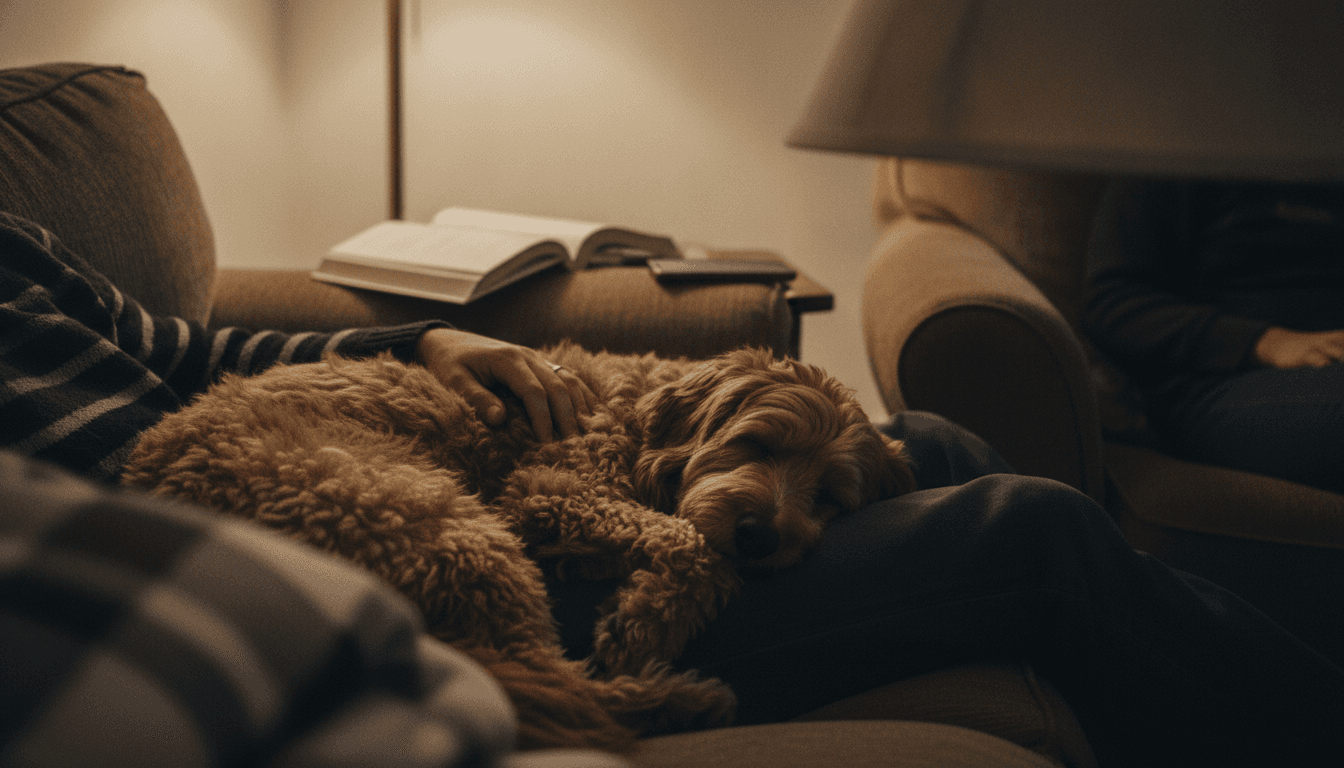

If your dog sleeps on you and not your husband, the most likely reason is that you are the dog's primary source of comfort and security. Dogs gravitate toward the person whose scent, body temperature, stillness, and daily caregiving feel safest at night. It rarely means your dog loves you more—it means your body is the cozier, calmer place to sleep.
The Short Answer: Comfort, Scent, and Routine Win the Bed
Dogs are not weighing love when they pick a sleeping spot—they are weighing comfort. The person who feeds the dog, handles the walks, and stays still through the night usually claims the prime real estate. Your scent is layered into the bed on your side, your movements are predictable, and your body heat may simply feel better. When all of those signals line up on one side of the mattress, your dog chooses you and quietly skips your husband.
This is one of the most common questions dog owners ask, and the reassuring truth is that a sleeping preference is a snapshot of the moment, not a ranking of your relationships. Plenty of dogs rotate their favorite over the years as routines shift. Below, we break down the specific reasons behind the choice and what, if anything, you can do about it.
Reason 1: Your Scent Is the Dog's Security Blanket
Smell is a dog's dominant sense. Dogs have up to 300 million scent receptors compared with roughly six million in humans, and a far larger share of the canine brain is devoted to processing odor. That means your individual scent profile is vivid, specific, and deeply reassuring to your dog in a way most people never fully appreciate.
According to the American Kennel Club, dogs use scent to map their world and identify the people in it. Your pillow, your pajamas, and your side of the bed are saturated with your smell. Curling up against you is a way of bathing in the most comforting scent your dog knows. If you also handle most of the feeding and grooming, your scent is tied to good things, which only strengthens the pull. For more on how powerful canine olfaction really is, the Royal Canin Foundation offers an accessible overview.
Reason 2: You're the Primary Caregiver (Even If You Don't Notice)
Dogs bond hardest with the person who meets their daily needs. As Dogster notes, the human who fills the bowl, clips on the leash, and shares the couch tends to win the dog's nighttime loyalty. Caregiving builds a predictable rhythm, and dogs crave predictability. If you are the one your dog tracks from room to room during the day, it makes sense that the pattern continues after lights-out.
This is also why the favorite can quietly switch. If your husband takes over morning walks for a month, you may notice the dog drifting to his side of the bed. Curious whether you're truly the chosen one? Our guide to whether dogs have a favorite person walks through the tell-tale signs.
Reason 3: You're Simply the Comfier Bed Buddy
Sometimes the explanation is gloriously simple: you are more comfortable to sleep on. Men, on average, run warmer and generate more body heat, which can feel like too much on a summer night for a dog wearing a fur coat. You may also move less in your sleep, take up less space, or breathe more quietly. Dogs are sensitive to disruption, and a still, calm sleeper is a magnet.
Body position matters too. A dog that drapes across your chest or tucks into the crook of your knees has found a spot that regulates its temperature and feels secure. If you want to decode what your dog's chosen pose says about how it feels, our breakdown of dog sleeping positions explains the most common ones.
Reason 4: Calm Energy Beats Fun Energy at Bedtime
Many households have a "fun parent" and a "calm parent." If your husband is the one who wrestles, throws the ball, and roughhouses, the dog may associate him with play and stimulation—great for daytime, less ideal for winding down. You, meanwhile, might be the person who signals rest. Dogs read our energy closely, and at night they seek the human who helps them feel settled and sleepy rather than revved up.
This split has nothing to do with who the dog prefers overall. It simply means your dog has sorted the household into roles. The play bond and the comfort bond are both real; they just show up at different times of day. You can see other versions of this affection in our roundup of signs your dog loves you.
Reason 5: Trust, Anxiety, and the Need to Feel Safe
Choosing to sleep pressed against one person is a vulnerable act. Dogs sleep deepest where they feel protected, so a dog that piles onto you is showing real trust. For anxious or velcro dogs, that closeness can also be a coping tool—your presence lowers their stress and helps them rest. The way we talk to our dogs feeds this bond, too; research-backed dog-directed speech (that sing-song "baby talk") genuinely strengthens attachment.
If the clinginess is new, intense, or paired with whining, pacing, or destructive behavior when you leave, it may point to separation-related anxiety rather than simple preference. That is worth a conversation with your veterinarian or a certified behaviorist.
What the Science Says About Dogs Choosing a Sleeping Partner
Researchers who study the human-dog bond point to a mix of attachment and practicality. Dogs form attachment relationships with their humans similar to the bonds infants form with caregivers, and they use a trusted person as a "secure base"—a safe anchor from which to relax. At night, that secure base is whoever makes the dog feel calmest, and the body chooses accordingly.
There's also a thermoregulation angle. Dogs seek out sleeping surfaces that help them hold a comfortable temperature; a person who runs slightly cooler, lies still, and radiates steady warmth is an ideal "mattress." Add in the powerful pull of familiar scent and the predictability of a caregiver's routine, and the dog's nightly decision starts to look less like favoritism and more like simple, sensible comfort-seeking. None of this diminishes the bond your dog shares with the rest of the household—it just reflects what feels best after dark.
Should You Worry If Your Dog Snubs Your Husband?
In almost every case, no. A sleeping preference is normal, healthy, and changeable. Your husband is not being rejected—he may just be warmer, busier in the mornings, or the household's designated play partner. The bond is still there; it simply expresses itself differently. The Sleep Foundation notes that co-sleeping with a dog can even improve some owners' sense of security, so there are upsides to the arrangement for everyone.
The exceptions to watch for are resource guarding (growling or snapping when your husband approaches the bed) and sudden, dramatic clinginess. Both deserve professional guidance.
How to Encourage Your Dog to Bond with Your Husband at Night
If your husband wants in on the cuddle pile, the fix is to make him the source of good, calm things:
- Shift the routine. Have him handle the last walk, the bedtime treat, and the lights-out ritual for a few weeks.
- Trade an item of clothing. Placing a recently worn (unwashed) T-shirt of his on the dog's preferred spot can transfer the comforting-scent advantage.
- Lower the energy before bed. Swap evening wrestling for gentle petting so the dog associates him with rest.
- Reward calm contact. A quiet treat for settling on his side reinforces the new habit without forcing it.
- Be patient. Preferences shift gradually; never drag or scold a dog into a sleeping spot.
Frequently Asked Questions
Does my dog love me more than my husband because it sleeps on me?
Not necessarily. Sleeping spots are about comfort, scent, body temperature, and routine—not a love ranking. Your dog can be deeply bonded to your husband and still prefer your side of the bed for purely practical reasons.
Why does my dog suddenly want to sleep on me when it used to sleep on my husband?
A change in routine—who feeds, walks, or settles the dog—often shifts the preference. Stress, a new schedule, warmer weather, or a recent illness can also prompt a dog to seek the person who feels most reassuring right now.
Is it bad to let my dog sleep on me every night?
For most healthy households it's fine and can be comforting for both of you. Reconsider if anyone has allergies or asthma, if the dog guards the bed, or if the closeness seems driven by anxiety. When in doubt, ask your veterinarian.
Why does my dog sleep on me but ignore me during the day?
Daytime is for stimulation and exploration; nighttime is for safety and rest. Your dog may seek excitement from others during the day and seek your calming presence at night. Both roles reflect a real bond.
How can I get my dog to sleep in its own bed instead?
Make the dog's bed irresistible—place it near you, add a worn shirt for scent, reward your dog for settling there, and keep bedtime calm and consistent. Gradual, positive reinforcement works far better than shutting the dog out.
The Bottom Line
When your dog sleeps on you and not your husband, it's reading the room: your scent, your stillness, your routine, and your calm energy add up to the safest place to rest. It's a quiet compliment, not a verdict on your marriage. And if your husband wants a turn, a few weeks of caregiving and a borrowed T-shirt usually do the trick.
Want more plain-English answers to your dog's quirkiest habits? Subscribe to the Daily Wag newsletter for science-backed dog insights delivered straight to your inbox.