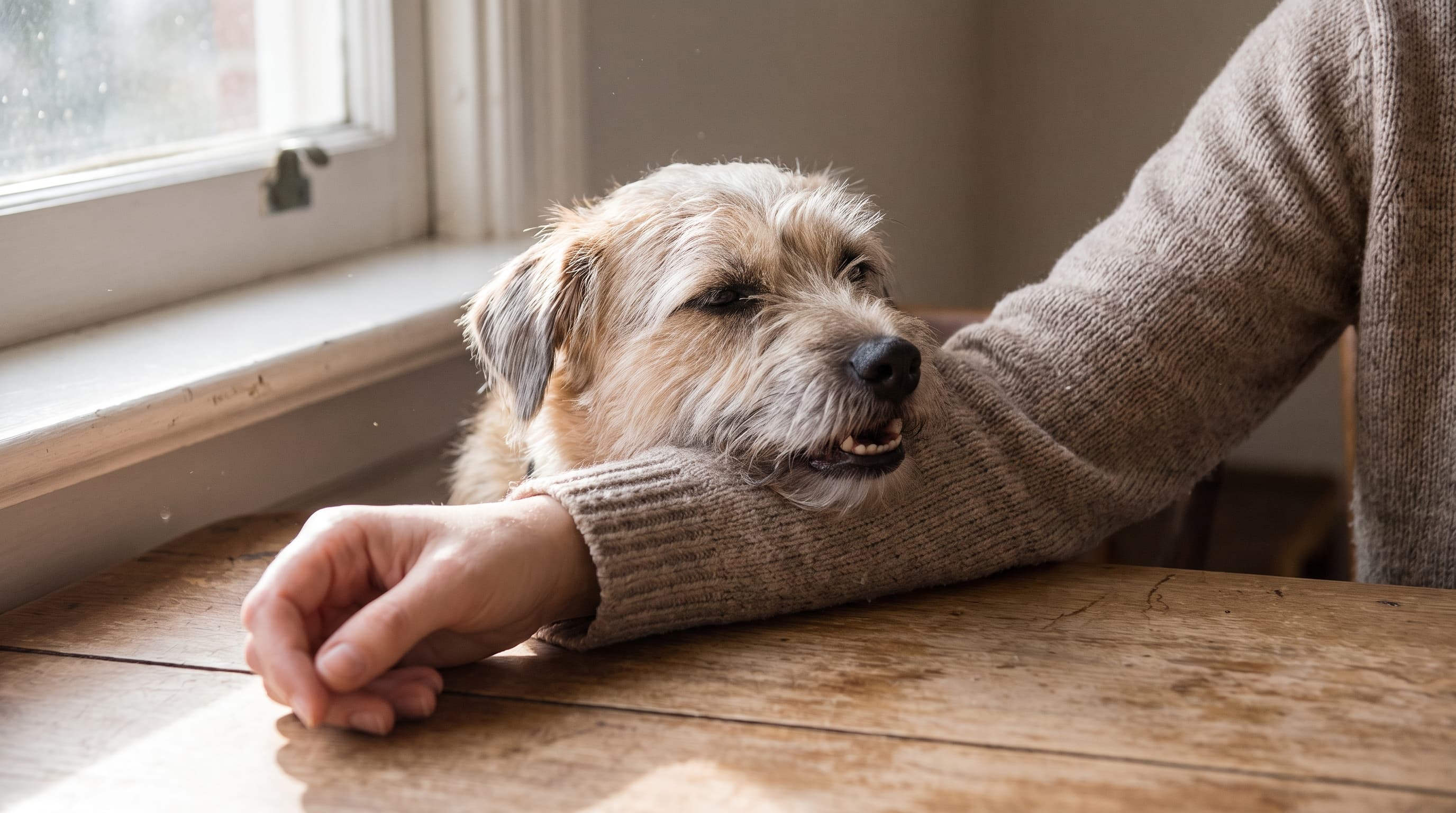

Cobbing is when a dog gently nibbles with its small front incisor teeth in a rapid, corn-on-the-cob motion — usually on your arm, a blanket, or another dog. It is almost always a friendly, self-soothing signal of affection, grooming, or mild over-arousal rather than aggression, and it is generally harmless.
If you have ever felt your dog pull back its lips and rake its tiny front teeth along your sweater or its own leg, you have witnessed cobbing. It looks a little odd the first time, but it is one of the most endearing things dogs do. Below, we break down exactly what cobbing means, why dogs do it, when it is sweet versus when it is worth a second look, and how to respond so the habit stays healthy.
What Is Cobbing in Dogs?
Cobbing describes a specific, gentle nibbling action a dog makes using only its front teeth — the small incisors sandwiched between the larger canine teeth. The dog draws back its lips and makes quick, rhythmic little bites, and the whole motion looks remarkably like a person eating corn on the cob. That resemblance is almost certainly where the informal name comes from.
The key thing to understand is that cobbing is a soft, low-pressure behavior. There is no real bite force behind it, and it is not the same thing as mouthing, play-biting, or nipping. Dogs cob on people, on other dogs, on cats, on soft blankets and toys, and sometimes on their own legs or paws. Because it usually happens during calm, close, relaxed moments, it reads as one small piece of the larger picture of canine communication. Learning to read the whole picture is easier when you understand your dog's overall body language cues and calming signals, since cobbing rarely happens in isolation.
Why Do Dogs Cob? The Main Reasons
There is no single cause. Cobbing is a versatile behavior that shows up for several overlapping reasons, and part of reading it correctly is noticing the context it appears in.
Affection and social bonding. The most common reason is simple: your dog likes you. Cobbing mirrors social grooming behaviors that dogs use to reinforce relationships, the same way one dog will nibble gently along a housemate's neck or shoulders. When your dog cobs on you during a cuddle, it is treating you like a trusted member of the family.
Grooming and allogrooming. Dogs use those front incisors to work through fur, dig out debris, and scratch spots a tongue cannot reach. When they turn that same motion toward you or a canine friend, it is a social grooming gesture — a way of saying "you're one of mine."
Self-soothing and mild over-arousal. Cobbing is frequently a calming, self-regulating behavior, much like a person fidgeting or a child sucking a thumb. You may notice more of it right after a walk, when guests arrive, or at the tail end of a play session, when your dog is happily over-stimulated and using the repetitive motion to settle. This overlaps with recognized canine calming signals such as lip-licking and yawning.
Leftover puppy instinct. Nursing puppies nibble to stimulate milk flow, and teething puppies nibble to relieve sore gums. Many dogs simply carry a softened version of that soothing motion into adulthood. If you have a young pup, it helps to know how their baby teeth and teething timeline shape early mouthy behaviors.
Attention-seeking. A quick cob can also be a polite tap on the shoulder: your dog wants petting, play, or simply to be noticed.
Is Cobbing a Sign of Affection?
In the vast majority of cases, yes. When cobbing happens during relaxed contact — you are petting your dog, you are both winding down on the couch, the body is loose and the eyes are soft — it is a genuine relationship connection. Behavior experts who have looked at cobbing describe it plainly as a self-soothing gesture that dogs share with individuals they trust. As one trainer quoted in this overview of cobbing put it, these behaviors are "information, not problems."
What tells you it is affection rather than distress is everything around the teeth. Affectionate cobbing comes packaged with loose muscles, a gently wagging or still-but-relaxed tail, half-closed eyes, and a general air of contentment. Stress-related nibbling, by contrast, tends to arrive with tension: a tucked tail, a stiff body, dilated pupils, or a frantic pace. The behavior looks similar; the surrounding whole-body signals tell you what it actually means.
Cobbing vs. Nibbling vs. Corn-Cobbing While Chewing
These terms get tangled, so it helps to separate them.
Cobbing is the light, social, front-teeth nibbling aimed at you, another animal, a blanket, or the dog itself. It is gentle and relationship-driven.
General nibbling or mouthing is a broader category that includes play-biting and excited nipping. It can involve more of the mouth and more pressure, and in puppies it is a normal part of learning bite inhibition. It is not the same soft, rhythmic corn-on-the-cob rake.
"Corn-cobbing" while chewing refers to how a dog holds a bone, chew, or toy with its paws and works it with the front teeth in that same corn-on-the-cob motion — but here the goal is gnawing an object, not a social signal. It is normal chewing behavior. If your dog redirects that gnawing drive onto your furniture or shoes, the fix is different from anything to do with social cobbing; see our guide to curbing destructive chewing.
Is Cobbing Ever a Problem?
Soft, occasional, socially-directed cobbing is not something you need to stop. It becomes worth a closer look when it changes character — specifically when it turns repetitive, frantic, or self-directed to the point of causing damage.
The clue is whether the behavior helps the dog settle. Healthy self-soothing calms a dog down. Veterinary behavior resources note that displacement and compulsive behaviors, by contrast, become "excessive, exceedingly intense, or performed out of context" and do not actually help the pet cope. A dog that cobs its own leg or flank for long stretches, keeps returning to the same raw patch of skin, or ramps up nibbling whenever it is left alone may be telling you about boredom, anxiety, or physical discomfort rather than affection.
Chronic self-directed nibbling can tip into a genuine compulsive pattern. Acral lick dermatitis (lick granuloma), for example, is a well-documented condition in which a dog repeatedly licks or chews one spot until the skin breaks down and gets infected. If nibbling clusters around departures and greetings, the root cause may be separation-related anxiety rather than a grooming quirk. And because sudden or obsessive nibbling is sometimes the first outward sign of an itch, allergy, or pain, it pays to remember that behavior often signals an underlying medical need.
A quick vet note: if cobbing becomes obsessive, or you see it paired with red, irritated, thinning, or broken skin, book a check-up with your veterinarian to rule out allergies, parasites, pain, or a skin condition before treating it as a behavior-only issue.
How to Respond to and Gently Redirect Cobbing
For ordinary, affectionate cobbing, the simplest response is to enjoy it. There is no need to correct a behavior that is friendly, gentle, and self-soothing. Punishing it can actually backfire — behavior professionals warn that abruptly restricting a self-calming outlet can raise a dog's anxiety and arousal instead of lowering it.
That said, plenty of owners would rather their dog not rake its teeth on bare skin, and that is a reasonable preference. Here is how to steer it kindly:
- Offer an acceptable target. Keep a soft chew, a lick mat, or a favorite blanket within reach and calmly guide the cobbing onto that instead of your arm.
- Reward the alternative. When your dog chooses the toy or settles quietly, mark and reward it. If you use a marker system, this is a natural fit for clicker training to build a clear "do this instead" habit.
- Meet the underlying need. If cobbing spikes from boredom or pent-up energy, add a walk, a sniffary session, or a puzzle feeder. A tired, mentally-satisfied dog cobs less out of restlessness.
- Stay calm and consistent. Yanking your arm away or reacting dramatically can read as a game. A neutral redirect works better than a big reaction.
The goal is never to shut the behavior down, just to give it a healthier outlet when you would prefer one.
Frequently Asked Questions About Cobbing
Does cobbing hurt, and can it break skin?
Genuine cobbing is gentle and should not hurt or leave a mark — it is a light nibble, not a bite. If your dog is applying real pressure or breaking skin, that is closer to mouthing or nipping and is worth addressing with basic bite-inhibition training rather than treating as ordinary cobbing.
Why does my dog cob on blankets and toys instead of me?
Blankets, plush toys, and soft bedding make satisfying self-soothing targets, especially at bedtime or during wind-down. Nibbling and "nursing" on a blanket is usually a harmless comfort ritual, much like a person hugging a pillow. Only worry if the dog is swallowing fabric or fraying the material enough to risk ingestion.
Should I stop my dog from cobbing?
Not if it is soft, occasional, and friendly — that kind of cobbing is normal and even sweet. Redirect it onto a chew or blanket only if you dislike teeth on your skin, and look deeper if it becomes frantic, constant, or self-directed to the point of irritating the skin.
Is cobbing the same as a dog licking its lips?
No, though both can be communication signals. Lip-licking is a recognized calming signal and can indicate mild stress or anticipation, while cobbing is a physical nibbling action. They can appear together, and reading them side by side — along with our guide to what lip-licking really means — gives you a fuller sense of how your dog is feeling.
When should cobbing prompt a vet visit?
See your veterinarian if the nibbling becomes obsessive, targets one spot repeatedly, or comes with red, raw, thinning, or broken skin, hair loss, or obvious discomfort. Those signs can point to allergies, parasites, pain, or a compulsive disorder that needs professional assessment rather than home management alone.
The Bottom Line
Cobbing is one of the quiet, quirky ways dogs tell us they feel safe. In almost every case, that rapid little corn-on-the-cob nibble is affection, grooming, or gentle self-soothing — nothing to fix. Watch the surrounding body language, redirect onto a chew if you prefer, and only dig deeper when the behavior turns frantic or the skin looks irritated.
Love decoding the little things your dog does? Subscribe to the Daily Wag newsletter for bite-sized, vet-informed insights on canine behavior delivered straight to your inbox — so the next curious habit your dog picks up never leaves you guessing.