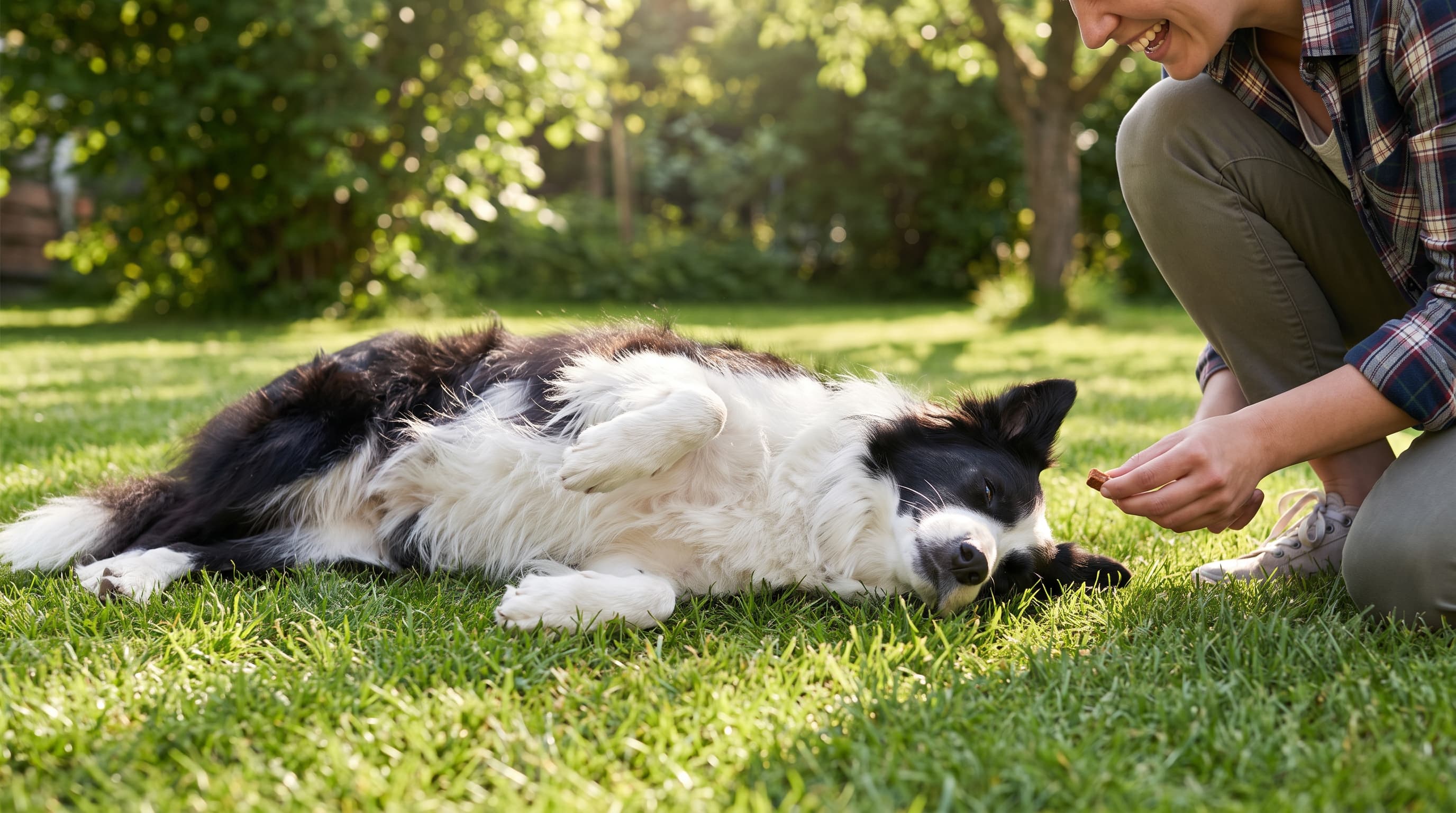
How to Teach a Dog to Play Dead: A Step-by-Step Trick Guide
To teach a dog to play dead, start with a solid "down," lure your dog gently onto their side with a treat, and mark the moment they roll flat with a cue like "bang!" Reward, then slowly build duration before adding a hand signal. Kept in short, upbeat sessions with lots of praise, most dogs learn this crowd-pleasing trick in a week or two.
"Play dead" is one of the most entertaining tricks in the canine repertoire—a guaranteed party favorite that also sharpens your dog's focus and deepens your bond. Better still, it's built entirely on positive reinforcement, so training is fun and stress-free for both of you. This updated guide walks you through the full process, troubleshoots the common sticking points, and flags the safety notes every owner should know before starting.
What Your Dog Needs to Know First
Play dead builds on a foundation, so a little prep makes everything smoother. Before you begin, your dog should reliably perform a "down" on cue, because the trick starts from a lying-down position (Dogster). If "down" isn't rock-solid yet, spend a few days there first.
You'll also want a few simple supplies on hand:
- High-value treats your dog goes crazy for, broken into tiny pieces
- A clicker or a consistent verbal marker like "yes!" to pinpoint the exact right moment
- A quiet, comfortable space with soft footing—carpet or a rug is kinder to a dog rolling onto their side than a hard floor
- A little patience and a good mood; dogs read your energy
Step-by-Step: Teaching "Play Dead"
Step 1: Start in the Down Position
Cue your dog into a "down" and reward calmly so they're relaxed and settled. This is your launch pad for every repetition.
Step 2: Lure Onto the Side
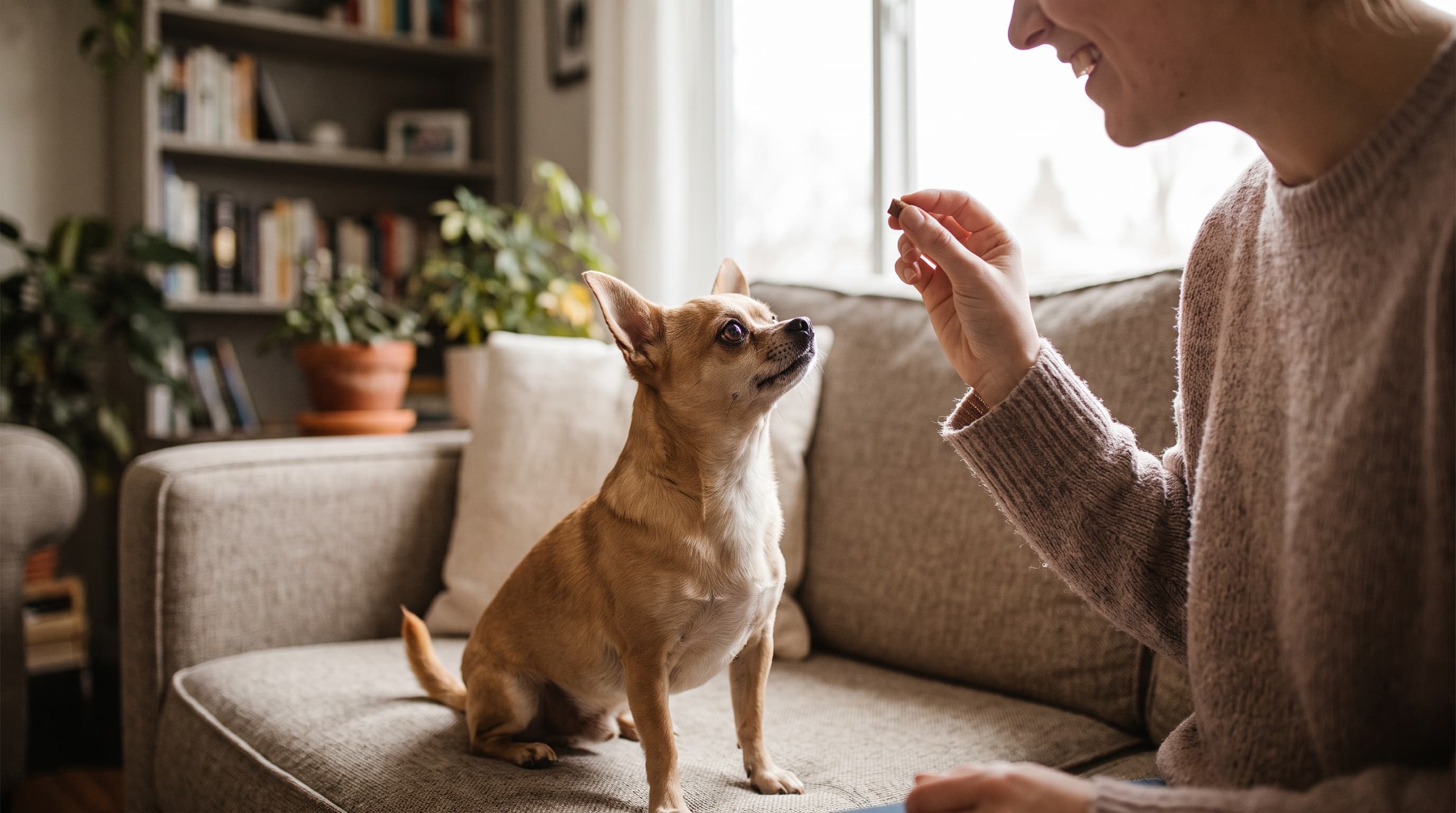
Hold a treat near your dog's nose and slowly move it from their nose toward their shoulder and back toward their spine. Most dogs will naturally follow the treat and roll onto one hip and then their side to keep tracking it. The moment their shoulder and head touch the ground, that's your target position (American Kennel Club).
Step 3: Mark and Reward
The instant your dog's body is flat on their side, click or say your marker word, then deliver the treat right where they're lying. Timing is everything—rewarding within a second of the behavior helps your dog understand exactly what earned the treat (Humane World for Animals). Repeat this lure-mark-reward loop several times until your dog rolls onto their side smoothly.
Step 4: Add the Verbal Cue and Hand Signal
Once your dog is reliably following the lure, introduce a cue right before you move the treat—say "bang!" or "play dead" in an upbeat tone. Many owners pair it with a "finger pistol" hand signal, which becomes a fun visual cue dogs learn to read on its own. After enough repetitions, your dog will start to drop into position on the cue alone, before the lure even moves.
Step 5: Build Duration and Fade the Lure
Now stretch the "dead" hold. Wait a beat longer before marking, gradually building from one second to several. Slowly reduce the food lure until the cue and hand signal do the work, and reward from your pocket instead. Finish each rep with a release word—"okay!" or "all done!"—so your dog knows when the trick is over (Dutch).
Step 6: Add Drama and Proof It
For extra flair, encourage your dog to let their head rest flat or roll fully onto their back once they're comfortable. Then "proof" the trick by practicing in new rooms, in the yard, and around mild distractions so your dog can perform it anywhere—not just in the kitchen.
An Alternative Method: Capturing the Behavior
If luring feels clumsy, you can "capture" the trick instead. When your dog naturally flops onto their side to rest, calmly mark and reward the moment, then add your cue over many repetitions. This hands-off approach works beautifully for laid-back dogs and for those who dislike being guided into position. It takes a bit longer but is completely pressure-free.
Troubleshooting Common Problems
- My dog stands up instead of rolling. Slow the lure down and keep it low to the ground; moving too fast or too high tempts your dog to pop up to follow it.
- My dog only rolls one way. That's normal—dogs have a preferred side. Work with it rather than forcing the other direction.
- My dog loses interest. Your treats may not be exciting enough, or the session is running long. Switch to higher-value rewards and keep sessions to 5–10 minutes.
- My dog gets overexcited. Take a breath and lower your energy. Practice after a walk when your dog is calmer.
- Progress stalled. Break the trick into smaller pieces and reward each tiny step. End every session on a win, even an easy one.
Safety First: When to Skip This Trick
Play dead asks your dog to roll onto their side or back, which isn't right for every body. Skip or modify the trick for dogs with back problems, hip or joint pain, arthritis, or recent injuries—breeds prone to spinal issues, like Dachshunds, warrant extra caution, and any dog showing discomfort should stop. Always train on soft footing and never physically force your dog into position. When in doubt about your dog's physical suitability, check with your veterinarian first. Reading your dog's body language keeps the experience positive: a loose, willing dog is having fun, while a stiff or avoidant one is telling you to ease off (American Kennel Club).
A Sample 7-Day Training Plan
Prefer a roadmap? This gentle week-long schedule breaks the trick into bite-sized wins. Keep each session to 5–10 minutes, once or twice a day, and end on a success.
- Days 1–2: Warm up your dog's "down." Then practice luring onto the side, marking and rewarding the instant they go flat. Don't add a cue word yet—just build the motion.
- Days 3–4: Keep luring, but start saying "bang!" right before you move the treat. Add your finger-pistol hand signal at the same time so the two link together.
- Day 5: Begin fading the lure. Give the cue and hand signal first, pause, and reward from your other hand or pocket when your dog drops into position.
- Day 6: Build duration. Ask your dog to hold "dead" for two, then three, then five seconds before marking. Introduce your release word to end each rep cleanly.
- Day 7: Proof it. Practice in a new room, then the yard, then with a family member watching. Celebrate—your dog has a party trick.
If any day feels shaky, simply repeat it. There's no prize for rushing, and dogs who learn at their own pace retain tricks far better (Humane World for Animals).
Why Trick Training Is Worth It
Beyond the "wow" factor, trick training delivers real benefits. It provides mental stimulation that tires dogs out as effectively as physical exercise, builds your dog's confidence, and strengthens the communication between you. Because it's all reward-based, every session is a deposit in your relationship's trust bank—and a reminder that learning together is one of the best parts of life with a dog.
Frequently Asked Questions
How long does it take to teach a dog to play dead?
Most dogs pick up the basics within one to two weeks of short daily sessions, though it varies by individual. Dogs who already know "down" and enjoy training often learn faster. Consistency matters more than marathon sessions.
What's the best command word for play dead?
Any distinct word works—popular choices are "bang!", "play dead," or "sleep." Pick one, stay consistent, and pair it with a hand signal like a finger pistol for extra clarity and showmanship.
Can old dogs learn to play dead?
Yes—the "you can't teach an old dog new tricks" myth is just that. Older dogs learn well with patience, though you should account for any joint stiffness or pain and check with your vet if your senior has mobility issues.
Is play dead hard to teach?
It's considered an intermediate trick because it builds on "down" and asks the dog to hold an unusual position. Broken into small steps with good treats, most dogs find it very achievable and fun.
My dog won't roll onto their side—what do I do?
Keep the lure low and slow, reward any partial movement toward the side, and consider the capturing method instead. If your dog consistently resists lying on their side, rule out physical discomfort with your veterinarian.
The Bottom Line
Teaching your dog to play dead is a rewarding weekend project that pays off in laughs, mental enrichment, and a tighter bond. Keep sessions short and positive, respect your dog's physical limits, and celebrate every small step. Before long, a simple "bang!" will drop your dog into the most dramatic flop in the neighborhood.
Ready for the next crowd-pleaser? Explore more easy, reward-based tricks and training foundations below—and keep the good times rolling.