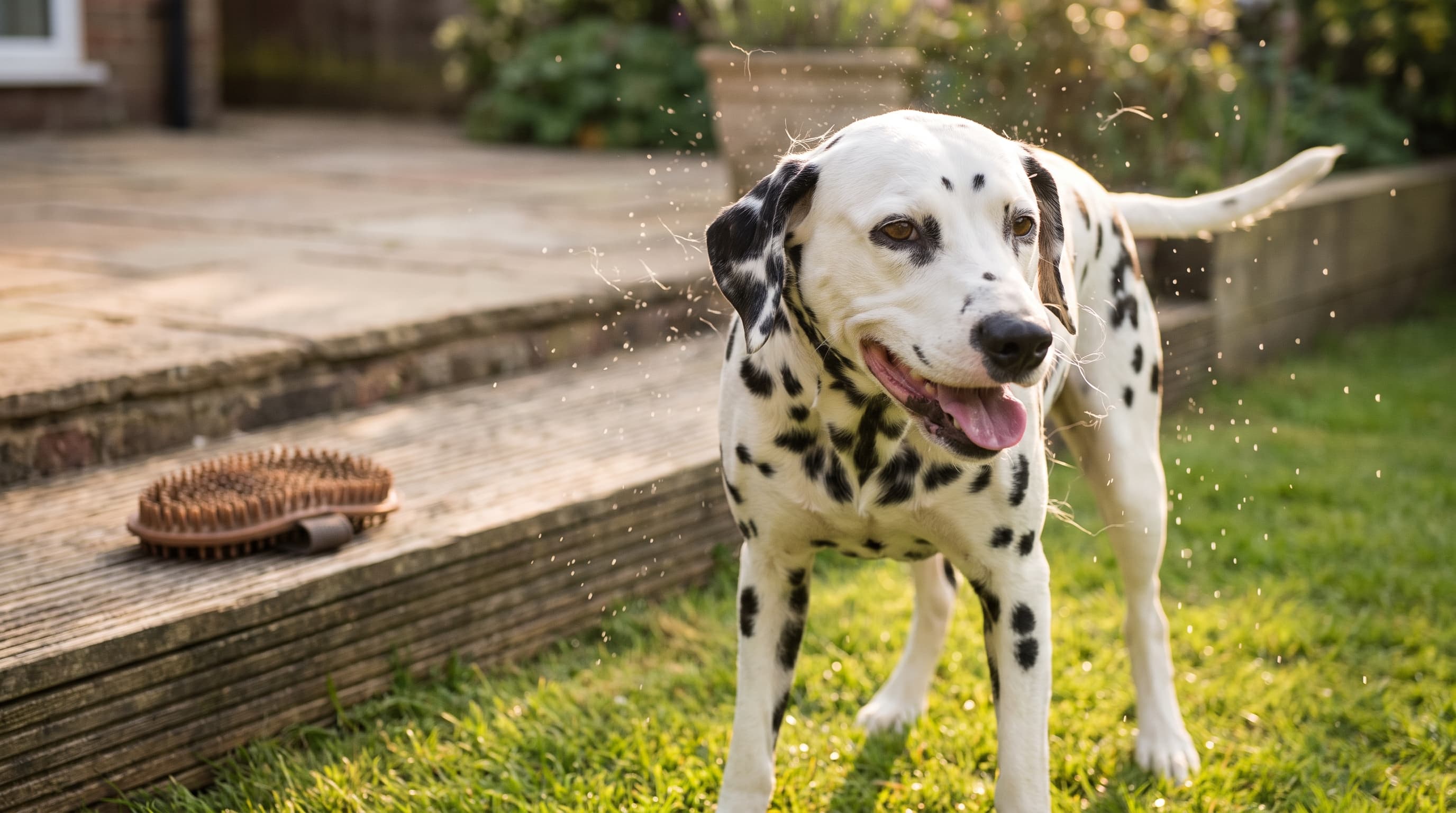

Are Dalmatians Aggressive? The Truth Behind the Spotted Stereotype
No, Dalmatians are not inherently aggressive. Like any dog, a Dalmatian's behavior is shaped by training, socialization, exercise, and health—not by breed alone. In fact, one Ohio State University study found Dalmatians rank among the lowest breeds for bite risk. Aggression in a Dalmatian is almost always a symptom of unmet needs—too little exercise, poor socialization, pain, or fear—rather than a built-in temperament.
Where the "Aggressive Dalmatian" Reputation Comes From
Dalmatians carry a reputation for being high-strung or snappy, and there's a story behind it. After the 101 Dalmatians films, demand exploded, and irresponsible breeders and puppy mills churned out poorly bred, poorly socialized dogs to cash in. As the breeders at Bedlam Dalmatians put it bluntly: aggression isn't inherent to the breed—"lousy breeders breed lousy dogs."
A well-bred Dalmatian from a reputable breeder is typically stable, confident, and devoted to its family. Many are "politely disinterested" in strangers—friendly enough, but clearly preferring their own people. That reserved, watchful nature can be mistaken for hostility, when it's really just a discerning, loyal temperament.
What Dalmatian Temperament Is Actually Like
Dalmatians are intelligent, energetic, playful, and deeply loyal. Bred as coach dogs to trot for miles alongside horse-drawn carriages, they have remarkable stamina and a strong bond with their humans. They're generally good with children and other dogs when raised well, though they can carry a stubborn, independent streak that demands patient, consistent training.
They are also protective of home and family—an instinct that's normal and healthy when properly directed. Compare this with our look at whether Dalmatians are mean, and a clear picture emerges: this is a sensitive, driven working breed, not a naturally hostile one.
The Real Triggers of Dalmatian Aggression
When a Dalmatian does show aggression, there's almost always an identifiable cause. According to trainers at K9 Mania Dog Training, the most common culprits are:
- Insufficient exercise — often called the number-one cause of behavior problems in this high-energy breed.
- Poor socialization — especially missing the critical developmental window between roughly 3 and 16 weeks of age.
- Unmanaged protective instincts — natural guarding behaviors that escalate without clear boundaries.
- Pain or medical issues — hip dysplasia, urinary stones, or allergies can trigger defensive, "leave me alone" reactions.
Notice what's not on that list: the breed itself. Address the underlying cause and the behavior almost always improves. Our guide to separating aggression myth from reality digs deeper into how canine aggression really works.
Deafness: A Hidden Factor Behind Fear Reactions
One factor unique to this breed deserves special attention: deafness. Dalmatians have an unusually high rate of congenital deafness, tied to the same extreme piebald (white) gene that gives them their signature spots. The American Kennel Club notes that cochleosaccular deafness is linked to piebald and merle coats, blue eyes, and white pigment—and occurs most commonly in breeds like the Dalmatian.
Research on the breed has long reported that roughly a quarter to a third of Dalmatians have some degree of hearing loss, with a smaller share deaf in both ears. A deaf or partially deaf dog can be startled easily—woken or touched without warning—and may snap out of pure reflex or fear, not malice. This is why Native Pet highlights deafness as a source of communication breakdowns between owners and dogs. If your Dalmatian seems reactive, a BAER hearing test can reveal whether hearing loss is part of the picture, allowing you to adapt with hand signals and gentle wake-up routines.
How to Prevent and Manage Aggression in Dalmatians
The good news is that a stable, well-mannered Dalmatian is very much within reach. The foundation is meeting the breed's core needs:
- Exercise, then exercise more. Dalmatians need one to two hours of vigorous daily activity. A tired Dalmatian is a well-behaved Dalmatian. See our tips on the best ways to burn off your dog's energy fast.
- Socialize early and often. Expose puppies to varied people, dogs, sounds, and settings during the critical socialization window and keep it up through adulthood.
- Use positive reinforcement. Reward-based training builds trust; harsh corrections tend to increase fear and defensiveness.
- Set consistent boundaries. Everyone in the household should enforce the same rules so the dog isn't confused.
- Provide mental enrichment. Puzzle toys, nose work, and trick training channel that sharp mind productively.
Early bite-inhibition work with puppies also pays lifelong dividends—our guide to teaching gentle mouth control is a great place to start. And if reactivity shows up as excessive barking, our advice on managing your dog's barking can help.
Aggression vs. High Energy: Telling Them Apart
A lot of behavior labeled "aggressive" in Dalmatians is really just under-channeled energy. The AKC describes the Dalmatian as a dignified breed with a storied history as a coach dog—an athlete built to run for miles. Bottle that stamina up in a house with a couple of short potty walks a day, and it comes out sideways: jumping, mouthing, frantic zoomies, guarding, and reactivity that can look alarming.
The tell is context. True aggression is intentional, targeted, and paired with warning signals—stiff body, hard stare, growling, snapping. Over-arousal, by contrast, is scattered and social: the dog is wound up and can't self-regulate, but isn't trying to drive anyone away. The fix for over-arousal is almost always more physical and mental outlets, plus impulse-control training like "sit to say please" and settle-on-a-mat work. Confuse the two and you'll punish a dog for being under-exercised, which only makes things worse.
Are Dalmatians Good Dogs for First-Time Owners?
Dalmatians can absolutely thrive with a first-time owner—but only one who goes in clear-eyed about the commitment. This is not a low-maintenance couch dog. It's a bright, sensitive, high-drive breed that needs a person willing to exercise it hard, train it consistently, and socialize it thoroughly through its first year and beyond.
If your lifestyle is active—running, hiking, cycling, dog sports—a Dalmatian may be a perfect match, and its loyalty and cleverness are genuinely rewarding. If you're away long hours or want a calm, independent pet, the breed's energy and need for companionship can lead to frustration on both ends. Honest self-assessment up front prevents the very neglect-and-boredom cycle that fuels the "aggressive Dalmatian" myth in the first place.
When to Call a Professional
Occasional grumbling or guarding is normal dog communication, but genuine aggression—lunging, biting, or intense reactivity—warrants professional help. A certified professional dog trainer or a veterinary behaviorist can assess triggers, rule out medical causes, and build a tailored behavior-modification plan. Because pain is a common hidden driver, a veterinary checkup is a smart first step whenever a previously easygoing Dalmatian suddenly becomes reactive. Early intervention is far more effective—and safer—than waiting for the behavior to escalate.
Health Problems That Can Look Like Aggression
Because Dalmatians are stoic, pain often shows up as a personality change rather than an obvious limp. A dog that suddenly guards its body, snaps when touched, or grows short-tempered may be hurting. The breed is prone to a few specific issues worth knowing: urinary stones (Dalmatians have a unique uric-acid metabolism that predisposes them to bladder stones), hip dysplasia, allergies and skin irritation, and—as covered above—congenital deafness.
Any of these can make a normally tolerant dog reactive. That's why a veterinary exam should be the first move whenever a previously easygoing Dalmatian's behavior shifts. Rule out the physical before you assume it's behavioral; treating the underlying condition frequently resolves the "aggression" entirely. Keeping up with routine vet care, hydration, and an appropriate diet goes a long way toward a comfortable, even-tempered dog.
Frequently Asked Questions
Are Dalmatians naturally aggressive dogs?
No. Dalmatians are not inherently aggressive. Their behavior depends on breeding, training, socialization, exercise, and health. One Ohio State University study even ranked them among the lowest breeds for bite risk.
Why do Dalmatians have a bad reputation?
Much of it traces to the post-101 Dalmatians boom, when puppy mills and careless breeders produced poorly socialized, poorly tempered dogs. Well-bred Dalmatians from reputable breeders are typically stable and friendly.
Does deafness make Dalmatians aggressive?
Not directly, but a deaf or partially deaf Dalmatian can be startled easily and may react out of fear rather than malice. A BAER hearing test and training with hand signals help prevent startle-based reactions.
Are Dalmatians good with children and other pets?
Generally yes, when well-bred, exercised, and socialized. Their energy means supervision around small children is wise, and early socialization helps them get along with other dogs and pets.
How much exercise does a Dalmatian need to stay well-behaved?
Plan on one to two hours of vigorous activity daily. Under-exercise is the leading cause of behavior problems in this athletic, high-endurance breed, so running, hiking, and active play are essential.
What should I do if my Dalmatian shows aggression?
First, see your veterinarian to rule out pain or illness. Then work with a certified trainer or veterinary behaviorist using positive reinforcement. Address the root cause—exercise, socialization, fear, or medical issues—rather than punishing the symptom.
Raising a Happy, Well-Balanced Dalmatian
Dalmatians aren't aggressive by nature—they're athletic, sensitive, loyal dogs that thrive on activity, structure, and connection. Meet those needs and you'll have a devoted companion, not a liability. For more myth-busting breed insights, training guides, and health tips delivered every week, subscribe to the Daily Wag newsletter and keep learning alongside your spotted best friend.