
Are Dachshunds Smart? The Truth About Doxie Intelligence
Yes, Dachshunds are smart—just not in the way obedience tests measure. Psychologist Stanley Coren ranks them 92nd of 138 breeds for working and obedience intelligence, or "average." But Dachshunds shine in instinctive and adaptive intelligence: independent problem-solving and the sharp tracking instincts they were bred for. Their famous stubbornness is confidence, not a lack of brains.
If you've ever watched a Dachshund ignore a "come" command to follow a scent, then figure out how to nose open a treat drawer an hour later, you've seen this paradox in action. These little hounds are cleverer than their obedience scores suggest. Below, we unpack what "smart" really means for a dog, where Dachshunds land, and how to bring out the best in your doxie's busy brain.
Are Dachshunds Smart? The Short Answer
Dachshunds are more intelligent than the average dog, but their intelligence is easy to underestimate because it doesn't always translate into instant obedience. Dogster notes there is no official canine IQ test, so any ranking is a snapshot rather than a verdict. What's clear is that Dachshunds were bred to think and act on their own—and a dog that makes independent decisions in the field will happily make independent decisions in your living room, too.
The Three Types of Dog Intelligence
To understand Dachshund smarts, it helps to know how researchers actually measure canine intelligence. In his landmark book The Intelligence of Dogs, Stanley Coren defined three distinct categories, summarized well by Pets4Homes:
- Instinctive intelligence: the natural ability a dog has to perform the tasks it was bred for—herding, guarding, retrieving, or in the Dachshund's case, tracking and hunting.
- Adaptive intelligence: a dog's problem-solving skills and ability to learn from its environment on its own.
- Working and obedience intelligence: how quickly a dog learns and obeys commands from people.
Here's the catch: Coren's famous breed rankings measure only that third category. They largely ignore instinctive and adaptive intelligence—the two areas where Dachshunds are genuinely gifted. So a breed can rank as merely "average" on the list while being an exceptional independent thinker.
Where Dachshunds Rank on Coren's Scale
According to Coren's obedience-and-working-intelligence trials, the Dachshund ranks 92nd out of 138 breeds, placing it in the "average working/obedience intelligence" tier, as confirmed by both A-Z Animals and The Smart Canine. Dogs in this group typically:
- Understand a new command after 25 to 40 repetitions.
- Obey a known command on the first try about 50% of the time or better.
Coren built these rankings from the responses of hundreds of obedience-trial judges across North American kennel clubs, only ranking breeds with enough data to be reliable. It's rigorous work—but it rewards biddable, handler-focused breeds like Border Collies and Poodles, and penalizes independent breeds that were never designed to hang on a human's every word. That's the Dachshund's whole story in one sentence.
It's worth putting "92nd" in perspective, too. Coren ranked 138 breeds, so the Dachshund sits comfortably in the middle of the pack—ahead of many popular breeds and firmly in the "average" band, not the bottom tier of "lowest working intelligence." And Coren himself stressed that genetics set only a baseline; as Pets4Homes notes, environment, training, and the individual dog all shape how bright a given pup turns out to be. In other words, your Dachshund's "score" is far from fixed.
Why Dachshunds Seem Stubborn (Not Dumb)
The Dachshund was developed in Germany to hunt badgers—the name literally means "badger dog." As the American Kennel Club describes, this is a bold, alert, tenacious breed. A badger dog had to go underground, alone, out of sight and earshot of its handler, and make life-or-death decisions on its own. Independence wasn't a bug; it was the entire job description.
Fast-forward to your couch, and that same independent streak reads as stubbornness. When a Dachshund "ignores" a command, it usually isn't confused—it has weighed your request against what it wants to do and decided its plan is better. That's cognition, not stupidity. Recognizing this changes how you train: you're not overriding a dumb dog, you're negotiating with a clever one.
Signs Your Dachshund Is Smarter Than You Think
Watch for these everyday displays of doxie brainpower:
- Manipulating their environment: nosing open cabinets, burrowing under blankets, or engineering a path onto the sofa.
- Reading you like a book: Dachshunds are quick to learn routines and human emotions, often anticipating walks, meals, or your departure before you move.
- Vocal communication: many owners report their Dachshund uses distinct sounds and "words" to demand toys, food, or attention.
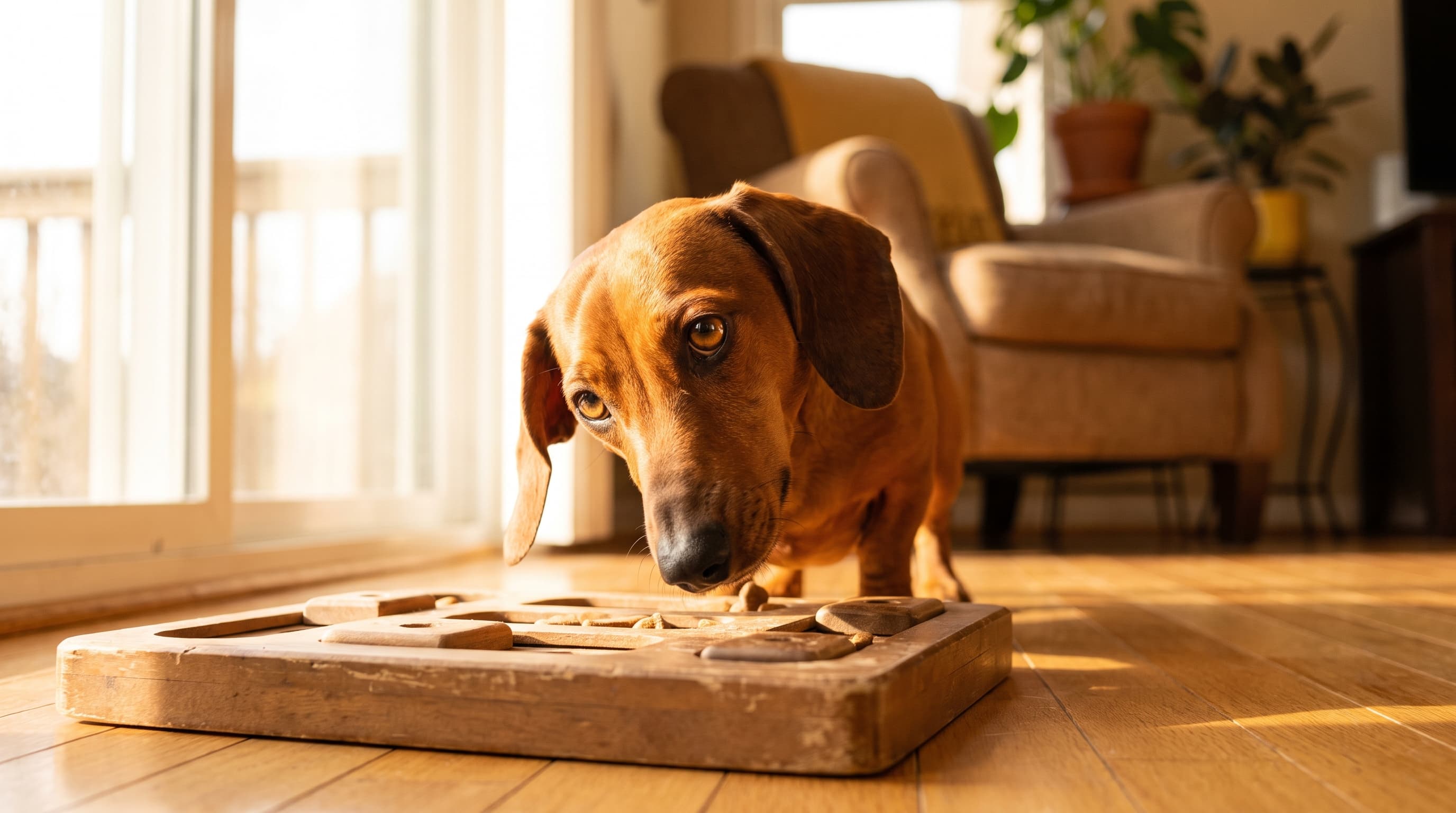
- Puzzle-solving: they excel at food-puzzle toys and can learn to retrieve specific items by name.
- Selective hearing with a purpose: the ability to tune you out is, ironically, a sign of independent decision-making.
Owner surveys collected by The Smart Canine reflect exactly this split: fans praise their doxies' vocabulary, communication, and problem-solving, while a minority who focus purely on obedience find them frustrating. Both groups are describing the same smart, self-directed dog.
How to Train a Smart, Stubborn Dachshund
Because Dachshunds are motivated but independent, training is all about making your idea more appealing than their idea. These strategies work with the breed's brain instead of against it:
- Lead with positive reinforcement: reward-based training gets far more cooperation than corrections, which tend to make a Dachshund dig in.
- Keep sessions short and fun: five to ten minutes prevents boredom and preserves attention.
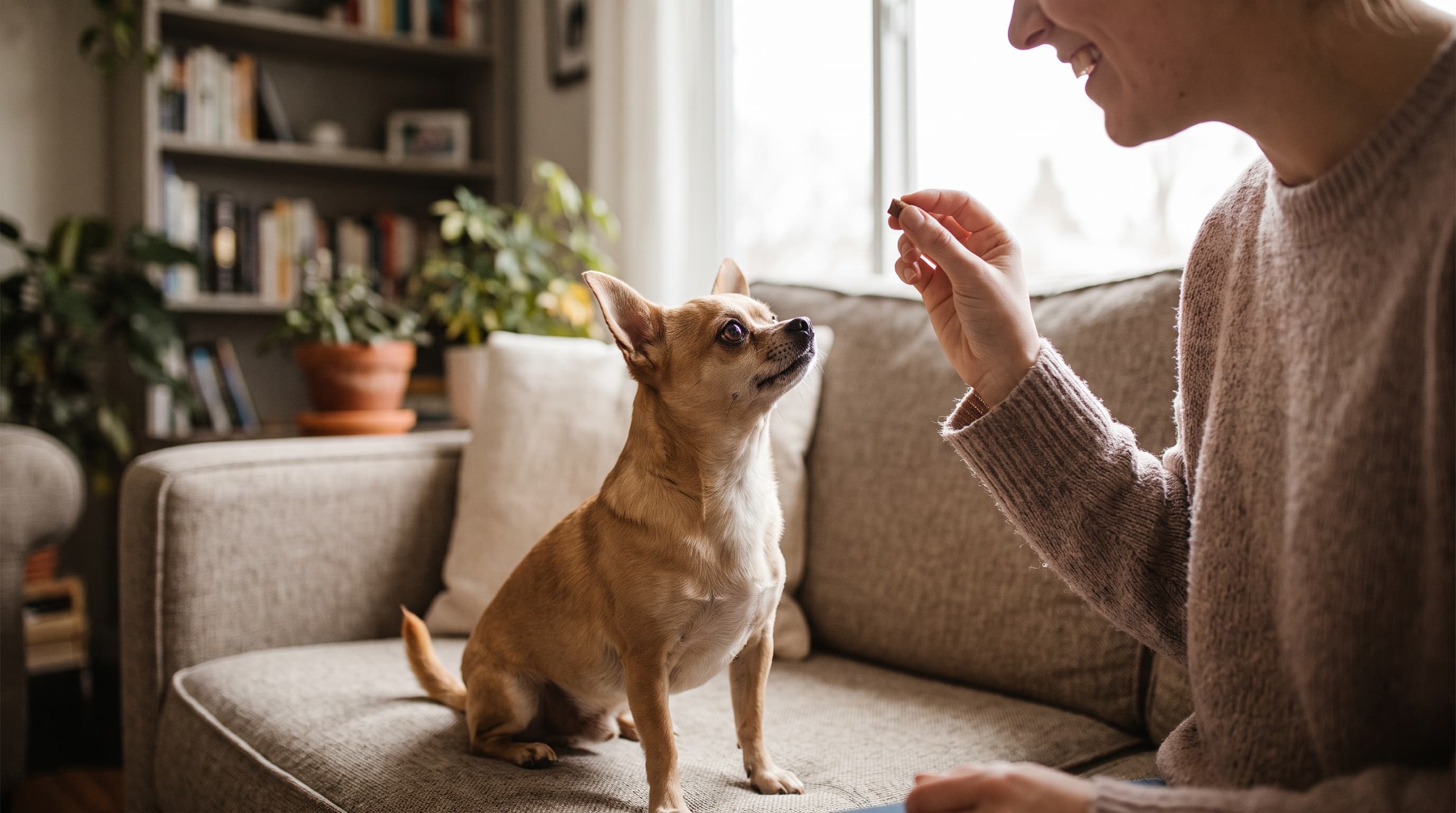
- Use high-value treats: a stubborn hunter needs a compelling reason to choose you over a scent.
- Be consistent: the same cues and rules every time reduce the wiggle room a clever dog will otherwise exploit.
- Channel the nose: scent games and tracking activities satisfy instinctive intelligence and make an easier training partner.
The payoff is real: the more you train a Dachshund with patience, the "smarter" it appears, because you're teaching it that working with you is worth its while. For hands-on ideas, our roundup of fun tricks any dog can learn is a great starting point.
Do Dachshunds Get Bored? The Enrichment Factor
A smart dog with nothing to do finds its own entertainment—usually the kind you'd rather it didn't, like digging, barking, or dismantling a cushion. Dachshunds need mental stimulation as much as physical exercise. Rotate puzzle feeders, hide treats for a "find it" hunt, teach new tricks, and give safe outlets for digging. A well-enriched Dachshund is calmer, better behaved, and visibly happier. Our guide to canine enrichment covers dozens of ideas you can try at home.
Because their intelligence leans instinctive, scent-based games are especially rewarding. Scatter kibble in the grass, hide a favorite toy and cue "find it," or build a simple snuffle mat so your doxie can "hunt" for its dinner. Ten minutes of nose work can tire a Dachshund more thoroughly than a long walk, because it engages the exact wiring the breed was built around. Just be mindful of that long back during play: skip repetitive jumping on and off furniture, and talk to your veterinarian before starting any strenuous new activity.
Frequently Asked Questions
Are Dachshunds one of the smartest dog breeds?
Not by obedience rankings—Coren places them 92nd of 138, in the "average" tier. But that measure ignores instinctive and adaptive intelligence, where Dachshunds excel. They're best described as clever, independent thinkers rather than eager rule-followers.
Why do Dachshunds seem so stubborn?
They were bred to hunt badgers underground and make decisions without a handler. That hardwired independence means a Dachshund evaluates your commands rather than blindly obeying them, which looks like stubbornness but is really self-directed thinking.
Are Dachshunds hard to train?
They can be more challenging than eager-to-please breeds, especially with housebreaking. Short, consistent, reward-based sessions with high-value treats work best. Training difficulty reflects independence, not low intelligence.
Are Dachshunds smart enough to do dog sports?
Absolutely. Dachshunds enjoy scent work, tracking, earthdog trials, and even agility. Activities that tap their natural hunting instincts play directly to their strongest form of intelligence.
How can I tell if my Dachshund is intelligent?
Look for problem-solving, manipulating their environment, quick learning of routines, and clear communication with you. These adaptive behaviors are stronger indicators of a Dachshund's intelligence than how fast it obeys commands.
Are mini Dachshunds as smart as standard Dachshunds?
Yes. Size doesn't affect intelligence in Dachshunds—miniature and standard varieties share the same temperament and cognitive traits. Individual personality and training matter far more than body size.
The Bottom Line on Dachshund Smarts
Dachshunds are proof that "smart" means more than "obedient." They're independent, resourceful, and emotionally tuned-in—brilliant at the tracking and problem-solving they were built for, and quick to outwit an owner who underestimates them. Meet that intelligence with patience, enrichment, and reward-based training, and you'll have a witty, devoted companion for life.
Curious how your doxie stacks up against other clever breeds? Read our full Dachshund breed guide and see whether Chihuahuas are smart for another surprising small-breed comparison. And for weekly training tips and breed deep-dives, subscribe to the Daily Wag newsletter.