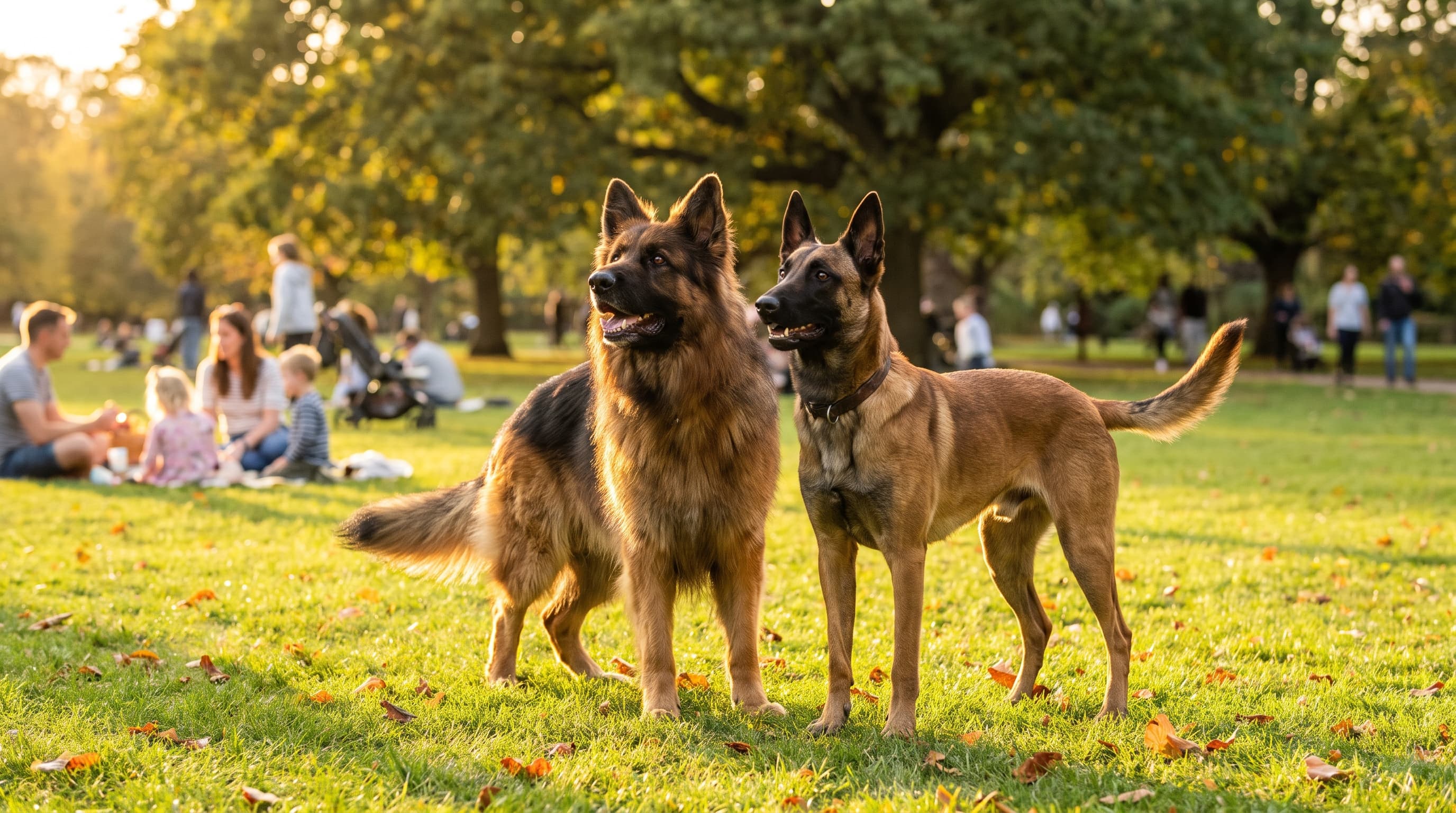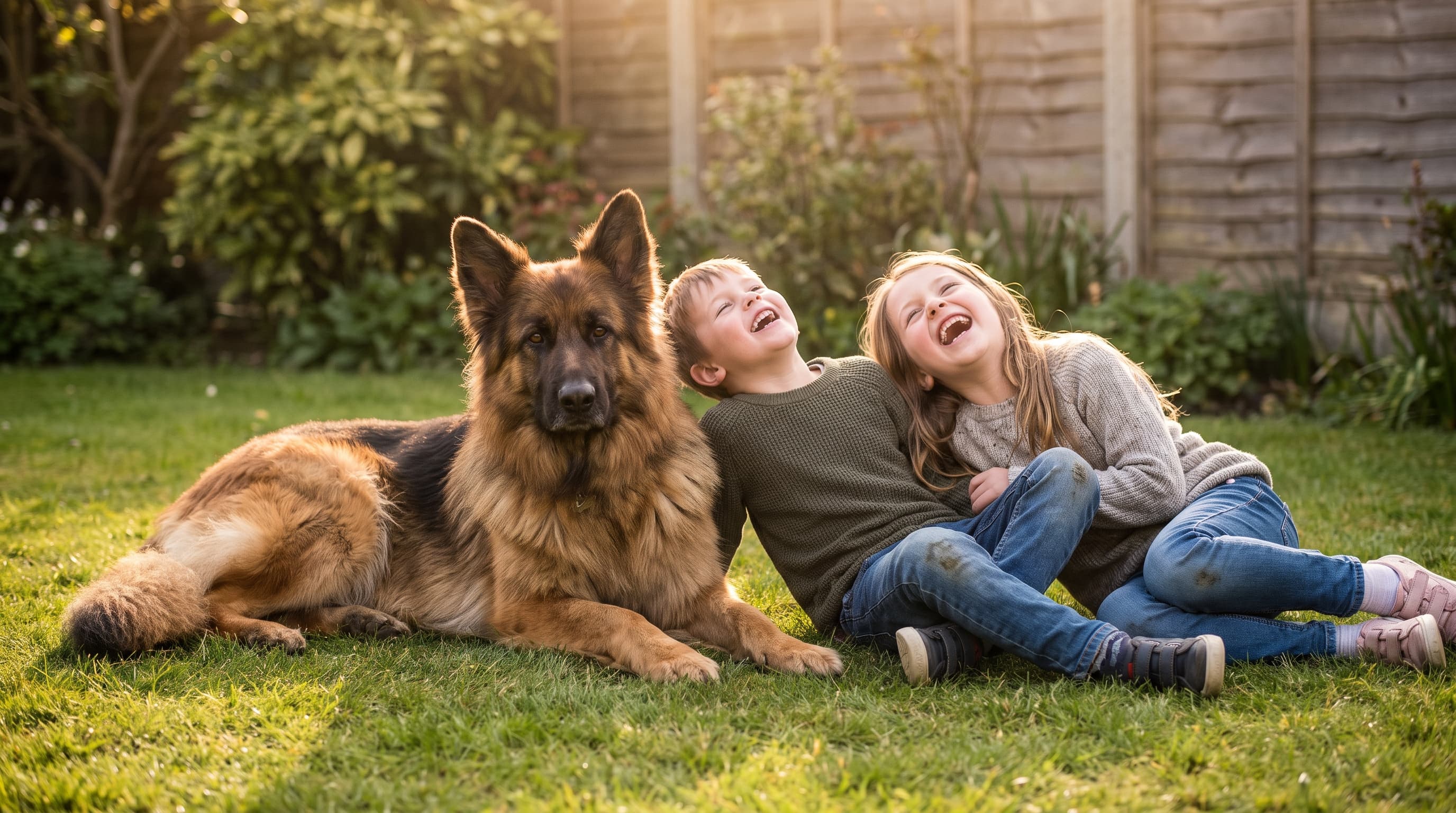

Are German Shepherds good with kids? Yes — a well-bred, well-socialized German Shepherd is loyal, patient, and protective of the children in its family. But this is a large, high-drive working breed, so being "good with kids" depends heavily on early socialization, consistent training, and adult supervision. Raised right, German Shepherds are among the most devoted family guardians there is.
Are German Shepherds Naturally Good With Children?
German Shepherds have the raw temperament to be excellent family dogs. The American Kennel Club describes the breed as "loyal, confident, courageous, and steady" — exactly the stable disposition you want around kids. They bond intensely with their people and often appoint themselves gentle protectors of the household's youngest members.
That said, temperament is potential, not a guarantee. As WebMD notes, German Shepherds "can be great family pets" and "can bond with and be fond of children," but only with proper training and supervision. The breed's intelligence and loyalty are assets; its size, strength, and herding instincts are what require management.
Why Training and Socialization Are Non-Negotiable
A German Shepherd's behavior with children is shaped far more by upbringing than by breed alone. Early, positive exposure to kids, strangers, noises, and other animals builds the confidence that prevents fear-based reactions later. The AKC calls socialization "key to ensuring you have a happy, confident, and well-adjusted dog," and the window is widest in puppyhood.
Obedience training matters just as much. A 75-pound dog that reliably responds to "sit," "leave it," and "settle" is a safe dog around a toddler; one that doesn't is a liability regardless of how sweet its intentions are. Enroll early, keep training positive and consistent, and involve older children in age-appropriate ways so the dog learns to take gentle direction from them too.
Managing the Herding Instinct Around Kids
German Shepherds were bred to herd, and that instinct can surface as nipping at heels or circling when children run and shriek during play. It's not aggression — it's hardwired working behavior — but it can startle or knock over a small child. Redirect it early: interrupt chasing, reward calm behavior, and give the dog a legitimate outlet like fetch, tug, or a structured job. Teaching kids not to sprint and scream around the dog helps just as much as training the dog.
The Exercise Factor: A Bored Shepherd Is a Problem Shepherd
This is a working breed with serious physical and mental needs. A German Shepherd that doesn't get enough exercise and stimulation becomes restless, mouthy, and destructive — and an under-exercised dog is a poorer companion for children. Plan on substantial daily activity: long walks, running, fetch, training games, and puzzle toys. Families who can channel that "working dog energy" constructively get the calm, steady house dog the breed is famous for. Families who can't will struggle, no matter how good the dog's bloodline is.
Mental exercise counts as much as physical exercise for this brainy breed. Obedience practice, trick training, food puzzles, scent games, and teaching the dog to help with simple household "jobs" all tire a Shepherd out in ways a walk alone can't. A mentally satisfied German Shepherd is calmer, more patient, and far easier to trust around excited, unpredictable children.
Introducing a German Shepherd to a New Baby or Young Child
Whether you're bringing a baby home to a resident Shepherd or adding a dog to a family with small kids, a slow, structured introduction sets the tone. Before a baby arrives, get obedience solid and gradually acclimate the dog to baby gear, sounds, and smells. On the day, let the dog investigate a blanket carrying the baby's scent before any face-to-face meeting, and keep those first interactions calm, brief, and leashed if needed.
Reward the dog for gentle, relaxed behavior around the child so it associates the little one with good things. Never force contact, never leave them unsupervised, and always give the dog a way to remove itself from the situation. A German Shepherd that feels secure and in control of its own space is far less likely to react out of stress. Build the relationship gradually and let trust develop on the dog's timeline.
Health Considerations for a Family German Shepherd
A dog's comfort affects its patience, so health is part of the family-fit equation. German Shepherds are prone to hip and elbow dysplasia, joint conditions that can cause pain and irritability if untreated — a painful dog is a less tolerant dog around rambunctious kids. Choose a breeder who screens the parents' hips, keep your Shepherd at a healthy weight, and stay current on veterinary care. A comfortable, well-managed dog is a safer, more patient companion for children.
Safety Rules for Kids and Dogs (Any Breed)
Even the gentlest German Shepherd is a big, powerful animal, so basic safety habits protect everyone. The ASPCA and veterinary consensus point to a few universal rules:
- Always supervise interactions between young children and dogs — never leave them alone together, even with a trusted dog.
- Teach kids to respect the dog's space: no climbing on, pulling ears or tails, or bothering the dog while it eats or sleeps.
- Give the dog an escape route — a crate or quiet room it can retreat to when it needs a break.
- Learn canine body language. Lip licking, yawning, a tucked tail, or a stiff freeze are early signs a dog is uncomfortable and needs space.
- Involve kids in care at an appropriate level so the relationship is built on trust, not roughhousing.
For hands-on ways to build that respect, see our guide to teaching kids to respect dogs.
Is a German Shepherd the Right Family Dog for You?
A German Shepherd tends to thrive with active families who have time to train, exercise, and include the dog in daily life. They often do best with school-age children who can follow the safety rules, rather than households with very young toddlers where constant supervision is harder to maintain. If your family wants a devoted, trainable protector and can meet the breed's exercise and training demands, a German Shepherd can be a phenomenal companion for kids. If you want a low-maintenance, hands-off pet, this isn't the breed. Compare notes in our full German Shepherd breed guide and our roundup of the best dogs for families with kids.
Do Working-Line and Show-Line Shepherds Differ for Families?
Not all German Shepherds are bred for the same purpose, and it can matter for a family home. Working-line Shepherds are bred for maximum drive, intensity, and stamina — traits prized in police, military, and protection work but demanding in a pet home, since these dogs need serious daily jobs to stay balanced. Show-line and "companion-line" Shepherds are often bred with a somewhat calmer, more easygoing temperament that many families find easier to live with.
Neither line is automatically "better" with kids — a well-bred, well-trained dog from either can be wonderful, and an under-exercised dog from either can struggle. But if you're a typical family without a working-dog lifestyle, be honest with breeders about your home and ask which of their dogs have the temperament to thrive as a family companion. A reputable breeder who health-tests and temperament-tests their litters is your best ally in matching the right individual puppy to your household.
Frequently Asked Questions
Are German Shepherds safe around babies and toddlers?
They can be, but very young children require constant, active supervision with any dog. German Shepherds are large and have a herding instinct, so most trainers suggest they pair best with school-age kids who understand how to interact safely.
Do German Shepherds protect children?
Yes. German Shepherds are naturally loyal and protective and often bond closely with the children in their family. Proper training ensures that protectiveness stays balanced and doesn't tip into reactivity toward guests or other kids.
Will a German Shepherd nip at my kids?
Herding-driven heel nipping can happen, especially when children run and squeal. It's instinct, not aggression, and it responds well to early redirection, training, and giving the dog a proper outlet for its energy.
At what age can kids and a German Shepherd be left together?
There's no fixed age — supervision should continue until children reliably follow safety rules and can read the dog's signals, typically well into the school-age years. Even then, adult oversight is the safe default.
How much exercise does a German Shepherd need to stay good with kids?
A lot — think one to two hours of physical and mental activity daily. A well-exercised Shepherd is calm and easygoing at home; an under-stimulated one becomes restless and harder to manage around children.
The Bottom Line
German Shepherds can be outstanding family dogs and devoted companions to children — the breed's loyalty and steadiness are exactly what you want. The deciding factors aren't in the breed name but in your commitment: socialize early, train consistently, meet the dog's exercise needs, and supervise every interaction. Do that, and you'll have a protector your kids adore. If you're new to the breed, our German Shepherd mix guide is a helpful next read.
Thinking about adding a Shepherd to your family? Dig into our complete German Shepherd breed guide and our German Shepherd mix guide to know exactly what to expect — and subscribe to the Daily Wag newsletter for more family-dog guides and training tips.