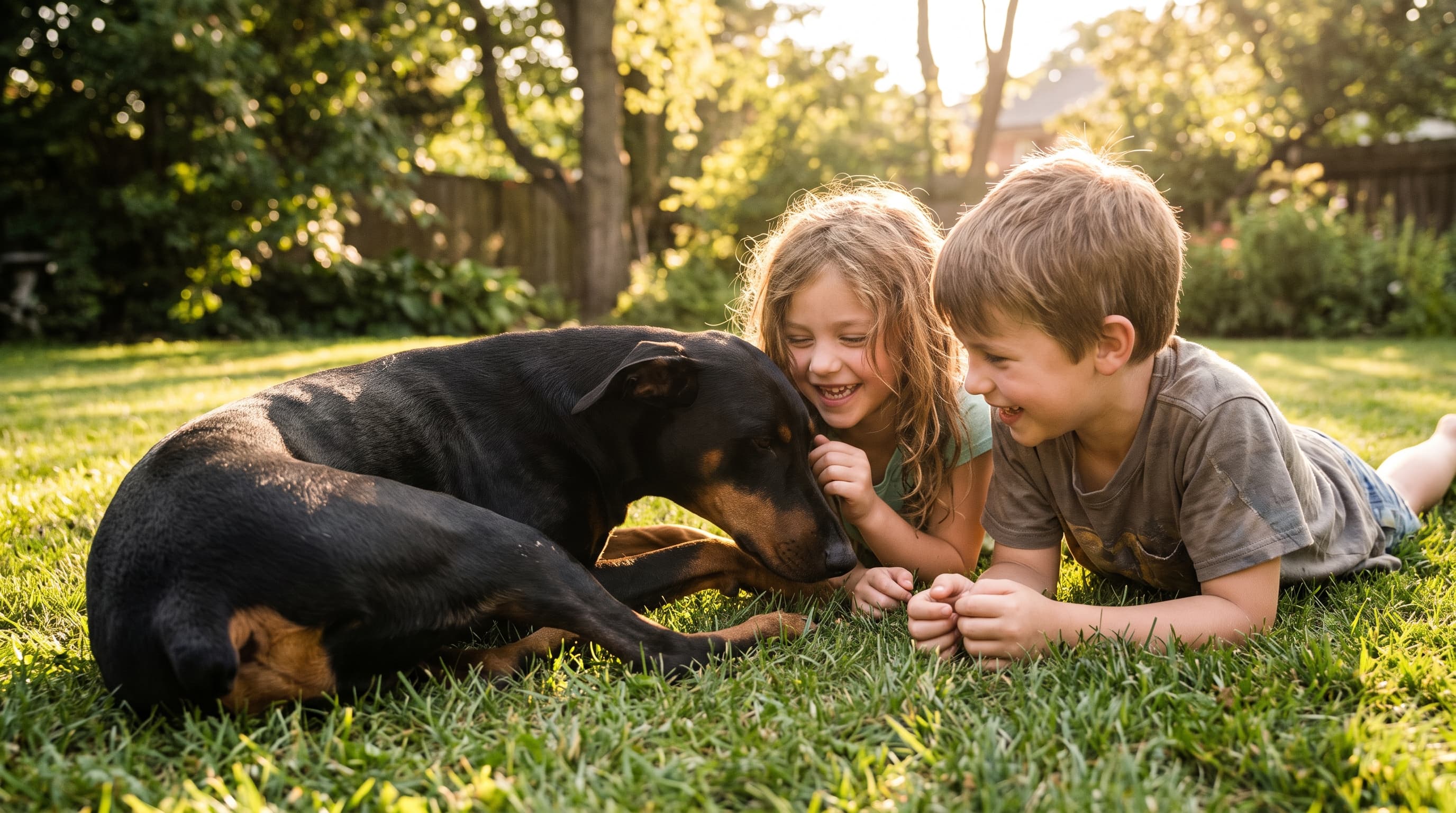

Are Dobermans Good With Kids? A Family's Honest Guide
Yes, Dobermans are good with kids. When properly socialized and trained, they are loyal, gentle, patient, and naturally protective family dogs that bond deeply with children of all ages. Their intelligence lets them adjust their behavior around little ones. The catch: their size, high energy, and need for early socialization mean supervision and training aren't optional — they're what make the difference.
Are Dobermans Good With Kids? The Short Answer
Despite an intimidating reputation, the Doberman Pinscher is widely regarded as an excellent family dog. According to Dogster, well-socialized Dobermans are "extremely loving and intelligent" and do beautifully with both younger and older children. The American Kennel Club describes the breed as intelligent, loyal, and one of the finest protection dogs — traits that, channeled correctly, make them devoted guardians of the kids they live with.
What holds people back is usually the breed's history as a guard dog and its powerful build. But temperament testing tells a different story. As Doberman Planet reports, about 79.5% of Dobermans pass their American Temperament Test Society evaluation — on par with the Golden Retriever, a breed synonymous with family friendliness. The reputation and the reality don't match.
Why Dobermans Make Great Family Dogs
Several core traits explain why so many families fall for this breed:
- Fierce loyalty. Dobermans are often called "velcro dogs" because they bond intensely with their people and want to be wherever the family is. That devotion extends protectively to children.
- High intelligence. Ranked among the smartest breeds, Dobermans learn quickly and read situations well. This lets them distinguish a real threat from ordinary roughhousing and adjust how they behave around a toddler versus an older child.
- Playful energy. Their athletic, energetic nature makes them natural playmates for active kids, and shared play helps both dog and children burn off steam.
- Patience and gentleness. Properly raised Dobermans are typically tolerant and forgiving, even with the unpredictable handling that comes with young children.
- Confident size. Doberman Planet notes that unlike smaller dogs that can become fearful around children, a Doberman is large enough to stay confident and steady around kids.
The Doberman Temperament Explained
Understanding what drives a Doberman helps you set it up to succeed with your family. This is a working breed developed in the late 1800s by German tax collector Louis Dobermann to be an alert, loyal protector. That heritage shows up as watchfulness, strong attachment to family, and a keen awareness of its surroundings.
Modern Dobermans are people-oriented and emotionally attuned — they pick up on their family's mood and often position themselves near the most vulnerable members, including babies and small children. Their protective instinct is real but discerning; a well-socialized Doberman doesn't react aggressively to normal activity. Dogster's pros-and-cons breakdown emphasizes that Dobermans are eager to please and easily trainable, which is exactly what makes their protectiveness manageable rather than a liability. If you want the full picture of the breed's history, drives, and care needs, read our complete Doberman Pinscher breed profile.
Socialization and Training Are Non-Negotiable
Here's the part every honest guide has to stress: a Doberman is a wonderful family dog because of socialization and training, not automatically. As Doberman Planet puts it, "most dog bites occur, not because of aggression, but because of fear." Early, positive exposure to children, other pets, sounds, and situations is what produces a calm, well-adjusted adult.
Start in puppyhood. Introduce your Doberman to kids of different ages in controlled, positive settings. Get them comfortable with the realities of family life — hands near the food bowl, gentle tugging, noise, and commotion — so none of it feels threatening later. Use positive-reinforcement training and consistent household rules from day one; this breed thrives with confident, kind leadership and a predictable routine. If you're raising one from a puppy, our guide to Doberman puppies covers the critical early months in detail. Skipping socialization is the single biggest mistake owners make with this breed.
Safety Tips for Dobermans and Children
Even the gentlest large dog needs sensible ground rules around kids. These apply to any powerful breed, but they matter with an energetic 60–100-pound dog:
- Always supervise interactions between dogs and young children — no exceptions, no matter how trustworthy the dog.
- Give the dog an escape route. Never let kids corner, chase, or crowd the dog. A dog that can walk away is a dog that won't feel forced to react.
- Teach kids to respect the dog. No riding, ear-pulling, tail-grabbing, or bothering the dog while it eats or sleeps. Our guide on teaching kids to respect dogs is a great place to start.
- Mind the size factor. A bouncy young Doberman can accidentally knock over a small child during play, so manage high-energy moments.
- Avoid wrestling and chase games that encourage mouthing or overexcitement, especially with puppies.
Exercise Needs Every Family Should Know
A tired Doberman is a well-behaved Doberman. This is a high-energy working breed that needs roughly one to two hours of exercise every day. Without enough physical and mental activity, Dobermans can become bored, anxious, and destructive — which is unfair to the dog and stressful for the family.
The good news is that this energy pairs perfectly with active kids and families who enjoy walks, hikes, fetch, and backyard play. A fenced yard is a big help, and structured activities like obedience, agility, or scent games satisfy their sharp minds. If your household is sedentary or frequently away for long hours, be honest with yourself: this breed's exercise and companionship needs are substantial, and unmet needs are the root of most behavior problems.
Potential Challenges to Consider
No breed is perfect, and Dobermans come with trade-offs families should weigh. They can be prone to same-sex dog aggression and may not mix easily with cats or small pets unless raised together from puppyhood. Their intense loyalty can tip into separation anxiety if they're left alone too much, so early crate training and gradual alone-time practice help. Health-wise, the breed is predisposed to dilated cardiomyopathy and other genetic conditions, which means choosing a breeder who health-tests their dogs is essential, along with budgeting for attentive veterinary care. And because Dobermans are strong and smart, they genuinely need an owner willing to commit to training — they're not a hands-off dog.
What Real Doberman Families Say
The gap between reputation and lived experience is striking once you talk to people who actually raise Dobermans alongside children. Writers at Doberman Planet, many of whom raise the breed with their own young kids, describe them as "gentle, patient, and kind around children" once properly socialized — while being candid that puppies need careful management and should never be left with children unsupervised. The consistent theme is that the effort you invest early pays off in a remarkably tolerant adult dog.
A second look from Dogster's family-dog analysis reinforces the same balance: it praises the breed's loyalty, trainability, and protectiveness while listing the real trade-offs — demanding exercise, the need for firm and consistent leadership, constant supervision around little ones, and a strong need for family companionship. Notably, both sources agree that a Doberman's size can be an advantage with children, because a confident large dog is far less likely to become fearful and snappy than a nervous small one. The message across every credible source is the same: this is a fantastic family dog for a family willing to do the work.
Frequently Asked Questions
Are Dobermans safe around babies and toddlers?
A well-socialized, trained Doberman can be very gentle and protective with babies and toddlers, and they often gravitate toward the most vulnerable family members. That said, always supervise interactions closely, because their size and energy can be a hazard around very small children even without any aggression.
Do Dobermans get aggressive with children?
Aggression toward children is uncommon in properly socialized Dobermans. Most incidents stem from fear, poor socialization, or a dog being cornered or provoked — not from the breed's nature. Early training and teaching kids to respect the dog dramatically reduce any risk.
Are Dobermans good for first-time dog owners with kids?
Dobermans can work for dedicated first-time owners, but they're a demanding breed that needs consistent training, socialization, and lots of exercise. Families new to dogs should be prepared to invest time in training classes and, ideally, work with a trainer to start off right.
How much exercise does a Doberman need in a family home?
Plan on one to two hours of daily exercise, combining walks, play, and mental stimulation. Active families with kids often meet this naturally, but the breed is a poor fit for sedentary households.
Do Dobermans protect children?
Yes. Dobermans have strong natural protective instincts and often watch over the children in their family. Their intelligence helps them tell genuine threats from harmless activity, so a socialized Doberman is watchful without being reactive.
At what age should I socialize my Doberman with kids?
Start as early as possible, ideally in the puppy stage. Positive, controlled introductions to children and everyday family situations during the first several months build the foundation for a calm, confident adult dog.
The Bottom Line
Are Dobermans good with kids? Absolutely — when you meet them halfway. Give a Doberman early socialization, consistent training, plenty of exercise, and sensible supervision, and you get a loyal, gentle, protective companion that adores its family and watches over the children like they're its own. The breed's reputation is scarier than its reality, but the commitment it asks of you is real. If you're weighing family-friendly guardians, compare notes with our guides on whether Rottweilers are good with kids and whether German Shepherds are good with kids — and subscribe to the Daily Wag newsletter for weekly breed guides, training tips, and real-family dog advice.