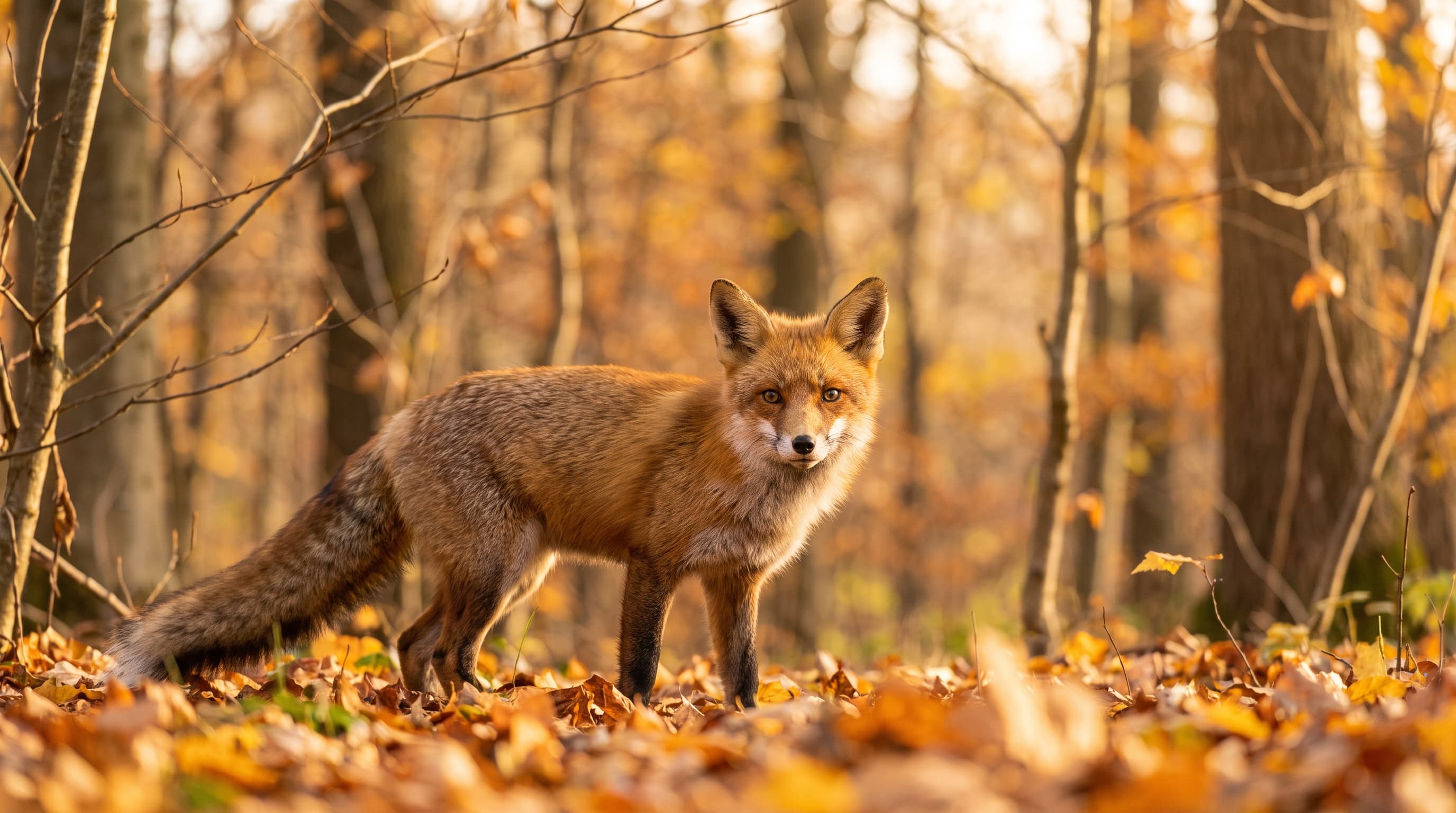

Is a Fox a Canine? The Surprising Truth About Foxes and the Dog Family
Yes, a fox is a canine. Foxes belong to Canidae, the same biological family as domestic dogs, wolves, coyotes, and jackals, so they are true canids. Despite cat-like eyes and habits, foxes are not felines. They simply evolved a specialized, cat-like hunting style within the dog family tree.
What Does "Canine" Actually Mean?
The word "canine" gets used loosely, so it helps to pin down its scientific meaning. In taxonomy, canines (or canids) are members of the family Canidae, a group of dog-like carnivorous mammals that share a common ancestor. According to Encyclopaedia Britannica, "canines, also called canids, include foxes, wolves, jackals, and other members of the dog family (Canidae)."
So when people ask whether a fox is a canine, they are really asking whether a fox belongs to the dog family. The answer is an unambiguous yes. Foxes sit on the same branch of the mammalian family tree as your Labrador, just several evolutionary twigs over. If you have ever wondered how far the dog family extends, foxes are a perfect example of just how varied Canidae really is.
Where Foxes Fit in the Canidae Family Tree
Canidae is a large, diverse family, and not every member is equally related. Scientists split the family into two broad living groups: the "true dogs" (tribe Canini), which includes wolves, coyotes, jackals, and domestic dogs, and the "true foxes" (tribe Vulpini), most of which belong to the genus Vulpes. The most familiar species, the red fox, is described by reference sources as the largest of the true foxes and the most widely distributed carnivore on Earth.
This matters because it explains a common point of confusion: foxes are canines, but they are not especially close cousins of domestic dogs. A wolf and a dog can interbreed; a fox and a dog cannot. Foxes branched away from the dog-and-wolf lineage millions of years ago, which is why they look and behave so differently while still being card-carrying members of the dog family.
Why People Think Foxes Are Cats
Foxes get mistaken for felines constantly, and the confusion is understandable. As wildlife references note, foxes are firmly part of the Canidae family, yet they have evolved several strikingly cat-like traits:
- Vertical, slit-shaped pupils. Most canids have round pupils; foxes have vertical ones, like cats, which helps them judge depth in low light while hunting at dawn and dusk.
- Partially retractable-feeling claws and sensitive whiskers. Foxes use whiskers on their faces and legs to navigate in the dark.
- Solitary, stalk-and-pounce hunting. Rather than running prey down in a pack like wolves, foxes often stalk small rodents and pounce, a technique that looks distinctly feline.
- Climbing ability. The gray fox can actually climb trees, which almost no other canid can do.
These are examples of convergent evolution: two unrelated animals developing similar features because they solve similar problems. The cat-like eyes and pounce do not make a fox a cat any more than a bat's wings make it a bird.
How Foxes Differ From Dogs and Wolves
Even within the dog family, foxes stand apart. Foxes are generally smaller than wolves and most dogs, with a red fox weighing roughly 8 to 15 pounds. They are typically solitary or live in small family units rather than large packs. Their diet is highly omnivorous, tilting toward small mammals, insects, and fruit. And their vocal range is famously eerie, from screams to gekkering chatter, quite unlike a dog's bark or a wolf's howl.
Foxes also differ behaviorally in ways that make them poor pets, despite their dog-family status. They are not domesticated, they scent-mark heavily, and they retain strong wild instincts. Understanding this helps put fox-versus-dog encounters in perspective. If you have ever worried about your pet crossing paths with one, our guide on whether a fox will attack a dog breaks down the real risks.
Other Canines You Might Not Expect
Once you know foxes are canids, the rest of the family becomes fascinating. Foxes share Canidae with a surprising cast of characters: the raccoon dog, the bush dog, the maned wolf (which is neither a true fox nor a true wolf), the African wild dog, and the dhole. Coyotes, jackals, and dingoes are all canids too, and some, like the coyote, can hybridize with domestic dogs to produce a coyote-dog cross.
What unites this eclectic group is a shared skeletal blueprint, dental structure, and evolutionary origin, not a shared appearance. That is the whole point of a biological family: it groups animals by ancestry, not by looks. It is also why terminology around dogs can get confusing in the first place, right down to basics like what a female dog is called.
So, Is a Fox a Canine? The Bottom Line
A fox is 100% a canine and a member of the dog family Canidae, not a feline. Its cat-like eyes, solitary hunting, and pouncing are quirks of convergent evolution, not signs of feline ancestry. Foxes are simply one of the most specialized and least dog-like members of the dog family, which is exactly what makes them so interesting.
How Foxes Evolved Within the Dog Family
The story of how foxes became such unusual canids is a story of deep time. The family Canidae traces back tens of millions of years to small, tree-climbing ancestors in North America. Over the eons, the family radiated into three subfamilies, only one of which, Caninae, survives today. Every living canid, from the tiny fennec fox to the towering gray wolf, descends from that single surviving branch.
Within Caninae, the fox lineage split off relatively early, before the wolf-and-dog group diversified. That head start on independence is why foxes retained and refined traits suited to a solitary, small-prey lifestyle, while the wolf lineage leaned into cooperative pack hunting of large game. Both strategies work; they simply pushed the two groups in different directions. When you watch a fox pounce nose-first into snow to catch a vole, you are watching millions of years of specialization inside the dog family, not a sign that a cat wandered into the wrong taxonomy.
Fox Behaviors That Reveal Their Canid Roots
For all their cat-like flourishes, foxes give away their dog-family membership constantly if you know what to look for:
- Scent-marking with urine. Like dogs and wolves, foxes mark territory and communicate through scent, one of the most quintessentially canid behaviors.
- Caching food. Foxes bury surplus food to dig up later, exactly the way domestic dogs bury bones and wolves cache kills.
- Play bows and body language. Foxes use canid-style body signals, including the front-down, rear-up play bow familiar to any dog owner.
- Denning and pup-rearing. Fox parents raise kits in dens, and in many species both parents help, a social investment seen across the dog family.
These shared behaviors are the behavioral fingerprints of Canidae. They persist across the family even in a species that has evolved to look and hunt a bit like a cat, which is the clearest everyday proof that a fox is, at heart, a canine.
Frequently Asked Questions
Is a fox a dog or a cat?
Neither, but it is much closer to a dog. A fox is a canid, a member of the dog family Canidae, along with wolves, coyotes, and domestic dogs. It is not a feline, despite having cat-like eyes and hunting behavior.
Can a fox breed with a dog?
No. Although foxes and dogs are both canids, they diverged too long ago and have different chromosome numbers, so they cannot interbreed. Reports of "fox-dog hybrids" are not genuine crosses.
Why do foxes have cat-like eyes?
Foxes have vertical, slit-shaped pupils that help them see in low light and judge distance while hunting at dawn and dusk. This is a case of convergent evolution, where an unrelated animal develops a similar trait to solve a similar problem, not evidence that foxes are related to cats.
Are foxes closely related to domestic dogs?
Not very. Foxes belong to the "true fox" branch of Canidae, while dogs, wolves, and coyotes belong to a separate branch. They share a distant common ancestor but split apart millions of years ago.
What family do foxes belong to?
Foxes belong to Canidae, the dog family, which includes all canines. Most foxes are further grouped in the genus Vulpes, known as the "true foxes."
Is a fox dangerous to my dog?
Foxes generally avoid dogs and rarely start fights, but conflicts can happen, especially with small dogs or if a fox feels cornered. Keeping your dog leashed at dawn and dusk and securing food sources reduces the risk.
Curious About the Wider World of Canines?
Foxes are just one branch of an endlessly fascinating dog family. If you love learning the surprising science behind the animals we share our lives (and neighborhoods) with, subscribe to the Daily Wag newsletter for weekly deep dives, breed spotlights, and expert-backed answers to the dog questions you did not know you had.
Sidewalk Dog is an independent editorial resource. While we research every article carefully, we are not a substitute for professional wildlife or veterinary advice.