
Corgi Tail: Do Corgis Have Tails? The Truth About Docking and Bobtails
Yes — corgis are born with tails. Cardigan Welsh Corgis keep their long, fox-like tails for life, while most Pembroke Welsh Corgis have theirs docked around three days old to meet the breed standard, or are born with a natural bobtail. So a tailless Pembroke isn't tailless by nature; a docked or bobbed tail is why. Tail docking is now banned across the UK and much of Europe.
Few dog questions spark more confusion than the humble corgi tail. Scroll social media and you'll see fluffy corgis with big plume tails and famous royal corgis with barely a stub — same general breed, wildly different back ends. Here's exactly what's going on, why it happens, and what it means if you're choosing a corgi.
Do Corgis Have Tails? The Short Answer
All corgis are born with tails. Whether an adult corgi has one comes down to two things: which of the two corgi breeds it is, and whether a human or genetics shortened the tail. As Dogster puts it, "both of these adorable breeds are supposed to have tails and are usually born with them." The visible difference in adulthood is almost always a matter of docking or a bobtail gene — not a natural tailless breed.
Cardigan vs. Pembroke: The Tail Is the Giveaway
There are two distinct corgi breeds, and the tail is the fastest way to tell them apart:
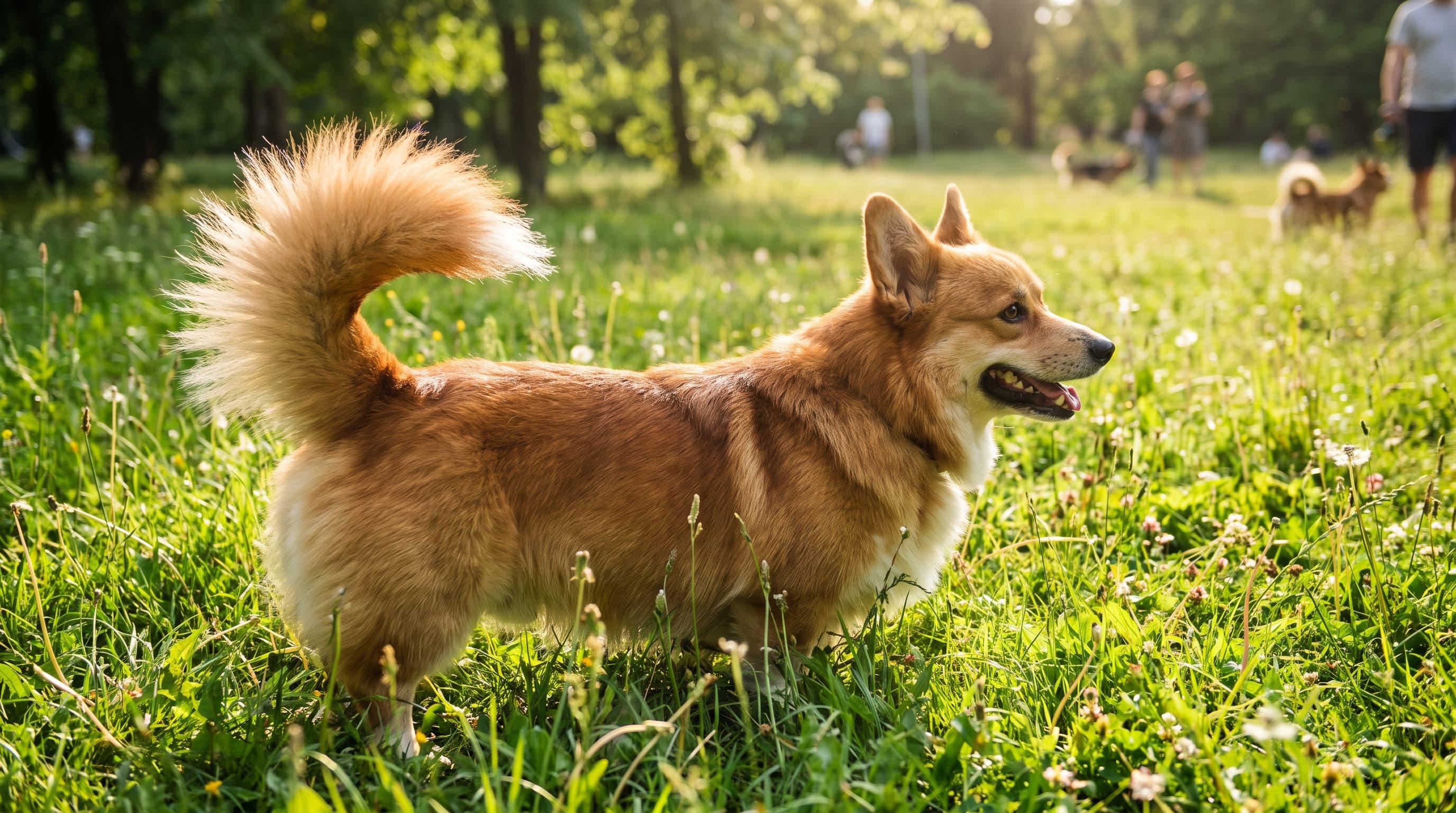
- Cardigan Welsh Corgi — keeps a long, low-set, fox-like brush tail. The tail is part of the breed standard, so Cardigans are almost always seen with a full, wagging tail.
- Pembroke Welsh Corgi — the more famous, royal-associated corgi. Traditionally shown with little to no tail, achieved through docking or a natural bobtail.
If you want to go deeper on how these two breeds differ beyond the tail, our full profiles of the Cardigan Welsh Corgi and the Pembroke Welsh Corgi break down temperament, size, and care side by side.
Why Are Pembroke Corgi Tails Docked?
Tail docking is the surgical removal of part of a puppy's tail, and in Pembrokes it's typically done at around three days old. According to Hepper, Pembrokes have historically had their tails docked "because of AKC standards" and their working roots: bred as cattle-herding dogs, the reasoning went that a long tail could get underfoot or be stepped on by livestock.
The modern AKC Pembroke Welsh Corgi standard still favors a docked or very short tail for the show ring. That's a big part of why the "tailless corgi" look became the popular image of the breed — it reflects show convention, not the dog's natural anatomy. By contrast, the AKC Cardigan Welsh Corgi standard calls for that full, low-set brush tail, which is exactly why the two breeds look so different from behind.
Natural Bobtail Corgis: Born That Way
Not every short-tailed Pembroke was docked. Some corgis carry a natural bobtail gene (a mutation on the T-box gene) that produces a short tail from birth. As demand grows for dogs that keep their natural anatomy, some breeders deliberately select for the bobtail so puppies can meet the short-tailed look without any surgery. A DNA test can distinguish a natural bobtail from a docked tail when the history is unknown.
Is Tail Docking Painful — and Is It Legal?
This is where the corgi tail conversation gets heated. Breeders who dock at three days old have long argued that newborn puppies don't feel pain, but veterinary experts push back hard on that claim. Dogster notes that the idea "newborn puppies don't feel pain" is disputed, and that early docking may affect how dogs "feel and perceive pain in later life."
Legally, the practice has largely ended in much of the world. Tail docking for cosmetic reasons is illegal in the United Kingdom and across most of Europe — and, as breed resources note, in Australia and a number of other countries too — where it's recognized as causing unnecessary pain. In the United States it remains legal and common for show Pembrokes, though a growing number of owners and breeders are choosing to leave tails intact. Major veterinary bodies generally oppose cosmetic docking done purely for appearance.
How to Tell If a Corgi Was Docked or Born a Bobtail
From a quick glance you often can't — a docked tail and a natural bobtail can look nearly identical in an adult dog. There are a few clues, though. A docked tail usually ends in a clean, uniform stub because it was cut to a set length, while a natural bobtail is more variable and can be a short kink, a partial tail, or almost nothing at all. Breeders who leave litters intact and select for the bobtail gene can often tell you which puppies inherited it. When history is unknown, the only definitive answer is a canine DNA test that checks for the bobtail (T-box) mutation. For most pet owners it ultimately doesn't matter — but if you specifically want a dog that was never docked, ask the breeder directly and consider testing.
Does a Fluffy Corgi Have a Different Tail?
"Fluffy" corgis carry a recessive long-coat gene that gives them a longer, softer coat than the standard corgi — including more feathering on the tail, ears, and legs. The fluff changes the coat, not the tail structure: a fluffy Pembroke can still be docked or a bobtail, and a fluffy Cardigan still carries the full brush, just with extra plume. If your corgi has a full tail and a fluffy coat, expect a gloriously feathered flag that needs a bit more brushing to stay tangle-free.
What a Corgi Uses Its Tail For
A tail isn't just decoration. Dogs use their tails for balance during quick turns and for communication — the position and motion of a tail is a core part of canine body language. Removing it can subtly reduce a dog's ability to signal to other dogs and to us. If you've ever wondered how much information is packed into a wag, our deep dive on the science of the tail wag unpacks exactly what different wags mean, and why dogs chase their tails covers the quirkier side of tail behavior.
Should You Choose a Corgi With a Tail?
That's increasingly a real choice. If you want a corgi with a full tail, a Cardigan Welsh Corgi is the natural pick, or you can seek a Pembroke breeder who leaves tails undocked or selects for natural bobtails. A tail has no effect on a corgi's health, temperament, or ability to be a wonderful companion — it's ultimately about your values and the look you prefer. Whichever you choose, you're getting the same big-eared, big-personality herding dog.
If you do bring home a full-tailed corgi, there's a small bonus: you get the complete corgi experience, tail language and all. You'll quickly learn to read the fast, low wag of a happy herder and the stiff, high hold of an alert one — signals a docked dog can only partly convey. It's a reminder that the tail was never just decoration in the first place. And if you're set on the classic short-tailed royal-corgi look but want it without surgery, a naturally bobtailed Pembroke gives you both.
Frequently Asked Questions
Do all corgis have tails?
All corgis are born with tails. Cardigan Welsh Corgis keep them into adulthood. Many Pembroke Welsh Corgis appear tailless because their tails were docked as newborns or because they carry a natural bobtail gene.
At what age are corgi tails docked?
When docking is done, it typically happens at around three days old, before the puppies leave the breeder. This timing is why many corgi owners never see their dog with a full tail.
Is docking a corgi's tail illegal?
It depends on where you live. Cosmetic tail docking is illegal in the United Kingdom and much of Europe. In the United States it is still legal and common for show Pembrokes, though more breeders now leave tails intact.
What is a natural bobtail corgi?
A natural bobtail corgi is born with a naturally short tail due to a genetic mutation, rather than having its tail surgically removed. Some breeders intentionally select for this gene to produce short-tailed puppies without docking.
Which corgi has a long tail, Cardigan or Pembroke?
The Cardigan Welsh Corgi has the long, fox-like tail as part of its breed standard. The Pembroke Welsh Corgi is the breed traditionally shown with little to no tail.
The Bottom Line
The tailless corgi is a bit of a myth: corgis are born with tails, and a short or absent tail is almost always the result of docking or a bobtail gene rather than nature. With docking now banned across much of the world, seeing a corgi in all its full-tailed, fox-brush glory is becoming more common again — and that's a wag worth celebrating.
Love corgi facts like these? Explore more breed profiles on Sidewalk Dog and subscribe to the Daily Wag newsletter for fresh dog stories, science, and smiles in your inbox.