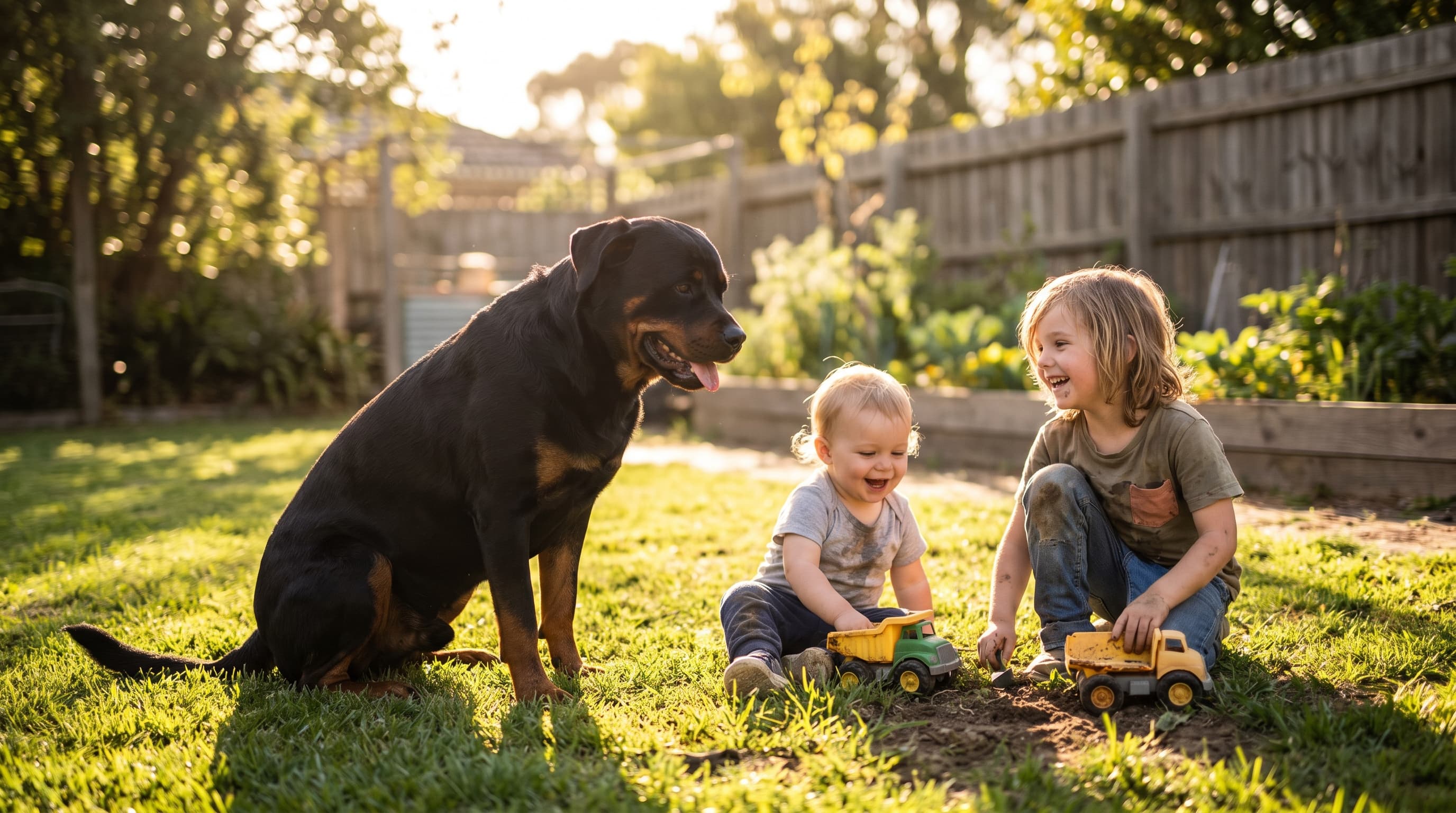

Yes, Rottweilers can be very good with kids. Well-bred, well-socialized Rottweilers are affectionate, loyal, and naturally protective of the children in their family. Their reputation for aggression is largely a myth, but their size, strength, and herding instinct mean early training, socialization, and constant supervision around young children are essential.
Are Rottweilers Naturally Good With Children?
Rottweilers were originally bred as working cattle dogs and guardians, and that heritage shows in how deeply they bond with their families. The American Kennel Club describes the Rottweiler as a confident guardian that is "a gentle playmate and protector within the family circle" while remaining aloof toward strangers. Within their own home, many Rottweilers are patient, tolerant, and devoted to the kids they grow up with.
That said, "good with kids" is never automatic for any breed. A Rottweiler's temperament is shaped by genetics, early socialization, training, and how the household manages interactions. A properly raised Rottweiler can be a wonderful family dog; a poorly socialized or under-exercised one can be a handful. The breed's size alone, often 80 to 135 pounds, means responsible ownership matters more than with a small dog.
Debunking the Rottweiler Aggression Myth
Rottweilers frequently land on "dangerous breed" lists, but breed reputation and individual behavior are very different things. Experts widely agree that Rottweilers are not inherently more aggressive than other breeds when they are properly bred, socialized, and trained. As breed behavior resources point out, most incidents trace back to a lack of training, poor socialization, neglect, or irresponsible ownership rather than the breed itself.
Temperament testing supports this. The Rottweiler consistently passes the American Temperament Test Society evaluation at rates comparable to or better than many popular family breeds. What Rottweilers do have is a strong protective drive and real physical power, which is why guidance and structure are so important. The goal is to raise a confident, well-mannered dog that knows how to behave around children and guests.
It also helps to remember that headlines about breed incidents rarely capture the full context, such as whether the dog was trained, socialized, supervised, spayed or neutered, or kept chained and isolated. When those factors are accounted for, breed becomes a far weaker predictor of behavior than the dog's individual history and environment. A Rottweiler raised as a loved, well-managed family member behaves very differently from one raised to be a neglected backyard guard dog.
What Makes Rottweilers Good Family Dogs
When raised right, Rottweilers bring a lot to a family with children:
- Loyalty and devotion. Rottweilers form deep bonds and are famously committed to "their" people, including the kids.
- Protectiveness. Their natural guarding instinct means many Rottweilers are watchful and gentle with family children.
- Sturdiness. Their solid build means they are less fragile around rambunctious play than a tiny breed, as family-dog breed guides note.
- Trainability. Rottweilers are intelligent and eager to please, which makes them responsive to consistent training.
- Playfulness. Behind the serious face, many Rottweilers are goofy, snuggly, and playful with their families.
If you are weighing several protective breeds, our comparison of whether German Shepherds are good with kids is a helpful companion read.
The Risks and Challenges to Consider
Being realistic about the challenges is part of responsible ownership:
- Size and strength. Even a friendly Rottweiler can accidentally knock over a toddler during play. Their power demands leash manners and impulse control.
- Herding and nudging. Some Rottweilers "bump" or lean, a behavior that can overwhelm small children.
- Exercise needs. A bored, under-exercised Rottweiler is more likely to develop problem behaviors. Plan on at least an hour of activity a day, as breed exercise guides recommend.
- Slow maturity. Rottweilers stay mentally puppyish for a couple of years, so their strength can outpace their manners.
- Insurance and housing. Some landlords and home insurers restrict the breed, which is worth checking before you adopt.
How to Raise a Kid-Friendly Rottweiler
Setting a Rottweiler up for success with children comes down to a few fundamentals:
- Start socialization early. Expose your puppy to children of all ages, plus new people, places, and sounds, in positive ways. As breed training experts stress, dogs not exposed to kids early are less likely to be comfortable around them later.
- Use positive-reinforcement training. Reward calm, gentle behavior. Enroll in puppy classes and keep training consistent.
- Teach kids how to interact. Children should learn to be gentle, avoid bothering the dog while it eats or sleeps, and never climb on or tease the dog.
- Provide plenty of exercise. A well-exercised Rottweiler is calmer and easier to manage. Combine walks, play, and mental enrichment.
- Establish clear routines and boundaries. Structure helps this intelligent breed feel secure and know what is expected.
For more on matching a breed to family life, see our guide to the best dogs for families with kids.
Choosing the Right Rottweiler for Your Family
If you have decided a Rottweiler fits your household, where you get your dog matters enormously. A reputable breeder who prioritizes stable, sound temperament, and who health-tests their breeding dogs, gives you the best odds of a confident, family-friendly companion. Ask to meet the puppy's parents, observe how they behave, and be wary of anyone breeding for size, "guard drive," or unusual colors over temperament. Rescue can also be a great path: many breed-specific rescues carefully evaluate their dogs and can match you with an adult Rottweiler whose personality around children is already known.
Think, too, about the practical realities of life with a big double-coated dog. Rottweilers shed more than many people expect, so a household with kids and allergies should read up on grooming and shedding first; our guide on whether Rottweilers shed covers what to plan for. Budget for quality food, training classes, routine veterinary care, and the time these dogs need every day. A Rottweiler that gets enough exercise, structure, and companionship is far more likely to be the gentle family guardian the breed is known for.
Supervision Rules Every Family Should Follow
No matter how gentle the dog, adults should always supervise interactions between dogs and young children. This protects both the child and the dog. Practical rules include: never leave babies or toddlers alone with any dog; teach children to respect the dog's space, especially around food, toys, and resting spots; watch for canine stress signals like lip-licking, yawning, or moving away; and give the dog a quiet retreat where kids are not allowed. These habits dramatically reduce the risk of accidents and help build a trusting relationship. General dog-bite-prevention guidance from veterinary and pediatric organizations echoes this supervision-first approach for every breed, not just Rottweilers.
Rottweilers and Visiting Children
Being good with the family's own kids does not automatically mean a Rottweiler will be relaxed around every visiting child. Because the breed is naturally protective and reserved with strangers, a house full of your child's friends, a birthday party, or a noisy playdate can be overstimulating. Introduce visiting children calmly, keep the dog leashed or crated during chaotic moments if needed, and never assume unfamiliar kids will follow the same gentle rules your own children have learned. Many well-behaved Rottweilers do best when they can observe new visitors from a calm distance before being asked to interact. Managing these situations thoughtfully keeps everyone safe and prevents your dog from feeling cornered or overwhelmed, which is when even a good-natured dog is most likely to react.
Frequently Asked Questions
Are Rottweilers safe around babies and toddlers?
A well-socialized Rottweiler can be gentle with babies and toddlers, but their size means interactions must always be closely supervised. Never leave any dog alone with an infant or toddler.
Do Rottweilers protect children?
Many Rottweilers are naturally protective of their family, including children. That instinct is a benefit when paired with good training, which teaches the dog when protection is and is not needed.
At what age should you socialize a Rottweiler with kids?
Start as early as possible, ideally in puppyhood. Positive, supervised exposure to children during the first few months helps a Rottweiler grow up comfortable and confident around kids.
Are male or female Rottweilers better with kids?
Both can be excellent with children. Temperament, socialization, and training matter far more than sex. Choose a puppy from a reputable breeder who prioritizes stable temperament.
Can first-time owners handle a Rottweiler around kids?
It is possible but demanding. A committed first-time owner who invests in training, socialization, and exercise can succeed, but the breed's size and strength make experience and guidance valuable.
The Bottom Line
Rottweilers can absolutely be good with kids. With responsible breeding, early socialization, consistent training, plenty of exercise, and constant supervision, this loyal and protective breed often becomes a devoted family guardian. The reputation for aggression says more about irresponsible ownership than the dogs themselves. Go in with clear eyes about their size and needs, and a Rottweiler can be a loving addition to a family with children.
Considering a Rottweiler for your family? Read our full Rottweiler breed guide and learn about the Roman Rottweiler, and subscribe to the Daily Wag newsletter for breed spotlights, training tips, and family dog advice.