
Homemade Dog Toothpaste: Safe Recipes Vets Approve Of
Yes, you can make homemade dog toothpaste at home, and it is genuinely safe when you keep it simple: a base of softened coconut oil with a small amount of baking soda, plus an optional dog-friendly flavor. Never add xylitol, fluoride, or human toothpaste, all of which are toxic to dogs. Below are five tested recipes.
Is Homemade Dog Toothpaste Safe? What to Never Include
Homemade dog toothpaste is safe and effective for everyday plaque control when you stick to non-toxic ingredients and pair it with regular brushing. Dogs cannot spit, so they swallow everything you put in their mouth. That single fact drives every safety rule on this page: the paste must be food-safe in the amounts a dog actually ingests.
The most important rule is the simplest. Never use human toothpaste on a dog. Many human pastes contain xylitol or fluoride, and both are dangerous to dogs. Xylitol is an artificial sweetener that triggers a rapid, dangerous drop in a dog's blood sugar and can cause liver damage; the U.S. Food and Drug Administration warns that effects can begin within 10 to 60 minutes of ingestion. The ASPCA lists xylitol among the substances most likely to poison pets. If you ever suspect your dog has swallowed something with xylitol, treat it as an emergency and call your veterinarian or the ASPCA Animal Poison Control Center right away.
Keep these ingredients out of any homemade dog toothpaste:
- Xylitol (and "birch sugar"): Toxic to dogs, even in small amounts. This is the single most important ingredient to avoid.
- Fluoride: Safe for people who spit it out, but not formulated for a dog that swallows it daily.
- Hydrogen peroxide: Sometimes suggested as a whitener, but it irritates the mouth and stomach and should not be brushed into the gums.
- Essential oils: Tea tree, peppermint, eucalyptus, wintergreen, and similar oils can be toxic to dogs and are far too concentrated for oral use.
- Salt: Adds nothing useful and contributes unnecessary sodium.
- Cocoa or chocolate: Contains theobromine, which dogs cannot safely metabolize.
- Raw garlic and onion: Members of the allium family that can damage a dog's red blood cells.
- Grapes or raisins: Toxic to dogs and never an appropriate flavoring.
If your dog already has known dental disease, loose teeth, oral pain, bleeding gums, or any chronic health condition, talk to your veterinarian before starting any home dental routine. Brushing inflamed or infected gums can hurt and may need professional treatment first.
Base Ingredients That Are Safe for Dogs
Good homemade dog toothpaste is built from two or three core ingredients. You do not need a long list to get a paste that helps clean teeth and freshen breath.
Coconut oil (the base)
Coconut oil gives the paste its smooth, spreadable texture and is well tolerated by most dogs. Use it softened, not fully melted, so the paste holds together. Many dogs like the taste, which makes brushing easier. Introduce it gradually, because a sudden large amount of any oil can upset a dog's stomach.
Baking soda (use sparingly)
Baking soda (sodium bicarbonate) is mildly abrasive and helps lift plaque, and it is the ingredient people ask about most. The key word is small amount. A little goes a long way, and too much makes a salty, off-putting paste that some dogs will refuse. Keep it to the proportions in the recipes below rather than scooping freely, and skip it entirely if your dog dislikes the taste. Baking soda is optional; coconut oil alone, used with a soft brush, still removes a meaningful amount of plaque.
Dog-safe flavor add-ins
A small amount of flavor turns toothpaste into something your dog looks forward to. Safe options include xylitol-free peanut butter, a crushed low-sodium bouillon cube or a spoon of low-sodium bone broth, a few fresh mint leaves, a pinch of Ceylon cinnamon, dried parsley, kelp flakes, and a tiny amount of turmeric. Always read peanut butter labels carefully, because some brands now contain xylitol.
5 Homemade Dog Toothpaste Recipes With Measurements
Each recipe makes a small batch. Mix the ingredients into a smooth paste, store it in a clean sealed jar, and keep it in the refrigerator. Use within about two weeks, and toss it sooner if the texture or smell changes. Because coconut oil firms up when cold, let the paste sit at room temperature for a few minutes before brushing.
1. Coconut Classic
The simplest recipe and a great starting point.
- 3 tablespoons baking soda
- 3 tablespoons coconut oil (softened, not fully melted)
Stir until smooth. If your dog finds it too salty, cut the baking soda in half and add a little more coconut oil.
2. Meaty Mint
Savory and fresh, ideal for dogs who prefer meat flavors over sweet ones.
- 3 tablespoons baking soda
- 3 tablespoons coconut oil (softened)
- 1 low-sodium chicken or beef bouillon cube (crushed) OR 1 tablespoon low-sodium bone broth
- 3 to 5 fresh mint leaves, finely chopped
Mint adds a touch of breath-freshening, while the broth makes the paste irresistible to most dogs.
3. Sparkling Cinnamon
A lightly spiced option for fresher breath.
- 3 tablespoons baking soda
- 3 tablespoons coconut oil (softened)
- 1/2 teaspoon ground cinnamon (Ceylon cinnamon preferred)
Choose Ceylon cinnamon over the more common cassia type, and keep the amount small.
4. Golden Glimmer
A nutrient-forward blend with mild plaque support.
- 3 tablespoons baking soda
- 3 tablespoons coconut oil (softened)
- 1/4 teaspoon kelp flakes
- 1/4 teaspoon ground turmeric
- 1/8 teaspoon dried parsley
Turmeric can stain fabric and grout, so wipe up spills promptly. The parsley adds a fresh note.
5. Peanut Brusher
A crowd-pleaser for peanut butter fans.
- 3 tablespoons baking soda
- 3 tablespoons coconut oil (softened)
- 1 teaspoon xylitol-free peanut butter
Double-check the peanut butter label for xylitol before you mix. This is the most common place dog owners accidentally introduce a toxic ingredient.
A reality check on all homemade pastes: they are abrasive-and-flavor aids, not medicine. They do not contain the enzymes found in many commercial dog toothpastes, and they cannot replace the mechanical action of brushing or a professional cleaning. The brushing matters more than the paste.
How to Brush a Dog's Teeth
Technique and consistency beat any recipe. Daily brushing is the goal, because plaque begins to mineralize into hard tartar within a couple of days, after which only a veterinary cleaning can remove it. The American Kennel Club recommends aiming for at least five days a week when daily is not possible.
- Pick a calm moment. Choose a quiet spot with no other pets or distractions, ideally when your dog is relaxed and a little hungry so treats feel rewarding.
- Let your dog taste the paste. Put a dab on your finger and let your dog lick it off. If they enjoy it, you are halfway there.
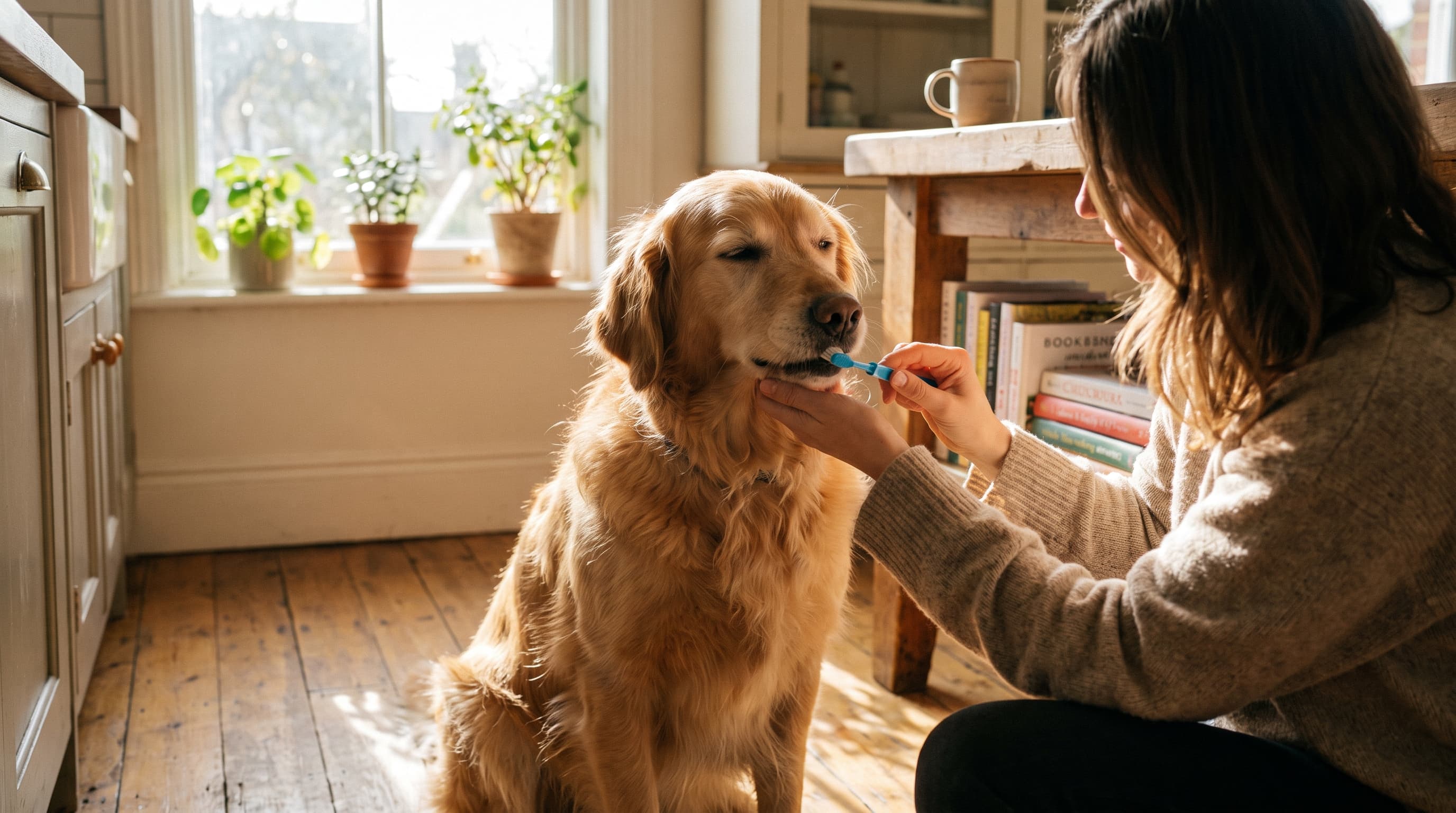
- Touch the gums first. Over a few sessions, gently lift the lip and rub a clean finger or a finger brush along the outer surfaces of the teeth and gumline.
- Introduce the brush. Use a soft dog toothbrush or a finger brush. Hold it at about a 45-degree angle to the gumline and use small circular motions.
- Focus on the outer surfaces. Plaque builds up most on the cheek-facing sides of the teeth, especially the large back teeth. The inner surfaces matter less and are harder to reach.
- Keep sessions short and positive. Thirty to sixty seconds is plenty. End with praise and a reward every time.
Go slowly over days or weeks rather than forcing a full brushing on day one. If your dog pulls away, drools heavily, or shows pain, stop and check with your vet. For a deeper walkthrough, see our guide on the proper way to brush your dog's teeth and keep them clean. Puppies are a special case: while their teeth are changing you should be especially gentle, and our article on dogs' baby teeth explains what to expect during teething.
Homemade vs. Enzymatic Vet Toothpaste
Homemade paste and commercial dog toothpaste do slightly different jobs, and many owners use both. Understanding the difference helps you set realistic expectations.
Homemade toothpaste is inexpensive, customizable, and free of additives you may want to avoid. Its main job is to provide gentle abrasion and a taste your dog likes so that brushing actually happens. That is valuable, because the brushing itself is what removes plaque.
Enzymatic veterinary toothpaste adds something a homemade paste cannot: enzymes that help break down plaque chemically and reduce oral bacteria, even on surfaces the brush misses. These products are formulated to be swallowed safely and come in dog-friendly flavors. If your dog has a tendency toward heavy tartar or you want maximum protection, an enzymatic paste is worth considering.
When choosing a commercial product, look for the seal from the Veterinary Oral Health Council (VOHC). The VOHC reviews dental products against set standards for reducing plaque and tartar and publishes a list of accepted products for dogs, which takes the guesswork out of shopping. Whichever paste you choose, the most important thing is consistent brushing. A perfect product used twice a year does far less than a basic one used most days.
Other Ways to Support Your Dog's Dental Health
Brushing is the foundation, but a few extra habits help round out a home dental routine.
- Dental chews and toys. VOHC-accepted dental chews and appropriately sized chew toys provide mechanical scrubbing between brushings. Choose products sized for your dog and supervise chewing.
- Water additives and dental wipes. These can supplement brushing for dogs who tolerate handling poorly, though they are less effective than a brush.
- Diet and fresh water. A complete, balanced diet supports overall health, and some prescription dental diets are formulated to reduce tartar. Ask your vet whether one fits your dog.
- Watch for warning signs. Bad breath, red or bleeding gums, reluctance to eat, pawing at the mouth, or visible tartar all warrant a vet visit. Periodontal disease is extremely common; the American Veterinary Medical Association notes that most dogs show evidence of it by age three, and that it can affect the heart, liver, and kidneys when left untreated.
- Professional cleanings. Even with daily brushing, dogs eventually need professional dental cleanings under anesthesia to remove tartar below the gumline. Your vet will advise on timing.
Behavior around the mouth can also be a clue to dental pain. If your dog suddenly becomes touchy about having its face handled or starts baring its teeth when you approach its mouth, an oral problem could be the cause, and a checkup is in order.
Frequently Asked Questions
Can I use human toothpaste on my dog in a pinch?
No. Human toothpaste is never safe for dogs. Many varieties contain xylitol or fluoride, which are toxic when swallowed, and dogs swallow everything you brush in. Use a homemade dog-safe paste or a commercial dog toothpaste instead, and never substitute human toothpaste even once.
Is baking soda safe for dogs' teeth?
In the very small amounts used in these recipes, baking soda is generally considered safe and helps lift plaque. The concern is quantity. Large amounts taste unpleasant and add unnecessary sodium, so measure carefully and reduce or omit it if your dog dislikes the flavor. Coconut oil alone is a fine base if you prefer to skip baking soda entirely.
How often should I brush my dog's teeth?
Daily is ideal, because plaque hardens into tartar within a couple of days. If daily is not realistic, aim for at least five days a week. Short, frequent, positive sessions work far better than occasional long ones, and consistency matters more than the exact paste you use.
Does homemade toothpaste work as well as enzymatic vet toothpaste?
It works for what it is meant to do: it provides gentle abrasion and a taste your dog likes so brushing happens. It does not contain the plaque-fighting enzymes found in many commercial dog pastes. For dogs prone to heavy tartar, an enzymatic paste, ideally one accepted by the Veterinary Oral Health Council, offers extra protection. Either way, the brushing itself does most of the work.
How long does homemade dog toothpaste keep?
Store it in a clean, sealed jar in the refrigerator and use it within about two weeks. Discard it sooner if the smell, color, or texture changes. Because it is coconut-oil based, let it warm at room temperature for a few minutes before brushing so it spreads easily.
My dog has bad breath even though I brush. What should I do?
Persistent bad breath despite regular brushing can signal dental disease or another health issue, so it is worth a veterinary exam. Do not try to diagnose or treat it at home. Your vet can check for tartar below the gumline, gum infection, broken teeth, or non-dental causes, and recommend a cleaning or treatment if needed.
A Note From Us, and a Word About Your Vet
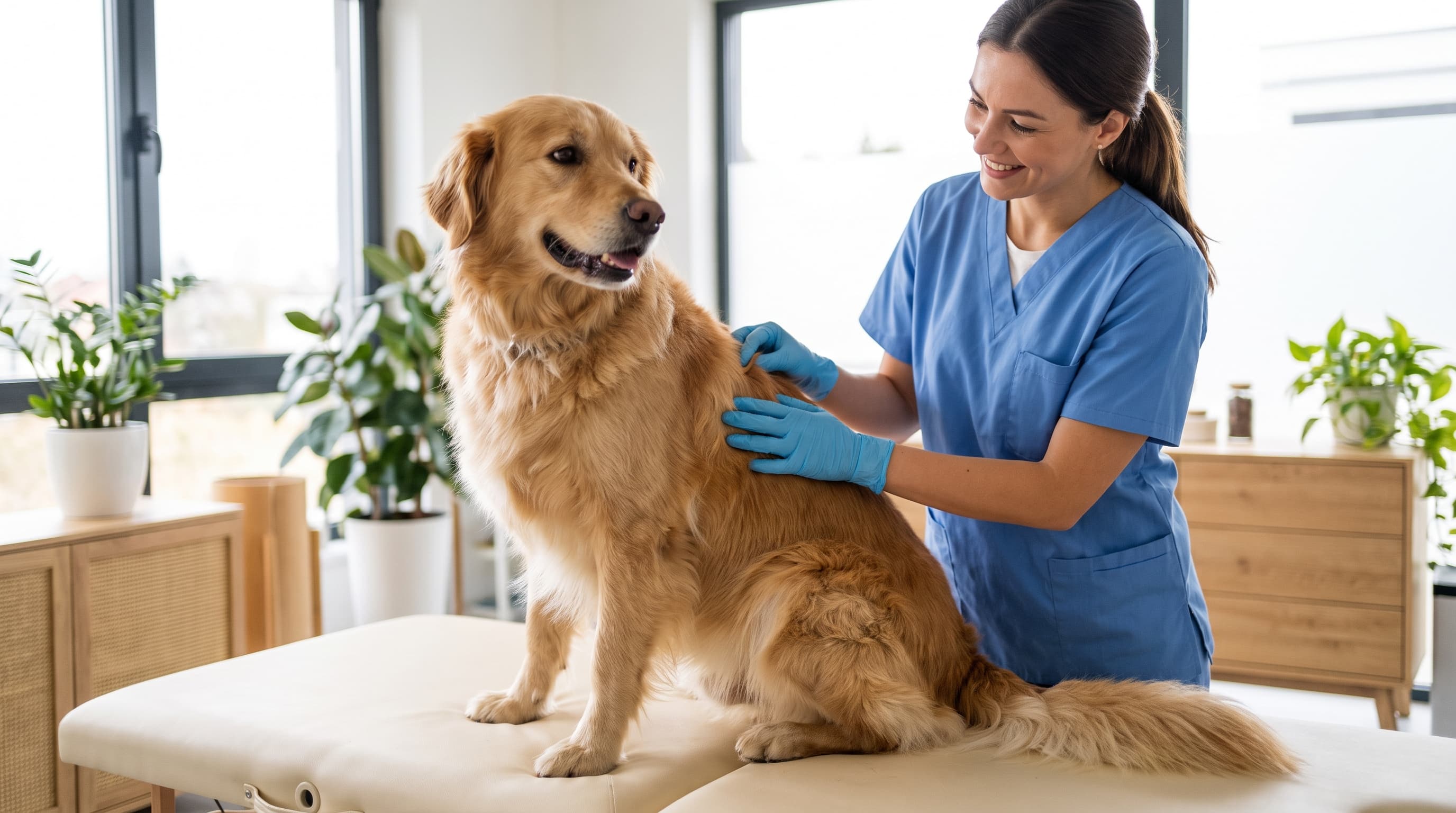
This article is for general educational purposes only and is not a substitute for professional veterinary advice. Every dog is different, and a homemade toothpaste is a supplement to good dental care, not a treatment for dental disease. Before you change your dog's dental routine, especially if your dog has existing dental problems, oral pain, or any chronic health condition, talk with your veterinarian. We do not provide dosing or diagnosis. The safest, most effective plan pairs consistent home brushing with a professional dental checkup, so schedule a dental exam with your vet to make sure your dog's smile stays healthy from the inside out.