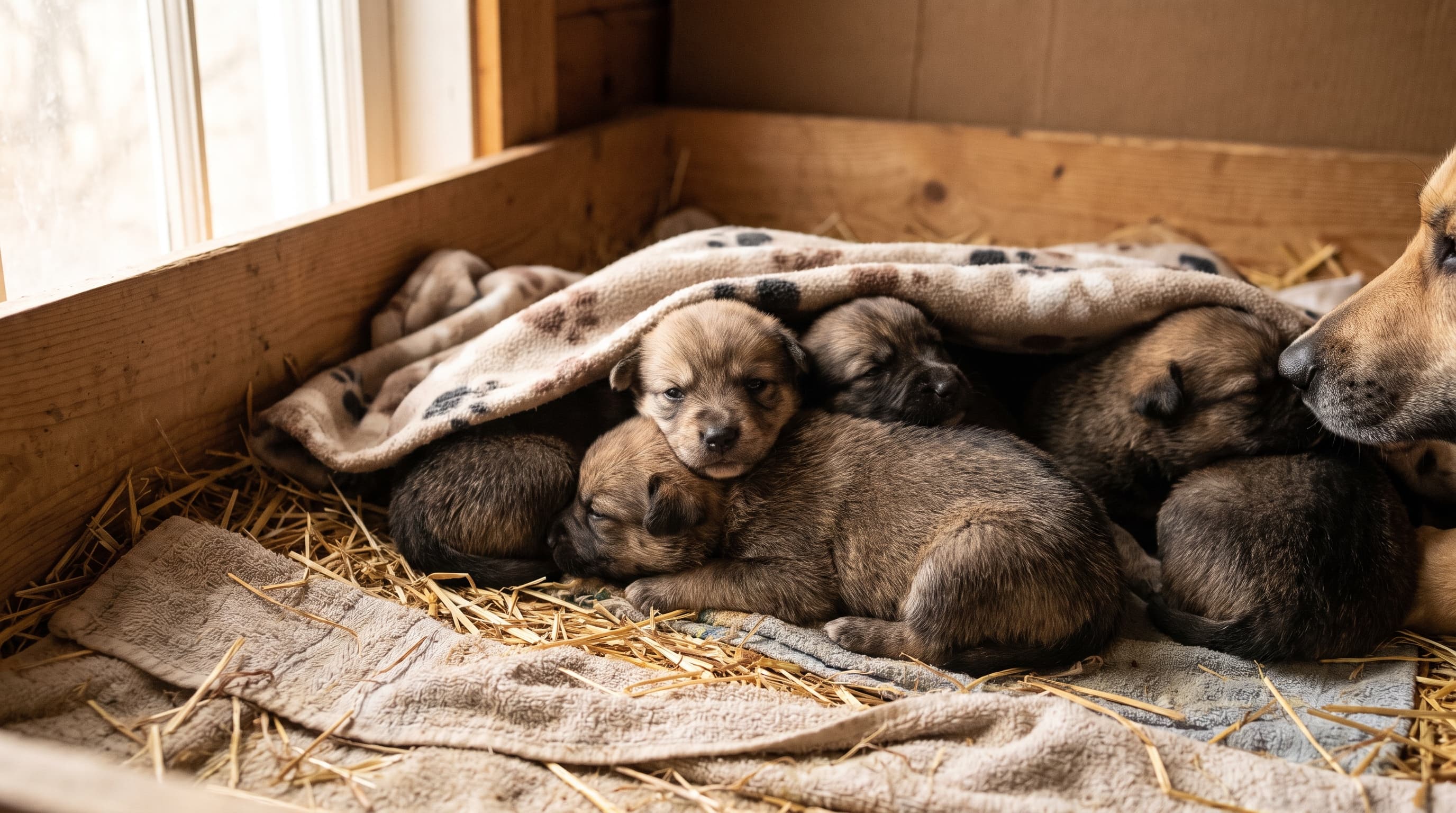
Most puppies open their eyes between 10 and 14 days after birth, though some take up to two or three weeks. They open gradually, often one eye at a time, and their early vision is blurry and light-sensitive. If a puppy's eyes stay sealed past three weeks, or show swelling or discharge, call your vet.
Watching a newborn litter is one of the sweetest experiences a dog lover can have, and the moment those tiny eyelids first crack open is a genuine milestone. But it also raises real questions: Is my puppy developing on schedule? Why are the eyes such a cloudy blue? What if one eye stays shut? This guide walks through the full eye-opening timeline, explains the biology behind those sealed lids, and flags the warning signs that mean it's time to phone a veterinarian.
The Week-by-Week Puppy Eye-Opening Timeline
Puppies are born into a world they cannot yet see. Their eyes stay fused shut for the first stretch of life and open on a fairly predictable schedule, though every litter has its outliers. Here is roughly how the first month unfolds.
- Birth to day 10 (the neonatal stage): Eyes and ear canals are sealed. According to the American Kennel Club's puppy growth timeline, for the first three weeks or so a puppy's senses aren't fully working yet, and pups spend most of their time sleeping and nursing. They navigate entirely by smell, warmth, and touch.
- Days 10 to 14: The eyelids begin to separate. This is the average window when most puppies first open their eyes, frequently one eye slightly ahead of the other. What emerges is not sharp sight but a hazy, blue-gray gaze.
- Days 14 to 21: Any late bloomers usually catch up here. The AKC notes that a puppy's eyes open when they are roughly 14 to 21 days old, and even once open their sight is still limited. Ears also start to open around this same period.
- Weeks 3 to 4: Vision sharpens quickly. Puppies begin tracking movement, recognizing littermates, and toddling toward the things they see. By around four weeks the fog of newborn vision has largely lifted.
Breed and size play a modest role. Smaller breeds sometimes open a day or two earlier, while some larger breeds or puppies from longer gestations may lag slightly. A difference of a few days is normal; a difference of a full week past the three-week mark is worth a vet's attention. For the bigger developmental picture, see our companion guide to the 5 stages of newborn puppies.
Why Puppies Are Born With Their Eyes Shut
It can seem strange that a mammal arrives unable to see, but for dogs it is a feature, not a flaw. Puppies (like kittens) are what biologists call altricial — born in an underdeveloped state and heavily dependent on their mother. Dogs have relatively short pregnancies, averaging about 63 days, so puppies are effectively born before some organs finish forming.
The eye is one of those still-developing organs. At birth a puppy's retina, optic nerve, and the neural pathways that carry visual signals to the brain are immature. The fused eyelid acts as a protective seal, shielding the delicate cornea and the developing structures behind it from light, dust, bacteria, and the accidental scratches of a wriggling pile of siblings. Only once the eye is robust enough to handle light and process images do the lids naturally separate. In other words, the timing is built around the eye being ready, not the calendar.
What to Expect When Your Puppy's Eyes First Open
The first opening is rarely a dramatic, wide-eyed reveal. Expect a thin, glistening slit that widens over a day or two. A few things are completely normal and worth knowing in advance so they don't alarm you:
- One eye before the other. Asymmetry in the first few days is typical and usually evens out quickly.
- A cloudy, blue-gray color. Nearly all puppies appear to have hazy bluish eyes at first. This is not their permanent color — the iris pigment fills in over the following weeks, and many pups shift to brown, amber, or hazel. (Some breeds do keep blue eyes for life.)
- Blurry, unfocused sight. Newborns can initially detect little more than light, movement, and vague shapes.
- Light sensitivity. Freshly opened eyes are sensitive to bright light, so keeping the whelping area softly lit helps.
If you have just welcomed a slightly older pup into your home, our overview of what new owners can expect covers the developmental stages that follow this one.
Newborn Puppy Vision: How Well Can They Actually See?
Open eyes do not mean adult eyesight. For the first week or two after opening, vision is genuinely poor — think of it as looking through frosted glass. The visual system is still wiring itself up, and depth perception, focus, and detail all arrive gradually.
Dogs also see the world differently than we do their whole lives. As the AKC explains in its guide to puppy senses, dogs perceive color but not the full human spectrum — they distinguish blues and yellows best while reds and greens look muted. They also excel in dim light thanks to a high density of rod cells, and they detect motion far better than fine, stationary detail, a legacy of their hunting ancestry.
Vision improves rapidly through weeks three and four, and by around eight weeks a puppy's eyesight is approaching adult sharpness. This is also why early, gentle exposure to sights and sounds matters so much once the eyes are working — it feeds directly into socialization and, later, into how easily a pup takes to early training.
Never Pry a Puppy's Eyes Open — Here's Why
This is the single most important safety rule in this article: never try to force, peel, or pry a puppy's eyes open, no matter how eager you are to see them or how far along you think they should be. The eyelids are sealed for a biological reason, and forcing them apart before the eye is ready can permanently damage the cornea, tear the delicate lid tissue, introduce infection, and in the worst cases cause blindness.
If a puppy seems overdue, the correct response is patience plus a veterinary check — not intervention. There is one narrow exception, and it is not a DIY project: if the lids are bulging or oozing beneath a still-closed eye, that can signal a trapped infection that a veterinarian may need to gently open and treat. That is a clinic procedure, not a kitchen-table one. When in doubt, keep your hands off and let a professional assess it. A calm, hands-off approach here also fits the broader mindset in our puppy first-aid tips.
Warning Signs and Eye Infections: When to Call the Vet
Most litters sail through eye-opening with no trouble at all. But because this is a health topic, it pays to know the red flags. Contact your veterinarian promptly if you notice any of the following:
- Eyes not open by about three weeks (21 days). A pup whose eyes remain fully sealed past this point should be examined.
- Swelling or bulging under a closed or partly closed lid, which can indicate fluid or pus trapped behind it.
- Discharge — cloudy, yellow, or greenish — crusting, or eyelids that seem stuck or glued shut with matter.
- Redness, squinting, or excessive blinking once the eyes are open.
These can point to neonatal conjunctivitis (sometimes called ophthalmia neonatorum), an infection that can develop behind the sealed lids in the 10-to-14-day window. As PetMD describes, it can cause inflammation, discharge, and lids crusted shut, and if left untreated it may lead to corneal ulceration or blindness — so it is genuinely time-sensitive. The same discharge-and-swelling signs describe ordinary conjunctivitis in dogs per VCA Animal Hospitals, and a separate allergic form, follicular conjunctivitis, more often shows up in older puppies. In every case, diagnosis and any medication belong to your veterinarian — never put human eye drops or leftover ointments in a puppy's eyes.
How to Support a Litter as Their Eyes Open
You cannot speed up eye-opening, but you can create the conditions that let it happen safely. Alongside the mother's own care, a clean and calm environment does most of the work — the AKC's guide to raising newborn puppies is a helpful companion for the whole neonatal period.
- Keep the whelping box clean and hygienic. Many newborn eye infections trace back to bacteria in a dirty environment, so fresh, laundered bedding matters.
- Dim the lights. Newly opened eyes are light-sensitive; soft, indirect lighting is kinder while vision develops.
- Handle gently and briefly. Short, calm handling supports socialization without stressing pups or mom.
- Watch, don't touch, the eyes. Observe daily for discharge or swelling, but resist wiping or opening them yourself unless a vet directs you.
- Keep mom healthy and well fed. A thriving dam is the single best thing for a thriving litter.
For everyday routines once pups are a little older, our quick tips on caring for a new puppy pick up where the whelping box leaves off.
Frequently Asked Questions
How long does it take for a puppy to fully open both eyes?
The eyelids usually begin separating around day 10 to 14 and both eyes are typically fully open within a few days of each other. It is normal for one eye to lead the other. If both aren't open by about three weeks, check with your vet.
Why are my puppy's eyes blue and cloudy?
Almost all puppies have a hazy blue-gray appearance when their eyes first open. This is the immature iris before its permanent pigment develops. Over the next several weeks the color usually shifts to brown, amber, or hazel — though some breeds keep blue eyes for life.
Can I help my puppy open its eyes?
No. You should never pry, peel, or force a puppy's eyes open. The lids are sealed to protect the developing eye, and forcing them can cause lasting damage or blindness. If a pup seems overdue or the lids look swollen or crusted, let a veterinarian handle it.
What if only one of my puppy's eyes is open?
A day or two of asymmetry is common and usually resolves on its own. If one eye stays sealed for several days after the other opens, or the closed lid looks swollen or is oozing, contact your veterinarian, as this can signal a trapped infection.
When should I worry about my puppy's eyes?
Call your vet if the eyes aren't open by roughly three weeks, or at any point if you see swelling, bulging, discharge, crusting, redness, or lids stuck shut. These can indicate infections such as neonatal conjunctivitis that need prompt veterinary treatment.
Can newborn puppies see once their eyes open?
Only barely at first. Early vision is blurry and limited mostly to light and movement. Sight sharpens quickly over weeks three and four, and by around eight weeks a puppy's eyesight approaches that of an adult dog.
A note from our team: This article is for general educational purposes and is not a substitute for professional veterinary advice. Newborn puppies are fragile, and eye problems can escalate quickly. If your puppy's eyes are not open by about three weeks, or you notice any discharge, swelling, crusting, or lids sealed shut, contact your veterinarian right away for an exam — do not attempt to diagnose or treat eye conditions at home.
Love learning the little milestones of raising a happy, healthy dog? Subscribe to the Daily Wag newsletter for practical, vet-informed tips delivered straight to your inbox.