Homemade Flea Spray for Dogs: Vet-Aware Recipes and What to Avoid
A safe homemade flea spray for dogs is a mild, water-based deterrent — most often diluted apple cider vinegar or a cooled lemon or rosemary infusion — not a true flea killer. These sprays can help repel fleas between vet-approved treatments, but they will not clear an infestation, and many popular DIY recipes contain essential oils that are toxic to dogs. Always check with your veterinarian first.
If your dog already has fleas, no spray from your pantry will solve the problem on its own. Fleas reproduce fast, most of the population lives in your carpets and yard rather than on your pet, and only proven treatments break that cycle. This guide covers which homemade sprays are reasonably safe, which ingredients are dangerous, how to apply them correctly, and — most importantly — when to stop experimenting and call your vet.
Do Homemade Flea Sprays Actually Work?
Honestly? Only a little. Home remedies like vinegar and citrus act as deterrents — fleas dislike the smell and taste — but they do not reliably kill adult fleas, and they do nothing to the eggs, larvae, and pupae developing off your dog. Because the vast majority of a flea population lives in the environment as eggs, larvae, and pupae rather than as adults on your pet, spraying your dog alone can never win the war.
Think of a homemade spray as a low-cost supplement for prevention or a stopgap while you get real treatment in place — never as a replacement for it. If you want a full comparison of your options, our guide to flea and tick treatments — natural, OTC, or Rx lays them side by side.
Warning: Essential Oils That Are Toxic to Dogs
This is the single most important section in this article. Countless DIY flea spray recipes online call for essential oils, and several of them are genuinely dangerous to dogs. According to the ASPCA, oils that can be toxic to dogs include tea tree (melaleuca), pennyroyal, pine, wintergreen, citrus/d-limonene, eucalyptus, and cinnamon oil, among others. Dogs are especially sensitive because they absorb these compounds through the skin and cannot metabolize them the way humans do.
Signs of essential oil poisoning can include drooling, vomiting, tremors, wobbliness, lethargy, and difficulty breathing. If you suspect exposure, contact your veterinarian or the ASPCA Animal Poison Control Center immediately. When in doubt, skip essential oils entirely — the risk is not worth a marginally better-smelling spray. For a deeper look, read our complete guide on whether essential oils are okay for your dog.
Reasonably Safe Homemade Flea Spray Recipes
These options use kitchen ingredients rather than essential oils. They are deterrents, not cures, and you should still clear them with your vet — especially if your dog has broken skin, allergies, or a health condition. Never spray near the eyes, nose, mouth, or any open wound, and do a small patch test first.
1. Diluted Apple Cider Vinegar Spray
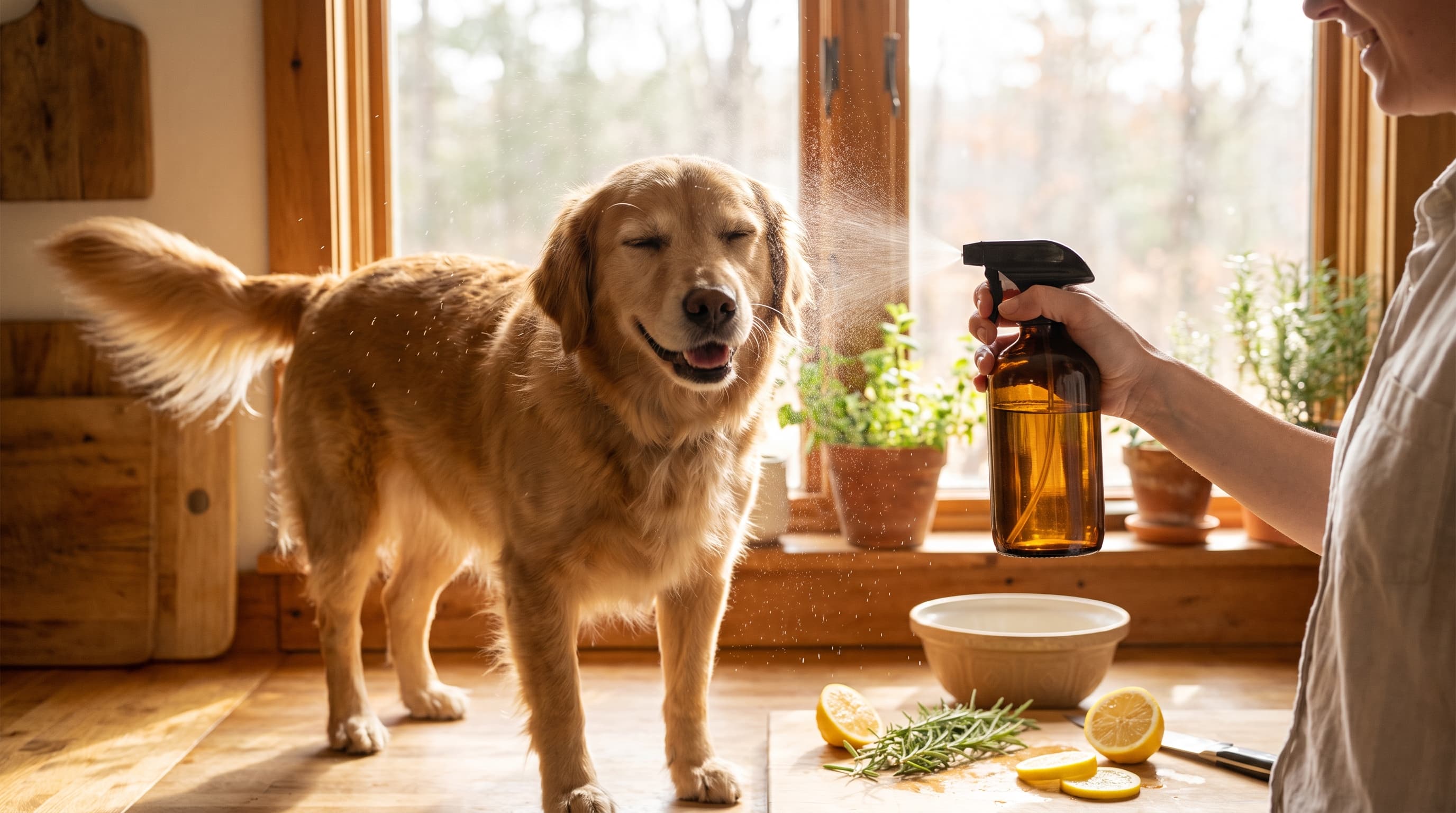
Mix equal parts apple cider vinegar and water (1:1) in a clean spray bottle. Lightly mist the coat, avoiding the face, and brush through. The acidic smell is thought to make your dog less appealing to fleas. It will not kill fleas already present, and it should never be used on irritated or broken skin.
2. Cooled Lemon Water Rinse
Slice one lemon, add it to a pint of water, bring to a boil, then remove from heat and let it steep overnight. Strain, cool completely, and transfer to a spray bottle. Use the infusion only — never citrus essential oil, which is far more concentrated and can be toxic. Mist lightly and avoid the eyes.
3. Rosemary Leaf Infusion
Steep fresh rosemary leaves in boiling water, strain, and cool. As with lemon, this uses the gentle plant infusion, not rosemary essential oil. It leaves a light herbal scent some owners like as a mild deterrent.
4. The Dawn Dish Soap Bath (The One That Actually Kills Fleas)
A bath with a small amount of gentle dish soap will drown and kill adult fleas already on your dog on contact — it is the one home method that genuinely kills fleas. The catch: it offers zero lasting protection, so your dog can be re-infested from the environment within hours. Use it as immediate relief, not a plan. Our article on whether you can wash your dog with Dawn explains how to do it safely and how often is too often.
How to Apply Homemade Flea Spray Safely
Whatever recipe you choose, apply it thoughtfully. Always patch-test on a small area and wait a few hours to check for redness or irritation. Spray onto the coat from a few inches away — or spray a cloth and wipe it on — keeping well clear of the eyes, ears, nose, mouth, and genitals. Work it in with a flea comb, which also physically removes adult fleas and eggs. Store batches in the fridge and make them fresh often, since homemade infusions have no preservatives and spoil quickly. Stop immediately if your dog scratches more, develops a rash, or seems bothered.
When Homemade Sprays Aren't Enough
If you are seeing live fleas, "flea dirt" (black specks that turn red on a wet paper towel), or a dog that won't stop scratching, you are past the point of deterrents. Modern vet-prescribed and veterinary-recommended flea preventives — including oral isoxazoline medications and topical products — are dramatically more effective and, when used as directed, have strong safety records. Your veterinarian can recommend the right product for your dog's age, weight, and health. Pendant-style and collar options exist too; see our breakdown of what makes a flea and tick pendant effective.
Because fleas and ticks often peak together, it is worth staying ahead of the season with year-round prevention. Our report on the 2026 tick season and how to protect your dog covers year-round prevention strategy.
Treating Your Home and Yard (Where the Fleas Really Live)
Since most of a flea population is off your dog, treating your dog without treating the environment is a losing battle. Wash all pet bedding in hot water and dry on high heat. Vacuum floors, carpets, and upholstery daily during an active infestation and discard the bag or empty the canister outside immediately, because vacuuming also helps trigger dormant pupae to emerge. In the yard, keep grass short and focus on shady, humid spots where fleas thrive. For heavy infestations, ask your vet or a licensed pest-control professional about safe environmental products — and always keep pets away from treated areas until surfaces are dry.
Signs Your Dog Has Fleas
Catching fleas early makes everything easier. Watch for excessive scratching, biting, or licking (especially at the tail base and hindquarters); flea dirt in the coat; visible small dark insects darting through the fur; hair loss or hot spots; and, in some dogs, an allergic reaction called flea allergy dermatitis that causes intense itching from just a few bites. Fleas can also transmit tapeworms, so a dog with fleas may need deworming too. Our guide on handling dog fleas walks through a full response plan.
Frequently Asked Questions
What is the best homemade flea spray for dogs?
The safest homemade options are a 1:1 apple cider vinegar and water spray or a cooled lemon or rosemary infusion. These are mild deterrents, not flea killers, and should be used alongside — not instead of — vet-recommended prevention.
Does apple cider vinegar kill fleas on dogs?
No. Apple cider vinegar may make your dog less attractive to fleas because of its smell and taste, but it does not kill fleas or their eggs. It is a deterrent only.
What actually kills fleas on a dog at home?
A bath with a small amount of gentle dish soap will kill adult fleas on contact by drowning them, but it provides no lasting protection. To truly clear and prevent fleas you need a veterinary-recommended preventive plus environmental cleaning.
Which essential oils are dangerous in DIY flea sprays?
Tea tree (melaleuca), pennyroyal, pine, wintergreen, citrus/d-limonene, eucalyptus, and cinnamon oils can all be toxic to dogs. Because of the risk, it is safest to avoid essential oils in homemade flea products entirely and ask your vet before using any.
How often can I use homemade flea spray on my dog?
Light, occasional use every few days is typical for deterrent sprays, but there is no established safe frequency, so check with your veterinarian. Stop right away if you notice any skin irritation, increased scratching, or discomfort.
Can homemade flea spray replace prescription flea prevention?
No. Homemade sprays cannot control or prevent an infestation. They may complement a proper prevention plan, but veterinary-recommended products are what actually keep fleas off your dog.
The Bottom Line
Homemade flea sprays have a place — as gentle, low-cost deterrents made from vinegar or plant infusions — but they are not a treatment, and the essential-oil recipes floating around online can do real harm. If your dog has fleas, combine immediate relief (a dish-soap bath and flea combing) with environmental cleaning and, above all, a veterinary-recommended prevention plan.
A note on your dog's health: This article is for general information only and is not a substitute for professional veterinary advice. Fleas can cause allergic reactions, anemia, and tapeworm infection, and some ingredients that are safe for people are toxic to dogs. Before using any homemade product or flea treatment, please consult your veterinarian, and seek prompt veterinary care if your dog shows signs of illness, skin reaction, or a heavy infestation.