
Can Dogs Have Nectarines? A Vet-Informed Safety Guide
Yes, dogs can safely eat the flesh of a ripe nectarine in moderation. The sweet fruit is non-toxic and offers vitamins A and C, fiber, and antioxidants. The real danger is the pit, which is a choking and blockage hazard and holds trace cyanide. Always skip canned and sugary nectarines.
Are Nectarines Safe for Dogs?
Nectarines are simply a smooth-skinned variety of peach, and like peaches they are not toxic to dogs. The soft, ripe flesh is perfectly fine as an occasional treat when it is washed, pitted, and cut into bite-sized pieces. Veterinary nutrition guides such as PetMD confirm that fresh nectarine flesh is safe in small amounts for most healthy dogs.
The important word is moderation. Nectarines are naturally high in sugar, so they should be treated as an occasional snack, not a daily staple. They also should never replace a complete, balanced dog food. Like any new food, a nectarine should be introduced slowly so you can watch for digestive upset. If your dog has diabetes, is overweight, or has a sensitive stomach, it is best to skip sugary fruit altogether and ask your veterinarian for a better-suited treat.
If you enjoy sharing fruit with your pup, nectarines sit alongside other dog-friendly options. Many of the same rules apply to sweet tropical fruits, so it is worth reading our guides on whether dogs can eat mango and whether dogs can have papaya before you build a fruit-snack routine.
Health Benefits: What Nectarines Offer Dogs
In small quantities, ripe nectarine flesh delivers a few genuinely useful nutrients:
- Vitamin A supports vision, immune function, and healthy skin and coat.
- Vitamin C is an antioxidant that helps neutralize free radicals, although dogs produce their own vitamin C naturally.
- Dietary fiber can support healthy digestion and regularity when given in tiny amounts.
- Potassium and magnesium contribute to nerve and muscle function.
- Water content makes a cool nectarine bite a hydrating summer refresher.
Here is the honest caveat: because a dog should only eat a very small portion of nectarine, these nutritional "benefits" are minor. Your dog gets everything it needs from a complete diet, and the fruit is better understood as a tasty, low-value treat than a health food. The American Kennel Club stresses that fruit should stay within the "10% rule," meaning treats of any kind should make up no more than about 10% of your dog's daily calories.
The Nectarine Pit: Choking and Cyanide Risk
The single biggest danger with nectarines has nothing to do with the sweet flesh. It is the hard pit (also called the stone). The pit poses two very different problems.
Choking and intestinal blockage
A nectarine pit is large, hard, and rough. If a dog swallows one, it can lodge in the throat and cause choking, or move into the stomach and intestines and create a life-threatening blockage. Smaller dogs are especially at risk because the pit is big relative to their digestive tract. A pit can also splinter when chewed, and the sharp edges may scratch the mouth, esophagus, or gut. This mechanical hazard is the most common real-world emergency, and it is the reason the pit must always be removed before serving.
Trace cyanide in the pit
Nectarine pits, like the pits of peaches, cherries, and plums, contain amygdalin, a compound that can release small amounts of cyanide. According to the Pet Poison Helpline, the seed inside the pit has to be crushed and thoroughly chewed to release free cyanide, and because dogs tend to gulp rather than grind their food, actual cyanide poisoning from a single swallowed pit is uncommon. PetMD similarly notes that a dog would need to chew and swallow many pits before serious cyanide toxicity became likely. Signs of cyanide poisoning can include drooling, vomiting, bright red gums, dilated pupils, difficulty breathing, and collapse.
The takeaway: for most dogs the choking and blockage risk is more immediate than the cyanide risk, but both dangers point to the same rule. Never let your dog have the pit, and never let a dog chew on a nectarine stone as a "toy."
How Much Nectarine Can a Dog Eat, and How to Serve It Safely
Nectarines are a treat, so keep portions small and infrequent. As a general guide, a couple of small bite-sized pieces once in a while is plenty for most dogs, and larger dogs can tolerate a bit more than toy breeds. Because sugar and fiber can upset a dog's stomach, err on the side of less. This guide does not replace individualized advice; your veterinarian can tell you the right amount for your specific dog.
Follow these steps to serve nectarines safely:
- Wash the fruit thoroughly to remove pesticide residue and dirt from the skin.
- Cut it open and remove the pit completely. Double-check that no fragments remain.
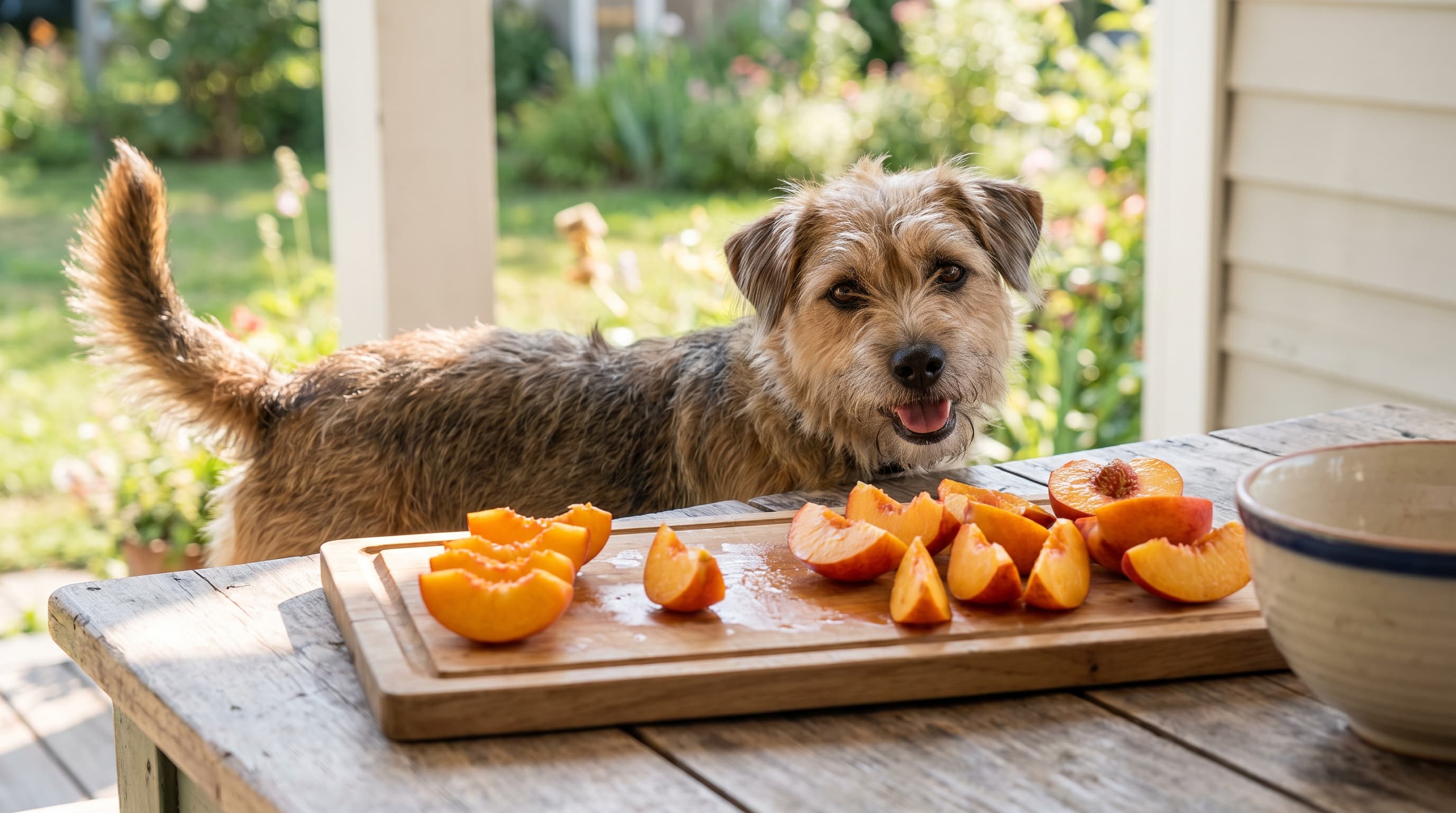
- Slice the flesh into small, bite-sized pieces sized to your dog to reduce choking risk.
- Consider peeling the skin for dogs with sensitive stomachs, as the skin is harder to digest.
- Offer one small piece first and wait a day to watch for any digestive upset before offering more.
- Serve plain. No sugar, syrup, spices, or toppings, and never nectarine-flavored desserts.
For a fun summer variation, freeze a few small pieces of pitted, ripe nectarine for a cooling treat on a hot day. If you would rather stick to treats designed for dogs, our roundup of the best dog treats for sensitive stomachs and our vet-approved homemade dog treat recipes are gentler, lower-sugar options.
When Nectarines Are Bad for Dogs: Canned, Rotten, and Moldy Fruit
Fresh, ripe nectarine flesh is fine, but several forms of the fruit are genuinely risky:
- Canned or jarred nectarines: These are usually packed in heavy syrup or juice loaded with added sugar, and some contain artificial sweeteners. Avoid them entirely. The extra sugar can trigger stomach upset and, over time, contributes to obesity and dental problems.
- Sugar-free or "diet" products: Some sugar-free foods contain xylitol, a sweetener that is extremely toxic to dogs even in small amounts. The ASPCA lists xylitol among the most dangerous human-food ingredients for pets because it can cause a rapid drop in blood sugar and liver damage.
- Rotten or moldy nectarines: Overripe or moldy fruit can contain mold toxins (mycotoxins) that may cause vomiting, tremors, or worse. Never let your dog raid the fruit bowl or compost pile.
- The pit, stem, and leaves: Only the flesh is treat-worthy. Keep the whole fruit out of reach so a curious dog can't swallow a pit on its own.
It is also worth remembering that "fruit is safe" is not a blanket rule. Some popular fruits are genuinely dangerous, which is why you should read up before sharing. Grapes, for example, can cause kidney failure in dogs, as we explain in our guide on why dogs should never eat grapes.
What to Do If Your Dog Ate a Nectarine Pit
If your dog swallows a nectarine pit, do not panic, but do act. This is a situation to take seriously rather than "wait and see" indefinitely, especially for small dogs. General steps to consider:
- Call your veterinarian right away and describe your dog's size and how many pits were eaten. They can advise whether to monitor at home or come in.
- Contact a poison hotline if a vet is not immediately available. The Pet Poison Helpline is reachable at (855) 764-7661 and the ASPCA Animal Poison Control Center at (888) 426-4435. (Note: these services may charge a consultation fee.)
- Watch for warning signs of a blockage or toxicity: vomiting, gagging, drooling, loss of appetite, straining or inability to pass stool, a hard or painful belly, lethargy, or difficulty breathing.
- Do not try to induce vomiting on your own unless a veterinary professional instructs you to. Bringing a sharp pit back up can cause more harm.
Most dogs that swallow a single pit pass it without incident, but blockages can develop over hours or days, so keep a close eye on your dog and follow professional guidance. When in doubt, call. It is always better to ask a vet than to guess with a YMYL health decision.
Frequently Asked Questions
Can dogs eat nectarine skin?
Yes, washed nectarine skin is not toxic and can be eaten in small amounts. However, the skin is tougher to digest, so peeling it is a good idea for puppies, small dogs, or dogs with sensitive stomachs.
Are nectarines poisonous to dogs?
The flesh is not poisonous. The pit is the concern: it is a choking and blockage hazard and contains trace cyanide compounds. As long as the pit is fully removed and the fruit is served fresh and plain, nectarine flesh is safe in moderation.
My dog ate a whole nectarine with the pit. What now?
Call your veterinarian or a poison hotline right away, especially for a small dog, and watch for vomiting, appetite loss, straining, or belly pain. Do not induce vomiting unless a professional tells you to.
Can puppies eat nectarines?
A tiny piece of ripe, pitted nectarine is unlikely to harm a puppy, but puppies have delicate digestive systems and are more prone to choking. It is safest to check with your vet first and stick to treats formulated for puppies.
How often can dogs have nectarines?
Treat nectarines as an occasional snack, not a daily food. Keep all treats within about 10% of your dog's daily calories, and offer just a few small pieces at a time. Dogs with diabetes or weight issues should avoid sugary fruit entirely.
What other sweet treats are safer than nectarines?
Lower-sugar dog-friendly options and purpose-made treats are gentler choices. Fruits like apples (cored and seeded) are popular; see our tips on safe apple snacking for dogs. A little honey can also be an occasional treat for some dogs.
The Bottom Line
Nectarines can be a refreshing, occasional treat for dogs as long as you remove the pit, serve small pieces of fresh flesh, and skip anything canned, sugary, or spoiled. The flesh is safe; the pit is the hazard. When in doubt about your individual dog, or if a pit is ever swallowed, call your veterinarian or a pet poison hotline rather than guessing.
Want more simple, vet-informed answers to "can my dog eat this?" delivered to your inbox? Subscribe to the Daily Wag newsletter for practical tips, treat ideas, and safety guides that keep your pup happy and healthy.