
Can Dogs Eat Radishes? A Vet-Informed Guide to This Crunchy Veggie
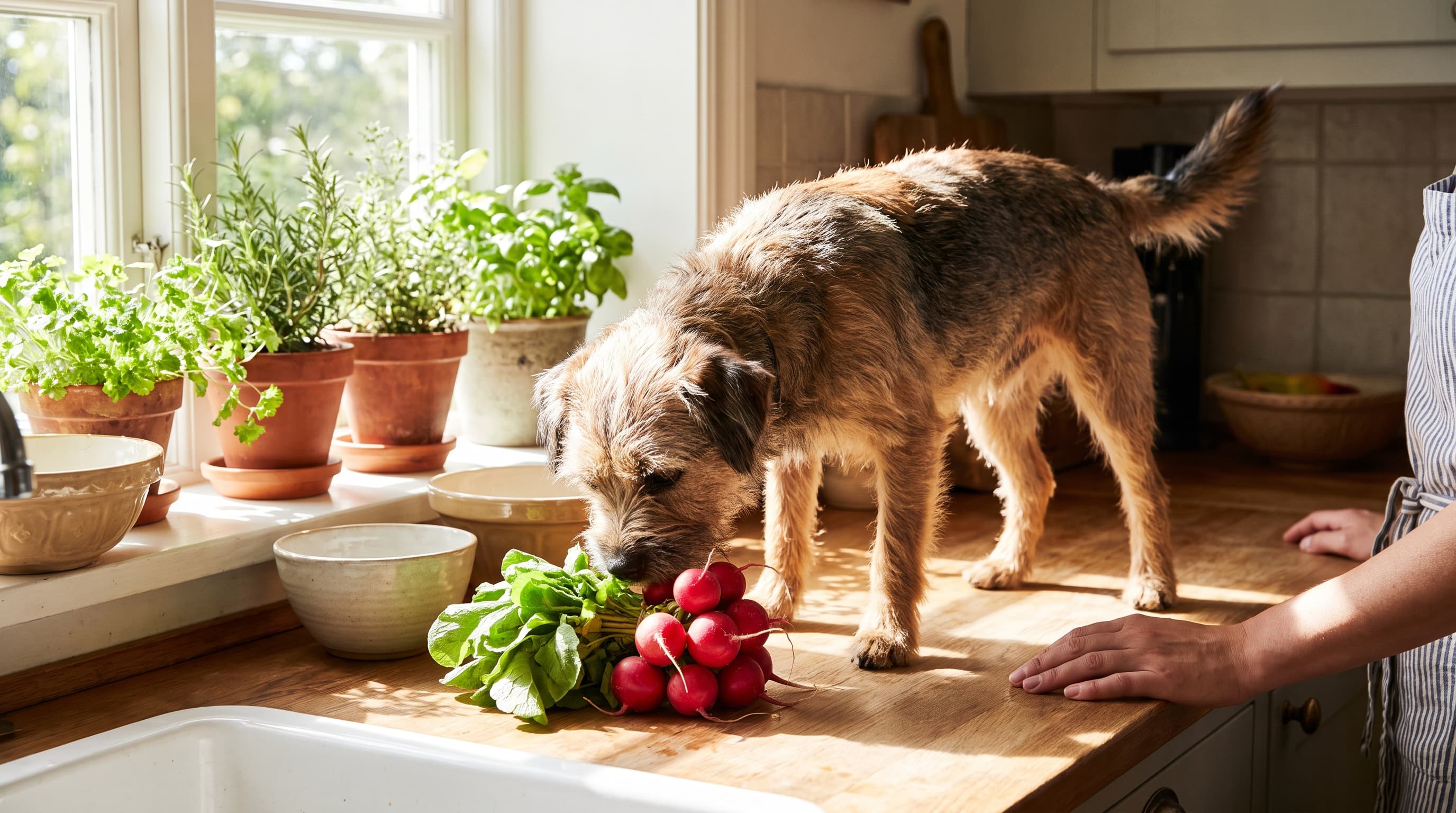
Yes, dogs can eat radishes. Plain raw or cooked radishes are non-toxic and safe for most dogs in small amounts. They are low in calories and offer fiber and vitamin C, but they can cause gas or mild stomach upset. Avoid wild radish, radish greens, horseradish, and any seasoning, and cut pieces small to prevent choking.
Are Radishes Safe for Dogs?
The common table radish (Raphanus sativus) is not on any major toxic-food list for dogs. According to the American Kennel Club, dogs can safely eat plain radishes in moderation, whether raw or cooked. PetMD agrees that the root of the radish is safe for dogs in small amounts, as long as it is served plain and cut into manageable pieces.
The catch is that "safe" does not mean "necessary." Radishes are a fine occasional snack, but they are not a required part of your dog's diet. Your pup already gets balanced nutrition from a complete commercial dog food, so think of a radish slice as a crunchy treat rather than a meal ingredient. Some dogs love the crunch, while others turn up their nose at the peppery bite.
Radish Nutrition and Potential Benefits for Dogs
Radishes are mostly water, which makes them a hydrating, low-calorie nibble. Per the U.S. Food and Drug Administration, a serving of about seven radishes (85 grams) contains roughly 10 calories, 2 grams of carbohydrates, 1 gram of fiber, and a meaningful dose of vitamin C. That nutrient profile translates into a few modest perks for dogs:
- Fiber for digestion. The fiber in radishes can support regular bowel movements. In small amounts it may help firm things up, though too much can have the opposite effect.
- Vitamin C. This antioxidant supports the immune system. Healthy dogs make their own vitamin C, so it is a bonus rather than a dietary necessity.
- Low calorie count. At only about 10 calories per handful, radishes are a guilt-free swap for richer, fattier treats, which is helpful for weight-conscious pups.
- Natural crunch. Chewing a firm radish slice can give some dogs a satisfying texture and may help scrape a little plaque, though it is no substitute for tooth brushing.
- Trace minerals. Radishes contribute small amounts of potassium and calcium, which support muscle, heart, and bone health.
Keep expectations realistic. Because dogs eat radishes in such tiny portions, the nutritional impact is minor. The main appeal is a crunchy, hydrating, low-calorie treat, not a superfood.
Risks and Downsides: Gas, Spice, and Choking
Radishes are non-toxic, but a few issues can turn a healthy snack into an upset tummy.
Gas and digestive upset
Radishes belong to the same broad family as cabbage and broccoli, and like those vegetables they can produce gas and bloating. Too much fiber at once may cause loose stools, cramping, or mild stomach upset. Introduce radishes slowly and in tiny amounts so you can watch how your dog reacts.
The peppery, spicy taste
Radishes get their signature bite from natural sulfur compounds. Many dogs find this peppery flavor off-putting, and a strongly flavored radish can irritate a sensitive mouth or stomach. Milder white varieties tend to be gentler than sharp red ones. If your dog spits out the first bite, take the hint and try a different veggie.
Choking and blockage hazard
A whole radish is firm and round, which makes it a choking risk, especially for small dogs or fast gulpers. Large chunks can also cause an intestinal blockage. Always slice, dice, or grate radishes into small, chewable pieces before offering them.
Seasonings and prepared radish products
Skip pickled radishes, radish products packed with salt, and anything seasoned with garlic, onion, oil, or spice. Garlic and onion are toxic to dogs, and excess salt and fat cause their own problems. Also avoid horseradish, which despite the name is a different, much harsher plant that can cause gastrointestinal upset. If your dog is prone to a delicate gut, read our guide to the best dog treats for sensitive stomachs before experimenting with new veggies.
Can Dogs Eat Radish Greens and Leaves?
This is where table radishes get a caveat. The leafy green tops are not recommended for dogs. Both the AKC and PetMD warn that radish greens can cause gastroenteritis, with symptoms like vomiting and diarrhea. Before you serve any radish, twist off and discard the leafy tops and stems, then rinse the root well. When in doubt, feed only the clean, chopped root and toss the greens in the compost.
Wild Radish vs. Table Radish: Know the Difference
Not every plant with "radish" in its name is safe. Wild radish (Raphanus raphanistrum) is a weedy relative that shows up in fields, roadsides, and unkempt yards. The ASPCA lists wild radish as toxic, pointing to isothiocyanate compounds that can cause gastrointestinal irritation and colic in animals. While serious poisoning is uncommon because dogs rarely eat much of it, wild radish is spicier and more irritating than the cultivated root, so it is best kept off the menu entirely.
The takeaway: the smooth red or white radishes from the grocery store are the safe kind. If your dog nibbles an unknown radish-like weed outdoors and then shows vomiting, drooling, or discomfort, contact your veterinarian or the ASPCA Animal Poison Control Center at (888) 426-4435.
Types of Radish: Daikon, Watermelon, and Black Radish
Radishes come in more shapes and colors than the classic red globe, and the same rules apply across the board: plain root only, no greens, cut small, served in moderation.
- Red globe radish. The familiar peppery salad radish. Safe, but its sharper bite means some dogs dislike it.
- Daikon radish. A large, mild white radish common in Asian cooking. Its gentler flavor is often more dog-friendly. Because daikon is big, be sure to slice it thin.
- Watermelon radish. A pink-centered heirloom variety that is mild and slightly sweet. Fine in small, chopped portions.
- Black radish. Denser and much spicier, with a strong sulfur bite. Safe in theory, but many dogs will refuse it and it is more likely to cause gas.
Whatever the variety, start with a single small piece and see whether your dog even wants it before offering more.
How Much Radish Can a Dog Eat, and How to Serve It
Radishes should be an occasional treat, not a daily staple. A widely used veterinary rule of thumb is that treats and extras should make up no more than about 10 percent of your dog's daily calories, with the rest coming from complete, balanced dog food. General feeding guidance from VCA Animal Hospitals stresses that treats are supplements to a balanced diet, not replacements for it. In practice that means a few small pieces for a big dog and only a sliver for a small one.
Here is a simple, safe way to serve radishes to your dog:
- Wash thoroughly to remove dirt and any residue.
- Remove the greens and stems, and peel if you prefer a milder result.
- Cut into small, thin pieces, grate, or dice so there is no choking risk.
- Serve plain, raw or lightly steamed, with no salt, oil, garlic, onion, or spices.
- Start with one small piece and watch for 24 hours for any gas, loose stool, or refusal before offering more.
Steaming softens the texture and mellows the peppery flavor, which can make radishes easier on sensitive stomachs and more appealing to picky eaters. If radishes do not go over well, plenty of other dog-safe vegetables are worth a try. See our guides on whether dogs can eat beets, dogs can eat cauliflower, and dogs can have zucchini for more low-calorie, crunchy options. And if you are ever tempted to share something with a real kick, read why dogs should not eat jalapenos first.
When to Talk to Your Vet
Radishes are a low-risk snack for most healthy dogs, but every dog is different. Talk to your veterinarian before adding radishes if your dog has a history of digestive issues, thyroid problems, kidney disease, or a sensitive stomach, or if you are unsure about the right portion for your dog's size. If your dog eats a large quantity of radishes, the greens, or a wild radish plant and shows vomiting, diarrhea, drooling, or lethargy, contact your vet promptly. This article is general educational information and is not a substitute for professional veterinary advice, diagnosis, or dosing.
Frequently Asked Questions
Are radishes poisonous to dogs?
No. Common table radishes are non-toxic to dogs and safe to eat in small, plain amounts. The concerns are the greens, wild radish, seasonings, and choking on large pieces, not the root itself.
Can dogs eat radish leaves or tops?
It is best to avoid them. Radish greens can cause gastroenteritis with vomiting and diarrhea in some dogs, so remove and discard the leafy tops before serving the root.
Can dogs eat cooked radishes?
Yes. Plainly cooked or steamed radishes are safe and often gentler on the stomach than raw. Do not add salt, oil, garlic, onion, or other seasonings.
Why does my dog refuse radishes?
Radishes have a peppery, sulfur-forward taste that many dogs dislike. That is completely normal. Milder varieties like daikon or lightly steamed slices may be more appealing, but there is no need to force it.
Can puppies eat radishes?
Puppies have developing digestive systems and specific nutritional needs, so it is safest to check with your veterinarian first and offer only a tiny piece, if any. Their diet should center on a complete puppy food.
How many radishes can a dog eat?
Only a small amount. Treats should stay within roughly 10 percent of daily calories, which usually means a few small pieces for a large dog or a single sliver for a small one. Start small and watch for gas or loose stool.
Subscribe to the Daily Wag Newsletter
Want more vet-informed answers to your "can dogs eat this?" questions, plus fresh feeding tips and treat ideas delivered to your inbox? Subscribe to the Daily Wag newsletter and keep your pup happy, healthy, and snacking smart.