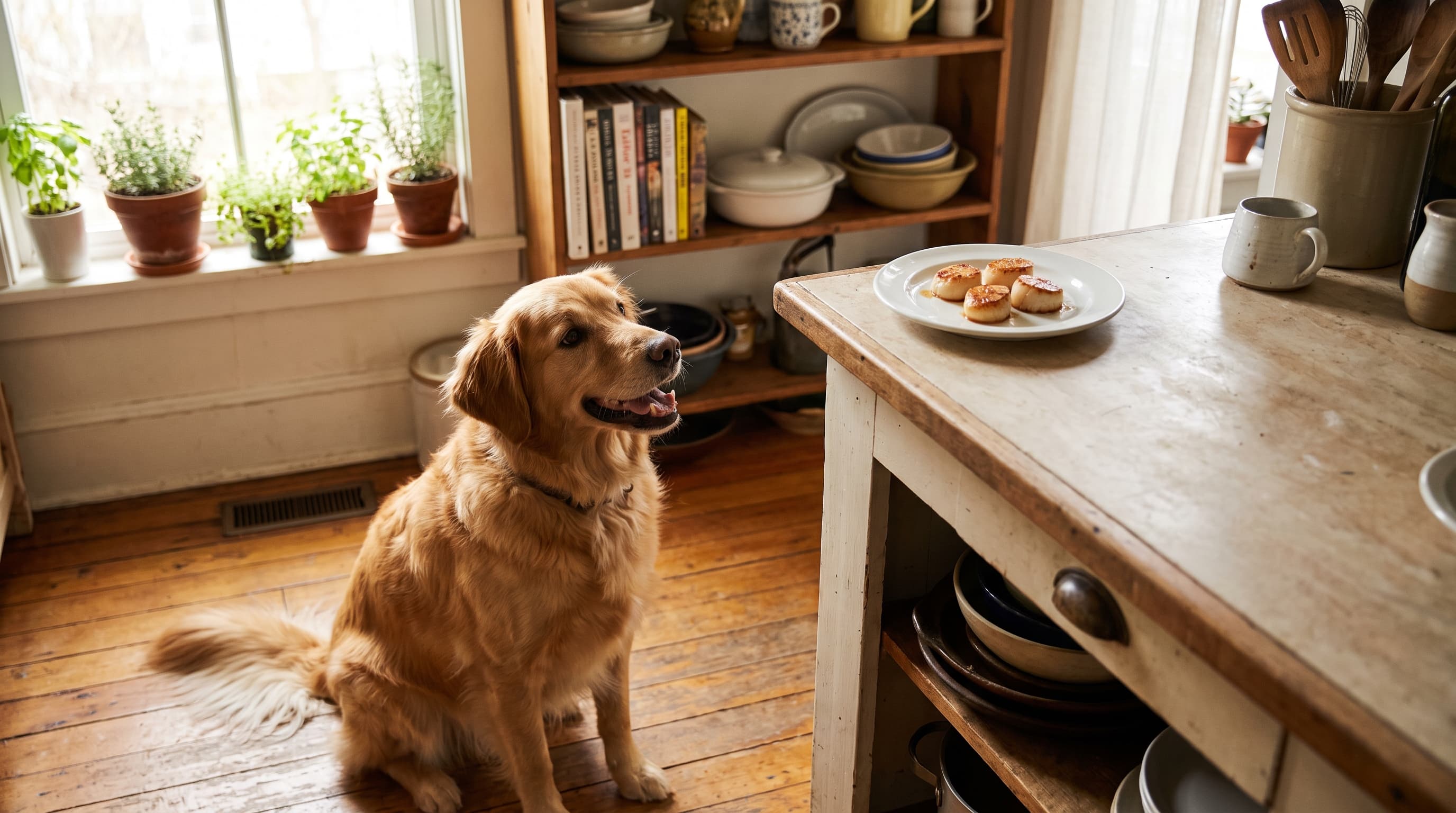

Yes, dogs can eat scallops in small amounts as long as they are fully cooked, unseasoned, and served plain. Cooked scallops are a lean source of protein, magnesium, and potassium. Never feed raw scallops, fried scallops, or scallops cooked with garlic, onion, or butter, all of which can make your dog sick.
Are Scallops Safe for Dogs?
Scallops themselves are not toxic to dogs. Plain, thoroughly cooked scallops are considered a safe occasional treat and are actually quite nutritious. The problems almost always come from how scallops are prepared rather than the shellfish itself. Restaurant and home-cooked scallops are frequently pan-seared in butter, oil, garlic, and onion, and both garlic and onion are toxic to dogs. Breaded or deep-fried scallops add unhealthy fat and salt that can trigger stomach upset or, over time, contribute to weight gain and pancreatitis.
Like any new food, scallops should be introduced slowly. Some dogs have shellfish sensitivities, and a large serving of a rich, protein-dense food can loosen stools even in a healthy dog. Start with a single bite-sized piece and watch your dog for the next 24 hours before offering any more.
Health Benefits of Scallops for Dogs
When served correctly, scallops offer real nutritional value. They are a lean, low-fat protein that supports muscle maintenance, and according to the American Kennel Club's guidance on seafood for dogs, shellfish like these can deliver beneficial nutrients when fed in moderation. Scallops are naturally rich in:
- Protein for lean muscle and tissue repair.
- Magnesium, which supports nerve and muscle function.
- Potassium, an electrolyte important for heart and kidney health.
- Phosphorus and omega-3 fatty acids, which contribute to bone strength and a healthy coat.
That said, dogs get all the essential nutrients they need from a complete, balanced dog food. Scallops should be treated as an occasional snack, not a dietary staple. Treats of any kind should make up no more than about 10% of your dog's daily calories.
Because scallops are naturally low in fat and carbohydrates, they can be a good high-value training reward for dogs that turn their noses up at ordinary kibble, provided you keep the pieces tiny. The lean protein also makes them a lighter option than fatty deli meats or cheese for dogs watching their waistline. Just remember that "healthy in moderation" is doing a lot of work in that sentence: the mineral density that makes scallops nutritious is the same reason a big serving can overwhelm a small dog's system. Think of them as a rare delicacy rather than an everyday snack, and you will get the benefits without the downsides.
Why Raw Scallops Are Dangerous
Raw scallops are a different story. Uncooked shellfish can harbor harmful bacteria such as Vibrio and Salmonella, as well as parasites, that can cause vomiting, diarrhea, and more serious foodborne illness. Cooking kills these pathogens, which is why plain cooked scallops are the only version you should ever offer. The ASPCA's list of people foods to avoid emphasizes that undercooked meat and fish carry the same bacterial risks for pets as they do for humans.
Scallops can also occasionally contain marine biotoxins from harmful algal blooms (the same toxins behind shellfish poisoning in people). Buying scallops from a reputable source and cooking them fully reduces this risk. When in doubt, leave raw shellfish off the menu entirely, as veterinary guides on scallops consistently recommend.
How to Safely Prepare Scallops for Your Dog
Preparing dog-safe scallops is simple. The goal is plain and fully cooked:
- Cook them thoroughly. Boil, steam, grill, or bake scallops until opaque all the way through. Skip the oil and butter.
- Hold the seasoning. No garlic, onion, salt, lemon, or spice blends. These range from unhealthy to outright toxic for dogs.
- Cut into small pieces. Chopping scallops reduces choking risk, especially for small breeds.
- Remove any tough side muscle and rinse before cooking.
- Serve in moderation. One or two small cooked scallops is plenty for a medium-sized dog; offer even less to toy breeds.
Guides such as Houndsy's scallop feeding guide echo this plain-and-cooked approach as the safest way to share seafood with your pup. If you love sharing seafood with your dog, you might also enjoy our guide to whether dogs can eat salmon skin.
How Much Scallop Can a Dog Eat?
Portion size depends on your dog's weight. As a general rule of thumb for an occasional treat:
- Toy and small dogs: half of one small cooked scallop.
- Medium dogs: one to two small cooked scallops.
- Large dogs: two to three small cooked scallops.
These are treat-sized amounts, not meal replacements. Feeding too much rich seafood at once is the most common cause of the mild digestive upset owners report. If your dog has a history of pancreatitis, food allergies, or a sensitive stomach, talk to your veterinarian before adding any new protein. For more everyday snack ideas, see our roundup of whether dogs can eat sushi.
Scallops vs. Other Seafood: How They Compare
Scallops sit among the leaner, lower-mercury shellfish, which makes them a reasonable occasional choice compared with some fish. Because they are low in fat, they are gentler on the stomach than oily, heavily processed options. Still, the same rules apply across the board: plain, cooked, boneless, and unseasoned. Fish with small bones (like some cuts of salmon or sardines) carry a choking and obstruction risk that scallops largely avoid, but scallops are richer in protein per bite, so portion control matters more. If you rotate seafood treats, keep the total to a small fraction of your dog's diet and never serve two rich new proteins on the same day. Veterinary explainers such as Hepper's vet-reviewed scallop guide stress that moderation and plain preparation are what keep seafood treats safe.
Can Puppies and Senior Dogs Eat Scallops?
Puppies have developing digestive systems that are more easily upset by rich, unfamiliar foods, so it is best to wait until your puppy is well established on a complete puppy diet before offering a tiny taste of cooked scallop. Senior dogs can enjoy scallops too, but older pets are more likely to have underlying conditions, such as kidney disease or pancreatitis, that a high-protein, mineral-rich food could aggravate. For dogs of any life stage with a chronic illness, a quick check with your veterinarian is the safest path. When in doubt, plainer treats like a piece of low-fat cheese or a spoon of plain pumpkin are easier on sensitive systems.
Signs of a Bad Reaction to Watch For
Most dogs handle a small, plain scallop with no trouble. Still, keep an eye out for signs of shellfish intolerance or an allergic reaction in the hours after feeding, including vomiting, diarrhea, excessive itching, facial swelling, or lethargy. Severe allergic reactions are rare but possible. If your dog shows swelling, hives, difficulty breathing, or repeated vomiting, contact your veterinarian or an emergency clinic right away. Pet-insurance safety resources note that first-time exposure is exactly when a hidden sensitivity tends to appear, so supervise closely the first time.
Frequently Asked Questions
Can dogs eat fried scallops?
No. Fried and breaded scallops are cooked in oil and often seasoned, adding fat and salt that can cause stomach upset or contribute to pancreatitis. Stick to plain boiled, steamed, or baked scallops.
Can dogs eat raw scallops?
No. Raw scallops can carry bacteria like Vibrio and Salmonella and possible parasites. Always cook scallops fully before sharing them with your dog.
Are scallops toxic to dogs?
Plain scallops are not toxic. The danger comes from common add-ons like garlic and onion, from frying, and from serving them raw. Cooked, unseasoned scallops in small amounts are safe for most dogs.
How many scallops can my dog have?
Treat scallops as an occasional snack. Half a small scallop for toy breeds, one to two for medium dogs, and two to three for large dogs is a reasonable ceiling. Treats should stay under 10% of daily calories.
What should I do if my dog ate seasoned or garlic-butter scallops?
Small amounts may only cause mild stomach upset, but garlic and onion are toxic to dogs in larger quantities. Watch for vomiting, weakness, or pale gums, and call your veterinarian or a pet poison helpline if you are concerned about the amount eaten.
The Bottom Line
Cooked, plain scallops can be a healthy, protein-rich treat for dogs when served in moderation. Skip anything raw, fried, buttered, or seasoned, introduce them slowly, and keep portions small. When shared responsibly, scallops are a perfectly good way to let your dog in on seafood night. Curious about other people-food questions? Our guide to whether dogs can eat tuna covers another popular seafood pick.
This article is for general informational purposes only and is not a substitute for professional veterinary advice. Every dog is different. Always consult your veterinarian before introducing new foods, especially if your dog has allergies, pancreatitis, or a chronic health condition.
Love practical, vet-informed tips like these? Subscribe to the Daily Wag newsletter for feeding guides, safety alerts, and dog-parenting advice delivered straight to your inbox.