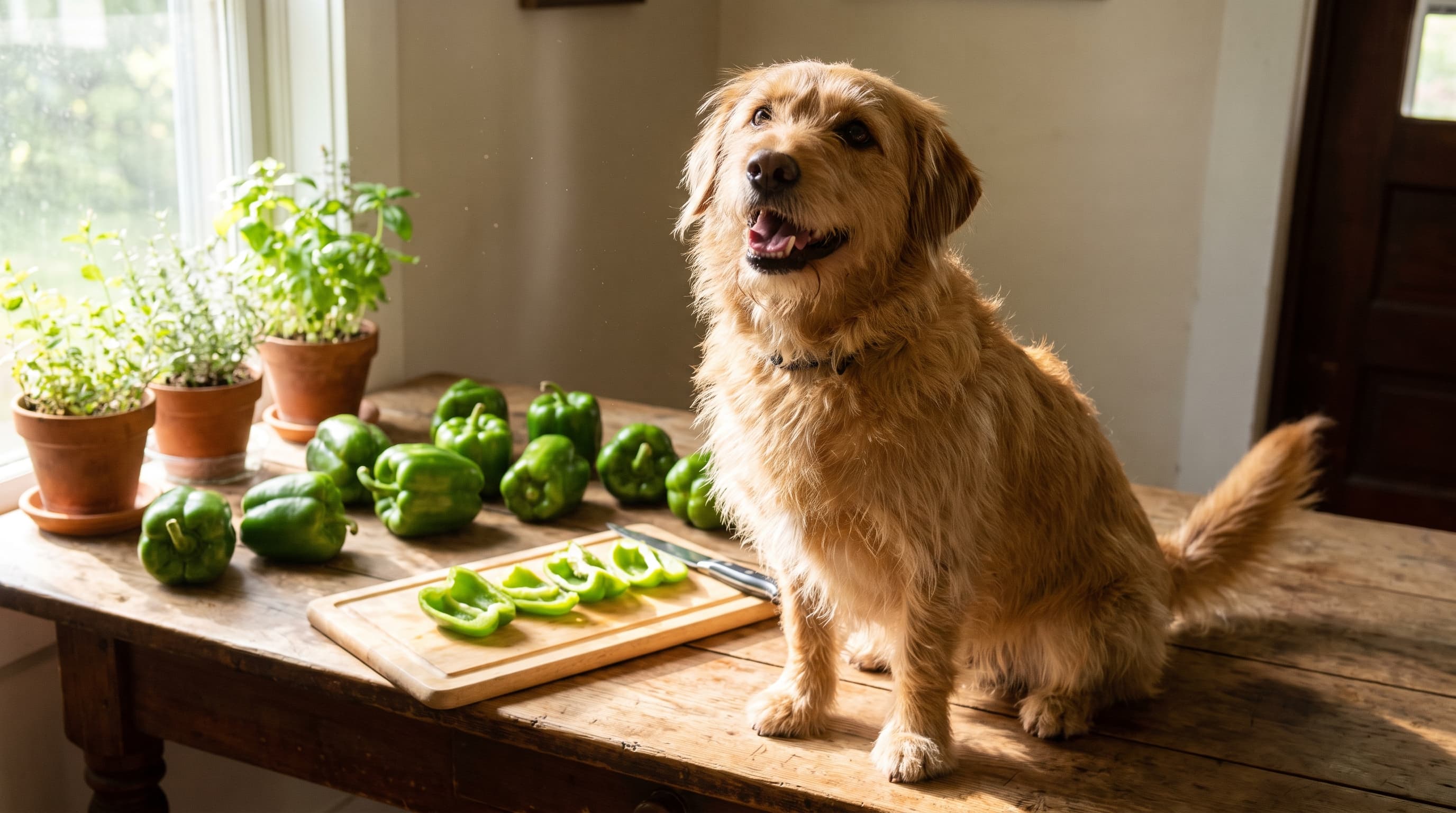

Can Dogs Eat Green Peppers? A Vet-Informed Feeding Guide
Yes, dogs can eat green peppers. Plain green bell peppers are non-toxic and safe for dogs in moderation, offering vitamin C, vitamin A, and fiber with very few calories. Remove the stem and seeds, serve the flesh raw or plain-cooked with no salt or seasoning, and keep portions small — a few bite-sized pieces for a big dog, less for a small one. Only spicy peppers like jalapeños are off-limits.
Green bell peppers are the crunchy, low-sugar member of the sweet pepper family, and most dogs either love them or ignore them. Below is everything you need to serve them safely, how green differs from red, and the mistakes to avoid.
Are Green Peppers Safe for Dogs?
Green bell peppers are on the short list of vegetables that are genuinely safe for dogs. They contain no capsaicin — the compound that makes hot peppers burn — so they won't irritate your dog's mouth or stomach the way a chili would. The American Kennel Club confirms that bell peppers of every color are safe for dogs, and PetMD lists them among nutritious vegetables dogs can enjoy.
The key word is bell. Green bell peppers are sweet, mild, and dog-safe. Green chili peppers, hot peppers, and anything spicy are not — they can cause mouth pain, drooling, vomiting, and diarrhea. When this guide says "green peppers," it means the sweet bell variety.
Green vs. Red Peppers: Does Color Matter?
All bell pepper colors are safe, but they aren't nutritionally identical. Green bell peppers are simply unripe peppers — they're the same fruit picked earlier, before it turns yellow, orange, and finally red. That earlier harvest makes green peppers more bitter and slightly less nutrient-dense.
Red bell peppers, which stay on the vine longest, pack the most vitamins — by some measures several times the vitamin C and a much higher level of beta-carotene than green. That doesn't make green peppers a bad choice; it just means red delivers a little more nutritional bang. If your dog prefers the crunch and milder sweetness of green, they're still getting a healthy, low-calorie snack. The Pooch & Mutt veterinary team notes that green is the most bitter of the bell peppers, which is why some dogs turn their noses up at it.
Health Benefits of Green Peppers for Dogs
In sensible amounts, green bell peppers offer real nutritional perks:
- Vitamin C — an antioxidant that supports the immune system.
- Vitamin A and beta-carotene — important for eye health, skin, and coat.
- Vitamin B6 and vitamin E — support metabolism and overall wellness.
- Fiber — aids digestion and helps dogs feel full.
- Low calories, high water content — making them a guilt-free crunchy treat for weight-conscious pups.
These antioxidants and vitamins support everything from immune function to healthy aging. As Chewy's pet-health resource points out, bell peppers are one of the many produce items dogs can safely enjoy, and their antioxidant content is a genuine plus for a treat that's this light on calories. Just remember that peppers complement — rather than replace — the complete nutrition in your dog's regular food.
Because peppers are so low in calories, they're a smart swap for higher-calorie biscuits when you want to reward your dog without padding their waistline. For other vet-approved produce, the AKC's guide to fruits and vegetables dogs can and can't eat is a handy reference.
How to Safely Serve Green Peppers to Your Dog
Preparation is where most owners go wrong. Follow these steps:
- Wash the pepper to remove dirt and any pesticide residue.
- Remove the stem, core, and seeds. Feed only the flesh — the stem and seeds are hard to digest and offer nothing beneficial.
- Cut into bite-sized pieces to prevent choking, especially for small dogs and fast eaters.
- Serve plain. No salt, oil, butter, garlic, or onion — those additions range from unhealthy to toxic.
- Raw or cooked both work. Raw is crunchy and keeps the most vitamin C; steaming or pureeing makes peppers softer and easier to digest for some dogs. Skip frying.
Green peppers pair well with other dog-safe veggies. If your pup enjoys crunchy produce, you might also like our guides to cauliflower for dogs, peas, and zucchini.
How Much Green Pepper Can a Dog Eat?
Moderation is everything. Vegetables and treats together should make up no more than about 10% of your dog's daily calories; the rest should come from a complete, balanced dog food. As a rough guide:
- Large dogs: up to about half a pepper, in pieces, at a time.
- Small dogs: a quarter of a pepper or less.
Start with a single small piece the first time to make sure your dog tolerates it. Too much pepper — or any new vegetable — can cause gas, an upset stomach, vomiting, or diarrhea. If your dog has a sensitive stomach, cooked and pureed peppers are gentler than raw. A fiber-rich veggie like pumpkin can also help keep digestion on track.
Creative, Dog-Safe Ways to Serve Green Peppers
Once you know your dog tolerates green pepper, there are plenty of easy ways to work it into treats and mealtime without any risky extras:
- Crunchy training bites: Dice raw green pepper into pea-sized pieces and use them as low-calorie training rewards. The crunch and mild sweetness are motivating for many dogs, and you won't blow their calorie budget.
- Frozen summer snack: Freeze small pepper pieces for a cool, crunchy treat on hot days — a nice change from the usual ice cube.
- Veggie meal topper: Lightly steam and mash green pepper, then spoon a small amount over your dog's regular food to add fiber and a little variety.
- Stuffed enrichment toy: Blend cooked pepper with a dog-safe base and pack it into a rubber puzzle toy for a longer-lasting activity.
Whatever the method, the rules stay the same: no salt, oil, butter, garlic, or onion, and small portions only. Keep it simple and your dog gets all the benefit with none of the risk.
How Green Peppers Compare to Other Dog-Safe Veggies
Green peppers are a great option, but they're just one of many vegetables dogs can enjoy. Compared with starchier choices, peppers are lower in calories and sugar, which makes them especially good for dogs watching their weight. Like cauliflower, they're a crunchy, low-calorie pick; like peas, they add vitamins and fiber, though peas bring a bit more protein. Rotating a few safe vegetables keeps snack time interesting and spreads out the nutritional benefits. Just remember that vegetables are a supplement to — not a replacement for — a complete, balanced dog food.
When to Skip the Peppers
Avoid feeding green peppers if:
- They're spicy or hot varieties — never feed jalapeños, chilis, or anything with heat.
- They're cooked in oil, butter, or seasoned with salt, garlic, or onion (think fajita or stir-fry peppers).
- Your dog has a known sensitivity or is on a restricted diet — check with your vet first.
- Your dog is showing digestive upset — stop and let their stomach settle.
Frequently Asked Questions
Can dogs eat raw green peppers?
Yes. Raw green bell peppers are safe and retain the most vitamin C. Just wash them, remove the stem and seeds, and cut them into small, manageable pieces. Some dogs digest cooked (steamed) peppers more comfortably.
Can dogs eat cooked green peppers?
Yes, as long as they're cooked plain — steamed, roasted, or boiled with no oil, salt, or seasoning. Softening peppers by cooking can make them easier on sensitive stomachs. Avoid peppers cooked with onion or garlic, which are toxic to dogs.
Are green pepper seeds and stems bad for dogs?
They aren't toxic, but the seeds and the tough stem and core are hard to digest and can contribute to an upset stomach or, rarely, a choking hazard. It's best to remove them and feed only the flesh.
Can puppies eat green peppers?
In tiny amounts, plain green pepper is generally fine for puppies, but their digestive systems are more sensitive. Introduce any new food slowly and in very small pieces, and check with your veterinarian before adding treats to a puppy's diet.
What kinds of peppers are dangerous for dogs?
Hot and spicy peppers — jalapeños, serranos, chili peppers, cayenne, and anything containing capsaicin — can cause mouth and stomach irritation, drooling, vomiting, and diarrhea. Stick to sweet bell peppers only.
How often can I give my dog green peppers?
A few times a week is plenty, as an occasional treat rather than a meal. Keep all treats and extras to under 10% of your dog's daily calories, and make sure the bulk of their diet is a complete, balanced dog food.
The Bottom Line
Green peppers are a safe, crunchy, low-calorie treat when they're the sweet bell variety, served plain, and given in moderation. Skip the stem and seeds, hold the salt and seasoning, and never offer spicy peppers. Introduce them slowly, watch your dog's reaction, and you've got a healthy way to add a little variety — and a lot of crunch — to snack time.
This guide is for general information only and doesn't replace personalized veterinary advice. If your dog has a health condition, is on a special diet, or reacts poorly to a new food, talk with your veterinarian.
Curious what else your dog can and can't eat? Subscribe to the Daily Wag newsletter for vet-informed feeding guides, treat ideas, and healthy-dog tips in your inbox each week.