
Can Dogs Eat Rotisserie Chicken? A Safe-Feeding Guide
Dogs can eat rotisserie chicken only if you remove the skin, all bones, and any seasoning first, then offer small amounts of the plain meat. The meat itself is a great protein, but cooked bones can splinter and seasonings like garlic, onion, and salt can be harmful. Serve it as an occasional treat, not a meal.
Is Rotisserie Chicken Safe for Dogs?
Chicken is one of the most dog-friendly proteins around, so the meat inside a rotisserie chicken is not the problem, the preparation is. Plain cooked chicken is safe and nutritious for dogs; both the American Kennel Club and PetMD note that cooked chicken is a healthy source of protein when prepared correctly.
Rotisserie chicken complicates that simple picture because it comes cooked with skin, bones, and a seasoning rub. As Dogster's vet-reviewed guide explains, dogs can enjoy rotisserie chicken as an occasional treat, but only after you strip away the parts that make store-bought rotisserie risky. Done right, a few bites of plain meat are a tasty, protein-rich reward.
The Real Risks: Bones, Skin, and Seasoning
Three parts of a rotisserie chicken deserve caution:
- Cooked bones. This is the biggest hazard. Cooked chicken bones become brittle and can splinter when chewed, creating choking risks or causing cuts and blockages in the throat, stomach, or intestines. Never let your dog have them.
- Seasoning. Rotisserie chickens are typically rubbed with salt and spice blends that often include garlic and onion powder. The ASPCA warns that Allium ingredients like garlic and onion can damage a dog's red blood cells and lead to anemia, while excess salt causes its own problems.
- Skin and fat. The greasy, salty skin is high in fat, which can upset the stomach or, in worse cases, contribute to pancreatitis. It is best removed.
As Wag! notes, plain preparations, boiled, grilled, or roasted without seasoning, are always the safest way to share chicken with a dog.
How to Serve Rotisserie Chicken to Your Dog
If you want to share a bit of your rotisserie chicken, prep it like this:
- Remove all skin. Peel off the fatty, seasoned skin completely.
- Debone carefully. Pull the meat off and check for every fragment, small bones hide easily.
- Choose the least-seasoned meat. Interior white meat generally carries less rub than the outer surface. If possible, rinse or pat off visible seasoning.
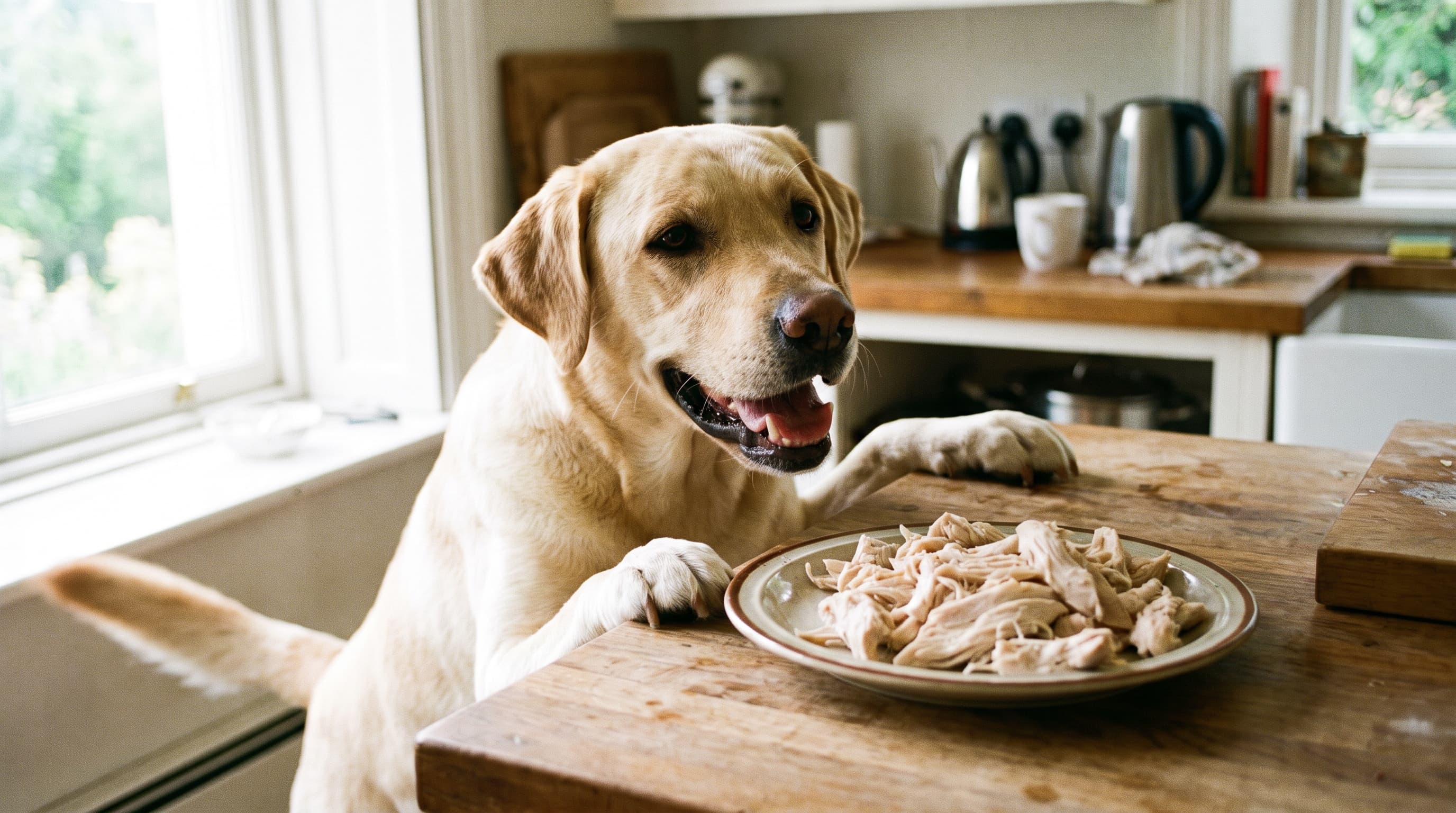
- Cut into small pieces. Bite-sized shreds are easy to eat and portion.
- Serve a small amount. A few pieces as a topper or training reward is plenty.
Honestly, if you know in advance you want to treat your dog, cooking a piece of plain, unseasoned chicken breast is even safer than salvaging rotisserie. Chicken also pairs well with other dog-safe staples; see our roundup of the healthiest human foods for dogs.
How Much Rotisserie Chicken Can a Dog Have?
Treats, including plain chicken meat, should stay within about 10% of your dog's daily calories, with the rest coming from complete, balanced dog food. A small dog might have a tablespoon of shredded meat; a larger dog can have a bit more. Because rotisserie chicken retains some sodium even after you remove the skin, it is best kept to an occasional treat rather than a daily habit.
Introduce it in small amounts and watch how your dog responds. If you are using chicken to add flavor or moisture to meals regularly, a lower-sodium option like plain chicken broth for dogs may be a smarter everyday choice.
What to Do If Your Dog Eats Chicken Bones
Accidents happen, a dog counter-surfs the carcass or snatches a dropped bone. Do not panic, but do act carefully. Do not induce vomiting unless a veterinarian tells you to, since bone fragments can cause more damage coming back up. Instead, contact your veterinarian for guidance, and watch closely for warning signs over the next few days: gagging, drooling, vomiting, loss of appetite, straining or difficulty passing stool, blood in the stool, or a painful, bloated belly. If you notice any of these, seek veterinary care promptly.
This is exactly why processed and bone-in foods deserve caution. The same logic applies to other tempting-but-risky treats, like the ones we cover in our guide to whether dogs can eat beef jerky, and to fast-food style scraps such as chicken nuggets.
When to Skip Rotisserie Chicken Altogether
Sometimes the safest answer is simply not to share it. Skip rotisserie chicken if your dog has a known chicken allergy, a history of pancreatitis or fat sensitivity, or a medical condition like kidney or heart disease that calls for careful sodium control, since even deboned, skinless rotisserie meat retains some salt. Puppies, senior dogs, and dogs with sensitive stomachs are also better served by plain, home-cooked chicken where you control every ingredient. And if you cannot be confident you have removed every bone fragment, or the bird was heavily seasoned, it is wiser to set it aside than to gamble. When a treat is convenient but the risks do not clearly outweigh the reward, plain cooked chicken is always there as a safer stand-in.
The Nutritional Upside of Plain Chicken
Once you set aside the skin, bones, and seasoning, the meat itself is genuinely good for dogs. Chicken is a lean, highly digestible protein that supports muscle maintenance and provides several nutrients dogs rely on:
- High-quality protein with the amino acids dogs need for muscle, skin, and coat health.
- B vitamins that support energy metabolism.
- Minerals like phosphorus and selenium.
- Low fat when you use skinless meat, which suits many dogs, including those watching their weight.
This is exactly why chicken is a foundation ingredient in so many commercial dog foods and why a little plain shredded chicken is such a popular high-value training reward. The nutrition is not the issue with rotisserie chicken; the packaging around that nutrition, the salty skin, the brittle bones, the garlicky rub, is what calls for care.
Rotisserie Chicken vs. Homemade Chicken for Dogs
If your goal is to treat your dog to chicken, it is worth weighing convenience against control. Rotisserie chicken is fast and readily available, but you inherit whatever seasoning and salt the store used, and you have to meticulously remove skin and every bone fragment. Homemade plain chicken takes a few extra minutes but gives you total control: no added salt, no seasoning, no surprises.
It is also worth remembering that a rotisserie chicken is engineered to taste good to people, which usually means more salt and fat than a dog needs, so the "plain" meat you pull from it is rarely as plain as it looks. For an occasional shared bite, carefully prepped rotisserie meat is fine. For anything more regular, such as a routine meal topper or a bland-diet protein when your dog's stomach is off, plain boiled or baked chicken breast is the better default. It is cleaner, lower in sodium, and easier to portion. Either way, chicken should complement a complete, balanced diet rather than take it over, and any new food is best introduced slowly so you can watch for tummy troubles.
Frequently Asked Questions
Can dogs eat rotisserie chicken skin?
It is best to avoid it. The skin is high in fat and coated in salt and seasonings, which can cause stomach upset or contribute to pancreatitis. Remove the skin and offer only plain meat.
What happens if my dog eats a rotisserie chicken bone?
Cooked bones can splinter and cause choking, cuts, or blockages. Do not induce vomiting on your own; contact your veterinarian and monitor for gagging, vomiting, appetite loss, or difficulty passing stool. Seek care if any warning signs appear.
Is the garlic and onion seasoning on rotisserie chicken bad for dogs?
Yes. Garlic and onion, common in rotisserie seasoning, are toxic to dogs and can damage red blood cells. Always remove or rinse off seasoning and choose the least-seasoned interior meat.
How much rotisserie chicken can I give my dog?
Keep it to a small amount, within about 10% of daily calories, as an occasional treat. Plain shredded meat works well as a topper or reward, but it should not replace balanced dog food.
Is plain cooked chicken better than rotisserie chicken for dogs?
Yes. Plain, unseasoned, boneless, skinless chicken breast is the safest choice because it avoids the salt, seasoning, skin, and bones that make rotisserie chicken risky.
Can puppies eat rotisserie chicken?
Only small amounts of plain, deboned, skinless, unseasoned meat, and ideally plain cooked chicken instead. Puppies have delicate digestive systems and specific nutritional needs, so check with your veterinarian first.
Treat Your Dog Smarter
Rotisserie chicken can be a fun, protein-packed treat when you take the time to remove the skin, bones, and seasoning. Want more clear, vet-informed answers on what is safe to share from your plate? Subscribe to the Daily Wag newsletter for weekly safe-food guides, feeding tips, and treat ideas your dog will love.
This article is for general informational purposes and is not a substitute for professional veterinary advice. If your dog has eaten bones or a large amount of seasoned food, or shows any signs of illness, contact your veterinarian.