
Can Dogs Have Chicken Broth? A Safe-Feeding Guide for Pet Parents
Yes, dogs can have chicken broth as long as it is plain and low in sodium with no onion or garlic. A few tablespoons of unseasoned broth can boost hydration, tempt a picky eater, and add flavor to kibble. Always avoid store-bought broths made with onion, garlic, or heavy salt, which are unsafe for dogs.
Is Chicken Broth Safe for Dogs?
Plain chicken broth is safe and even beneficial for most dogs, but the safety depends entirely on the ingredients. Many commercial broths and stocks contain onion, garlic, and high levels of sodium for human flavor, and all three are problems for dogs. As Great Pet Care explains, a simple, low-sodium broth free of these additives is a useful tool in a dog owner's kitchen, while a seasoned grocery-store carton is not.
The two ingredients to watch most closely are onion and garlic. Both belong to the allium family and are toxic to dogs, capable of damaging red blood cells and causing a form of anemia even in modest amounts. The ASPCA lists garlic and onions among the people foods to avoid feeding pets, including the powdered versions hidden in most broths. If a broth label lists "onion powder," "garlic," "natural flavors," or simply a long ingredient list you cannot decode, it is safer to skip it or make your own.
Benefits of Chicken Broth for Dogs
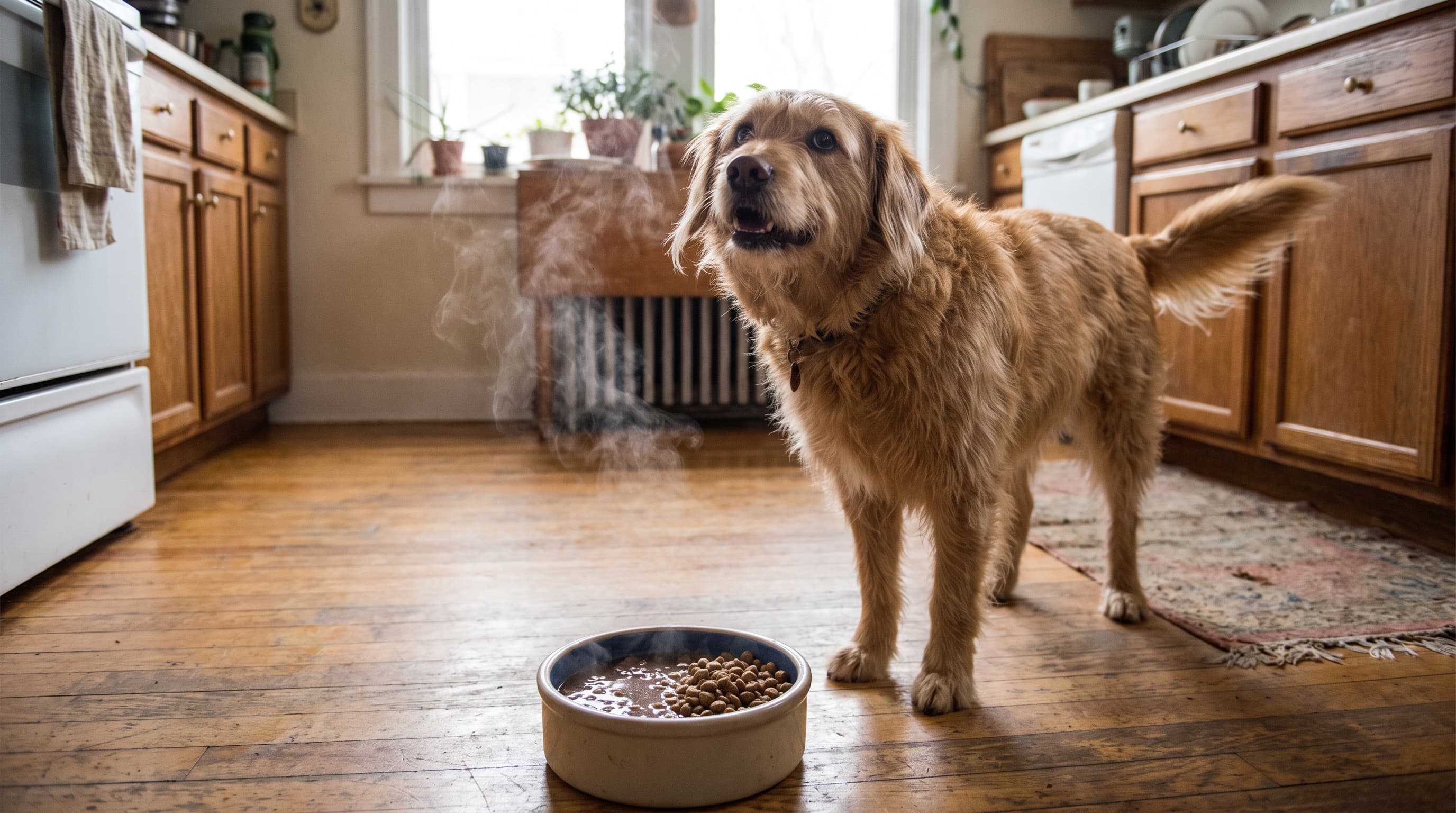
When it is plain and dog-safe, chicken broth offers a handful of practical benefits. The most common is appetite support. Portland Pet Food Company notes that pouring a little warm broth over kibble is a classic trick for enticing a dog who is feeling under the weather or is simply a fussy eater to finish a meal.
Broth also adds moisture, which helps dogs who do not drink enough water or who eat a dry-food-only diet. The extra hydration can support kidney and digestive health, particularly in hot weather or during recovery from a minor stomach upset. Bone-based broths are sometimes promoted for joint support thanks to naturally occurring collagen and gelatin; the American Kennel Club describes bone broth as a gentle, nutrient-rich addition, though it should complement, not replace, a complete and balanced diet. Think of broth as a flavorful bonus rather than a meal in itself.
How to Choose a Dog-Safe Store-Bought Broth
If you would rather buy than simmer, reading the label carefully is non-negotiable. Look for a broth that is:
- Low-sodium or unsalted: The lower the sodium, the better. High salt intake can be dangerous for dogs, especially those with heart or kidney conditions.
- Onion- and garlic-free: Scan for "onion," "garlic," and "onion/garlic powder" anywhere on the label, including under "natural flavors."
- Free of artificial additives: Skip broths with added MSG, preservatives, or unspecified seasonings.
A handful of brands now market broths and "bone broth" toppers specifically for dogs, which take the guesswork out of label-reading. When in doubt, a plainer product is always the safer product. The same vigilance applies to other human foods you might share, like cheese or bread, where sodium and additives are the real concern.
How to Make Homemade Chicken Broth for Dogs
Making dog-safe broth at home is straightforward and lets you control every ingredient. The basic method: simmer plain chicken (meat, bones, or both) in water for several hours, with no salt, onion, garlic, or seasoning of any kind. Strain out the solids, and critically, remove all cooked bones before serving, since cooked bones can splinter and cause injury or blockages.
Let the broth cool completely and skim off excess fat, which can upset the stomach or contribute to pancreatitis in sensitive dogs. You can serve it slightly warm or at room temperature. Homemade broth keeps in the refrigerator for a few days and freezes well in ice-cube trays, giving you single-serving portions you can thaw as needed. A frozen broth cube is also a refreshing summer treat on a hot day.
How Much Chicken Broth Can a Dog Have?
Chicken broth is a supplement to your dog's diet, not a meal, so moderation matters. As a general guideline, treats and extras, including broth, should make up no more than about 10% of your dog's daily calories. For a small dog that might be a tablespoon or two drizzled over food; for a large dog, a quarter cup is plenty.
Introduce broth gradually, as you would any new food, and watch for loose stools or stomach upset the first few times. Too much broth, even plain, can cause diarrhea simply because of the volume of liquid and any residual fat. If your dog is on a prescription diet or has a health condition such as kidney or heart disease, check with your veterinarian before adding broth, since sodium and fluid intake can matter clinically.
When to Skip the Broth
Certain situations call for caution. Avoid giving broth to a dog who is actively vomiting until your vet advises otherwise, and never use broth as a substitute for veterinary care if your dog has stopped eating for more than a day or shows signs of illness like lethargy, repeated vomiting, or diarrhea. A loss of appetite can signal a serious underlying problem, and a splash of broth treats the symptom, not the cause.
Also skip any broth you are unsure about. If you cannot confirm a store-bought broth is free of onion, garlic, and excess salt, do not risk it. The downside of guessing wrong, allium toxicity or salt poisoning, far outweighs the convenience. Salty, seasoned human foods like salami illustrate the same principle: what is harmless to us can be genuinely risky for a dog.
Why Sodium Is the Hidden Problem in Broth
The single most overlooked risk in feeding dogs chicken broth is salt. A standard carton of human chicken broth can contain several hundred milligrams of sodium per cup, sometimes close to a third of a healthy dog's entire daily sodium allowance in just one serving. For a small dog, that adds up quickly, and for a dog with heart disease, kidney disease, or high blood pressure, excess sodium can be genuinely harmful.
This is why "low-sodium" is not just a nice-to-have label, it is the difference between a healthy topper and a daily salt overload. Dogs do need some sodium in their diet, but they get what they need from complete, balanced dog food. Broth should never become a meaningful sodium source. If you are using broth regularly, the unsalted homemade version or a product formulated specifically for dogs is by far the safest route. When you read a label, sodium content should be one of the first numbers you check, right alongside the onion-and-garlic scan.
Using Broth During Recovery and Hot Weather
Two moments when broth shines are recovery and summer heat. After a bout of mild stomach upset, many vets recommend a bland diet to ease a dog back to normal eating, and a splash of plain broth can make that bland food more appealing without adding irritants. The moisture also helps replace fluids lost to a brief episode of diarrhea, supporting gentle rehydration.
In hot weather, frozen broth cubes become a hydrating treat that encourages reluctant drinkers to take in more fluid. You can also stir broth into water to make it more enticing for a dog who is not drinking enough on a sweltering day. As always, these are supportive measures, not cures. If your dog seems genuinely sick, dehydrated, or off their food for more than a day, broth is not a treatment plan, and a call to your veterinarian should come first.
Frequently Asked Questions
Can dogs drink chicken broth every day?
A small amount of plain, low-sodium broth daily is generally fine for healthy dogs, but it should stay within the 10% treat allowance and never replace fresh water or balanced meals. Check with your vet if your dog has a health condition.
Is store-bought chicken broth okay for dogs?
Only if it is low-sodium and completely free of onion, garlic, and artificial seasonings. Many standard grocery broths contain these ingredients, so always read the label carefully or choose a broth made specifically for dogs.
Can chicken broth help a sick dog eat?
Yes, warm plain broth over food is a common way to tempt a dog with a reduced appetite. However, if your dog refuses food for more than 24 hours or seems unwell, contact your veterinarian rather than relying on broth.
Can puppies have chicken broth?
Healthy puppies can have small amounts of plain, unseasoned, low-sodium broth, which can help with hydration and tempting picky eaters. Introduce it in tiny quantities and ask your vet first, since puppies have sensitive digestive systems.
Is bone broth better than regular chicken broth for dogs?
Bone broth is simmered longer and contains more collagen and minerals, which some owners value for joint support. Both are fine when plain and dog-safe; neither replaces a complete diet, and the same no-onion, no-garlic, low-salt rules apply.
The Bottom Line
Chicken broth can be a genuinely useful addition to your dog's bowl, boosting hydration, reviving a picky appetite, and adding a little flavor, as long as it is plain, low in sodium, and free of onion and garlic. Homemade broth gives you the most control, while careful label-reading makes store-bought versions workable. This article offers general guidance only and is not a substitute for professional advice; talk to your veterinarian before adding broth to your dog's routine, especially if your dog is sick or has a chronic condition.
Want more straight answers about what your dog can and cannot eat? Browse our dog-food safety guides and subscribe to the Daily Wag newsletter for vet-informed tips in your inbox.