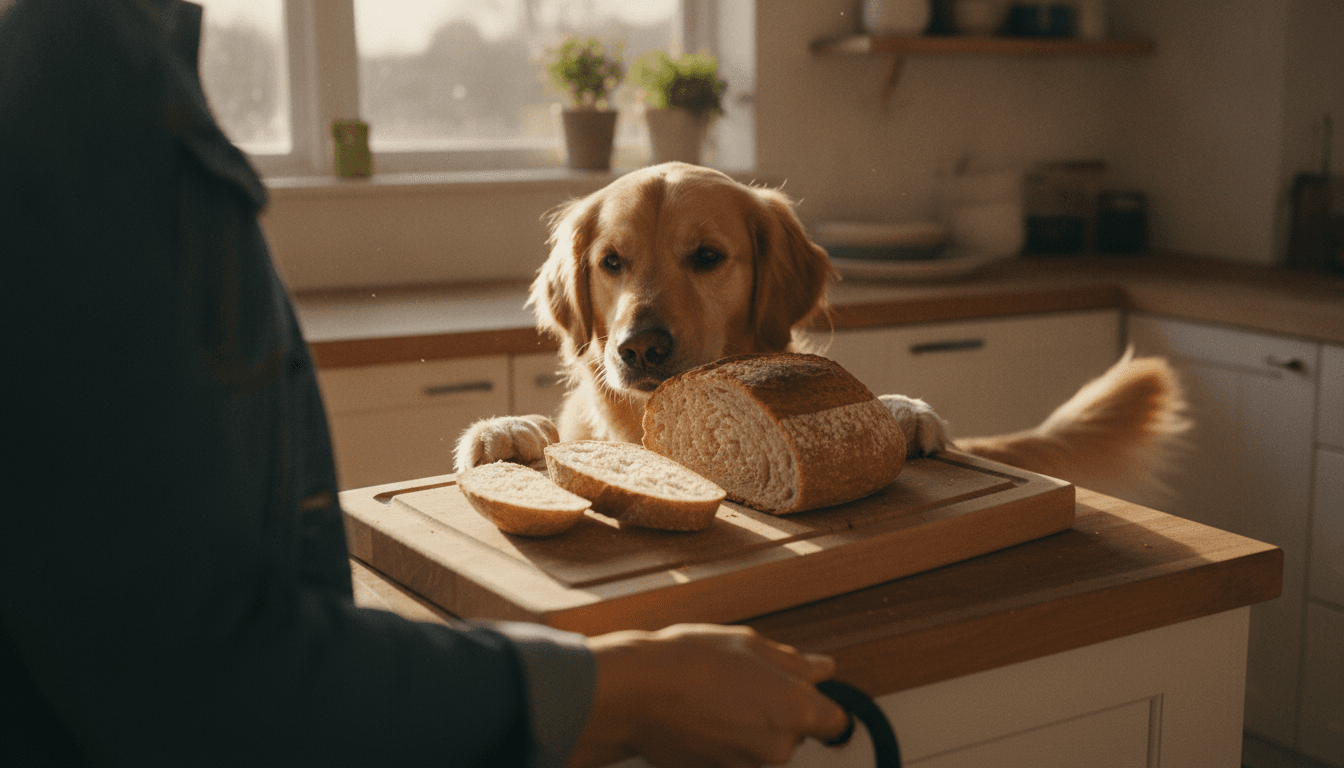

Yes, dogs can have bread in small amounts—plain, fully baked white or wheat bread is generally safe as an occasional treat for most healthy dogs. But bread offers almost no nutritional value, adds empty calories, and turns dangerous fast if it contains raisins, xylitol, garlic, onion, or nuts. Raw bread dough is a true emergency and should never be given.
Can Dogs Have Bread Safely? The Quick Verdict
For a healthy dog with no wheat allergy, a small piece of plain baked bread now and then won't cause harm. Think of it the way you'd think of giving a child a plain cracker: harmless in tiny amounts, but not something to build a diet around. According to the American Kennel Club, plain white or wheat bread is safe for dogs that aren't sensitive to it, as long as their main diet remains complete and balanced.
The real risks aren't the bread itself—they're what's baked into it and how much your dog eats. A nibble of your sandwich crust is one thing; half a loaf of raisin bread is a veterinary emergency. Let's break down exactly when bread is fine and when it's a problem.
Is Bread Actually Good for Dogs? Nutrition Reality Check
Bread is essentially filler for dogs. As PetMD explains, plain bread is high in carbohydrates and calories but offers little protein and minimal nutritional benefit for dogs. It packs a high glycemic punch, which can spike blood sugar, and the extra calories add up quickly—especially in small dogs.
Veterinary nutritionists generally recommend that treats make up no more than 10% of a dog's daily calories. A slice of bread can blow through a big chunk of that allowance with nothing useful in return. If you want a treat that actually does something, options like a spoonful of plain pumpkin deliver fiber along with the flavor. Purina echoes that bread should be a rare extra, not a dietary staple.
Which Types of Bread Are Safe—and Which Aren't
The kind of bread matters enormously. Here's how the most common varieties stack up:
- Plain white or wheat bread: Generally safe in small amounts for dogs without a grain sensitivity.
- Whole-grain or multigrain (plain): Safe in moderation; the extra fiber is fine, but watch for seeds or nuts.
- Raisin or fruit bread: Never. Raisins and grapes are highly toxic to dogs and can cause kidney failure.
- Garlic or onion bread: Never. Both are toxic to dogs and damage red blood cells.
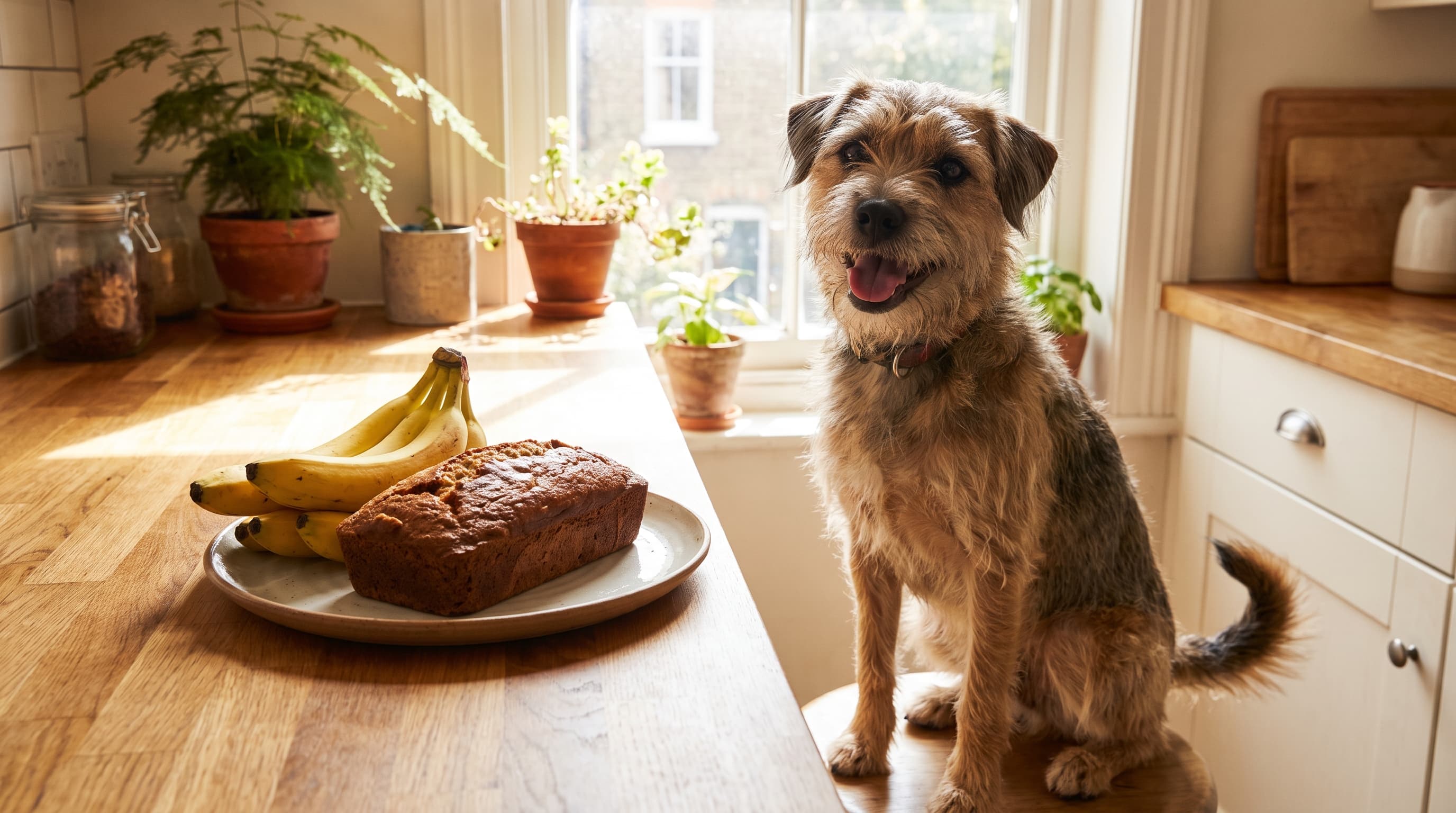
- Banana, walnut, or macadamia nut breads: Avoid—many nuts are toxic or high-fat, and macadamias are dangerous.
- "Sugar-free" or diet breads: Check the label for xylitol, which is deadly to dogs.
- Raw bread dough: Emergency. See the section below.
The Two Biggest Dangers: Raw Dough and Toxic Add-Ins
Raw bread dough is the single most serious bread-related hazard. The Merck Veterinary Manual lists bread dough as a recognized food hazard: in a dog's warm stomach, the yeast keeps fermenting, causing the dough to expand and distend the stomach while releasing toxic levels of ethanol (alcohol) into the bloodstream. The result can be a painful, bloated abdomen plus alcohol poisoning—both of which require immediate veterinary care.
The second danger is toxic ingredients hidden in finished bread. Raisins and grapes can trigger kidney failure even in small amounts, per the ASPCA. Xylitol, a sugar substitute increasingly found in low-sugar baked goods, is profoundly toxic to dogs—the U.S. Food and Drug Administration warns it can cause a rapid, life-threatening drop in blood sugar and liver failure. Garlic and onion, common in savory breads, damage canine red blood cells. When in doubt about any of these, treat it as urgent and call your vet or a pet poison hotline. Our deep dives on grapes and raisins cover why these everyday foods are so dangerous.
How Much Bread Can a Dog Have?
Less than you'd think. A small dog should get no more than a bite or two; a large dog can handle a small piece. Bread should be an occasional treat—not a daily habit and never a meal replacement. Because bread is calorie-dense and nutritionally empty, frequent feeding contributes to weight gain, which strains joints and shortens lifespan.
Always serve bread plain, with no butter, jam, garlic, or seasoning. Skip bread entirely for dogs that are overweight, diabetic, or on a prescription diet without first checking with your veterinarian.
Can Dogs Be Allergic or Sensitive to Bread?
Some dogs are sensitive to wheat or gluten. Signs of a food intolerance include itchy skin, ear infections, gas, or loose stools after eating wheat-based foods. True grain allergies in dogs are less common than many people assume, but they do exist. If your dog reacts after eating bread—or any new food—stop offering it and talk to your veterinarian about an appropriate diet. For dogs that tolerate dairy, small amounts of plain cheese or a lick of honey can be better-rounded occasional treats, though those carry their own caveats.
Healthier Treats to Offer Instead of Bread
If your goal is to give your dog a satisfying snack, you can do far better than empty carbs. Many fruits and vegetables deliver fiber, vitamins, and crunch with a fraction of the calories. Good options for most dogs include small pieces of plain cooked or raw vegetables, a spoonful of plain canned pumpkin, or a few blueberries. The key is to introduce any new food slowly and in small amounts, watching for digestive upset.
Whole, single-ingredient treats also make it easier to control your dog's overall calorie intake. Because bread is so calorie-dense and nutritionally hollow, swapping it for a lower-calorie produce snack is an easy win for weight management—especially for smaller breeds where a single slice represents a big share of the day's calories. When you do want to share table food, stick to plain, unseasoned, dog-safe options and skip anything containing garlic, onion, raisins, excess salt, butter, or sweeteners.
Common Bread Myths, Debunked
A few persistent myths trip up well-meaning owners. First, "bread settles a dog's stomach"—there's no solid evidence that bread soothes canine digestion, and feeding it to a sick dog can actually add load to an already-upset system; call your vet instead. Second, "a little garlic bread won't hurt"—garlic is toxic to dogs in even modest amounts, so garlic and onion breads are always off the menu. Third, "whole-grain bread is healthy for dogs"—while marginally more fibrous, it's still a calorie-dense filler with no special benefit, and the seeds or nuts in some artisan loaves can pose their own risks. When in doubt, simpler and smaller is always safer.
What to Do If Your Dog Eats Too Much Bread (or the Wrong Kind)
If your dog grabbed a slice of plain bread, don't panic—watch for mild stomach upset like gas or a soft stool and make sure fresh water is available. If your dog ate raw dough, raisin bread, garlic bread, or anything containing xylitol, treat it as an emergency: contact your veterinarian or an animal poison control center immediately and be ready to share how much was eaten and when. Quick action makes a major difference with these toxins.
This article is for general information only and is not a substitute for professional veterinary advice. Always consult your veterinarian about your dog's specific diet and before introducing new foods, and seek immediate care for any suspected poisoning.
Frequently Asked Questions
Can dogs have bread every day?
No. Bread is high in calories and low in nutrition, so daily bread can lead to weight gain. Keep it to a small, occasional treat—and remember treats should make up no more than about 10% of your dog's daily calories.
Can puppies have bread?
It's best to avoid it. Puppies need nutrient-dense, balanced food for proper growth, and empty calories from bread can crowd out what they actually need. Check with your veterinarian before offering any human food to a puppy.
Is white bread or wheat bread better for dogs?
Both are fine in small amounts for dogs without a grain sensitivity. Whole wheat offers a bit more fiber, but neither provides meaningful nutrition. Always choose plain, unseasoned bread with no raisins, nuts, garlic, or xylitol.
My dog ate raw bread dough—what should I do?
Treat it as an emergency. Raw dough expands in the stomach and releases toxic alcohol as the yeast ferments. Call your veterinarian or a pet poison hotline right away rather than waiting for symptoms.
Can dogs eat toast or bread crusts?
Plain, dry toast or a plain crust is fine in tiny amounts. Avoid butter, spreads, garlic, and sugary jams, all of which add fat, salt, or potential toxins your dog doesn't need.
The Bottom Line
Dogs can have bread, but it's a "sometimes, plain, and tiny" food at best. Skip it for diabetic, overweight, or grain-sensitive dogs, and stay alert to the genuine dangers—raw dough, raisins, xylitol, garlic, and onion. When you stick to small pieces of plain baked bread, the occasional crust is a harmless way to share a moment with your pup.
Hungry for more clear, vet-aware answers to "can my dog eat this?" questions? Subscribe to the Daily Wag newsletter and never guess at the dinner table again.