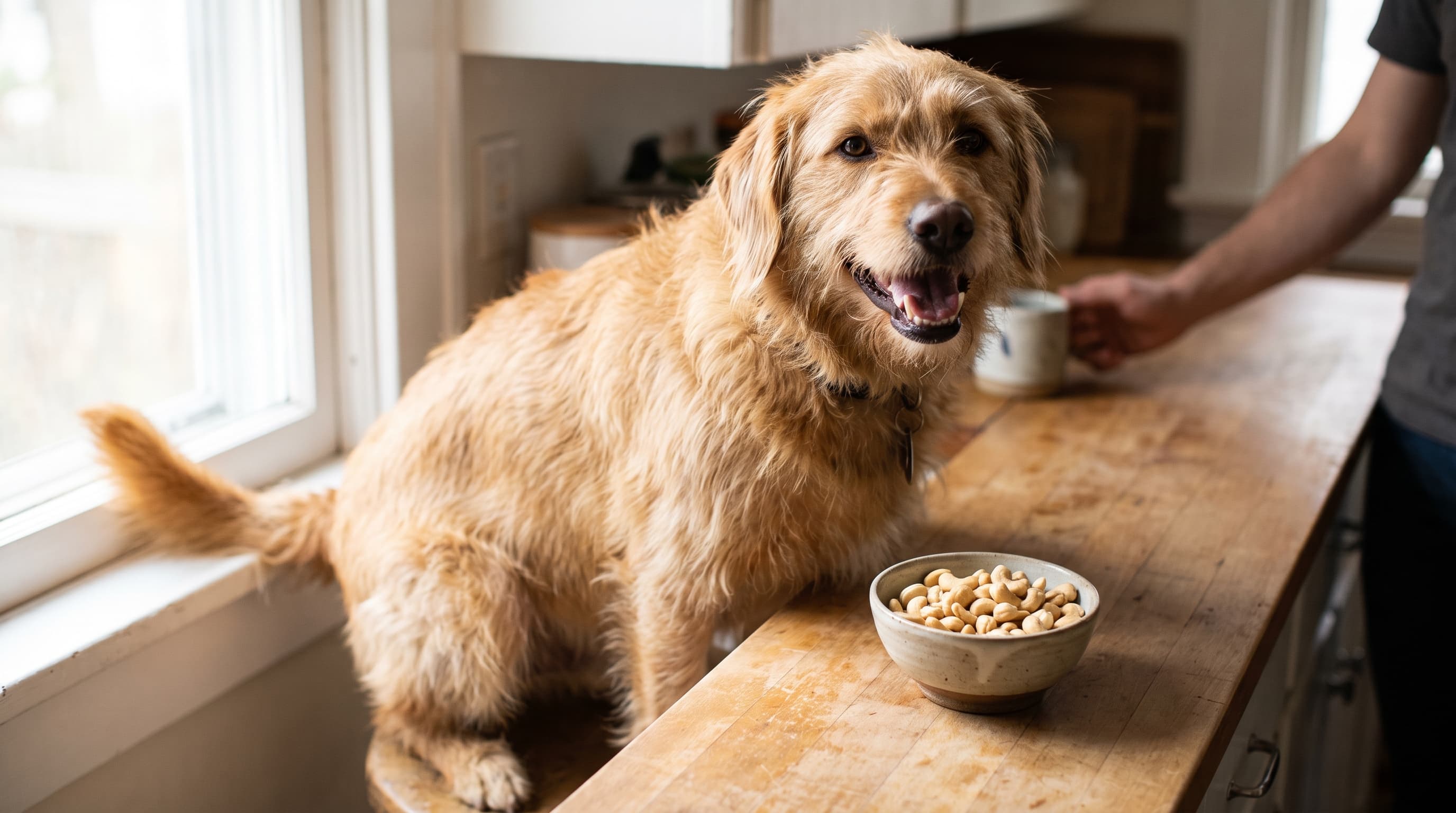

Can Dogs Eat Cashews? What Every Owner Should Know
Yes, dogs can eat cashews in small moderation. Plain, unsalted cashews are not toxic to dogs and are safe as an occasional treat. But cashews are high in fat (a pancreatitis risk), frequently salted, and their curved shape makes them a choking hazard, so keep portions tiny and never make them a daily habit.
Are Cashews Safe or Toxic for Dogs?
Cashews sit firmly in the "safe but not ideal" category. Unlike macadamia nuts, which are genuinely toxic to dogs, cashews contain no compound that poisons them. The American Kennel Club confirms that cashews are generally safe for dogs to eat, and PetMD agrees they are nontoxic. A dog who steals one or two plain cashews off the floor is not in danger.
The catch is that "not toxic" is not the same as "healthy." Cashews are calorie-dense, fatty, and often sold heavily salted or coated in flavorings. So while a stray cashew won't hurt your dog, cashews are never something your dog actually needs, and the way they are usually packaged for humans introduces most of the real risks. As always, treats of any kind should make up no more than about 10% of your dog's daily calories, with the rest coming from a complete, balanced dog food.
One important warning: cashews are frequently sold in mixed-nut assortments. Those mixes often contain macadamia nuts, which the ASPCA lists as toxic, causing weakness, tremors, vomiting, and hyperthermia. Never feed cashews straight from a trail mix or party-nut tin. Only offer plain, single-ingredient cashews.
Do Cashews Have Any Benefits for Dogs?
Cashews do contain some genuinely useful nutrients. They provide protein, healthy unsaturated fats, magnesium, and antioxidants, and Purina notes they carry small amounts of omega fatty acids that support skin and coat health. On paper, that sounds appealing.
In practice, the benefit is negligible. The quantity of cashews a dog can safely eat is so small that it delivers almost none of these nutrients in a meaningful dose, and your dog is already getting everything it needs from a quality complete diet. Think of cashews the way you'd think of a single potato chip for yourself: a pleasant taste, not a nutrition strategy. If you want a treat that actually adds value, low-fat options like a slice of apple or a spoonful of plain pumpkin do far more good with far less risk.
The Real Risks and Dangers of Cashews
High Fat and Pancreatitis
This is the single biggest concern. Cashews are roughly 44% fat, and a diet spiked with fatty snacks is a well-known trigger for pancreatitis, an inflammation of the pancreas that can be painful and, in serious cases, life-threatening. PetMD warns that repeatedly eating fatty foods like cashews can cause obesity or pancreatitis. VCA Hospitals explains that a fatty meal can help trigger the condition, with symptoms including vomiting, abdominal pain, lethargy, and loss of appetite. Dogs with a history of pancreatitis, obesity, diabetes, or those on a prescription diet should not have cashews at all without a vet's approval.
Salt and Sodium
Most cashews sold for people are salted, and salt adds up fast in a small body. The ASPCA notes that excessive salt can cause increased thirst, vomiting, diarrhea, tremors, and in extreme cases seizures. A small handful of salted cashews can push a small dog's daily sodium well past a healthy limit in a single snack. Always choose plain, unsalted cashews.
Choking and Blockage
Cashews are curved, firm, and just the right size to lodge in a small dog's throat or esophagus. For toy and small breeds especially, a whole cashew is a real choking hazard, and swallowing several whole can risk an intestinal blockage. If you do offer a cashew, break it into small pieces first.
Flavored and Seasoned Cashews
Honey-roasted, barbecue, chili-lime, garlic, and onion cashews are all off the table. Onion and garlic powder are toxic to dogs, added sugar contributes to obesity and dental problems, and heavy seasoning multiplies the sodium load. If a cashew is anything other than plain and unsalted, don't share it.
How Many Cashews Can a Dog Eat?
There is no official "safe number," and honestly, fewer is always better. The right amount depends on your dog's size, and these are conservative ceilings for an occasional treat, not a daily allowance:
- Extra-small and small dogs (2–20 lbs): 1 cashew, broken into pieces, rarely.
- Medium dogs (21–50 lbs): 1–2 cashews, no more than once or twice a week.
- Large dogs (51–90 lbs): 2–4 cashews, occasionally.
- Extra-large dogs (91+ lbs): up to a few cashews, still only now and then.
These numbers assume plain, unsalted, whole cashews given as a one-off treat. If your dog is overweight, has had pancreatitis, or eats a special diet, the safe number is zero unless your vet says otherwise. When in doubt, offer a single piece and stop there.
What About Cashew Butter?
Plain cashew butter can be given to dogs in tiny amounts, and PetMD notes it's fine as long as it contains no harmful add-ins. The two things to check are the ingredient list and the sweetener. Avoid any nut butter containing xylitol (also labeled "birch sugar"), an artificial sweetener that is extremely toxic to dogs even in small amounts. Also skip products with added salt, sugar, oils, or macadamia nuts. A thin smear of single-ingredient cashew butter on a lick mat is fine as an occasional enrichment treat; a heaping spoonful is a fat overload.
What to Do If Your Dog Ate a Lot of Cashews
First, don't panic. If your dog snagged a couple of plain cashews, you can simply watch them. If your dog ate a large quantity, salted or flavored cashews, or a mixed-nut blend that might contain macadamias, take it more seriously.
- Remove the source and estimate how many were eaten and what type (plain, salted, flavored, or mixed).
- Watch for pancreatitis signs over the next 24–48 hours: vomiting, diarrhea, loss of appetite, a hunched or "praying" posture, or lethargy.
- Watch for salt toxicity if they were salted: excessive thirst, restlessness, tremors, or wobbliness.
- Offer fresh water and hold off on other rich food while you monitor.
- Call your veterinarian or a pet poison line if your dog ate a large amount, ate anything from a mixed-nut container, or shows any symptom above.
When in doubt, a quick phone call to your vet is always the safest move, especially for small dogs and dogs with existing health conditions.
Safer Nut and Snack Alternatives
If you want to give your dog a crunchy, satisfying treat without the fat-and-salt baggage of cashews, plenty of better options exist. Some dog-friendly nuts and seeds, like unsalted peanuts or shelled sunflower seeds, are lower-risk in small amounts, though they still carry fat to watch. For a full rundown of which nuts are genuinely safe and which are dangerous, see our guide to what's safe and what's not when it comes to dogs and nuts.
Honestly, though, the best "nut alternatives" often aren't nuts at all. Fresh, low-fat produce tends to be a smarter everyday treat. Consider apple slices, a little plain coconut, or a spoonful of plain unsweetened yogurt for variety. For the bigger picture on building a treat routine that supports your dog's health rather than working against it, our guide to better everyday nutrition is a good place to start.
Frequently Asked Questions
Are cashews poisonous to dogs?
No. Cashews are not toxic to dogs the way macadamia nuts, grapes, or chocolate are. The concerns with cashews come from their high fat content, added salt, and choking risk, not from poisoning. Plain, unsalted cashews in a very small amount are safe for most healthy dogs.
Can puppies eat cashews?
It's best to skip cashews for puppies. Their digestive systems are still developing, they're more sensitive to fatty foods, and their small size makes whole cashews a serious choking hazard. Stick to age-appropriate puppy treats and talk to your vet about safe options.
Can dogs eat salted cashews?
No, avoid salted cashews. The added sodium can cause increased thirst, vomiting, and in large amounts more serious salt-toxicity signs like tremors. Always choose plain, unsalted cashews, and even then only in tiny, occasional portions.
My dog ate one cashew, should I worry?
A single plain cashew is very unlikely to cause any problem for most healthy dogs. Just make sure it wasn't part of a mixed-nut blend containing macadamias, and watch for any stomach upset. If your dog is very small, has had pancreatitis, or ate a salted or flavored cashew, keep a closer eye out and call your vet if anything seems off.
Can dogs eat cashew milk or cashew butter?
Plain, unsweetened cashew butter is okay in tiny amounts as long as it contains no xylitol, salt, sugar, or other nuts. Cashew milk is generally not recommended because it often contains added sugars, sweeteners, or flavorings, and dogs don't need it. When in doubt, plain water is always the better drink.
The Bottom Line
Cashews are safe for dogs in the sense that they aren't toxic, but they're a "sometimes, tiny amount, plain only" treat rather than a go-to snack. Keep them unsalted and unflavored, break them into pieces, count them in single digits, and skip them entirely for dogs with weight issues or a history of pancreatitis. For most owners, a slice of fruit or a dedicated dog treat is the smarter choice.
Enjoyed this guide? Subscribe to the Daily Wag newsletter for vet-informed feeding tips, treat ideas, and honest "can my dog eat this?" answers delivered straight to your inbox.
Vet disclaimer: This article is for general informational purposes only and is not a substitute for professional veterinary advice. Always consult your veterinarian before making changes to your dog's diet or if you're concerned about something your dog has eaten.