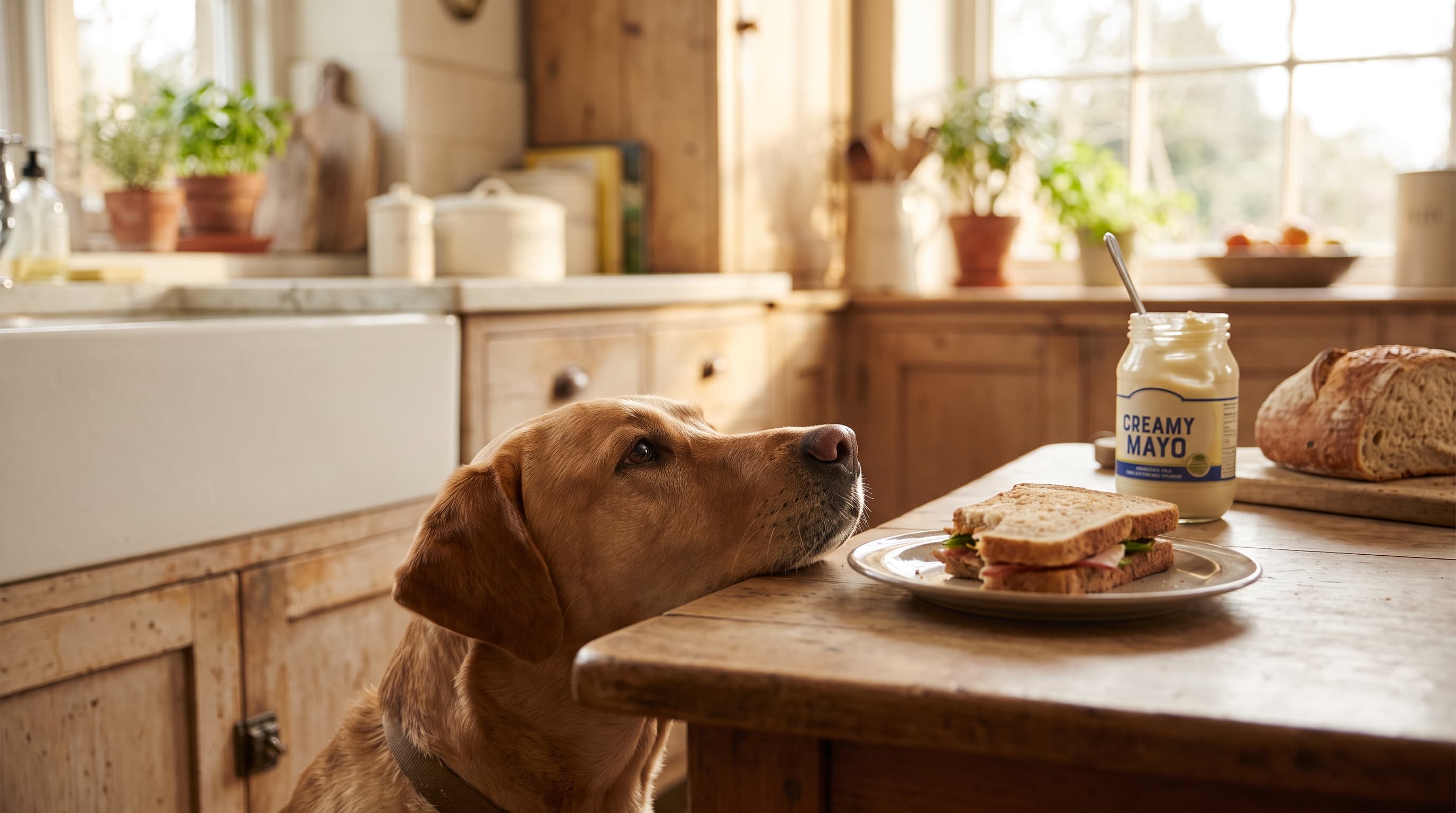

Can Dogs Eat Mayo? What Every Dog Owner Should Know
Dogs can technically eat mayo, but they really shouldn't. Plain mayonnaise isn't toxic, so a small lick won't poison your dog. But mayo is almost pure fat and oil with little nutritional value, and regularly feeding it can lead to weight gain, stomach upset, and even pancreatitis. Flavored mayos may also hide garlic or onion, which are genuinely toxic to dogs.
Is Mayonnaise Safe for Dogs?
Mayonnaise is not on the list of foods that are outright poisonous to dogs, like chocolate, grapes, or xylitol. That means an accidental small amount—a swipe your dog licks off a dropped sandwich, for instance—is unlikely to cause an emergency. But "not poisonous" is a low bar. Plain mayo is made from oil, egg yolks, and an acid like vinegar or lemon juice, which makes it extremely high in fat and calories while offering your dog essentially nothing it needs. There's no meaningful protein, vitamin, or mineral benefit that your dog can't get from a better source.
In short: a tiny taste won't hurt a healthy dog, but mayo has no place as a regular treat or food topper. The risks scale quickly with the amount and the frequency.
Why Mayo Is a Problem: The Fat Factor
The single biggest issue with mayonnaise is its fat content. A typical tablespoon of mayo contains roughly 90–100 calories, almost entirely from fat. For a small dog, that one tablespoon can represent a huge chunk of their daily calorie budget. Over time, high-fat human foods contribute to obesity, which VCA Animal Hospitals links to diabetes, joint strain, and a shorter lifespan.
The more urgent danger is pancreatitis—a painful and potentially life-threatening inflammation of the pancreas that is frequently triggered by a sudden hit of fatty food. Symptoms include vomiting, diarrhea, a hunched posture, loss of appetite, and lethargy. Some breeds, like Miniature Schnauzers, are especially prone. A single large serving of a rich, fatty food can be enough to set off an episode in a susceptible dog, which is exactly why veterinarians warn against sharing greasy human foods.
The Hidden Danger: Flavored and Seasoned Mayo
Plain mayo is a fat problem. Flavored mayo can be a toxicity problem. Many popular mayonnaise varieties and spreads contain add-ins that are dangerous for dogs:
- Garlic and onion: Aioli, chipotle mayo, and garlic mayo often contain garlic or onion. Both belong to the allium family and are toxic to dogs, damaging red blood cells and potentially causing anemia. The ASPCA lists onions, garlic, and chives among the people foods to keep away from pets.
- Added sugar or sweeteners: Some spreads contain sweeteners. Always check for xylitol (sometimes labeled "birch sugar"), which is extremely toxic to dogs even in tiny amounts.
- Extra salt and spices: Seasoned mayos pile on sodium and spices that can upset a dog's stomach.
Because you can't always tell what's blended into a flavored mayo, it's safest to treat any seasoned variety as off-limits.
What About Homemade Mayo and Raw Eggs?
Homemade mayonnaise carries its own risk: it's typically made with raw egg yolks. Raw eggs can harbor Salmonella or E. coli bacteria, which may cause food poisoning in dogs (and in the humans handling it). Raw egg whites also contain avidin, a protein that can interfere with biotin absorption if fed in large amounts over time. If you want to share the benefits of eggs with your dog, a plain cooked egg is a far safer and more nutritious option than raw homemade mayo.
Does Mayo Have Any Benefits for Dogs?
You may have heard that mayo helps with a dog's coat or aids in passing hairballs. There's no solid veterinary evidence for these claims, and any theoretical benefit is outweighed by the fat load. If your dog needs help with a dull coat, healthy fats from fish oil or a quality diet are the right tools—not mayonnaise. For genuinely dog-friendly foods that support skin and coat, see our roundup of the healthiest human foods for dogs.
My Dog Ate Mayo—What Should I Do?
Don't panic. Here's how to respond based on the amount:
- A small lick of plain mayo: A healthy adult dog will almost certainly be fine. Just monitor for any mild stomach upset over the next day.
- A larger amount of plain mayo: Watch closely for 24–48 hours for vomiting, diarrhea, lethargy, or signs of abdominal pain. Keep fresh water available and hold off on other rich foods.
- Any flavored mayo (garlic, onion, chipotle, aioli): Contact your veterinarian or the ASPCA Animal Poison Control Center (888-426-4435) right away, since garlic and onion toxicity can be serious.
- Your dog is small, a puppy, or has a history of pancreatitis or GI issues: Be extra cautious and call your vet even for moderate amounts, as these dogs tolerate fat poorly.
If your dog develops persistent vomiting or diarrhea, contact your vet—our guide on what causes puppy diarrhea explains when digestive upset warrants a call.
Better Alternatives to Mayo
If you're looking for a moist, tasty topper to make food more appealing or to hide a pill, skip the mayo and reach for something with actual nutritional value in small amounts:
- A spoonful of plain, unsweetened pumpkin puree
- Plain low-fat, unsweetened yogurt (if your dog tolerates dairy)
- A little plain cooked egg
- A small amount of unsweetened applesauce
- Low-sodium bone broth
These give you the "special treat" effect without the fat overload. And if you're weighing other deli-counter foods, our take on whether dogs can eat salami and how much cheese is safe covers two more common sandwich ingredients dogs love to beg for.
How Much Fat Is Too Much for a Dog?
There's no single magic number, because it depends on your dog's size, activity level, and health. The general rule is that treats and extras should make up no more than 10% of your dog's daily calories, and high-fat foods should be an exception rather than a habit. For a 20-pound dog eating around 500 calories a day, that 10% cap is only about 50 calories—half of which a single tablespoon of mayo would blow through. When you frame it that way, it's clear why mayo isn't worth it.
What About Miracle Whip, Vegan Mayo, and Light Mayo?
None of these are meaningfully better for your dog. Miracle Whip is a mayo-style dressing that actually adds sugar and extra seasonings, so it combines the fat problem with unnecessary sweeteners—skip it. "Light" or reduced-fat mayo still contains fat and often makes up for lost richness with additives, stabilizers, and sometimes sweeteners, so it's not a safe workaround either. Vegan or egg-free mayo removes the raw-egg concern but is typically still oil-based and high in fat, and many versions contain garlic, onion powder, or other seasonings. The bottom line is the same across every variety: mayonnaise and its cousins are built around fat and flavorings your dog doesn't need, so the safest amount is essentially none.
Frequently Asked Questions
Is a little bit of mayo bad for dogs?
A small lick of plain mayonnaise won't poison a healthy dog, but it offers no nutritional benefit and adds a lot of fat and calories. It's fine as a rare accident, not as a treat you offer on purpose.
Can dogs eat mayo on a sandwich or with tuna?
It's best avoided. The mayo adds unnecessary fat, and sandwich ingredients like onion, garlic, and seasonings can be harmful. If you want to share tuna, offer a small amount of plain, cooked or water-packed tuna without the mayo.
Is mayonnaise toxic to dogs?
Plain mayo is not toxic, but flavored versions containing garlic or onion can be, and any mayo with xylitol is dangerous. The bigger everyday concern with plain mayo is its very high fat content, which can trigger stomach upset or pancreatitis.
Can mayo give my dog diarrhea?
Yes. The high fat content can easily overwhelm a dog's digestive system and cause diarrhea, vomiting, or an upset stomach, especially in small dogs or those unaccustomed to fatty foods.
Can puppies eat mayo?
No. Puppies have sensitive, developing digestive systems and a low tolerance for fat, so mayo is more likely to cause problems for them. Stick to a complete puppy food and vet-approved treats.
What should I do if my dog ate garlic mayo?
Contact your veterinarian or the ASPCA Animal Poison Control Center (888-426-4435) promptly. Garlic is toxic to dogs and can damage red blood cells, so it's worth getting professional guidance based on your dog's size and how much they ate.
The Bottom Line
Can dogs eat mayo? A tiny bit of plain mayonnaise won't hurt a healthy dog, but there's no good reason to offer it. It's high in fat, empty of nutrition, and risky in flavored forms that may contain garlic, onion, or xylitol. Skip the mayo, choose a healthier topper, and call your vet if your dog eats a large amount or any garlic- or onion-flavored version. When in doubt about any human food, your veterinarian is always the best source of advice for your individual dog.
Want straight answers on what's safe in your dog's bowl? Subscribe to the Daily Wag newsletter for vet-informed feeding tips, treat swaps, and dog-care guides every week.