
Can Dogs Eat Gummy Bears? What Every Owner Needs to Know
No, dogs should not eat gummy bears. Regular gummy bears are not toxic but are loaded with sugar that upsets the stomach and harms teeth. The real danger is sugar-free gummy bears sweetened with xylitol, which is highly toxic to dogs and can be life-threatening even in tiny amounts. If your dog ate sugar-free candy, call your vet immediately.
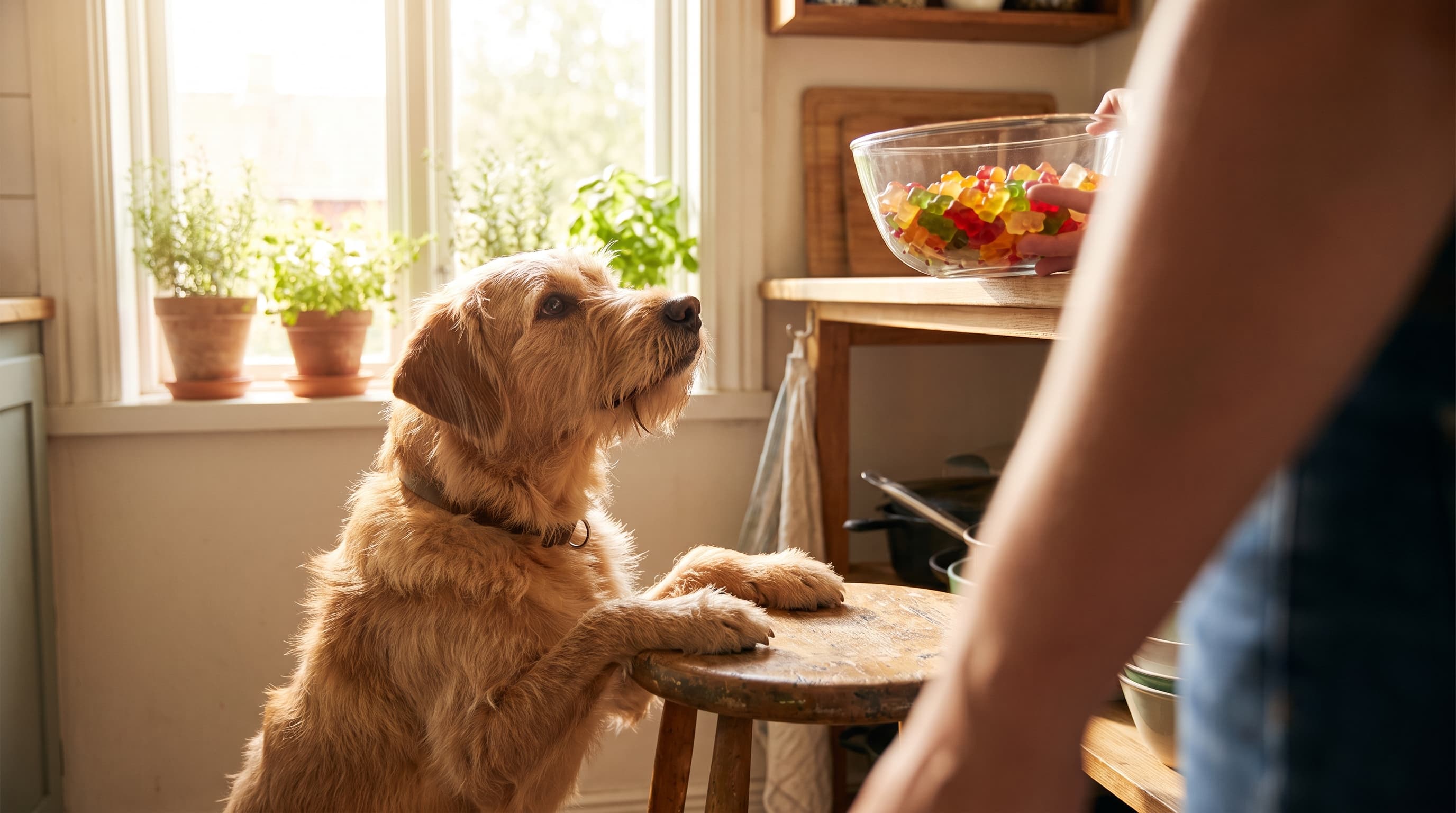
Those chewy, colorful candies are one of the most common "my dog grabbed it off the counter" foods, and the right response depends entirely on which kind your dog swallowed. Below we break down the difference between regular and sugar-free gummy bears, the warning signs to watch for, and exactly what to do next.
Are Gummy Bears Safe for Dogs?
Gummy bears fall into two very different risk categories. Regular, sugar-sweetened gummy bears are not poisonous. A dog that eats one or two is unlikely to have a serious problem, though the candy offers zero nutritional value. Sugar-free or "reduced sugar" gummy bears are a genuine emergency, because they are frequently sweetened with xylitol — a sugar alcohol that is extremely dangerous to dogs. As Great Pet Care explains, the safest policy is to keep all gummy candy away from your dog and treat any sugar-free variety as a poison risk until proven otherwise.
The Real Danger: Xylitol Toxicity
Xylitol is the reason gummy bears deserve their scary reputation. In humans it is a harmless sweetener, but in dogs it triggers a rapid, dangerous release of insulin that causes blood sugar to crash. According to the Pet Poison Helpline, xylitol can cause hypoglycemia within 10 to 60 minutes, and larger doses can lead to liver failure. The VCA Animal Hospitals guide to xylitol poisoning notes that even relatively small amounts can be toxic, which is why sugar-free gum, candy, and baked goods are considered emergencies for dogs.
The ASPCA lists xylitol among the top people-food hazards for pets precisely because it hides in so many "sugar-free" products. If a gummy bear label lists xylitol — sometimes called birch sugar — treat it as an urgent situation and contact your veterinarian or an animal poison control line right away.
What About Regular, Sugary Gummy Bears?
Even without xylitol, ordinary gummy bears are a poor choice for dogs. They are essentially concentrated sugar and gelatin with artificial flavors and dyes. As DogTime points out, a large quantity of sugary candy can cause vomiting, diarrhea, gas, and stomach upset, and repeated sugar overload contributes to obesity, dental decay, and — over time — an increased risk of diabetes, particularly in small dogs. The sticky texture can also cling to teeth and, in large amounts, pose a choking or blockage risk for tiny breeds.
If you want to give your dog a naturally sweet treat, stick to dog-safe options. A little plain, unsweetened fruit is a far better idea than candy — see our guides on whether dogs can have honey and dog-friendly snacking. And always steer clear of the genuinely toxic ones, like the grapes and raisins covered in can dogs eat grapes.
My Dog Ate Gummy Bears — What Should I Do?
Act quickly and methodically:
- Find the package and read the label. The single most important step is checking whether the candy contains xylitol (or "birch sugar"). Save the wrapper to show your vet.
- If it contains xylitol — or you are not sure — call your veterinarian or an animal poison control hotline immediately. Do not wait for symptoms. Xylitol acts fast, and early treatment gives the best outcome.
- If it was regular sugary candy and only a small amount, monitor your dog for stomach upset and make sure fresh water is available.
- Do not induce vomiting on your own unless a veterinary professional specifically tells you to.
- Note the details: how many your dog ate, the brand, and the time, so your vet can assess the risk accurately.
This article is general information and is not a substitute for professional veterinary advice. Only a veterinarian can evaluate your specific dog and situation, so when in doubt, call.
Warning Signs to Watch For
Whether the candy was sugary or sugar-free, know the symptoms that mean it is time to get help. Signs of xylitol poisoning or serious sugar-related upset can include:
- Vomiting or diarrhea
- Weakness, wobbliness, or difficulty standing
- Lethargy or collapse
- Tremors or seizures
- Loss of coordination
- Yellowing of the gums or eyes (a possible sign of liver involvement)
Any of these warrant an immediate call to your vet. Our overviews of dog poisoning signs and 12 signs your dog needs a vet visit can help you tell a minor tummy ache from a true emergency.
Safer Sweet Treats and Prevention
The best cure is prevention: store candy well out of reach, keep purses and backpacks off the floor, and remind guests — especially around holidays — not to share treats with the dog. On hot summer days, a much safer indulgence is a simple frozen snack; our guide to whether dogs can have ice cubes covers cooling options that won't send you to the emergency vet. When you want to reward your pup, reach for treats made for dogs or a few bites of dog-safe fruit rather than anything from the candy aisle.
Frequently Asked Questions
Will one gummy bear hurt my dog?
A single regular, sugar-sweetened gummy bear is unlikely to cause a serious problem for most dogs, though it offers no benefit. A single sugar-free gummy bear containing xylitol, however, can be dangerous — so always check the label and call your vet if xylitol is present.
How much xylitol is toxic to dogs?
Xylitol is toxic in very small amounts, and the danger rises with the dog's size and the dose. Because the exact quantity in a given candy is hard to know, any suspected xylitol ingestion should be treated as an emergency. Do not try to calculate a "safe" amount yourself — contact a veterinarian.
Are all sugar-free gummy bears dangerous?
Not every sugar-free candy contains xylitol, but many do, and some use it without prominent labeling. Because you cannot tell by looking, treat every sugar-free or "reduced sugar" gummy your dog eats as potentially toxic and verify the ingredient list immediately.
What are the first signs of xylitol poisoning?
Early signs often appear within 10 to 60 minutes and include weakness, wobbliness, vomiting, and collapse as blood sugar drops. Liver-related signs can appear later. Any of these symptoms after candy exposure require urgent veterinary attention.
Can dogs eat other gummy candies or fruit snacks?
The same rules apply. Fruit snacks, gummy worms, and sugar-free candies carry the same sugar and potential xylitol risks as gummy bears. It is safest to keep all human candy away from dogs entirely.
The Bottom Line
Dogs can technically stomach a regular gummy bear or two, but they should never have them — and sugar-free versions with xylitol can be deadly. Skip the candy, secure the treat jar, and reward your dog with something made for them instead.
Want more clear, vet-informed answers to the "can my dog eat this?" questions you actually search for? Subscribe to the Daily Wag newsletter for practical, no-nonsense dog nutrition and safety tips delivered straight to your inbox.