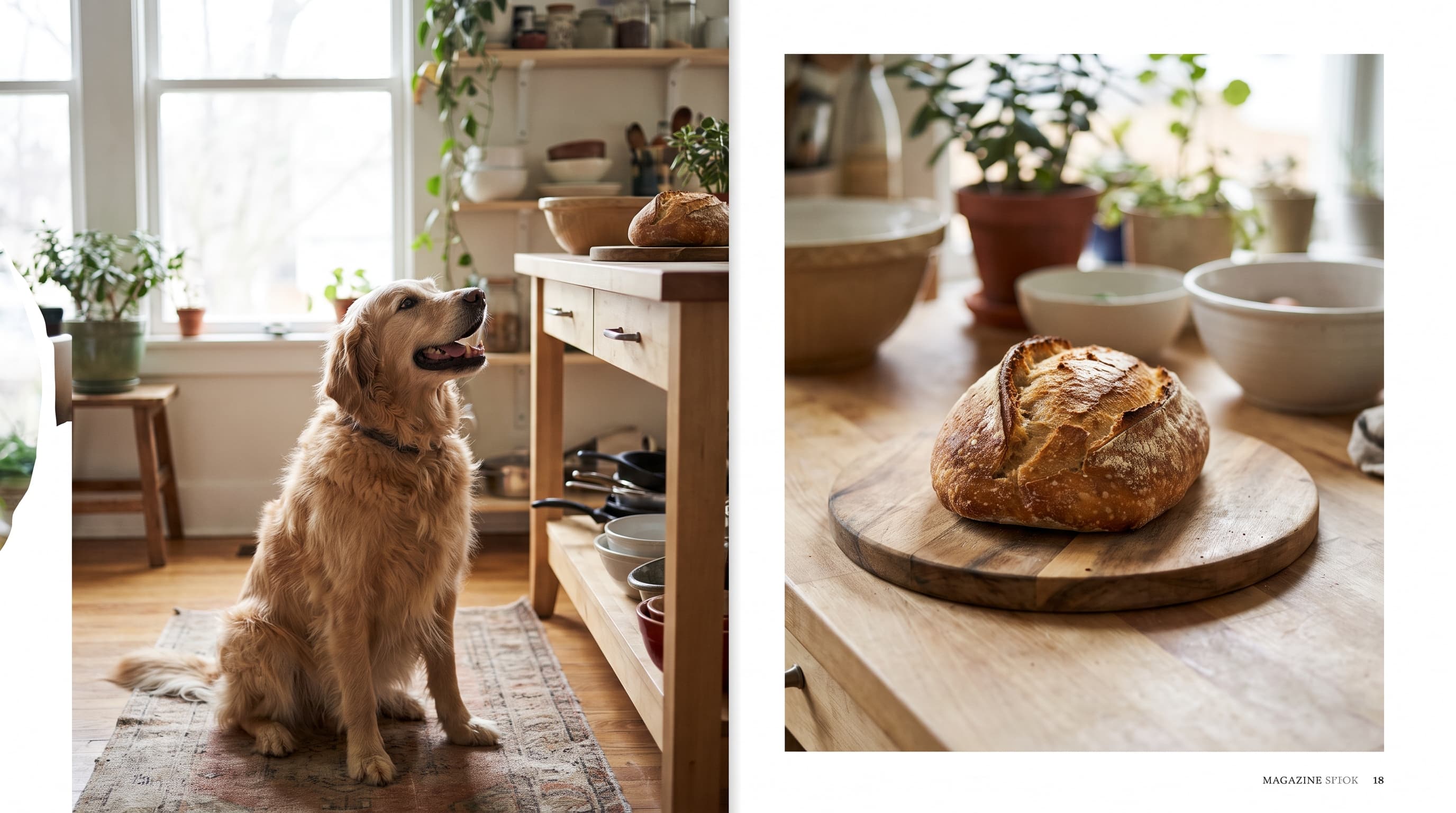

Can dogs eat sourdough bread? A small piece of plain, fully baked sourdough is not toxic and will not usually harm a healthy dog, though it offers little nutrition. Raw sourdough dough or starter, however, is a true emergency: it expands in the stomach and ferments into alcohol, so unbaked dough warrants an immediate call to your veterinarian.
Sourdough sits in a strange spot in the dog-safety world. The baked loaf on your counter is a mostly harmless carb, but the bubbling starter on your windowsill is one of the most dangerous kitchen items a dog can swallow. This guide breaks down exactly where the line falls, what to watch for, and when a chunk of bread turns into a race to the animal ER.
Can Dogs Eat Baked Sourdough Bread?
Yes, in moderation. Plain, fully baked sourdough bread with no toxic add-ins is generally safe as an occasional treat. As the American Kennel Club notes, dogs can eat bread much the way people do — in moderation. Once sourdough is baked, the oven's heat kills the active yeast and cooks off the alcohol produced during fermentation, which removes the two dangers that make raw dough so risky.
That said, "safe" is not the same as "good for them." Bread is essentially empty calories for a dog: high in carbohydrates, low in the protein and nutrients dogs actually need, and easy to overfeed. Sourdough's tangy flavor comes from lactic and acetic acids created by fermentation, which can also be a little harsh on sensitive stomachs. For dogs prone to digestive upset, plain rice or a designated dog treat is a gentler choice — see our roundup of the best dog treats for sensitive stomachs for better everyday options.
Why Raw Sourdough Dough Is a Life-Threatening Emergency
Unbaked sourdough dough and starter are a completely different story. According to the Pet Poison Helpline, consuming unbaked sourdough can lead to poisoning, and the danger comes from two separate mechanisms happening at once.
1. The dough keeps rising inside the stomach
A dog's stomach is a warm, moist environment — essentially a perfect proofing box. Swallowed dough continues to expand there, stretching the stomach and potentially triggering bloat, or gastric dilatation-volvulus (GDV), a condition in which the stomach distends and can twist on itself. GDV is a surgical emergency that the AKC notes can cause shock and death within a couple of hours if untreated.
2. Fermentation produces alcohol
As the yeast digests sugars in the dough, it releases carbon dioxide gas and ethanol — alcohol. That alcohol is absorbed straight into the bloodstream, causing alcohol toxicosis. The team at Durvet explains that this fermentation makes raw dough hazardous to pets, and the resulting intoxication can drop a dog's blood sugar, blood pressure, and body temperature to dangerous lows. Because dogs are far smaller than people, even a modest amount of starter can push them into serious poisoning.
Signs Your Dog Ate Raw Dough — and What to Do
If your dog raids a proofing bowl or licks up starter, act quickly rather than waiting to "see how it goes." Warning signs of raw-dough ingestion include:
- A visibly distended, firm, or swollen belly
- Unproductive retching or attempts to vomit with nothing coming up
- Restlessness, pacing, or obvious abdominal discomfort
- Drooling, weakness, or an unsteady, drunken-looking gait
- Lethargy, disorientation, low body temperature, or collapse
Any of these — especially a swollen abdomen or repeated unproductive retching — is a call-the-vet-now situation. The Pet Poison Helpline can be reached at (855) 764-7661, and your nearest emergency clinic should be your very next stop. Do not try to induce vomiting at home unless a veterinarian specifically tells you to; with a rapidly expanding mass of dough, that can make things worse. When in doubt, our guide to the 12 signs your dog needs a vet visit can help you gauge urgency, but raw dough always earns a phone call.
How Much Baked Sourdough Is Too Much?
For baked sourdough, portion is everything. Treats of any kind should make up no more than about 10% of your dog's daily calories, and bread should be an occasional nibble within that budget — think a bite-sized piece for a small dog or a couple of small chunks for a large one, not a whole slice every day.
Too much bread contributes to weight gain and can crowd out the balanced nutrition dogs get from their regular food. Dogs with wheat or grain sensitivities may react to sourdough with itching, gas, or loose stools, so introduce it in a tiny amount and watch for a reaction. This is the same "moderation" logic that applies to nearly every human food — the same reason we tell owners to go easy on bread of any kind and to treat pizza as an off-limits combination of risky ingredients.
Sourdough Ingredients That Are Extra Dangerous
Plain sourdough is one thing; flavored and specialty loaves are another. Before sharing, make sure the bread contains none of these common toxic add-ins:
- Raisins and currants: Grapes and raisins can cause acute kidney failure in dogs, even in small amounts. Cinnamon-raisin sourdough is a hard no.
- Garlic and onion: Garlic sourdough, focaccia, and herb loaves often contain alliums, which damage red blood cells and can cause anemia.
- Xylitol: This sugar substitute, found in some "diet" or sugar-free baked goods, is extremely toxic to dogs and can trigger a dangerous blood-sugar crash.
- Macadamia and other nuts: Nut-studded artisan loaves can cause weakness, tremors, or pancreatitis.
- Excess salt: Heavily salted crusts add up fast in a small dog — here's the truth about dogs and salt.
The AKC flags raisins, garlic, macadamia nuts, and xylitol as the bread ingredients most likely to turn a harmless snack into a poisoning. When in doubt, keep the loaf plain.
Healthier Treats to Share Instead
If you love handing your dog a bite from your plate, there are far better options than bread. Small pieces of plain cooked chicken, carrot sticks, green beans, blueberries, or a lick of dog-safe peanut butter deliver flavor with actual nutrition and far fewer empty carbs. A little plain cheese is fine for many dogs too — here's how to share cheese safely. Reserving "human food" moments for these choices keeps the ritual without the risk, and it keeps your dog's waistline in check.
Is Sourdough Better for Dogs Because It's Fermented?
Because sourdough is made through fermentation, some owners assume it delivers gut-friendly probiotics like yogurt or kefir. It doesn't. The wild yeast and bacteria that leaven the dough are largely killed during baking, and any beneficial cultures that survive are present in amounts far too small to meaningfully support your dog's microbiome. Sourdough may be a little easier to digest than some breads because fermentation pre-breaks some starches and gluten, but that's a modest edge — it does not turn an empty-calorie snack into a health food.
If you want to support your dog's digestion, skip the bread and talk to your veterinarian about a diet formulated for gut health or a vet-recommended probiotic supplement. Fermented dog-safe foods like a spoonful of plain unsweetened yogurt do far more for the microbiome than a slice of sourdough ever will, and they come without the extra carbohydrates.
What About Sourdough Pizza Crust, Pretzels, and Discard?
Specialty sourdough products deserve extra caution. Sourdough pizza crust usually arrives coated in garlic, oil, and cheese, and often sits under toppings that are genuinely toxic — which is why we treat pizza as a food to keep away from dogs entirely. Soft pretzels made with sourdough are typically loaded with coarse salt, a real concern for small dogs. And "sourdough discard" is simply raw starter by another name: it is unbaked, actively fermenting, and carries the exact same bloat-and-alcohol risks as a proofing bowl of dough. Keep discard sealed and out of counter-surfing range.
Frequently Asked Questions
Is a small bite of baked sourdough toxic to dogs?
No. A small piece of plain, fully baked sourdough is not toxic and typically causes nothing worse than mild tummy upset in a sensitive dog. The danger is raw dough, not the baked loaf.
My dog ate raw sourdough starter — is that an emergency?
Yes. Raw starter and dough can expand in the stomach and ferment into alcohol, causing bloat and alcohol poisoning. Call your veterinarian or the Pet Poison Helpline at (855) 764-7661 immediately, even if your dog seems fine at first.
Can puppies have sourdough bread?
It's best to skip it. Puppies have tiny margins for extra calories and are more vulnerable to low blood sugar, so their calories should come from a complete puppy diet rather than bread.
How long after eating raw dough do symptoms appear?
Signs can begin within 30 minutes to a couple of hours as the dough rises and ferments, but the situation can escalate quickly. Because timing varies, don't wait for symptoms — contact a vet as soon as you know dough was eaten.
Is sourdough worse than regular bread for dogs?
Baked sourdough is roughly comparable to other plain breads. Raw sourdough dough carries the same rising-and-fermenting risks as any raw yeast dough, so the "baked vs. raw" distinction matters far more than the type of bread.
Can dogs eat sourdough crackers or toast?
Plain, unsalted sourdough crackers or toast in tiny amounts are generally okay, but many crackers are loaded with salt, garlic, or seasonings — read the label and keep portions small.
This article is for general informational purposes and is not a substitute for veterinary advice. If you suspect your dog has eaten raw dough or a toxic ingredient, contact your veterinarian or an emergency animal hospital right away.
Love practical, science-backed answers to "can my dog eat this?" Get more feeding guides and subscribe to the Daily Wag newsletter for bite-sized dog-care tips delivered straight to your inbox.