
Can Dogs Eat Pizza? What Every Dog Owner Should Know
No, dogs should not eat pizza. A whole slice combines several things dogs handle poorly at once: garlic and onion in the sauce (both toxic to dogs), heavy salt and fat that can trigger stomach upset or pancreatitis, and rich cheese many dogs can't digest. A stray nibble of plain crust rarely causes an emergency, but pizza should never be a treat or a meal.
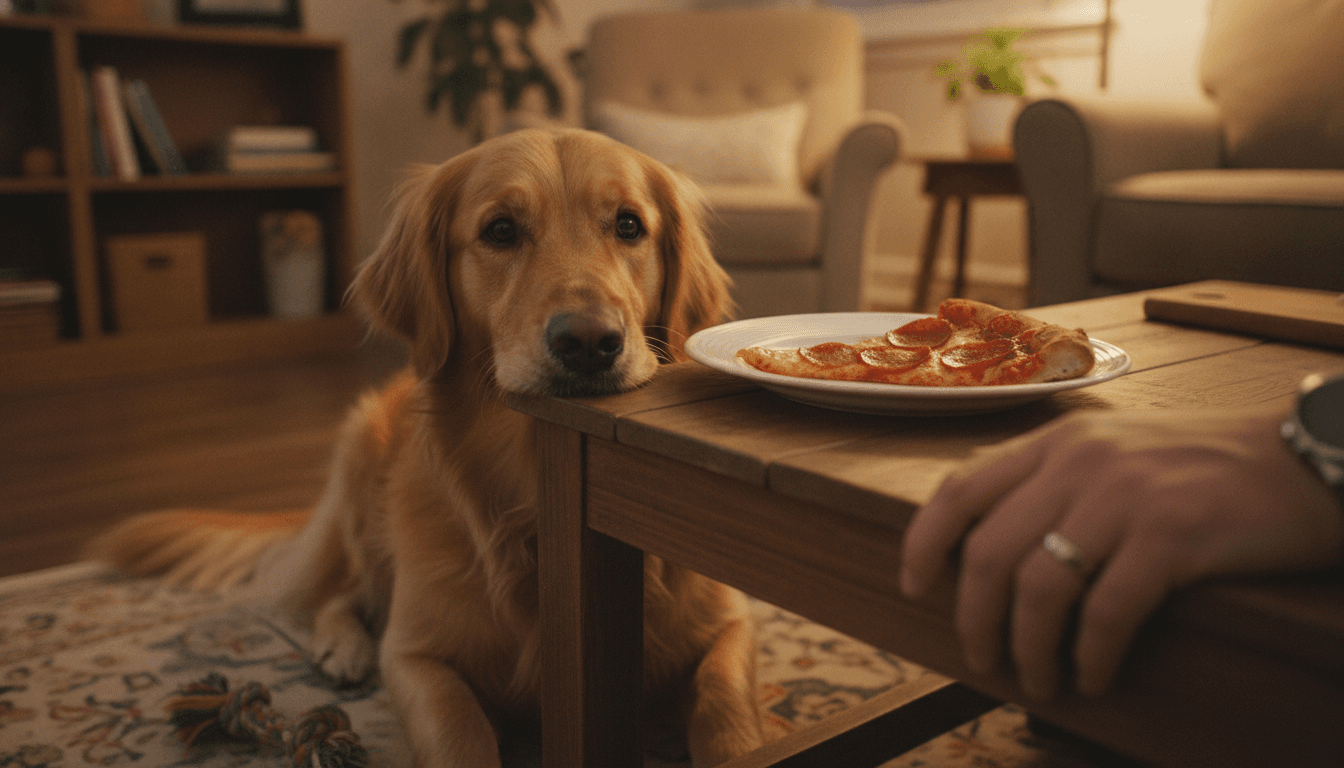
That "stolen bite off the coffee table" moment is incredibly common, so the real question most owners have isn't should I feed my dog pizza — it's my dog already ate some, now what? Below we break pizza down ingredient by ingredient, walk through exactly what to watch for, and offer safer ways to let your dog feel included on pizza night.
Why pizza is a bad idea for dogs
Pizza isn't a single food — it's a stack of ingredients, and several of them work against your dog. According to PetMD, the combination of high fat, high sodium, dairy, and seasonings is what makes even a "harmless looking" slice risky. Hill's Pet notes that the empty calories alone can push a dog toward obesity over time. The problem is rarely one bite of bread — it's everything baked on top of and into it.
Onions and garlic: the hidden toxin in the sauce
Almost every pizza sauce contains garlic, onion, or both, and these belong to the allium family, which is toxic to dogs. Pet Poison Helpline explains that alliums damage a dog's red blood cells and can cause a form of anemia, with garlic being roughly five times more potent than onion by weight. The danger is dose-dependent, so a smear of sauce on one bite is usually mild — but garlic bread crusts, onion-heavy toppings, or repeated exposure raise the stakes. The ASPCA lists onions and garlic among the people foods to avoid feeding pets entirely.
Salt and fat: the everyday hazards
Pizza is loaded with sodium and grease. Dogs are far more sensitive to salt than people are, and large amounts can cause excessive thirst, vomiting, and in extreme cases sodium-ion toxicity. The fat is the other concern: a sudden hit of greasy, fatty food is a classic trigger for pancreatitis, a painful and sometimes serious inflammation of the pancreas. VCA Animal Hospitals notes that high-fat meals and dietary "indiscretion" — getting into rich human food — are common triggers, especially in smaller and predisposed breeds.
Cheese and dairy
Cheese isn't toxic, but it's fatty and many dogs are lactose intolerant, so a cheesy slice can mean gas, loose stool, or vomiting. If you want to share cheese safely as an occasional treat, our guide to whether dogs can eat cheese covers the right types and portions. The same caution applies to a creamy white pizza, which is often even richer.
What about pizza crust?
Plain, fully baked crust with nothing on it is the least harmful part of a pizza — it's essentially bread. As our overview of whether dogs can have bread explains, a small piece of plain baked bread is generally fine for most dogs in moderation. The catch is that crust is rarely plain: pizzeria crusts are often brushed with garlic butter, oil, or salt, and stuffed crust hides cheese. Raw or under-proofed pizza dough is a separate, more serious danger — the yeast continues to ferment in the warm stomach, producing alcohol and expanding painfully. Never give a dog raw dough.
My dog ate pizza — what should I do?
Don't panic. For a single small bite of cooked, cheese-and-sauce pizza, most healthy dogs will be fine, and the worst you'll likely see is mild stomach upset. Offer fresh water and watch them for the next 24 hours. Call your veterinarian or an animal poison control line right away if your dog is small, ate a large amount, ate something garlic- or onion-heavy, ate raw dough, or shows any of the warning signs below.
- Vomiting or diarrhea that is repeated or won't stop
- Lethargy, weakness, or pale gums (possible sign of allium toxicity)
- A hunched posture, painful belly, or refusal to eat (possible pancreatitis)
- Excessive thirst, restlessness, or tremors (possible salt overload)
- A swollen, bloated abdomen after eating raw dough
When in doubt, call. Two good 24/7 numbers to keep handy are the ASPCA Animal Poison Control Center and the Pet Poison Helpline (note that both may charge a consultation fee).
Are any pizza toppings safe for dogs?
A few toppings are dog-safe on their own, in plain form — but that's very different from being safe baked into a salty, cheesy, garlicky pizza. Plain cooked plain chicken, plain cooked plain mushroom (the grocery-store kind), and plain tomato flesh are generally tolerated. Others are problems: olives are high in salt and often brined (see our note on dogs and olives), and cured meats like pepperoni and sausage are loaded with fat, sodium, and spices. The safest approach is to skip pizza entirely and offer the topping ingredient plain and separately, if at all.
Better pizza-night alternatives for your dog
Your dog mostly wants to be part of the fun, not the pepperoni specifically. Give them a job and a treat of their own:
- A few pieces of plain cooked chicken or a dog-formulated treat in a snuffle mat or puzzle toy
- Crunchy dog-safe veggies like carrot sticks or a spoonful of plain pumpkin — see dogs and pumpkin
- A "dog pizza": a slice of dog-safe sweet potato topped with a smear of plain yogurt and a sprinkle of their kibble
- A stuffed, frozen rubber toy to keep them busy while you eat
For a broader list of people foods that are actually good for dogs, bookmark our roundup of the healthiest human foods for dogs.
Frequently asked questions
Can dogs eat a small piece of pizza crust?
A small piece of plain, fully baked crust with no garlic, butter, or salt is usually fine for a healthy adult dog as a rare treat. Because most restaurant crusts are seasoned or oiled, it's safest to assume crust is not plain unless you made it yourself.
Is pepperoni pizza bad for dogs?
Yes. Pepperoni is very high in fat, salt, and spices, and it sits on top of cheese, garlicky sauce, and dough. It's one of the worse pizza types to share and is best avoided completely.
What if my dog ate pizza with onions or garlic?
Onions and garlic are toxic to dogs and the risk depends on how much they ate relative to their size. Call your veterinarian or a pet poison hotline, and watch for weakness, pale gums, vomiting, or dark urine over the next few days, since allium-related anemia can be delayed.
Can puppies eat pizza?
No. Puppies have smaller bodies and more sensitive digestive systems, so the salt, fat, and toxic ingredients in pizza hit them harder. Stick to a complete puppy food and vet-approved treats.
Can dogs eat cheese pizza without toppings?
Plain cheese pizza is still a poor choice. Even without meat toppings, you're giving your dog fatty cheese, salty dough, and garlic-and-onion sauce all at once, which can cause digestive upset and, over time, weight gain.
The bottom line
Pizza is a human food that simply isn't built for dogs. One stolen bite usually isn't an emergency, but it's never a good idea to offer it on purpose — and a few ingredients, especially garlic, onion, and raw dough, can turn a "treat" into a vet visit. When you're unsure about a specific food or a specific incident, your veterinarian is always the best source of advice for your individual dog.
This article is for general information and isn't a substitute for professional veterinary advice. If your dog ate something concerning or seems unwell, contact your veterinarian.
Want more easy, vet-aware answers to "can my dog eat this?" Subscribe to the Daily Wag newsletter for practical, dog-safe food tips delivered to your inbox.