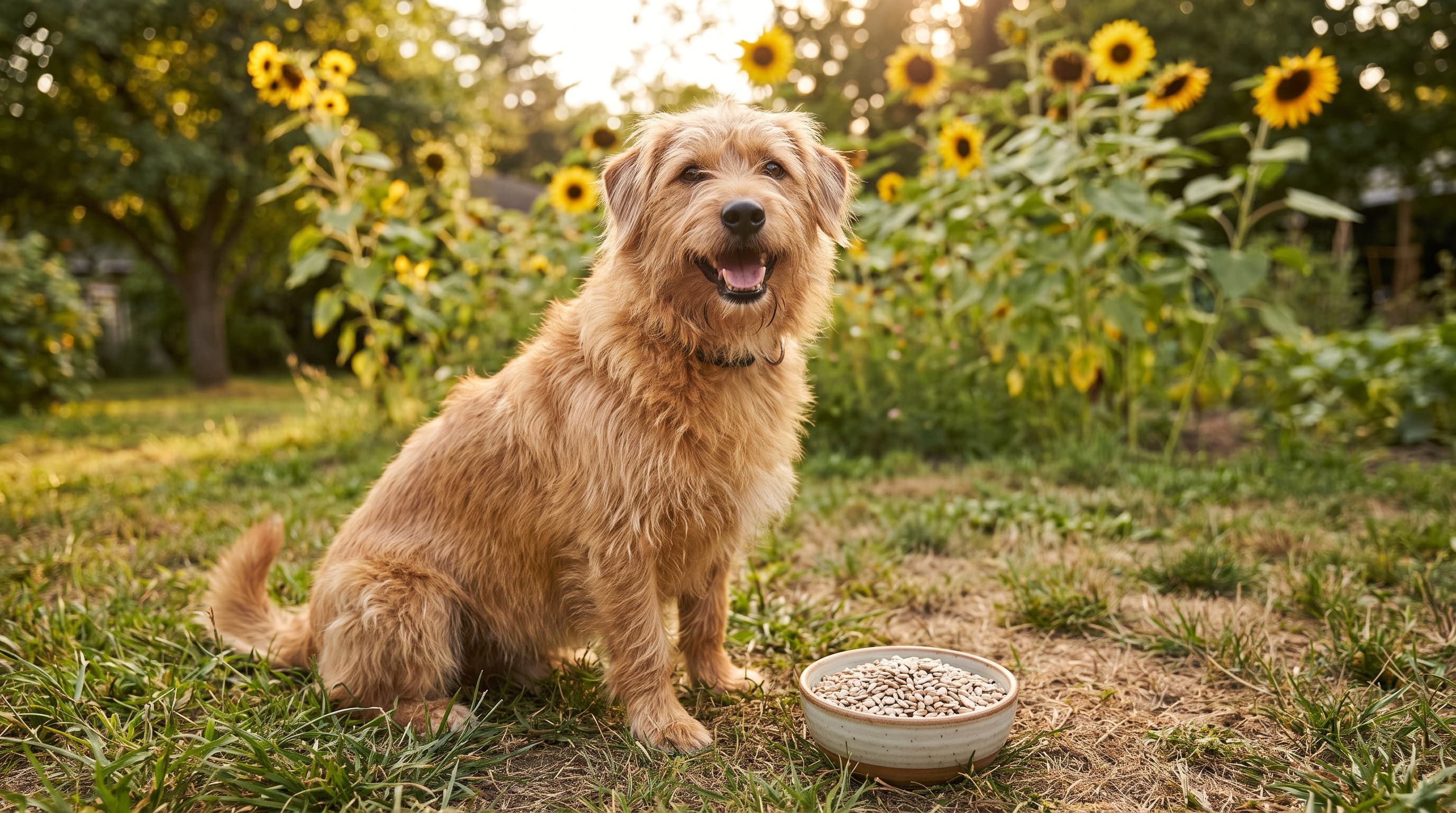

Can Dogs Eat Sunflower Seeds? What's Safe and What's Not
Dogs can eat sunflower seeds only if they are plain, unsalted, and fully shelled. A few seeds make a fine occasional treat rich in vitamin E and healthy fats. Never feed seeds in the shell, which can cause choking or blockages, and avoid salted or flavored seeds, which can lead to salt toxicity and stomach upset.
Are Sunflower Seeds Safe for Dogs?
Sunflower seeds are not toxic to dogs, but "not toxic" is not the same as "feed freely." The kernel itself, the soft inner seed, is safe in small amounts. The trouble comes from the two ways sunflower seeds are usually sold to humans: in the shell, and heavily salted. According to PetMD, dogs can have plain, shelled, unsalted sunflower seeds as an occasional snack, but the shells and seasonings turn a harmless seed into a real hazard.
The American Kennel Club draws the same line: the meat of the seed is fine in moderation, but the fibrous shell is indigestible and the salt on packaged seeds is dangerous. So while you do not need to panic if your dog snags a stray kernel off the floor, sunflower seeds are not a treat to hand out by the handful.
Health Benefits of Sunflower Seeds for Dogs
In small, appropriate amounts, sunflower seed kernels offer a few genuine nutritional perks. They are a notable source of vitamin E, an antioxidant that supports healthy skin, a shiny coat, and immune function. They also provide healthy unsaturated fats, plus minerals like magnesium and selenium and a small amount of plant protein.
That said, your dog does not need sunflower seeds to get these nutrients. A complete and balanced dog food already supplies vitamin E and essential fatty acids, so seeds are a bonus rather than a necessity. If your goal is a skin-and-coat boost, there are dog-formulated options designed for that purpose. Sunflower seeds are best viewed as a small, occasional treat your dog might enjoy, not a supplement you should add for health reasons. For fat-based treats, the same moderation applies to foods like coconut and cheese.
The Real Risks: Shells, Salt, and Fat
Three specific dangers make sunflower seeds a treat to handle with care. Understanding each one helps you decide whether to share and how much.
Shells. Sunflower seed shells are tough, fibrous, and indigestible. Dogs cannot break them down, so eating shells can cause choking, mouth or throat irritation, or, in larger quantities, an intestinal blockage, especially in small dogs. Always feed fully shelled kernels only.
Salt. Most packaged sunflower seeds are heavily salted. Too much salt can cause salt toxicity (technically called sodium ion poisoning), with symptoms ranging from excessive thirst and vomiting to tremors and weakness. The ASPCA warns that large amounts of salt are dangerous for pets, so salted snack seeds are off the table.
Fat. Sunflower seeds are high in fat. While a few kernels are fine, too many can cause stomach upset and, over time, contribute to weight gain or trigger pancreatitis, a painful inflammation of the pancreas. PetMD notes that high-fat foods are a known pancreatitis risk, so dogs with a history of the condition should avoid sunflower seeds entirely.
How Many Sunflower Seeds Can a Dog Have?
Less is more. For a small dog, a few plain shelled kernels are plenty; for a large dog, up to ten or so as an occasional treat is reasonable. The universal guideline applies: treats should make up no more than 10% of your dog's daily calories, and because sunflower seeds are calorie-dense and fatty, they hit that ceiling fast.
These should be a now-and-then snack, not a daily habit. If you want to offer them, introduce just one or two the first time and watch for any digestive upset before offering more. Keep the bag of salted seeds you snack on out of reach, since the danger is rarely a single kernel and almost always a dog who gets into a whole package.
My Dog Ate a Lot of Sunflower Seeds: What Now?
If your dog gulped down a handful of plain, shelled, unsalted kernels, they will most likely be fine, though they may have mild gas or a loose stool. The situation is more concerning if your dog ate a large quantity of seeds in the shell, or a significant amount of salted seeds.
With shells, watch for signs of obstruction over the next day or two: repeated vomiting, straining or inability to pass stool, a tender or bloated belly, or loss of appetite. With salted seeds, watch for excessive thirst, vomiting, diarrhea, wobbliness, or tremors, which can signal salt toxicity. In either case, do not wait it out if symptoms appear, contact your veterinarian or an emergency animal poison hotline right away. When in doubt about how much your dog ate, a quick call to your vet is always the safer choice. Salty cured foods like salami carry the same salt-overload concern and are worth keeping out of reach for the same reason.
Safe Ways to Share Sunflower Seeds
If you would like to offer sunflower seeds as a treat, here is how to do it responsibly:
- Buy raw or dry-roasted, unsalted kernels. Skip anything labeled salted, seasoned, or flavored.
- Shell them completely. Only the soft inner kernel should ever reach your dog.
- Keep portions tiny. A few kernels for a small dog, up to a small pinch for a large dog.
- Mix into food. A couple of crushed kernels sprinkled over a meal or stirred into a dog-safe snack like plain pumpkin is an easy way to share without overdoing it.
And as always, avoid sunflower seed products made for humans, like trail mix or flavored snack packs, which often hide salt, oils, chocolate, raisins, or xylitol, several of which are genuinely toxic to dogs.
Sunflower Seeds vs. Other Seeds and Nuts
Sunflower seeds often come up alongside other seeds and nuts that owners wonder about, and they are not all equal. Pumpkin seeds, for example, are also safe in plain, unsalted, moderate amounts and are sometimes ground into food as a treat. Flaxseed and chia are likewise generally tolerated in tiny quantities. Sunflower seeds sit comfortably in this "fine in moderation" group, with the same shell-and-salt caveats.
Nuts are a different story and a more common source of trouble. Macadamia nuts are toxic to dogs and should never be fed. Many other nuts, including almonds, walnuts, and pistachios, are not technically toxic but are high in fat, hard to digest, frequently salted, and a choking or obstruction risk, so most vets advise skipping them. The takeaway is that you cannot lump all seeds and nuts together: a plain shelled sunflower kernel is a low-risk occasional treat, while a handful of salted mixed nuts is something to keep well away from your dog.
This is also why human snack mixes are so risky. Trail mix and snack blends often combine sunflower seeds with raisins, chocolate, and xylitol-sweetened ingredients, several of which are dangerous or outright toxic to dogs. The presence of safe sunflower seeds in a mix does not make the whole mix safe. When you want to share, start with a single, simple, dog-appropriate ingredient rather than anything designed for a human pantry.
Frequently Asked Questions
Can dogs eat sunflower seeds in the shell?
No. The shells are tough and indigestible, posing a choking hazard and a risk of intestinal blockage, particularly in small dogs. Only fully shelled kernels should be offered.
Are salted sunflower seeds bad for dogs?
Yes. The salt on packaged seeds can lead to salt toxicity, with symptoms like excessive thirst, vomiting, and tremors. Always choose plain, unsalted kernels for your dog.
Can dogs eat sunflower butter or sunflower oil?
Plain sunflower oil in tiny amounts is generally not toxic, but it is high in fat. Sunflower seed butter can be fine if it is unsalted and free of additives like xylitol, but check the label carefully and offer only small amounts.
How many sunflower seeds will hurt a dog?
There is no exact number, but the risk rises with quantity, with shells, and with salt. A few plain kernels are usually harmless; a whole bag of salted, in-shell seeds can cause serious problems and warrants a call to your vet.
Are sunflower seeds good for a dog's coat?
Sunflower seeds contain vitamin E and healthy fats that support skin and coat, but your dog gets these nutrients from balanced dog food already. Seeds are a small treat, not a coat supplement, and should not be relied on for that purpose.
The Bottom Line
Sunflower seeds land squarely in the "okay in moderation, with conditions" category. Plain, shelled, unsalted kernels are a safe occasional treat that offers a little vitamin E and healthy fat, but shells, salt, and excess fat are real hazards you have to manage. Keep portions tiny, keep the salted snack bags out of reach, and you can share a few kernels without worry. This guide is general information only and not a substitute for veterinary advice; talk to your veterinarian before adding new treats, especially if your dog has a history of pancreatitis or other health conditions.
Curious about more everyday foods your dog wants to share? Read our other dog-food safety guides and subscribe to the Daily Wag newsletter for vet-informed tips delivered to your inbox.