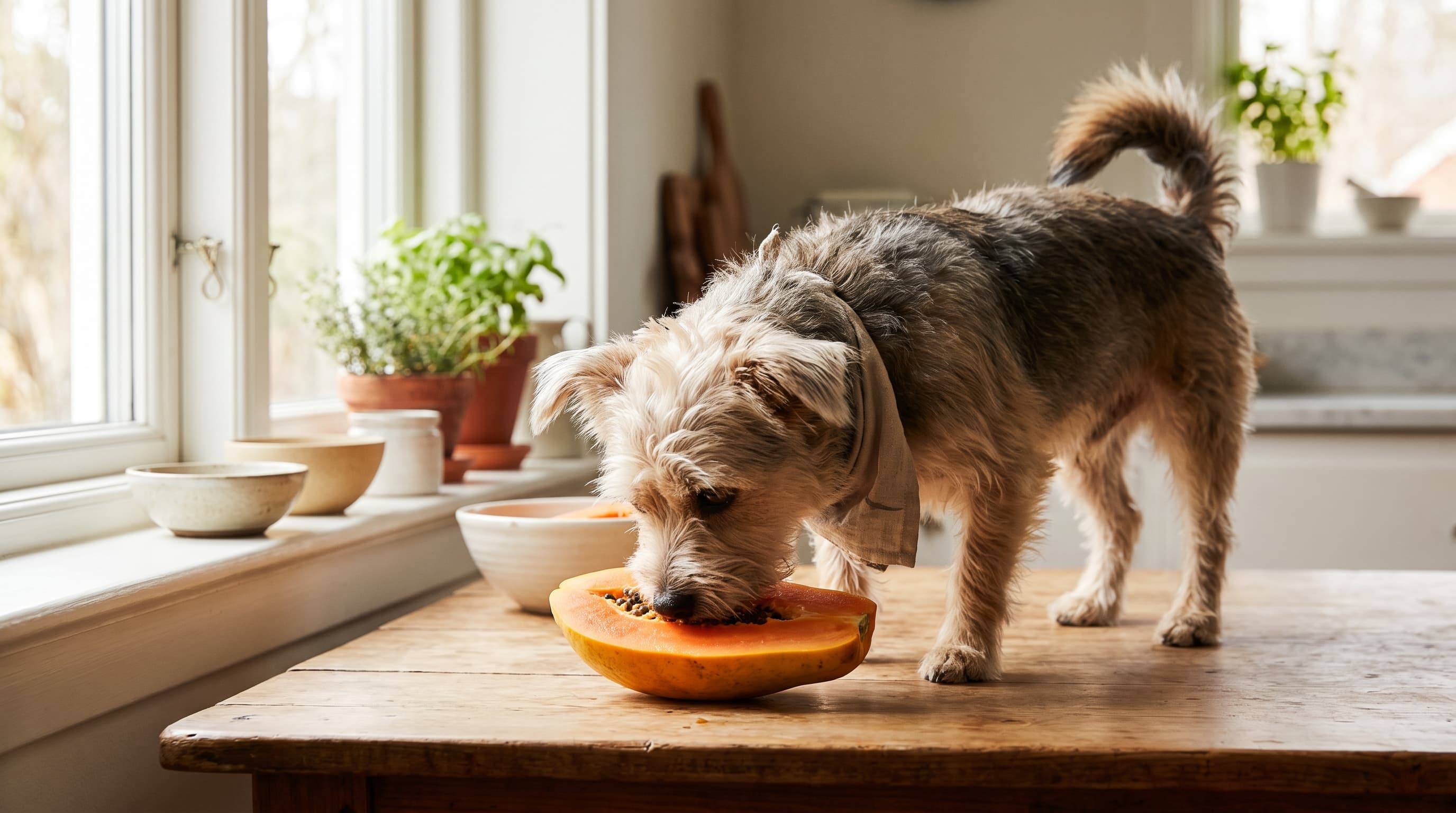

Can Dogs Have Papaya? A Vet-Informed Guide to Safe Servings
Yes, dogs can have papaya. Ripe, peeled, seedless papaya is a safe, low-calorie treat that delivers fiber, vitamins A and C, and digestive enzymes. Remove the skin and every seed, cut the flesh into small cubes, and keep treats under 10% of daily calories. Skip dried papaya and unripe fruit.
That quick answer covers most pet parents, but papaya has a few real catches worth understanding before you share a slice. Below, we break down the benefits, the parts you must remove, how much is safe by dog size, and the warning signs of too much. Everything here is general guidance, not a substitute for your veterinarian's advice.
Is Papaya Safe for Dogs?
Papaya itself is non-toxic to dogs, and most veterinary nutrition resources list it among the fruits that are fine to share in moderation. The fleshy orange part of a ripe papaya is the only portion you want your dog to eat. According to PetMD, papaya can be a healthy snack when prepared correctly, while Native Pet highlights its fiber and enzyme content as gut-friendly perks.
The caveats are all about preparation. The seeds, skin, and overripe or dried forms create the risks—not the fruit. As long as you serve fresh, ripe, peeled flesh in small amounts, papaya is one of the safer "human foods" you can offer. If your dog has diabetes, a sensitive stomach, or a history of pancreatitis, check with your vet first, since even healthy fruit carries natural sugar.
Health Benefits of Papaya for Dogs
Papaya earns its reputation as a "superfruit" for a reason. A small serving packs a surprising nutritional punch that complements a complete-and-balanced diet without adding many calories.
- Fiber for digestion: The soluble fiber in papaya can help firm up loose stools and keep things moving. Parrish Veterinary Clinic notes papaya's role in supporting healthy digestion.
- Papain, a natural enzyme: Papaya contains papain, a proteolytic enzyme that helps break down proteins and is often associated with easier digestion.
- Vitamins A, C, and E: These antioxidants support skin, coat, vision, and immune health. NOW FRESH points to papaya's vitamin density as a key benefit.
- Potassium and folate: These minerals support nerve, muscle, and cellular function.
- Hydration: Papaya is roughly 88% water, making frozen cubes a refreshing summer treat on a hot day.
That said, dogs on a complete commercial diet already get the nutrients they need. Think of papaya as a fun bonus, not a supplement your dog depends on. The real value of fruit treats often lies less in the vitamins and more in the experience—a novel taste, a cooling frozen snack on a hot day, or a healthy reward during training that won't pack on pounds the way a fatty biscuit might. Used thoughtfully, a few cubes of papaya can make your dog's day a little brighter while supporting, rather than disrupting, a balanced diet.
Which Parts of Papaya Are Dangerous?
This is the section that matters most. The flesh is friendly, but three components are not.
Papaya Seeds
Always scoop out every seed. Papaya seeds contain trace amounts of cyanogenic compounds, and—more importantly for most dogs—their small, slippery shape poses a choking hazard and can contribute to intestinal blockage if eaten in quantity. Country Vet Mom advises removing all seeds before serving.
The Skin
Papaya skin is tough, fibrous, and hard for dogs to digest. Large pieces can cause stomach upset or, in small dogs, a blockage risk. Peel the fruit completely.
Dried and Unripe Papaya
Dried papaya concentrates sugar into a much smaller volume, making it easy to overdo calories and spike blood sugar. Many commercial dried fruits also contain added sweeteners. Unripe (green) papaya is harder to digest and more likely to cause an upset stomach. Stick with fresh, ripe fruit.
How Much Papaya Can a Dog Eat?
The golden rule for any treat is the 10% rule: treats, including fruit, should make up no more than 10% of your dog's daily calories. The rest should come from a complete-and-balanced dog food. Here's a rough starting guide for fresh papaya cubes:
- Extra-small dogs (under 10 lbs): 1–2 small cubes (about a teaspoon).
- Small dogs (10–25 lbs): 2–3 small cubes.
- Medium dogs (25–50 lbs): a small handful of cubes.
- Large dogs (50+ lbs): a slightly larger handful, still as an occasional treat.
Introduce papaya slowly—offer one small piece and watch for 24 hours before giving more. Too much fiber and natural sugar at once is the most common cause of diarrhea or gas. For dogs with delicate digestion, our guide to the best dog treats for sensitive stomachs can help you build a gentler snack rotation.
How to Safely Prepare Papaya for Your Dog
Preparation takes about a minute and removes nearly all the risk:
- Choose a ripe papaya—the skin should be mostly yellow-orange and give slightly when pressed.
- Wash the outside, then slice in half and scoop out all the seeds.
- Peel away the skin completely.
- Cut the flesh into small, bite-sized cubes appropriate for your dog's size.
- Serve plain. Skip the smoothies, sweetened yogurt mixes, or canned papaya in syrup.
For a hot-weather twist, freeze the cubes for a crunchy, hydrating treat. Papaya also pairs well with other dog-safe fruits—see what else is on the menu in our roundups on whether dogs can eat mango and coconut.
Signs Your Dog Ate Too Much Papaya
Papaya is gentle, but overdoing it—or eating the seeds and skin—can cause problems. Watch for:
- Soft stools, diarrhea, or noticeably increased gas
- Vomiting or a clearly upset stomach
- Lethargy or signs of abdominal discomfort
- Straining or signs of a possible blockage (especially if seeds or skin were eaten)
Mild digestive upset usually resolves on its own with a brief return to a bland diet. But if symptoms are severe, persist beyond a day, or you suspect a blockage, contact your veterinarian promptly. When in doubt, a quick call to your vet is always the safest move.
Creative Ways to Serve Papaya to Your Dog
Once you've mastered safe prep, papaya becomes a versatile treat. Here are a few owner-favorite ways to serve it:
- Frozen cubes: Freeze bite-sized pieces for a hydrating, crunchy summer snack that doubles as a soothing teething aid for puppies (in tiny amounts).
- Mashed topper: Mash a small spoonful of ripe papaya over your dog's regular food for a fiber-rich flavor boost.
- Puzzle-toy filler: Mix a little mashed papaya with plain canned pumpkin and stuff it into a rubber puzzle toy, then freeze for long-lasting enrichment.
- Fruit medley: Combine small amounts of papaya with other dog-safe fruits like blueberries or watermelon for a colorful, vitamin-packed treat bowl.
Whatever the format, keep the total within the 10% treat rule and always serve plain—no added sugar, syrup, honey, or sweetened yogurt. If you like rotating produce, our guide to whether dogs can eat applesauce covers another easy fruit option to keep snacks interesting.
Which Dogs Should Avoid Papaya?
Papaya is safe for most healthy dogs, but a few should steer clear or get vet clearance first. Diabetic dogs and dogs prone to weight gain may not tolerate the natural sugar well. Dogs with a history of pancreatitis, chronic digestive disorders, or food sensitivities should be introduced to any new food only under veterinary guidance. And because every dog is an individual, even a generally safe fruit can occasionally trigger an allergic reaction—watch for itching, swelling, or digestive upset the first few times. When in doubt, your veterinarian is the best resource for your specific dog.
Frequently Asked Questions
Can puppies eat papaya?
In tiny amounts, yes—but puppies have sensitive, developing digestive systems, so introduce any new food cautiously and only after their main nutritional needs are met by a quality puppy food. Ask your vet before adding treats.
Can dogs eat papaya seeds?
No. Remove every seed. They pose a choking and blockage risk and contain trace cyanogenic compounds. Accidental ingestion of one or two seeds is rarely an emergency, but you should never serve them on purpose.
Is dried papaya safe for dogs?
It's best avoided. Drying concentrates the sugar, and many products add extra sweeteners. Fresh, ripe papaya is the far better choice.
Can papaya help with my dog's digestion?
Papaya's fiber and the enzyme papain are often credited with supporting digestion, and many owners use a small amount to help with mild irregularity. It is not a treatment for diarrhea or any medical condition—see your vet if digestive issues persist.
How often can dogs have papaya?
A few times a week at most, always within the 10% treat limit. Variety matters, so rotate papaya with other dog-safe fruits and veggies rather than feeding it every day.
The Bottom Line
Ripe, peeled, seedless papaya is a tasty, nutrient-rich treat that most dogs can enjoy in moderation. Remove the seeds and skin, skip the dried stuff, start small, and keep it under the 10% treat rule. Do that, and papaya becomes a healthy way to add a little tropical variety to your pup's snack lineup.
Want more vet-informed answers to "can my dog eat this?" plus weekly treat ideas and feeding tips? Subscribe to the Daily Wag newsletter and never second-guess your dog's snack bowl again.