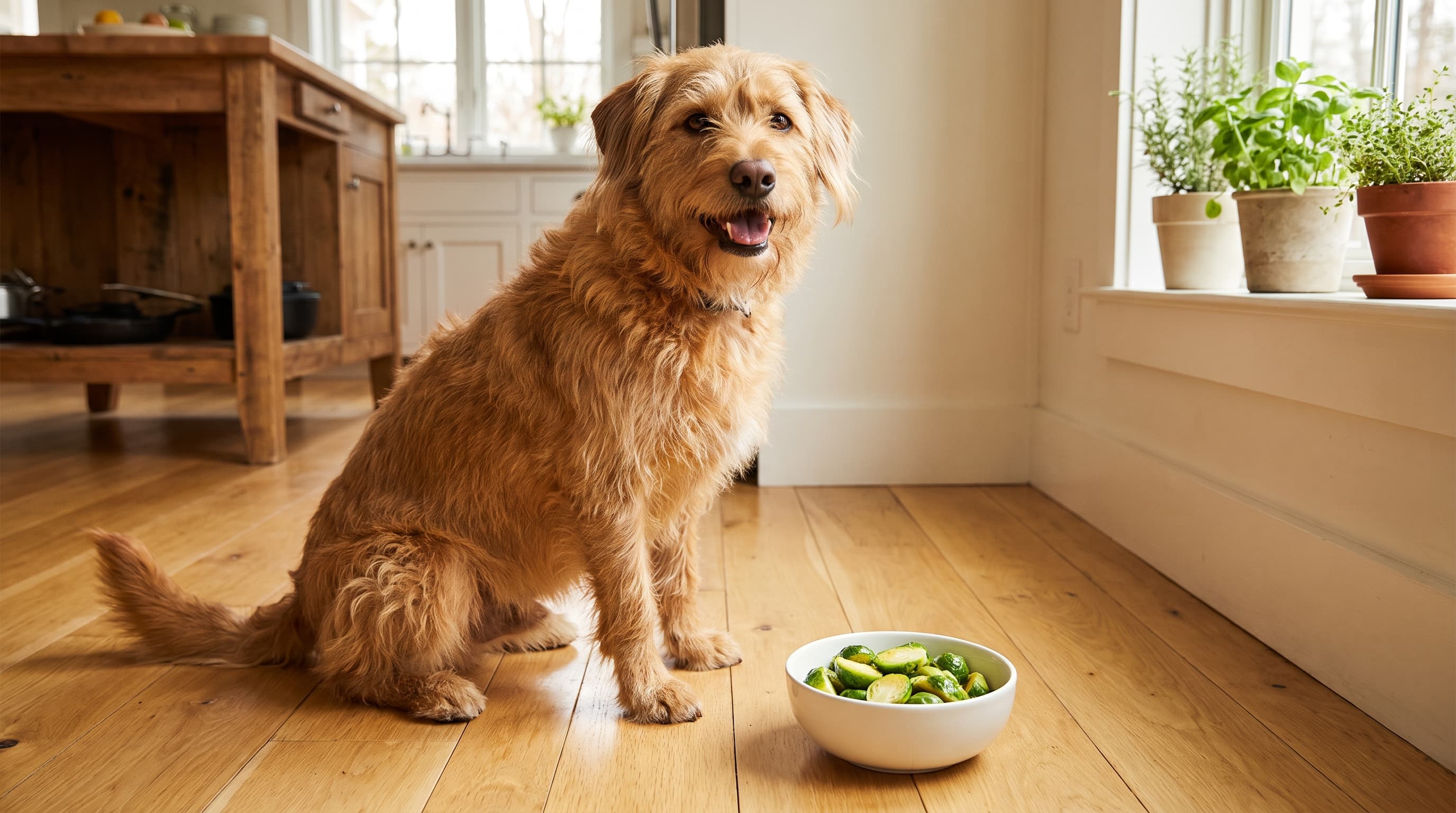

Yes, dogs can have Brussels sprouts. Plain, cooked Brussels sprouts are a safe, low-calorie treat packed with fiber, vitamin K, and antioxidants. Serve them steamed or roasted with no oil, salt, butter, garlic, or onion, cut into halves, and in small amounts — a bite or two for small dogs and no more than two or three sprouts for large dogs.
Are Brussels Sprouts Safe for Dogs?
Brussels sprouts are a member of the cruciferous vegetable family, alongside broccoli, cabbage, and cauliflower, and they are non-toxic to dogs. Veterinary nutrition resources agree that when they are cooked plainly and portioned sensibly, sprouts make a healthy occasional snack rather than a hazard, according to PetMD and the American Kennel Club.
The key word is plain. Most of the ways humans love to eat Brussels sprouts — pan-fried in butter, tossed with bacon, drizzled in balsamic glaze, or roasted with garlic — introduce ingredients that range from unhelpful to genuinely dangerous for dogs. Treats like Brussels sprouts should also follow the 10% rule: snacks and extras should make up no more than ten percent of your dog's daily calories, with the rest coming from a complete and balanced food.
Health Benefits of Brussels Sprouts for Dogs
When served correctly, sprouts deliver real nutritional value. They are naturally low in calories and rich in nutrients dogs can use:
- Fiber supports healthy digestion and regular bowel movements.
- Vitamin K contributes to bone health and normal blood clotting.
- Vitamin C acts as an antioxidant, though dogs also produce their own.
- Antioxidants and compounds like kaempferol help reduce inflammation and combat free radicals.
- Manganese and potassium support metabolism and muscle function.
The The Farmer's Dog notes that these antioxidants are one reason vegetables like sprouts show up as toppers in fresh-food diets. Still, sprouts are a supplement to a complete diet, not a replacement for it — they don't provide the full range of nutrients a dog needs.
Risks and Side Effects to Watch For
The most famous side effect is gas. Brussels sprouts contain a fiber called raffinose that dogs, like people, don't fully digest, and the result can be some seriously smelly flatulence. That's uncomfortable but not dangerous. More important cautions include:
- Digestive upset: Too many sprouts can cause vomiting or diarrhea. Introduce them slowly and in small amounts.
- Choking and blockages: Whole sprouts can be a choking hazard, especially for small dogs. Always cut them into halves or quarters.
- Raw sprouts are hard to digest: Raw Brussels sprouts are tougher on the stomach and contain more of the compounds that can interfere with thyroid function in very large quantities. Cooking softens them and deactivates those compounds.
- Toxic add-ins: Garlic, onions, chives, and leeks are all part of the Allium family and can damage a dog's red blood cells, per the ASPCA. Never season sprouts you plan to share.
How to Prepare and Serve Brussels Sprouts to Dogs
Preparation is where most of the safety happens. Follow these steps:
- Wash the sprouts thoroughly and trim off the tough stem end.
- Cook them plain — steaming, boiling, or roasting without oil are all good options. Steaming preserves the most nutrients.
- Skip all seasoning: no salt, butter, oil, garlic, or onion.
- Cut into small pieces to prevent choking and make them easy to chew.
- Let them cool before offering them to your dog.
Sprouts can be served on their own as a treat, mixed into your dog's regular food as a topper, or mashed into a puzzle feeder. If you're building a whole veggie-friendly snack rotation, the AKC's list of fruits and vegetables dogs can and can't eat is a helpful reference.
How Many Brussels Sprouts Can a Dog Eat?
Portion size scales with your dog. As a starting point, feed a quarter to a half of one cooked sprout to a small dog and monitor for several hours before offering more. Medium and large dogs can typically handle one to three sprouts. Because of the gas and fiber load, sprouts are best as an occasional snack — a couple of times a week at most, not a daily side dish. Butternut Box recommends introducing any new vegetable in controlled quantities so you can spot digestive issues early.
Puppies, senior dogs, and dogs with sensitive stomachs or existing health conditions should start with even smaller amounts, and you should check with your veterinarian first.
Signs Your Dog Has Had Too Many
If your dog overindulges, watch for excessive gas, a bloated or uncomfortable belly, loose stools or diarrhea, or vomiting. These symptoms are usually mild and pass on their own. If diarrhea or vomiting is severe, persists for more than a day, or is paired with lethargy or a swollen abdomen, contact your veterinarian promptly.
Cooked vs. Raw Brussels Sprouts: Which Is Better?
Cooked wins, and it isn't close. Cooking accomplishes three things that make sprouts safer and more useful for your dog. First, it softens the dense vegetable so it's easier to chew and gentler on the stomach. Second, heat breaks down some of the tough fiber that causes gas and bloating. Third, cooking deactivates the goitrogenic compounds in raw cruciferous vegetables that, in very large amounts, can interfere with thyroid function.
Steaming is generally considered the best method because it preserves the most water-soluble vitamins while still softening the sprout. Boiling works too, though it leaches out some nutrients into the water. Roasting without oil is fine and many dogs love the slightly caramelized flavor. Whatever method you choose, the rule stays the same: nothing added to the pan but the sprouts and, at most, a little water.
Creative, Safe Ways to Serve Brussels Sprouts
Once you've cooked a batch of plain sprouts, there are several dog-friendly ways to serve them:
- As a food topper: chop a cooled sprout and stir it into your dog's regular kibble or fresh food for a fiber and antioxidant boost.
- Mashed in a puzzle feeder or lick mat: mash cooked sprouts and spread them thin to turn snack time into enrichment.
- Frozen for teething or hot days: a cooked, cooled, then frozen sprout half can be a soothing treat for a teething puppy or a dog on a warm afternoon.
- Blended into homemade treats: puree sprouts with dog-safe ingredients like pumpkin and a little oat flour, then bake into small biscuits.
Whichever route you take, count those sprouts toward your dog's daily treat allowance so you don't accidentally overdo the fiber.
Brussels Sprouts vs. Other Green Vegetables for Dogs
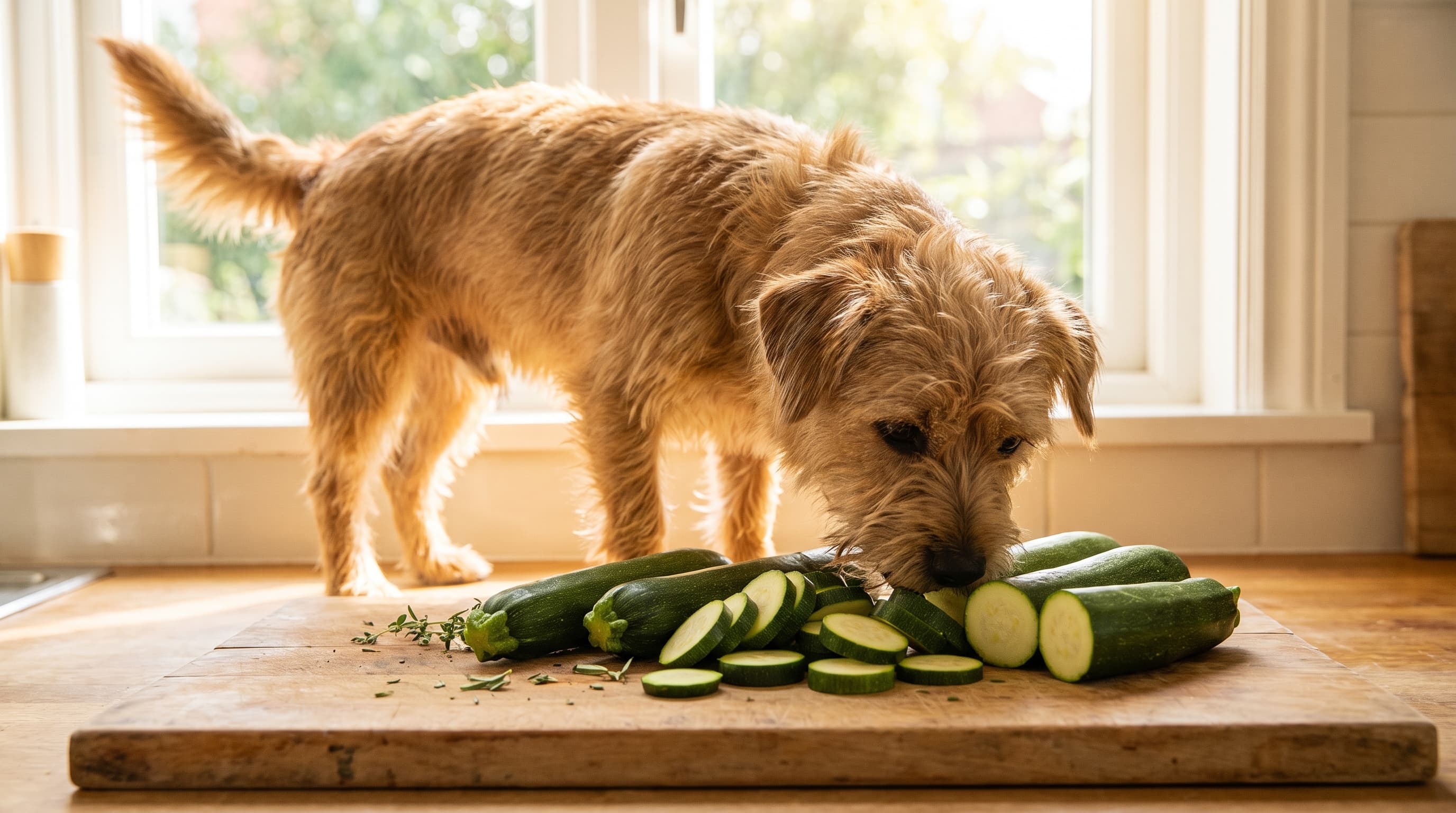
Brussels sprouts are far from the only vegetable your dog can enjoy, and rotating a few keeps snacks interesting while spreading out the fiber load. Green beans are a low-calorie favorite that cause less gas, making them a good everyday option. Broccoli is safe in small amounts but shares the gassy, cruciferous traits of sprouts. Cauliflower, a close cousin, is another fiber-rich pick — see our guide to cauliflower for dogs. Zucchini is one of the gentlest, most hydrating choices; learn more in our guide to zucchini for dogs. Because sprouts are among the gassier vegetables, many owners use them as an occasional treat and lean on gentler veggies for daily toppers.
Puppies, Seniors, and Dogs With Health Conditions
Not every dog should be handed a Brussels sprout without a little extra thought. Puppies have developing digestive systems that are more easily upset, so any new food should be introduced in very small amounts and only after checking with your vet. Senior dogs can enjoy the fiber, but if they have reduced kidney function or other chronic conditions, portion sizes and frequency may need adjusting. Dogs with a history of pancreatitis, thyroid disease, or chronic digestive problems should only eat sprouts with veterinary approval. When in doubt, your vet knows your dog's health history and can give you a personalized green light.
Frequently Asked Questions
Can dogs eat raw Brussels sprouts?
It's not recommended. Raw sprouts are hard to digest, more likely to cause gas and stomach upset, and pose a bigger choking risk. Cooking them plainly makes them safer and easier on your dog's system.
Can dogs eat Brussels sprout stalks or leaves?
The outer leaves are fine in small amounts if cooked, but the tough stalk should be removed — it's hard, fibrous, and a choking or blockage risk.
Why do Brussels sprouts make my dog gassy?
Sprouts contain raffinose and isothiocyanate, compounds that ferment in the gut and produce gas. This is normal and harmless, though it can be quite pungent. Smaller portions mean less gas.
Can puppies eat Brussels sprouts?
In tiny, cooked, plain amounts, yes — but a puppy's digestive system is more sensitive, so introduce them cautiously and ask your vet before adding new foods.
Are frozen or canned Brussels sprouts okay?
Plain frozen sprouts that you cook yourself are fine. Avoid canned sprouts, which are often high in sodium and may contain added seasonings.
This article is for general informational purposes and isn't a substitute for professional veterinary advice. Every dog is different — talk to your veterinarian before making changes to your dog's diet, especially if your dog has a health condition.
Curious which other everyday foods are safe to share? Explore our guides to cauliflower for dogs, zucchini for dogs, and the healthiest human foods for dogs. For a steady stream of vet-informed feeding tips, subscribe to the Daily Wag newsletter and never second-guess your dog's snack bowl again.