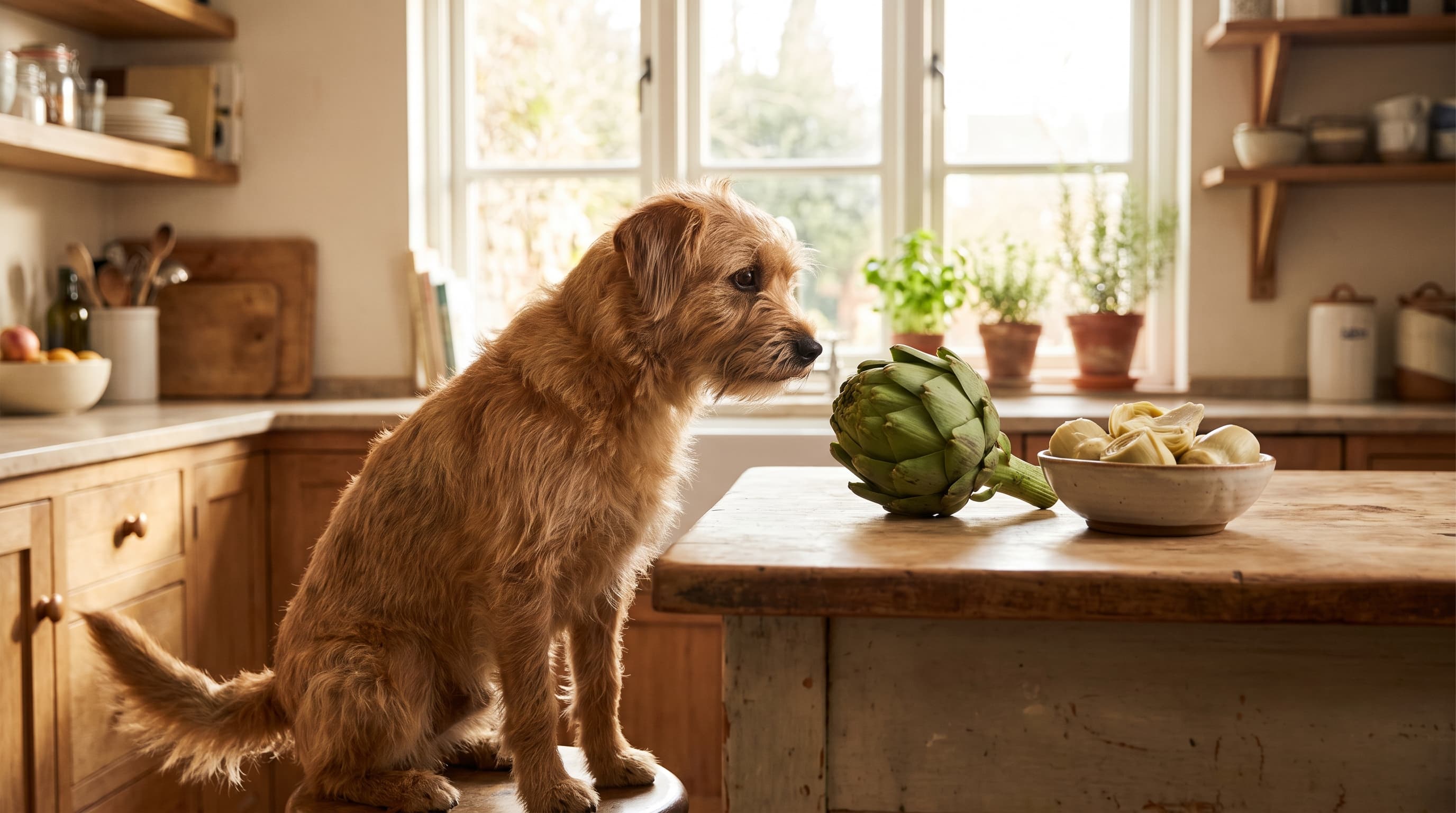

Yes, dogs can eat artichokes. Plain, cooked or raw artichoke — hearts, leaves, and stems — is non-toxic and delivers fiber, vitamin C, folate, potassium, and antioxidants. Serve it unseasoned and cut into bite-sized pieces to prevent choking, and skip canned, marinated, oiled, or dip-covered artichokes, which add salt, garlic, and fat that can harm your dog.
Can Dogs Eat Artichokes Safely?
Artichokes are a dog-safe vegetable when they're plain and prepared thoughtfully. There's nothing in a plain artichoke that's toxic to dogs — no compound like the ones that make grapes, onions, or garlic dangerous. That means an accidental nibble of unseasoned artichoke is no cause for panic, and a small, well-prepared piece can be a genuinely healthy treat.
The important word is plain. As the ASPCA notes, the real risks in "people food" usually come from what we add — salt, garlic, onion, butter, and oil — rather than the vegetable itself. An artichoke roasted in olive oil and garlic, jarred in a briny marinade, or blended into spinach-artichoke dip is a very different food from a steamed, unsalted heart. Treats of any kind, artichokes included, should stay within roughly 10% of your dog's daily calories so their complete, balanced dog food still does the heavy lifting.
Health Benefits of Artichokes for Dogs
Artichokes punch above their weight nutritionally. Per the nutrition profile on artichokes, a cooked serving is about 82% water and only ~74 calories per 100 grams, yet supplies meaningful folate (about 22% of a human daily value), vitamin K, magnesium, copper, and manganese, plus 5.5 grams of fiber. For a dog, that combination of low calories and high nutrient density is exactly what you want in an occasional veggie treat.
A few standouts for canine snackers:
- Fiber supports healthy digestion and can help firm up loose stools or ease mild constipation.
- Vitamin C and antioxidants help mop up free radicals; artichokes are especially rich in phytochemicals, including the compound cynarine, a biologically active constituent unique to the plant.
- Potassium and magnesium support nerve, muscle, and heart function.
- Low fat and low calorie makes artichoke a smart swap for richer, fattier treats, especially for weight-conscious dogs.
None of this makes artichoke a required part of your dog's diet. As the American Kennel Club puts it, dogs are omnivores with no real need for fruits or vegetables — but dog-safe produce is a perfectly fine treat or snack.
The Risks: Choking, Seasonings, and Overfeeding
The biggest hazard isn't toxicity — it's the artichoke's tough, fibrous texture. Raw leaves and the fibrous "choke" in the center are hard to chew and can pose a choking or blockage risk, especially for small dogs or gulpers. Cutting artichoke into small, manageable pieces and removing the tough outer leaves and stringy choke dramatically lowers that risk.
The second hazard is everything we cook artichokes with. Watch out for:
- Garlic and onion — common in roasted and dip recipes, and toxic to dogs, causing gastrointestinal upset and potentially damaging red blood cells.
- Salt and brine — canned and jarred artichokes are often loaded with sodium, which in excess can cause vomiting, diarrhea, and worse.
- Oil and butter — the fat can trigger stomach upset and, in sensitive dogs, contribute to pancreatitis.
- Spinach-artichoke dip — a triple threat of dairy, garlic, and salt that's best kept entirely away from your dog.
Finally, moderation matters even with plain artichoke. Too much fiber too fast can cause gas, loose stool, or an upset stomach. Introduce it in a small amount, watch how your dog responds over the next day, and scale from there.
How to Prepare and Serve Artichokes to Your Dog
Preparation is where a healthy snack goes right or wrong. Follow this simple routine:
- Buy fresh or frozen, not canned or marinated. Skip anything packed in oil, brine, or seasoning.
- Wash thoroughly to remove dirt and any surface residue.
- Cook it plain. Steaming or boiling with no salt, oil, garlic, or butter softens the fibers and makes artichoke easier to digest. Raw is technically fine but tougher and harder to chew.
- Remove the tough bits. Take off the sharp, fibrous outer leaves and scrape out the stringy choke; the heart and tender inner portions are the easiest to eat.
- Cut into bite-sized pieces sized to your dog, and serve a small portion as a topper or standalone treat.
A tender, steamed artichoke heart chopped into small pieces is the gold standard: soft, safe, and nutrient-rich. Following general canine feeding wisdom, keep artichoke and all treats to a small share of daily calories so your dog's balanced diet stays the foundation.
How Much Artichoke Can a Dog Have?
There's no universal gram count, because it scales with your dog's size. A practical guide: a few small pieces for a toy or small breed, and up to a couple of tablespoons of chopped artichoke heart for a large dog, offered occasionally rather than daily. First-timers should start with a single small piece to rule out any sensitivity. If your dog has a history of digestive issues, kidney disease, or is on a sodium-restricted diet, check with your vet before adding any new vegetable.
Frequently Asked Questions
Can dogs eat artichoke hearts?
Yes — plain, cooked artichoke hearts are the safest and easiest part for dogs to eat, as long as they're not canned in oil, brine, or seasoning. Chop them into bite-sized pieces before serving.
Can dogs eat canned or marinated artichokes?
No. Canned and marinated artichokes are typically high in sodium and often contain garlic, onion, or oil. Stick to fresh or frozen artichoke cooked plain.
Can dogs eat raw artichokes?
Raw artichoke isn't toxic, but it's tough and fibrous, which makes it harder to chew and digest and raises the choking risk. Steaming or boiling it plain is a better, gentler option.
Is spinach-artichoke dip safe for dogs?
No. Spinach-artichoke dip usually combines dairy, garlic, onion, and salt — several of which are harmful to dogs. Keep dip and dip-covered artichokes away from your pet.
What should I do if my dog ate a seasoned artichoke?
A small amount of plain artichoke is usually harmless, but if your dog ate one prepared with garlic, onion, lots of salt, or oil, note how much and call your veterinarian or the ASPCA Animal Poison Control Center at (888) 426-4435, and watch for vomiting, diarrhea, or lethargy.
The Bottom Line
Plain, well-prepped artichoke is a safe, nutrient-dense treat that most dogs can enjoy in moderation — the trick is keeping it unseasoned, cutting it small, and steering clear of the canned, oily, and dip versions. Hungry for more dog-safe veggie guides? Check out whether dogs can eat cauliflower, squash, and edamame. For a steady stream of what's safe in your dog's bowl, subscribe to the Daily Wag newsletter and never second-guess a snack again.