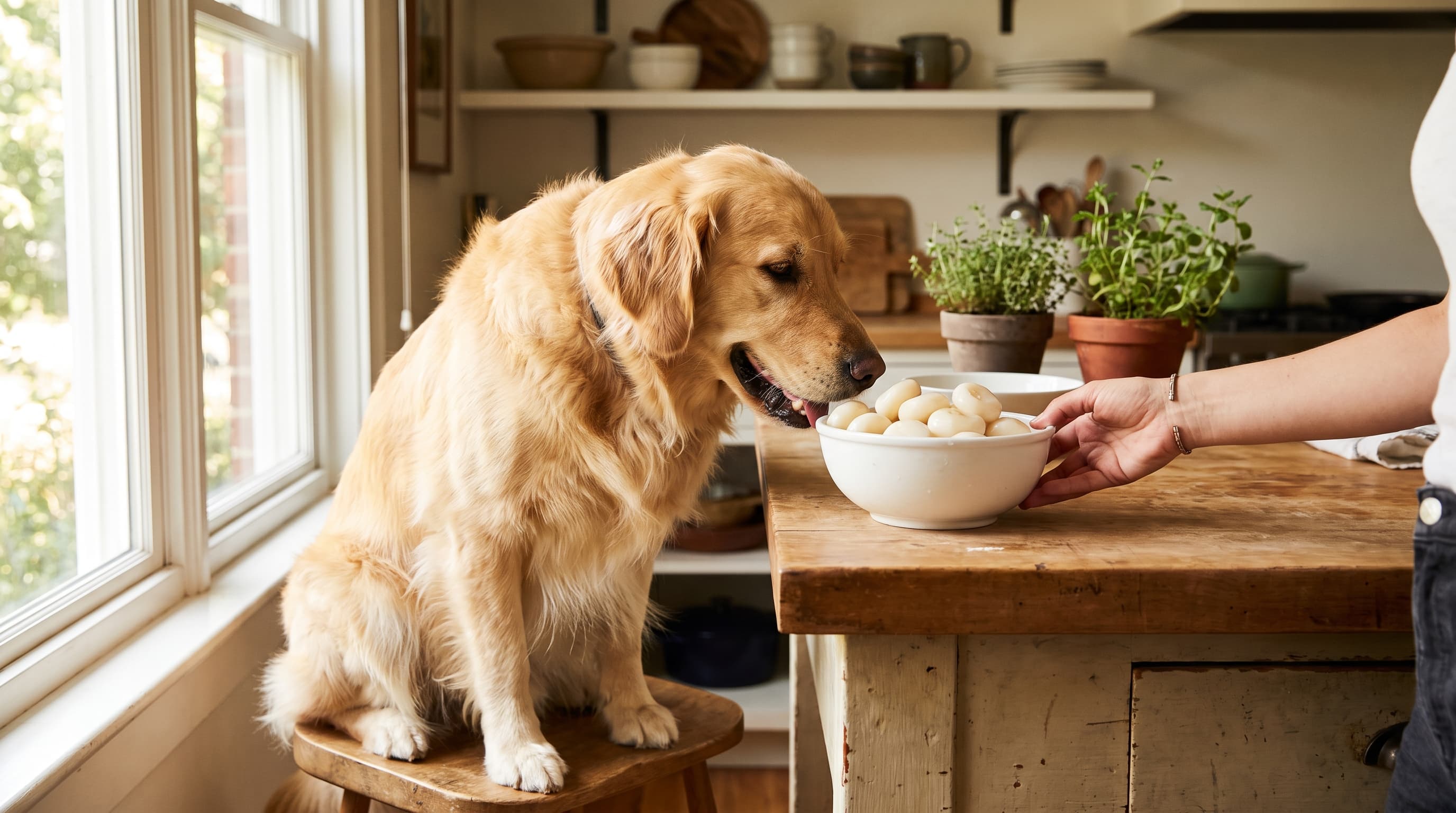

Can Dogs Eat Water Chestnuts? A Vet-Informed Safety Guide
Yes, dogs can eat water chestnuts in moderation. Plain, peeled, thoroughly cooked (or raw and finely chopped) water chestnuts are non-toxic and offer fiber, potassium, and vitamin B6. Avoid canned versions high in sodium, never serve them in dishes with onion or garlic, and keep them to an occasional treat because they are carb-heavy.
Are Water Chestnuts Safe for Dogs?
Water chestnuts are not a toxic food for dogs. Despite the name, they are not nuts at all — they are the corm (an underground stem) of an aquatic plant, which means they don't carry the choking and fat-content risks associated with true tree nuts like macadamias. According to vet-verified guidance from Dogster, water chestnuts are safe for canines when they are prepared plainly and served in small amounts.
The real risks aren't the water chestnut itself but how it's prepared and served. Canned water chestnuts are frequently packed in brine or salted water, and excess sodium is a genuine concern for dogs. Stir-fries and holiday dishes almost always include seasonings — especially onion and garlic — that are toxic to dogs and can damage red blood cells, as the ASPCA's list of people foods to avoid makes clear. The safest water chestnut is one you've prepared yourself, with nothing added.
Nutritional Benefits of Water Chestnuts for Dogs
In sensible portions, water chestnuts bring a few genuine nutritional positives to the bowl. They are roughly 74% water and low in fat, which makes them a light, hydrating snack — nutrition data compiled by Healthline notes they also supply fiber, potassium, manganese, copper, vitamin B6, and riboflavin.
- Fiber: Supports healthy digestion and can help dogs feel full without many calories.
- Potassium: An electrolyte that contributes to normal muscle and heart function.
- Vitamin B6 and riboflavin: B vitamins involved in metabolism and energy use.
- High water content: A refreshing, hydrating crunch on a warm day.
That said, dogs get the vast majority of these nutrients from a complete, balanced commercial diet. Water chestnuts are a fun extra, not a nutritional necessity. If you like offering produce as treats, our roundup of the healthiest human foods for dogs puts these snacks in context.
It's also worth setting expectations: the amounts of fiber, potassium, and B vitamins a dog gets from one or two chopped water chestnuts are small. The benefit of a treat like this is as much about variety, hydration, and a satisfying crunch as it is about nutrition. Think of water chestnuts as a low-calorie, low-fat way to say "good dog" — a healthier alternative to fatty, salty table scraps — rather than a supplement that will meaningfully change your dog's health.
The Downsides: Carbs, Portions, and Choking
Water chestnuts are prized for their crunch, but they are also comparatively high in carbohydrates. Feeding too many carb-dense treats can contribute to weight gain and, over time, obesity — a leading canine health problem. The standard veterinary rule of thumb is that treats of any kind should make up no more than about 10% of your dog's daily calories, with the other 90% coming from a complete diet.
The whole, firm shape of a water chestnut can also be a choking hazard, particularly for small dogs and enthusiastic gulpers. Always slice or chop them into bite-sized pieces before serving. For dogs prone to digestive upset, introduce any new food slowly — the same cautious approach we recommend for other crunchy vegetables like artichokes and beets.
Raw vs. Cooked: How to Prepare Water Chestnuts for Dogs
Both raw and cooked water chestnuts can be safe, but preparation matters more than the cooking method.
- Peel them. Fresh water chestnuts have a tough, muddy skin that should be removed. The American Kennel Club's guide to fruits and vegetables dogs can eat stresses that plain, well-prepared produce is the goal.
- Chop small. Cut into pea-sized pieces to reduce choking risk.
- Keep it plain. No salt, oil, butter, soy sauce, onion, or garlic.
- Skip the can when possible. If you only have canned, drain and rinse thoroughly to cut sodium, and offer only a tiny amount.
- Cook to soften. Lightly steaming or boiling makes them gentler on sensitive stomachs, per DogTime's feeding notes.
How Much Water Chestnut Can a Dog Eat?
Portion size scales with your dog's body weight. As a general starting point:
- Small dogs (under 20 lbs): A single small piece, chopped fine.
- Medium dogs (20–50 lbs): One to two chopped water chestnuts.
- Large dogs (50+ lbs): Two to three chopped water chestnuts.
These are treats, not meals. Offer them once in a while rather than daily, and always keep the 10% treat rule in mind. Dogs with diabetes, a history of pancreatitis, or weight concerns should skip carb-heavy snacks like this unless your veterinarian has approved them. If you're building a snack rotation, our list of vet-friendly veggies for pups is a helpful next stop.
Water Chestnuts vs. Tree Chestnuts: Don't Confuse Them
This is one of the most important distinctions for dog owners, because the two foods are completely different despite sharing a name. Water chestnuts are aquatic vegetables — the crunchy corm you find sliced in Asian dishes. Tree chestnuts (like the roasted chestnuts sold in winter) are true nuts that grow on trees, and they are a different story entirely.
Plain, cooked, shelled sweet chestnuts are generally considered safe in small amounts, but they are dense, starchy, and easy to choke on, and their shells are a real hazard. More importantly, chestnuts are easily confused with horse chestnuts (conkers), which are toxic to dogs and can cause vomiting, drooling, and serious illness. If you're ever unsure which "chestnut" your dog got into, treat it as an emergency and call your vet. When it comes to the water chestnuts in your stir-fry ingredients, though, you're dealing with the safe, vegetable kind.
How to Introduce Water Chestnuts to Your Dog
Any new food deserves a slow, watchful introduction — dogs' digestive systems don't appreciate sudden changes. Here's a simple approach:
- Start tiny. Offer a single small, chopped, plain piece and stop there for the day.
- Wait and watch. Give it 24 hours and monitor for any vomiting, diarrhea, gas, or itching.
- Go slow if all is well. If your dog handled the first taste fine, you can offer a slightly larger (still small) portion next time.
- One new food at a time. Don't introduce water chestnuts alongside another brand-new treat, or you won't know which one caused a reaction.
This measured approach protects dogs with hidden sensitivities and helps you learn what your individual dog tolerates. It's the same strategy vets recommend for rotating any fresh produce into a dog's routine, and it pairs naturally with a diet already built for a veggie-friendly pup.
Signs of a Problem After Eating Water Chestnuts
Most dogs tolerate a small, plain serving with no issue. Watch for these signs if your dog has eaten water chestnuts — especially a large amount or a seasoned dish:
- Vomiting or diarrhea
- Excessive thirst or urination (a possible sign of too much salt)
- Gagging, retching, or difficulty breathing (possible choking)
- Lethargy, weakness, or pale gums (which can follow onion/garlic ingestion)
If your dog ate a dish containing onion or garlic, or shows any of the more serious symptoms above, contact your veterinarian or an animal poison control hotline right away. This article is general information and isn't a substitute for personalized veterinary advice.
Frequently Asked Questions
Can dogs eat canned water chestnuts?
Only in a pinch, and only if you drain and rinse them well to remove excess sodium. Fresh, plain water chestnuts are a much better choice because canned versions are often packed in salted water.
Are water chestnuts poisonous to dogs?
No. Water chestnuts themselves are not toxic to dogs. The danger comes from added ingredients like salt, onion, and garlic, or from serving large, whole pieces that pose a choking hazard.
Can puppies eat water chestnuts?
It's best to wait. Puppies have sensitive, developing digestive systems and should get their nutrition from a complete puppy diet. If you want to offer a taste, ask your vet first and give only a tiny, finely chopped, plain piece.
Can dogs eat water chestnuts in stir-fry?
No. Stir-fries typically contain soy sauce (high sodium), onion, and garlic, all of which are harmful to dogs. Set aside a plain, unseasoned piece before adding sauces and seasonings.
How often can dogs have water chestnuts?
Treat them as an occasional snack, not a daily food. Because they are carb-heavy, water chestnuts should be an infrequent extra that fits within the 10% of daily calories reserved for treats.
The Bottom Line
Water chestnuts are a safe, crunchy, low-fat treat for most dogs when they're plain, peeled, chopped small, and served in moderation. Skip the canned and seasoned versions, watch portions, and check with your veterinarian if your dog has any health conditions. When in doubt about a new food, your vet is always the best resource.
Love decoding what's safe in your dog's bowl? Subscribe to the Daily Wag newsletter for vet-informed feeding guides, treat ideas, and dog-care tips delivered straight to your inbox.