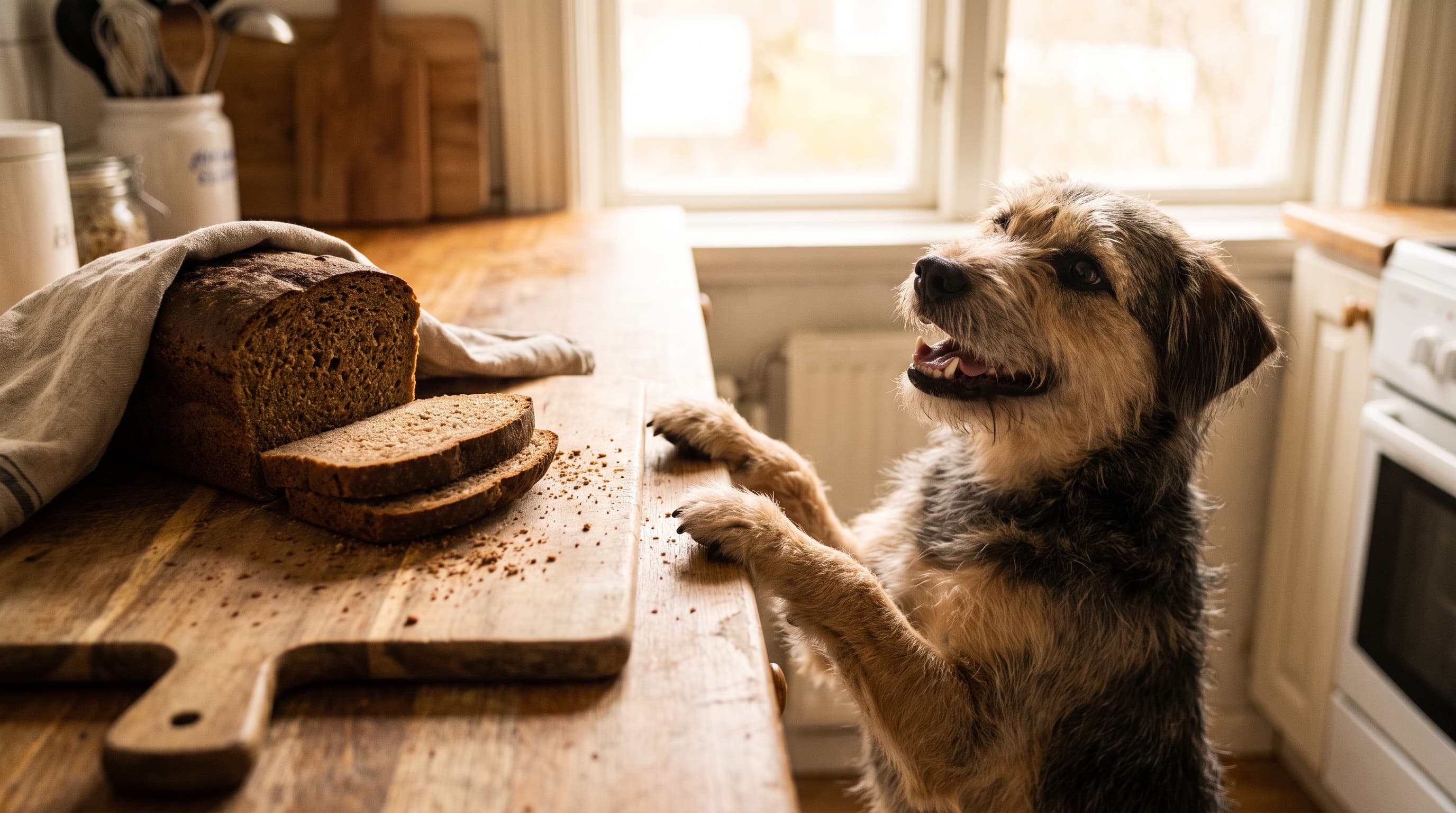

Can Dogs Eat Rye Bread? A Vet-Informed Feeding Guide
Yes, most dogs can eat plain rye bread in small amounts, and it is generally not toxic. The real dangers hide in the extras: caraway seeds, raisins, garlic, onion, xylitol, and heavy salt. Skip those, keep portions tiny, and treat rye as an occasional nibble rather than a regular snack.
Rye bread sits in a gray zone that confuses a lot of dog owners. Search for it and you will find pages that say "totally fine" right next to pages that shout "toxic." The truth is more nuanced, and it depends almost entirely on which rye bread you are holding. Below, we break down what is actually safe, what is genuinely risky, and how to make a smart call the next time your dog gives you those hopeful eyes at the breakfast table.
Is Rye Bread Safe for Dogs?
Plain, fully baked rye bread is safe for most healthy dogs in moderation. Rye itself is not a toxic grain, and a small piece of crust or a torn-off bite is unlikely to cause any harm to a dog without grain sensitivities. Veterinary sources broadly agree that plain, cooked bread, including rye, is acceptable as an occasional treat. The American Kennel Club notes that dogs can safely eat bread in much the same way as humans, in moderation, so long as it does not contain harmful add-ins.
"Safe," though, comes with three quiet conditions:
- It is plain. No seeds, dried fruit, sweeteners, garlic, or heavy toppings.
- It is baked, not raw. Raw yeast dough is a genuine emergency (more on that below).
- Your dog tolerates grains. Dogs with wheat or gluten sensitivities should skip it.
If you want the bigger picture on bread in general, our guide on whether dogs can have bread walks through every common loaf type.
Is Rye Bread Bad for Dogs?
Rye bread is not "bad" in the way chocolate or grapes are bad, but it is not doing your dog any favors either. It is essentially empty calories: high in carbohydrates, often high in sodium, and low in the nutrients a dog actually needs. Fed regularly or in large amounts, it can contribute to weight gain, and over time, obesity raises the risk of diabetes and joint strain.
According to PetMD, bread offers minimal nutritional value and regular consumption can contribute to obesity and diabetes. A single slice of rye can carry roughly 80 or more calories, which is a meaningful chunk of a small dog's daily allowance. The takeaway: rye bread is a "sometimes, tiny bit" food, not a staple. For a deeper look at where bread helps and where it hurts, see our article on whether bread is bad for dogs.
What About Caraway Seeds and Pumpernickel?
This is where rye bread earns its cautious reputation. Many rye and pumpernickel loaves are studded with caraway seeds, which give that distinctive savory flavor. Caraway is considered mildly problematic for dogs and can cause digestive upset, and in larger amounts it may be more troublesome. There is no benefit to your dog in caraway, so the simplest rule is to avoid any rye bread that contains it.
Pumpernickel and "dark rye"
Pumpernickel is a dark, dense rye bread, and it deserves extra scrutiny. Some dark rye and pumpernickel recipes include cocoa powder, coffee, or molasses to deepen the color and flavor, and both cocoa and coffee contain compounds that are toxic to dogs. Always read the ingredient list on a dark loaf before sharing. If you cannot verify what is in it, do not offer it.
Rye crackers and rye crispbread
These are often just rye flour and salt, but many varieties add seeds, onion or garlic powder, or seasoning blends. Check the label the same way you would with a loaf.
The Real Risks: Raisins, Xylitol, Garlic, Onion, and Salt
The biggest dangers in rye bread are almost never the rye. They are the additions. Here is what to watch for:
- Raisins and currants. Some specialty rye and fruit-rye breads contain raisins, which are seriously toxic to dogs. The AKC warns that even a single grape or raisin can cause serious illness, including kidney failure, with unpredictable sensitivity from dog to dog. Never give a dog any bread containing raisins.
- Xylitol. This sugar substitute appears in some "low-sugar" or diet baked goods. Per VCA Animal Hospitals, xylitol triggers a rapid insulin release that can cause a dangerous drop in blood sugar and potentially liver damage, sometimes within 30 minutes to 2 hours.
- Garlic and onion. Some savory ryes and rye rolls include garlic or onion powder. The ASPCA lists onion, garlic, and chives as Allium species that can cause gastrointestinal irritation and red blood cell damage. The AKC adds that even small amounts can be harmful, especially over time or in smaller dogs.
- Salt. Rye bread is frequently high in sodium. A tiny bite is fine, but larger amounts can contribute to excess sodium intake, especially for dogs on sodium-restricted diets.
- Raw dough. Uncooked yeast dough is a true emergency. Inside the warm stomach, the yeast keeps rising and produces ethanol, which can cause painful bloating and alcohol poisoning. If your dog eats raw dough, call your vet immediately.
Because so many bread dangers overlap, it is worth reading up on related loaves too, such as our guides to sourdough bread for dogs and garlic bread for dogs, which cover the yeast and Allium risks in more depth.
How Much Rye Bread Can a Dog Eat?
Think in terms of bites, not slices. Treats of any kind, including bread, should make up no more than about 10% of your dog's daily calories, and the rest should come from a complete, balanced dog food. For a small dog, that might mean a thumbnail-sized piece; for a large dog, a bite or two of plain crust.
A sensible approach:
- Offer a small piece of plain, seedless, fully baked rye only.
- Make it occasional, not daily.
- Introduce it slowly and watch for any digestive upset the first time.
- Skip it entirely for dogs that are overweight, diabetic, or grain-sensitive.
If you notice vomiting, diarrhea, or unusual lethargy after your dog eats rye bread, especially a seeded or specialty loaf, contact your veterinarian.
Rye Bread vs. White and Wheat Bread
Nutritionally, whole-grain rye offers a bit more fiber than plain white bread, which sounds like a win. In practice, the differences barely matter for a dog eating a bite-sized treat, and rye's frequent add-ins (caraway seeds, higher salt, dark-loaf cocoa) can actually make it riskier than a plain slice of white or wheat.
- Plain white bread: Lowest-risk in terms of add-ins, but nutritionally empty.
- Plain wheat bread: Slightly more fiber; fine for grain-tolerant dogs.
- Plain rye bread: Comparable when truly plain, but more likely to hide seeds and stronger seasonings.
The verdict: no bread is a health food for dogs. Rye is fine as an occasional plain bite, but it is not meaningfully "better" than white or wheat for your dog, and its typical flavorings tip the scales toward caution.
A Quick Word for Dogs With Allergies or Diabetes
Two groups of dogs should be especially careful. Dogs with wheat or gluten sensitivities can react to the grains in rye bread with itching, ear issues, or digestive upset, so it is best avoided. And for diabetic dogs, the carbohydrate load in bread can affect blood sugar management. If your dog falls into either camp, talk to your veterinarian before offering rye bread at all. This article is general guidance, not a substitute for advice tailored to your individual dog.
Frequently Asked Questions
Can dogs eat rye bread with caraway seeds?
It is best to avoid it. Caraway seeds can cause digestive upset in dogs and offer no benefit, so choose a plain, seedless piece instead.
Is pumpernickel bread safe for dogs?
Only if you know exactly what is in it. Some pumpernickel and dark rye recipes include cocoa or coffee, both of which are toxic to dogs. When in doubt, do not share it.
What should I do if my dog ate raisin rye bread?
Contact your veterinarian or a pet poison hotline right away. Raisins can cause kidney failure in dogs, and prompt professional guidance matters even if your dog seems fine.
Can puppies eat rye bread?
It is better to wait. Puppies have sensitive, developing digestive systems and need nutrient-dense puppy food, so skip bread treats until they are older and check with your vet first.
My dog ate raw rye dough. Is that an emergency?
Yes, treat raw yeast dough as an emergency. It can expand in the stomach and produce alcohol, so call your veterinarian immediately.
How much rye bread is too much for a dog?
Treats should stay under about 10% of daily calories. For most dogs that means a small bite or two of plain rye at most, and only occasionally.
The Bottom Line
So, can dogs eat rye bread? A small piece of plain, seedless, fully baked rye is generally fine for a healthy dog as an occasional treat, but the loaf's usual companions (caraway seeds, raisins, garlic, onion, xylitol, and salt) are where the danger lives. Read the label, keep portions tiny, and when the loaf is a dark or specialty rye, err on the side of caution.
Curious about which other everyday foods are a treat or a trap for your pup? Subscribe to the Daily Wag newsletter for bite-sized, vet-informed answers delivered straight to your inbox, so you always know what is safe to share.