
Can Dogs Eat Grits? A Vet-Informed Guide to This Southern Staple
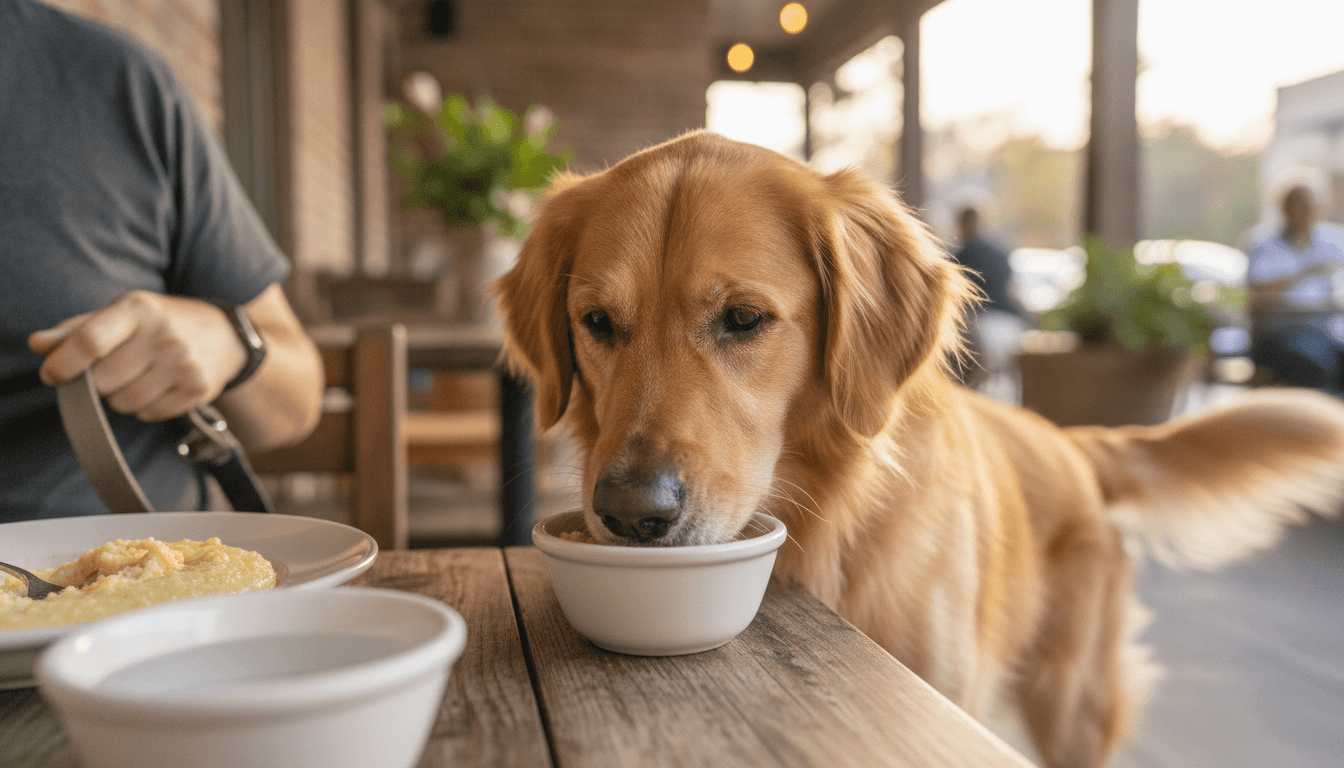
Can dogs eat grits? Yes — plain, fully cooked grits are not toxic and a small spoonful is safe for most healthy dogs as an occasional treat. But grits are a nutrient-poor refined carbohydrate, and the buttery, cheesy, salty versions people love are not dog-friendly. Serve them plain, in tiny amounts, and rarely.
Grits are a beloved breakfast in the American South, so it is natural to wonder whether your dog can share a bite. The short answer is that a plain spoonful will not hurt most dogs, but grits bring almost nothing to the bowl nutritionally, and the way we usually cook them turns a harmless food into a risky one. Here is exactly how to think about it.
Are Grits Safe for Dogs?
Grits are made from ground dried corn (hominy), boiled into a soft porridge. Corn itself is safe for dogs and is a common, digestible ingredient in many commercial dog foods — the American Kennel Club confirms that plain corn is perfectly safe for dogs in small amounts. That means the base ingredient in grits is not a problem for the average dog.
The catch is that grits are a heavily refined carbohydrate. Most of the fiber, protein, and micronutrients are stripped away during processing, leaving mostly starch and calories. So while plain cooked grits will not poison your dog, they are essentially "empty" filler. Safe? Yes. Worthwhile? Not really. They are best viewed as an occasional, tiny indulgence rather than a healthy addition.
How to Safely Serve Grits to Your Dog
If you want to let your dog try grits, preparation is everything. Follow these rules:
- Plain only. Cook the grits in water — never with butter, cheese, milk, salt, or seasonings.
- Fully cooked. Undercooked or dry grits can be hard to digest and may cause stomach upset. Cook them until soft and let them cool completely.
- Tiny portions. A tablespoon or less for a medium-sized dog, and even less for a small dog, is plenty. Grits should be a taste, not a meal.
- Occasional, not routine. Offer them rarely so the empty calories do not crowd out balanced nutrition.
As with any new food, introduce a very small amount first and watch for any digestive reaction over the next day before offering it again.
Why the Toppings Are the Real Problem
Almost nobody eats grits plain, and that is exactly where the danger lies. The classic add-ins are the issue, not the corn:
- Butter and cheese add a heavy dose of fat. Rich, fatty foods can trigger pancreatitis — VCA Animal Hospitals notes a fatty meal can set off this painful inflammation of the pancreas, with symptoms like vomiting, abdominal pain, and lethargy.
- Salt. Heavily salted grits can contribute to sodium ion poisoning in large amounts and are hard on dogs with heart or kidney concerns.
- Cheese and milk bring lactose, which many adult dogs digest poorly, leading to gas and loose stool.
- Onion or garlic powder, common in savory grits recipes, is toxic to dogs, according to the ASPCA's list of people foods to avoid.
Instant grits packets deserve special caution — they are frequently pre-seasoned and high in sodium. Always check that any grits you share contain nothing but corn and water.
Do Grits Offer Any Nutritional Benefit?
Honestly, very little. Grits provide fast-digesting carbohydrates for energy and trace amounts of iron and B vitamins if enriched, but they lack the protein, healthy fat, and fiber a dog actually needs. A complete, balanced dog food already supplies everything in the right proportions. Because grits are calorie-dense and low in nutrients, feeding them regularly can nudge a dog toward weight gain — and VCA describes obesity as an accumulation of excess body fat that strains the joints and shortens lifespan. If you are looking to add wholesome variety to your dog's diet, there are far better choices, which we cover in our guide to the healthiest human foods for dogs.
When Dogs Should Avoid Grits Entirely
Some dogs should skip grits altogether. Avoid them if your dog:
- Has a corn or grain allergy or sensitivity. Signs can include itchy skin, ear infections, or chronic digestive upset.
- Is diabetic or prone to blood-sugar swings. Grits are a high-glycemic refined starch that can spike blood glucose.
- Is overweight. The empty calories work against weight-management goals.
- Has a history of pancreatitis or digestive disease. Even plain grits, and certainly buttery ones, are an unnecessary risk.
This article offers general guidance only and is not a substitute for veterinary advice. If your dog has a medical condition or you are unsure whether grits fit their diet, check with your veterinarian first.
Better Carb Options Than Grits
If you want to share a starchy treat, several options deliver more nutrition than grits. Plain cooked plain white or brown rice is gentle on the stomach — see our guide on whether dogs can eat jasmine rice. Plain cooked oatmeal offers soluble fiber. Plain canned pumpkin adds fiber and supports digestion. A small piece of plain cooked sweet potato is packed with vitamins. For an occasional bready treat, our article on whether dogs can have bread walks through the same "plain and tiny" logic. Any of these beats grits for a dog because they bring real fiber or micronutrients along with the calories.
Frequently Asked Questions
Can dogs eat cheese grits?
It is best to avoid cheese grits. The added cheese and butter are high in fat and lactose, which can cause digestive upset or, in susceptible dogs, contribute to pancreatitis. Stick to a tiny amount of plain grits if you share any at all.
How much grits can a dog eat?
Keep it to a tablespoon or less of plain, cooked grits for a medium dog, and less for a small dog, no more than occasionally. Grits should stay within the 10% of daily calories reserved for treats.
Are instant grits safe for dogs?
Instant grits are often pre-seasoned and high in sodium, so they are generally not a good choice. If you want to share grits, cook plain, unseasoned ones in water instead.
Can puppies eat grits?
Puppies should stick to a complete puppy food. Their digestive systems are sensitive, and grits offer no nutritional value they need, so it is best to skip them until adulthood and even then only rarely.
Can dogs eat grits every day?
No. Grits are a refined, nutrient-poor carbohydrate. Eating them daily adds empty calories that can lead to weight gain and crowd out balanced nutrition. Reserve them for the occasional tiny taste.
My dog ate buttery, cheesy grits — should I worry?
A small accidental bite is usually fine, but watch for vomiting, diarrhea, or signs of belly pain over the next day. If your dog ate a large amount or shows repeated vomiting, lethargy, or a painful abdomen, contact your veterinarian.
The Bottom Line
Can dogs eat grits? A small spoonful of plain, fully cooked grits will not harm most healthy dogs, but grits are empty calories at best and — loaded with butter, cheese, salt, or onion — a genuine risk at worst. If you want to treat your pup, choose a food that gives them something back nutritionally, and always keep human-food extras to a rare, tiny taste.
Love clear, vet-informed answers to "can my dog eat this?" Subscribe to the Daily Wag newsletter for weekly feeding tips, treat guides, and dog-care advice delivered to your inbox.