
Can Dogs Have Jicama? A Vet-Informed Guide to This Crunchy Root
Yes, dogs can have jicama — but only the peeled white flesh of the root, served raw or plain-cooked in small amounts. The skin, leaves, stems, and seeds are toxic and must never be fed. Offered correctly, jicama is a low-calorie, high-fiber, hydrating treat that most healthy dogs can enjoy in moderation.
Is Jicama Safe for Dogs?
The edible root of the jicama plant is safe for dogs when it's peeled and given in moderation, according to veterinary guidance from Dial-A-Vet. Jicama (pronounced HEE-kah-mah) is a Mexican turnip with a crisp, slightly sweet white interior similar in texture to a raw water chestnut or apple. Dogs tend to like the crunch, and because it's low in calories, it makes a reasonable alternative to fattier treats.
The key word is moderation. Jicama should be an occasional snack, not a meal. As the American Kennel Club notes about vegetables generally, produce should supplement a complete, balanced diet — never replace it. Treats of any kind should make up no more than about 10% of your dog's daily calories.
Which Parts of Jicama Are Toxic to Dogs?
This is the single most important thing to know before you share jicama. Only the white, potato-like root is safe. The skin, leaves, stems, and seeds of the jicama plant are toxic to dogs. As Dogster's vet-verified guide explains, these parts contain rotenone — a naturally occurring compound the plant uses as an insecticide that is toxic to humans, dogs, and other animals.
Always peel the tough brown skin completely, cut away any stem, and make sure no seeds are included. If your dog manages to eat the skin, leaves, stems, or seeds — or a large quantity of jicama — watch for vomiting, diarrhea, drooling, lethargy, loss of appetite, or difficulty breathing, and contact your veterinarian promptly.
Health Benefits of Jicama for Dogs
When prepared properly, jicama offers genuine nutritional upsides. Per one-cup serving, the root delivers about 49 calories and 6.4 grams of fiber along with vitamin C and a high water content, according to Healthline's nutrition breakdown. For dogs, that translates into a few real perks:
- Digestive support: The fiber promotes healthy digestion and regularity. Jicama is also high in inulin, a prebiotic fiber that can feed beneficial gut bacteria.
- Low-calorie treat: Its low calorie density makes it useful for dogs watching their weight.
- Hydration: Jicama's high water content adds a little extra moisture, a nice bonus on hot days.
- Vitamin C and antioxidants: These support immune function and help protect cells, per DogTime's overview.
Keep in mind that dogs produce their own vitamin C and get complete nutrition from quality dog food, so treat these benefits as a pleasant extra rather than a reason to feed jicama daily.
How Much Jicama Can a Dog Eat?
Portion size should scale with your dog. As a general starting point, Dial-A-Vet suggests roughly:
- Small dogs (under 20 lbs): 1–2 small pieces
- Medium dogs (20–50 lbs): 2–4 small pieces
- Large dogs (50+ lbs): 3–5 small pieces
Introduce jicama slowly the first time, offering just a bite or two and watching for any digestive upset over the next day. Too much can cause bloating, gas, or diarrhea because of the fiber load. If your dog has a sensitive stomach, a history of pancreatitis, diabetes, or other health conditions, check with your veterinarian before adding any new food. Curious about other veggies? See our guides to whether dogs can eat radishes, squash, and zucchini.
How to Safely Prepare Jicama for Your Dog
Preparation is quick and makes all the difference:
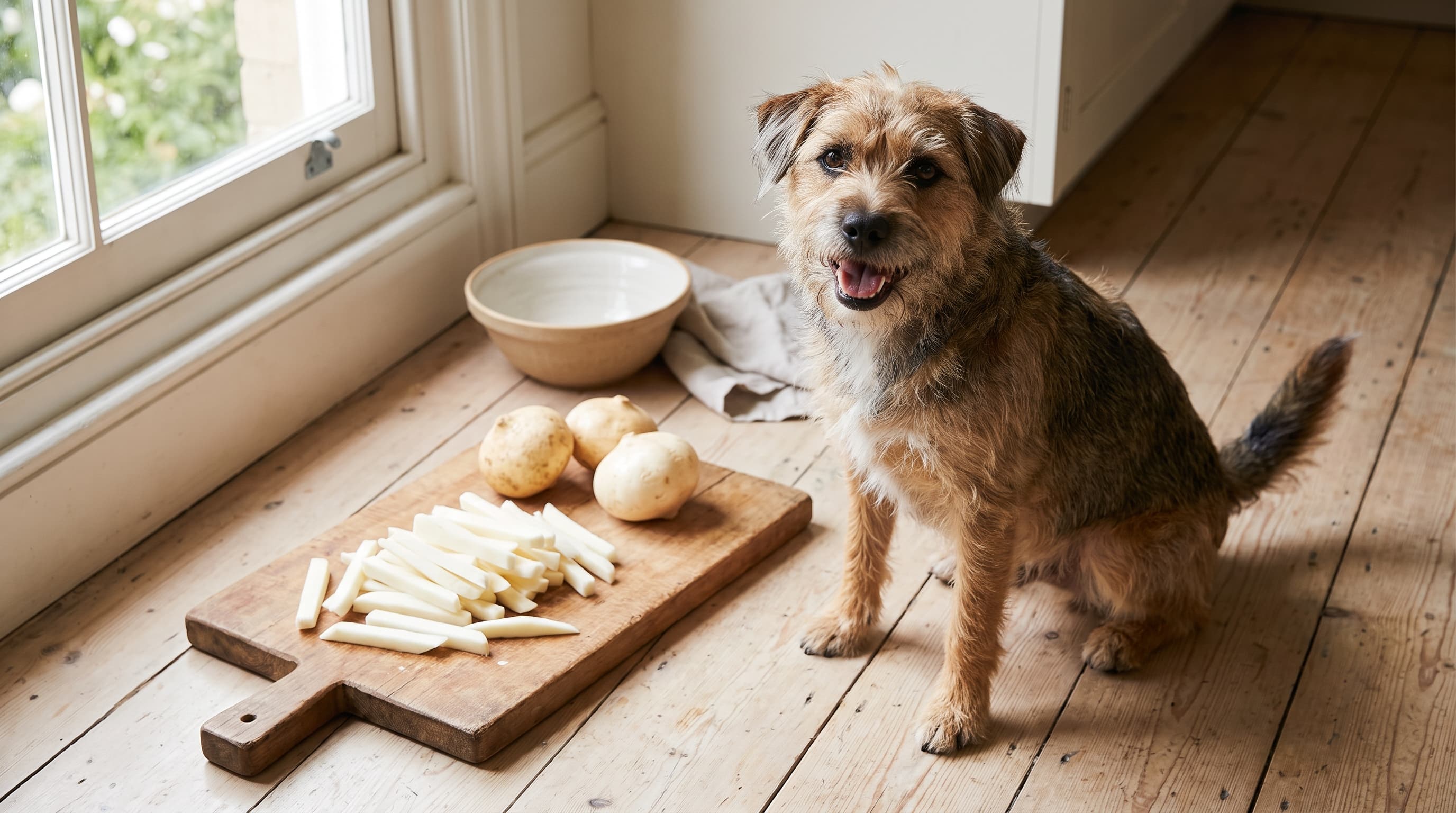
- Wash the whole jicama, then peel off all of the brown skin and any fibrous layer beneath it.
- Cut the white flesh into small, bite-sized pieces to prevent choking — especially important for small dogs and gulpers.
- Serve it plain: raw for maximum crunch, or lightly steamed for puppies and seniors with dental issues. Softening it can make it easier to chew.
- Skip all seasonings, oils, salt, and dips. Garlic and onion powder, in particular, are toxic to dogs.
- Discard the skin, stems, leaves, and seeds where your dog can't reach them.
Frozen jicama sticks can double as a soothing, crunchy chew on a warm afternoon. Pair a healthy treat habit with steady activity — here's how to burn off your dog's energy fast.
When to Skip Jicama
Jicama isn't right for every dog or every moment. Avoid it if your dog is prone to gastrointestinal issues, is on a restricted diet, or has never had it and is about to travel or face another stressor (new foods are best introduced on calm, ordinary days). And never offer the processed jicama chips or seasoned "jicama fries" made for people — those often contain salt, spices, and oils dogs don't need. When in doubt, your veterinarian is the best source of advice for your individual dog.
Frequently Asked Questions
Can dogs eat jicama skin?
No. The skin is not safe for dogs. Along with the leaves, stems, and seeds, jicama skin contains rotenone, a natural toxin. Always peel jicama thoroughly and feed only the white inner flesh.
Can dogs eat raw jicama?
Yes. Peeled, raw jicama cut into bite-sized pieces is fine for most healthy dogs in moderation, and many enjoy the crunch. Steaming is a good option for puppies or senior dogs that struggle with hard textures.
Is jicama good for dogs with weight problems?
It can be a helpful swap. Jicama is low in calories and high in fiber and water, so a few small pieces can satisfy a dog that likes to snack without adding many calories. Still, treats should stay under about 10% of daily calories, and weight-loss plans are best guided by your vet.
How much jicama is too much for a dog?
Amounts beyond a few small pieces — scaled to your dog's size — can cause bloating, gas, or diarrhea from the fiber. Start with one or two bites, increase slowly, and stop if you notice any digestive upset.
What should I do if my dog eats jicama leaves or seeds?
Contact your veterinarian. The leaves, stems, and seeds contain rotenone and can cause toxicity. Watch for vomiting, diarrhea, drooling, lethargy, or difficulty breathing, and seek prompt professional care rather than waiting to see if symptoms pass.
Can puppies have jicama?
In tiny amounts, yes, as long as it's peeled and softened by steaming to reduce choking risk. Puppies have developing digestive systems, so introduce any new food cautiously and ask your veterinarian if you're unsure.
The Bottom Line
Dogs can have jicama safely when you serve only the peeled white root, cut small, plain, and in moderation — and keep the toxic skin, leaves, stems, and seeds far away. As a crunchy, low-calorie, fiber-rich treat, it's a solid occasional snack for many healthy dogs. If your pup enjoys exploring new produce, you might also check whether they can eat cauliflower and beets.
Want more human-food-for-dogs answers in your inbox? Subscribe to the Daily Wag newsletter for vet-informed feeding tips, treat ideas, and dog news every week.