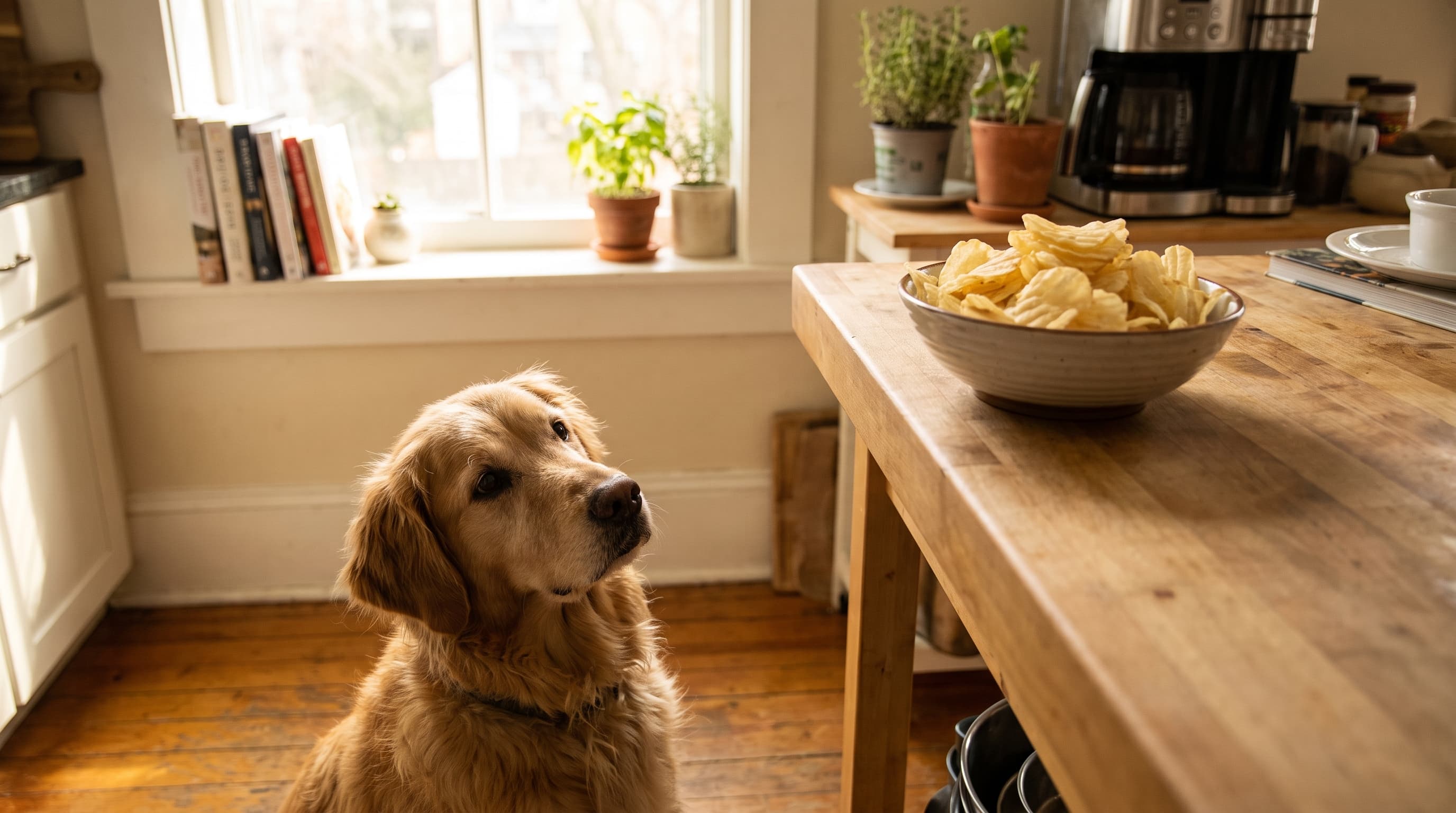

Can Dogs Eat Chips? What Every Owner Should Know Before Sharing
Dogs should not eat chips. A single plain potato chip won't poison a healthy adult dog, but chips are loaded with salt, fat, and artificial seasonings that offer zero nutritional value and, in larger amounts, can trigger dehydration, stomach upset, pancreatitis, or salt toxicity. Chips are best kept off the menu entirely, with safer, dog-friendly snacks used instead.
Why Chips Are a Poor Snack Choice for Dogs
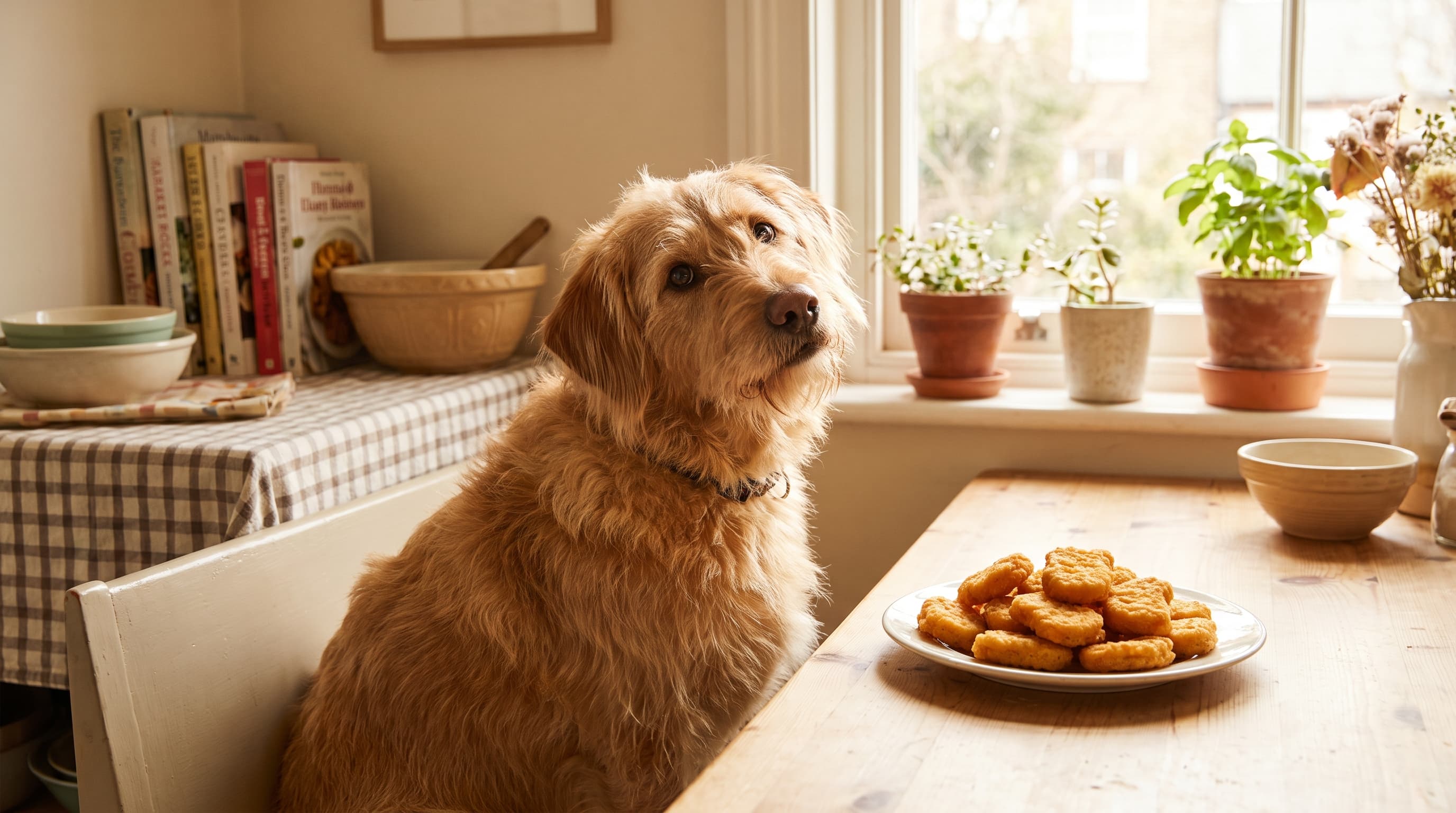
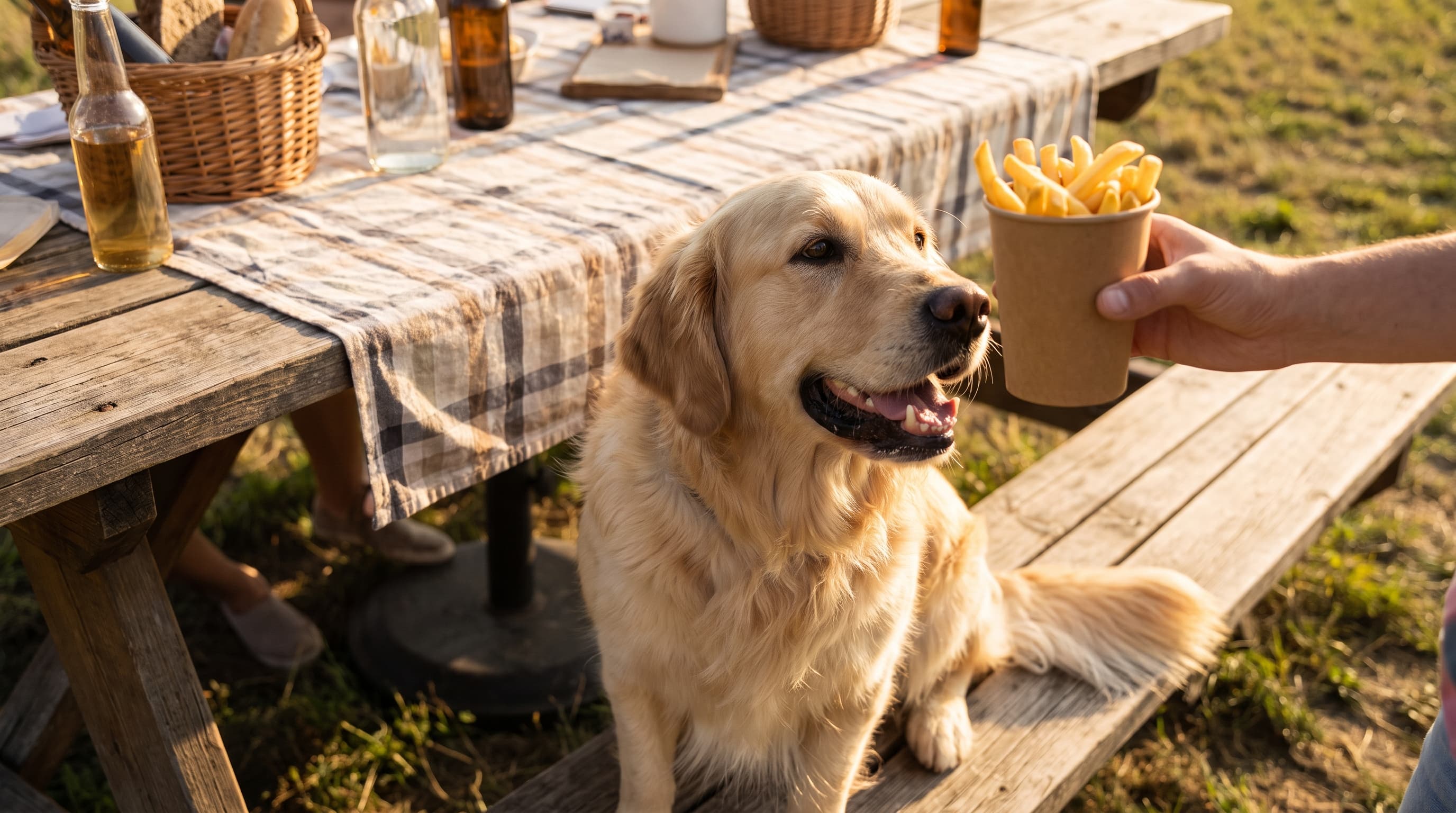
Chips are engineered for human taste buds, not canine health. Whether they're potato, tortilla, or veggie chips, nearly all commercial varieties share the same three problems: high sodium, high fat, and flavor additives your dog doesn't need. The occasional crumb that falls to the floor is unlikely to cause a crisis, but making chips a regular habit stacks the odds against your dog's long-term health.
Dogs process food very differently from people, and snacks that are merely "empty calories" for us can push a dog past its daily limits fast. Veterinary nutritionists recommend that treats make up no more than about 10% of a dog's daily calories — and a small handful of chips can blow through that budget while delivering nothing useful in return.
The Salt Problem: How Much Is Too Much?
Salt is the biggest red flag with chips. A single ounce of potato chips can contain 150–200 mg of sodium, and dogs are far smaller than us. Too much salt at once can cause increased thirst and urination, and in serious cases it can lead to salt toxicity — a dangerous condition that produces vomiting, diarrhea, a stumbling gait, tremors, and even seizures.
The ASPCA lists excessively salty foods among the human snacks pet parents should avoid. If your dog gets into an open bag of salted chips, make sure fresh water is always available and call your veterinarian if you notice repeated vomiting, restlessness, weakness, or a wobbly walk. For a deeper look at sodium and dogs, see our guide on the truth about dogs and salt.
Fat, Oil, and the Pancreatitis Risk
Chips are deep-fried or baked in oil, making them very high in fat. A sudden hit of greasy food can upset a dog's stomach, and in some dogs a fatty snack can help trigger pancreatitis, a painful and potentially serious inflammation of the pancreas. Signs include vomiting, a hunched posture, loss of appetite, and lethargy. Small breeds and dogs prone to weight gain are especially vulnerable, so the "just one won't hurt" mindset is riskier than it sounds.
Over time, regular fatty treats also contribute to obesity, which strains joints and raises the risk of diabetes and heart disease. If your dog already has a sensitive stomach, skip greasy human snacks and reach for treats formulated for sensitive stomachs instead.
Are Some Chips Worse Than Others?
Not all chips carry the same risks, though none are truly "safe":
- Salted potato chips: High in sodium and fat — a double hazard.
- Flavored chips (BBQ, sour cream & onion, cheese): The worst offenders. Onion and garlic powders are toxic to dogs and can damage red blood cells even in seasoning-sized amounts.
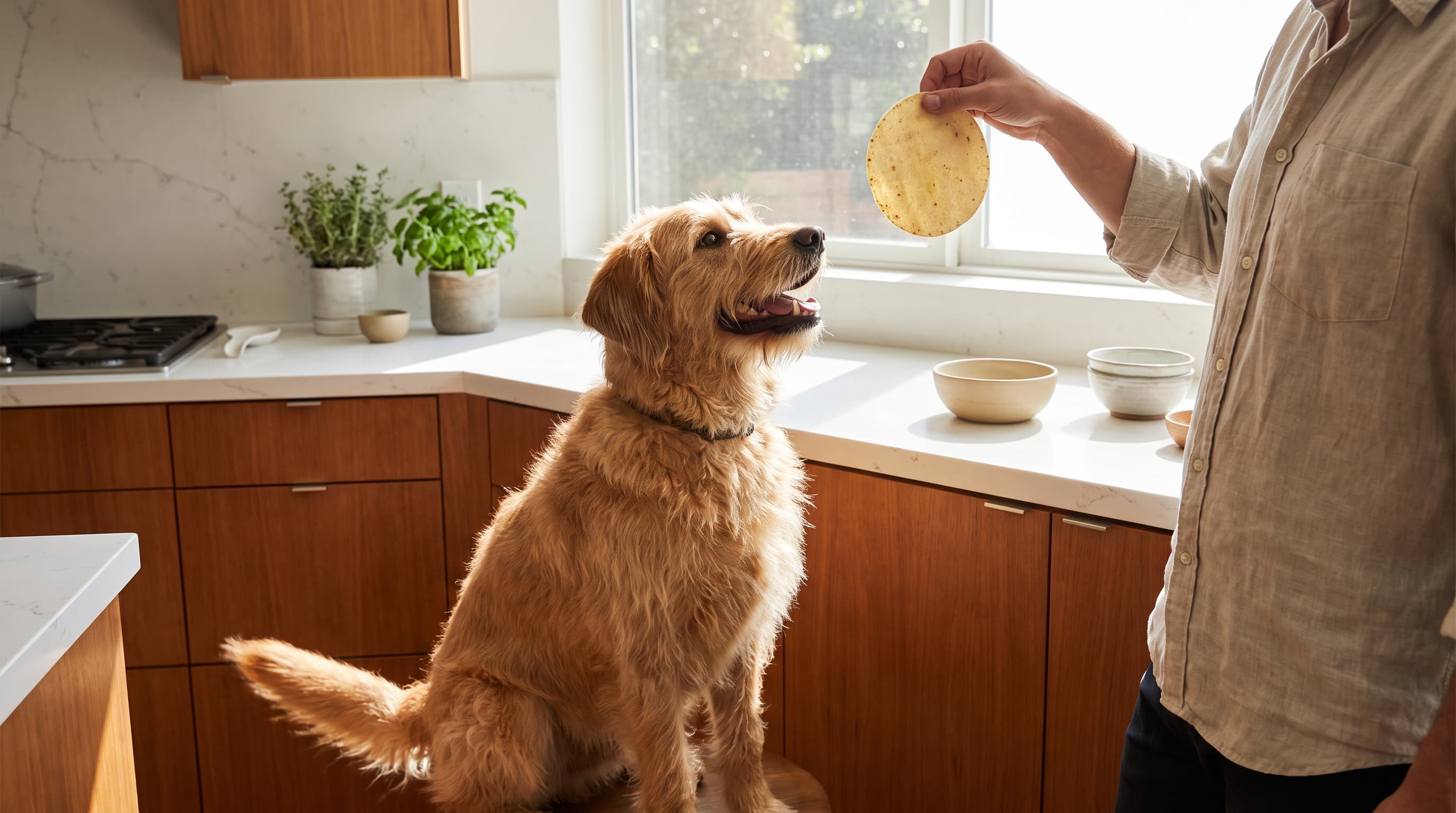
- Tortilla chips: Often heavily salted and sometimes seasoned; the corn base itself isn't toxic, but the salt and oil are. See our full breakdown on whether dogs can eat tortillas.
- Plain, unsalted "chips" (like a plain baked potato slice): The least harmful, since plain cooked potato is generally safe for dogs in moderation — but that's a far cry from a bag of Lay's.
The takeaway: the more processing, salt, and seasoning, the more you should keep the bag away from your dog.
What to Do If Your Dog Eats Chips
If your dog snags a chip or two, don't panic — a small amount rarely causes more than mild tummy trouble. Watch for vomiting, diarrhea, excessive thirst, or lethargy over the next 12–24 hours and keep water available. If your dog ate a large quantity, a whole bag, or any chips with onion or garlic seasoning, call your veterinarian or a pet poison hotline right away. Puppies, senior dogs, and small breeds should be watched more closely, since it takes less to affect them.
Better Snack Alternatives to Chips
Cravings for a crunchy treat are easy to satisfy with something genuinely good for your dog:
- Air-popped popcorn — plain, unsalted, and unbuttered popcorn makes a light, crunchy snack. Completely plain, air-popped popcorn is safe for dogs in small portions.
- Raw carrot sticks — crunchy, low-calorie, and great for teeth.
- Green beans — filling and fiber-rich.
- Apple slices (no seeds or core) — naturally sweet and hydrating.
- Plain cooked potato or sweet potato — no salt, no oil.
These swaps give your dog the satisfying crunch of a snack without the salt, grease, and additives packed into a chip.
Frequently Asked Questions
Can dogs eat one potato chip?
One plain potato chip is unlikely to harm a healthy adult dog, but it still contains salt and fat with no nutritional benefit. It's fine as a rare accident, not something to offer on purpose.
Are tortilla chips safe for dogs?
Tortilla chips aren't toxic, but they're usually salted and fried, and flavored versions may contain onion or garlic powder that is harmful to dogs. It's best to avoid them.
What happens if my dog eats a whole bag of chips?
A whole bag delivers a large dose of salt and fat, which can cause vomiting, diarrhea, excessive thirst, and, in serious cases, salt toxicity or pancreatitis. Provide water and contact your veterinarian promptly.
Can chips kill a dog?
A chip or two won't, but a large amount of salted or onion/garlic-flavored chips can cause salt toxicity or blood-cell damage that becomes life-threatening without treatment. When in doubt, call your vet.
What snacks can I give instead of chips?
Great crunchy alternatives include plain air-popped popcorn, raw carrots, green beans, apple slices (no seeds), and plain cooked potato or sweet potato with no salt or oil.
The Bottom Line
Chips are a human indulgence that dogs are better off skipping. While an accidental crumb won't cause a crisis, the salt, fat, and seasonings in chips add up to real risks — from stomach upset to salt toxicity — with no upside for your dog. Keep the bag on the counter, and reward your pup with crunchy, dog-safe snacks instead.
Love no-nonsense answers about what your dog can and can't eat? Subscribe to the Daily Wag newsletter for vet-informed feeding tips, treat ideas, and dog-care guides delivered straight to your inbox.