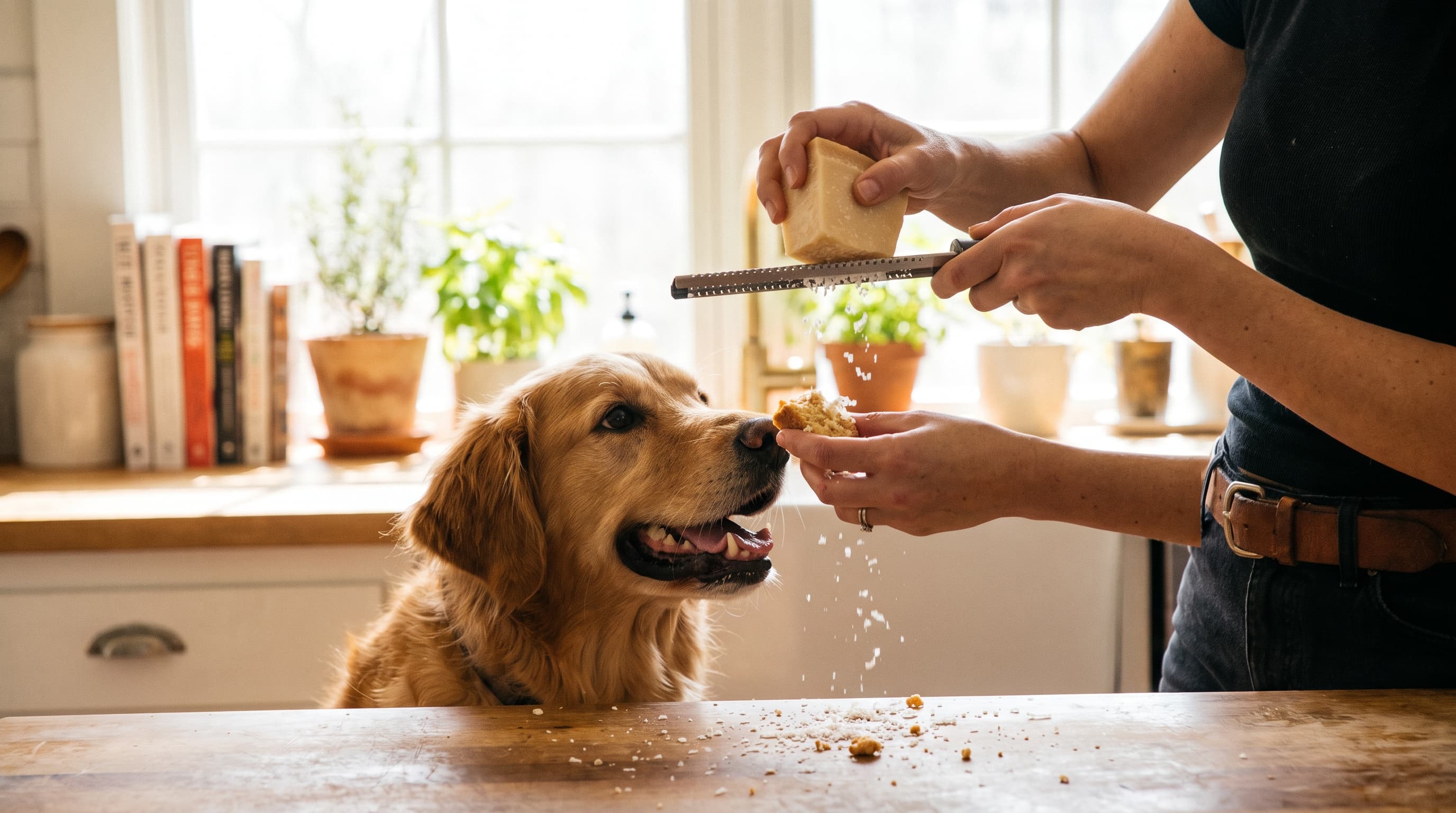

Yes, most healthy adult dogs can have parmesan cheese in tiny amounts as an occasional treat. Because parmesan is an aged, hard cheese, it contains very little lactose, so most dogs digest it without trouble. The catch is that parmesan is high in sodium and fat, so it should only ever be a small pinch, never a regular snack.
Is parmesan cheese safe for dogs?
For the average healthy adult dog, a small amount of parmesan cheese is generally safe. Parmesan is not toxic to dogs the way chocolate, grapes, or xylitol are, and its long aging process breaks down most of the milk sugar (lactose) that gives many dogs an upset stomach after dairy. Veterinary-reviewed guidance confirms that dogs can eat parmesan in small amounts, treating it as a garnish rather than a meal (Dogster).
That said, "safe in small amounts" is doing a lot of work in that sentence. Parmesan is one of the saltiest and most calorie-dense cheeses on the shelf, so the same properties that make it a powerful flavor bomb for humans make it easy to overdo for a dog. A light dusting can be a fantastic high-value training reward; a whole cube every day is a recipe for weight gain and digestive upset. Think of parmesan the way you would a rich dessert for yourself: a taste is a treat, a habit is a problem.
Is parmesan cheese good for dogs, or just harmless?
In moderation, parmesan does offer a few genuine perks. It is rich in protein and calcium, and it delivers small amounts of phosphorus and vitamin A. Most importantly for dog owners, it is intensely palatable — that concentrated, savory umami flavor makes even picky or distracted dogs sit up and pay attention, which is why grated hard cheese is a classic trick for hiding pills or rewarding a tough new command.
But none of those nutrients are things your dog needs from cheese. A complete, balanced dog food already supplies the protein and calcium a dog requires, so parmesan is best thought of as a flavor tool, not a health food. The protein-to-calorie trade is simply not in your dog's favor here — you get a lot of salt and fat for a very small nutritional return. If you want human foods that actually add nutritional value, our roundup of the healthiest human foods for dogs is a better starting point than the cheese drawer.
How much parmesan cheese can a dog eat?
Keep it tiny. A good rule of thumb is a light pinch of finely grated parmesan per 20 to 30 pounds of body weight, offered no more than occasionally. For a small dog, that might be a quarter-teaspoon; for a large dog, up to a teaspoon. When in doubt, use less.
The real guardrail is the veterinary "10% rule": treats and extras of all kinds should make up no more than 10% of your dog's daily calories, with the other 90% coming from a complete, balanced diet (American Kennel Club). Parmesan is calorie-dense, so even a small sprinkle eats into that 10% budget quickly. If your dog gets cheese today, dial back other treats to keep the day in balance. This matters most for small breeds, where a "small" pinch of cheese represents a much bigger share of their daily calories than it would for a large dog.
When is parmesan cheese bad for dogs?
There are three main reasons to be cautious with parmesan, plus a list of dogs who should skip it entirely.
It is very high in salt
Parmesan is one of the saltiest cheeses available. Too much sodium can cause increased thirst and urination, and in larger amounts it can lead to salt toxicity, with signs ranging from vomiting and diarrhea to tremors and worse (Pet Poison Helpline). A pinch is nowhere near a toxic dose for most dogs, but it is a good reason to keep portions small and to avoid salty cheese for any dog on a sodium-restricted diet.
It is high in fat
Rich, fatty foods are a well-known trigger for pancreatitis, a painful and sometimes serious inflammation of the pancreas (VCA Animal Hospitals). Regularly feeding fatty treats like parmesan also adds up to unwanted weight gain over time, which stresses joints and shortens lifespan.
Some dogs are still lactose intolerant
Most adult dogs produce very little of the enzyme needed to digest lactose, which is why dairy can cause gas, bloating, and diarrhea (American Kennel Club). Aged parmesan is low in lactose, so it bothers fewer dogs than milk or soft cheese — but a sensitive dog can still react. Introduce it in a tiny amount and watch for stomach upset over the next day.
Which dogs should skip parmesan entirely? Avoid it for puppies, and for any dog with a history of pancreatitis, obesity, a dairy allergy, or diagnosed heart or kidney disease. When a health condition is involved, ask your veterinarian before offering any cheese.
Signs your dog ate too much parmesan cheese
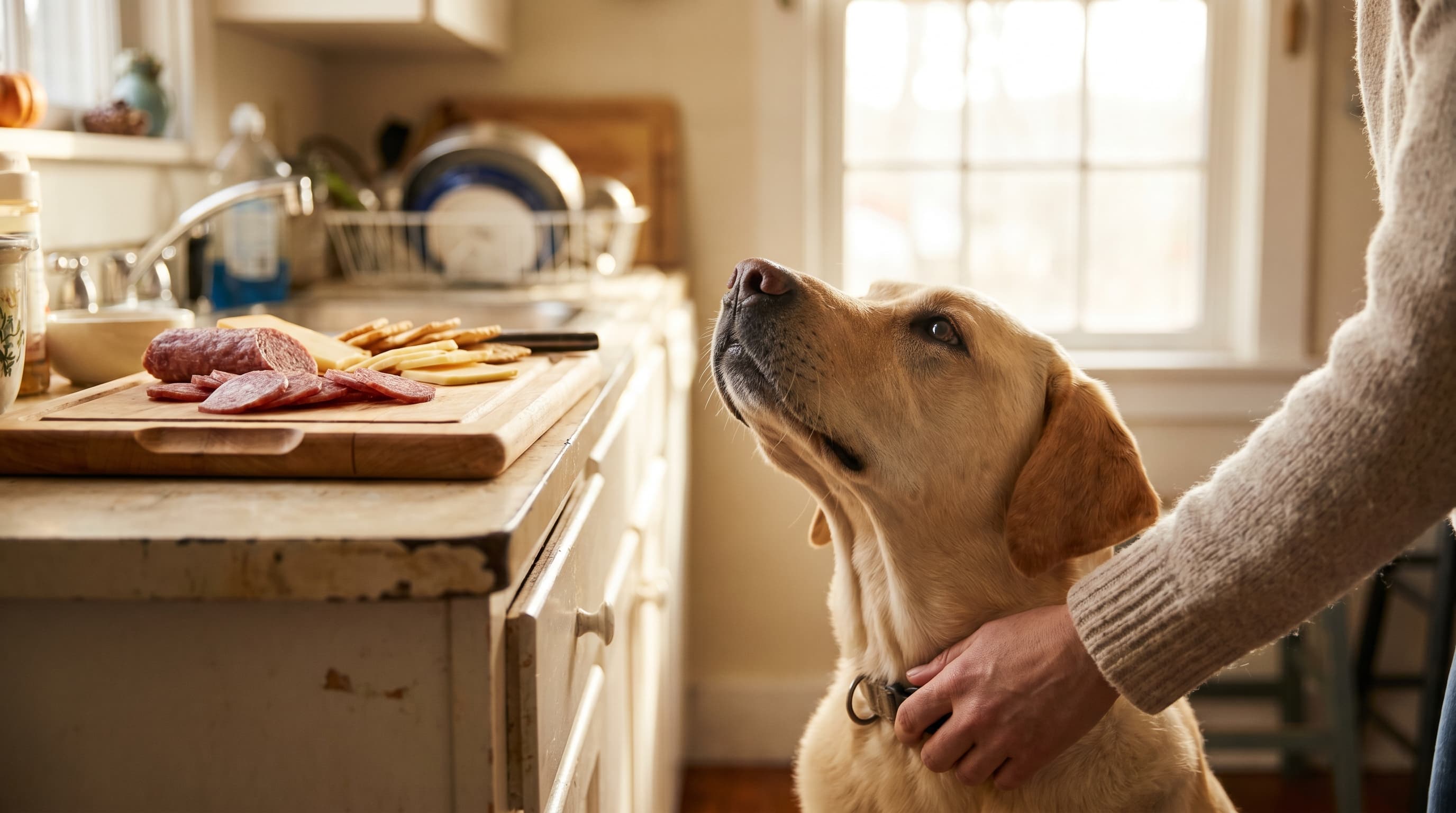
If your dog raids the cheese board, most of the time the result is a mildly upset stomach rather than an emergency. Keep an eye out for the common signs of overindulgence:
- Vomiting or diarrhea
- Excessive thirst and more frequent urination (a response to the salt)
- Gas, bloating, or an obviously uncomfortable belly
- Lethargy or a lack of appetite at the next meal
Most of these pass on their own within a day. But call your veterinarian right away if you notice repeated vomiting, a painful or swollen abdomen, tremors, disorientation, or if a small dog ate a large amount of salty cheese or a hard rind. When in doubt, a quick phone call to your vet or a pet poison hotline is always the safer move than waiting it out.
How to safely give your dog parmesan cheese
If your dog is a healthy adult with no dairy issues, here is how to keep parmesan a treat rather than a problem:
- Grate it finely and use a pinch. A light dusting over a training treat or into a puzzle toy goes a long way.
- Use plain parmesan only. Skip anything blended with garlic, onion, or heavy seasoning — garlic and onion are toxic to dogs.
- Avoid the rind and the crusty ends. Parmesan rinds are hard, extremely salty, and a choking or blockage risk.
- Skip powdered "shaker" parmesan when you can. The shelf-stable canned kind often contains extra sodium and additives; fresh grated is cleaner.
- Introduce it slowly. The first time, offer just a crumb and watch for 24 hours before making it a regular reward.
Cheese also pairs naturally with other people-food questions. If your dog is angling for a bite of your sandwich, it is worth knowing the rules on whether dogs can have bread and whether dogs can eat crackers before you share.
What about other cheeses for dogs?
Parmesan is not the only option, and it is far from the best for everyday use. Lower-fat, lower-sodium choices like plain cottage cheese or a small cube of mozzarella tend to be gentler for regular treating. For a full breakdown of which varieties are safest and which to avoid, see our guide to whether dogs can eat cheese. As a general rule, the softer, milder, and less salty the cheese, the better it suits daily training — while intensely salty hard cheeses like parmesan are best saved for the occasional high-value reward.
Frequently asked questions
Can puppies have parmesan cheese?
It is best to skip parmesan for puppies. Their digestive systems and diets are more sensitive, and the salt and fat load is a poor fit for a growing dog. Stick to puppy-appropriate treats and their regular food.
Is a little parmesan on pasta okay for my dog?
A stray strand of plain, unsauced pasta with a dusting of parmesan is unlikely to harm a healthy dog. The bigger concern is what else is on the plate — garlic, onion, and rich cream or tomato sauces are the real hazards, not the cheese itself.
Can dogs eat parmesan crisps or "whisps"?
These baked, pure-cheese crisps are extremely concentrated in salt and fat, so they are not a good dog treat. If your dog snags one off the floor it is not an emergency, but do not offer them on purpose.
My dog ate a chunk of parmesan rind — should I worry?
Watch for vomiting, diarrhea, excessive thirst, or signs of stomach pain. A large rind can also pose a blockage risk in small dogs. If your dog seems unwell or ate a big piece, call your veterinarian for advice.
How often can I give my dog parmesan as a training treat?
Occasionally is the honest answer. Because of its salt and calorie density, parmesan is better as a now-and-then jackpot reward than a daily habit. For everyday training, reach for lower-fat, lower-salt options and keep all treats within the 10% rule.
The bottom line
A pinch of finely grated parmesan is a safe, high-value treat for most healthy adult dogs, thanks to its low lactose content — but its heavy salt and fat load means it should stay an occasional garnish, never a staple. Keep portions tiny, skip it for puppies and dogs with health conditions, and always check with your veterinarian if your dog has a medical issue or you are unsure.
Hungry for more clear, no-nonsense answers to "can my dog eat this?" questions? Subscribe to the Daily Wag newsletter for vet-informed food guides, treat ideas, and dog-parenting tips delivered straight to your inbox.