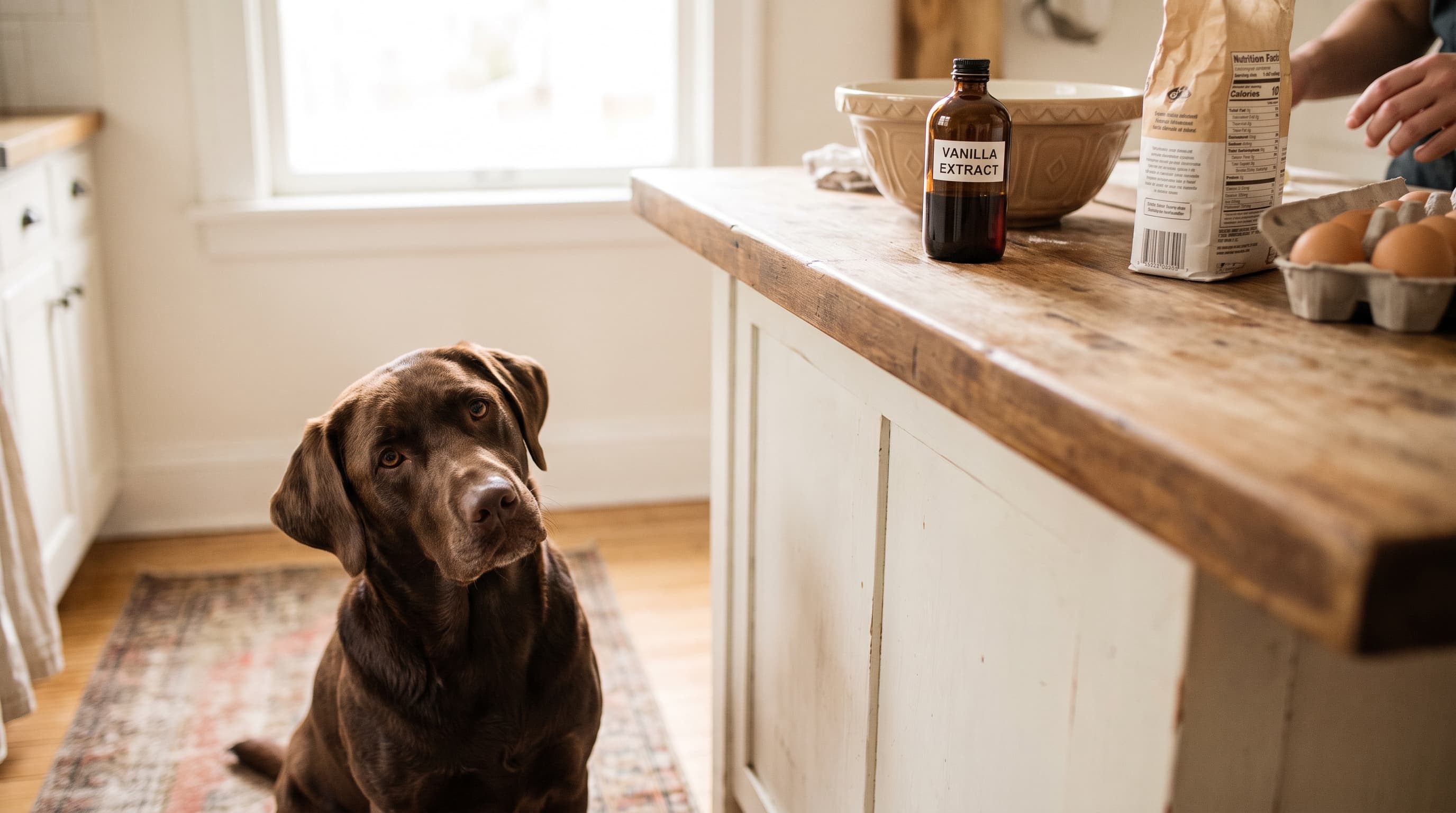

No, dogs should not have vanilla extract. Pure vanilla extract is roughly 35% alcohol, and even small amounts of ethanol are toxic to dogs. While a bite of a fully baked vanilla-flavored treat is usually harmless because the alcohol cooks off, straight liquid vanilla extract can cause alcohol poisoning and warrants a call to your veterinarian.
Vanilla is one of the most common flavors in the human kitchen, so it's natural to wonder whether a splash is safe to share with your dog. The short answer is that the flavor of vanilla isn't the problem—the alcohol in the extract is. Here's what every dog owner should understand about vanilla extract, how it differs from other vanilla products, and what to do if your dog gets into the bottle.
Is Vanilla Extract Safe for Dogs?
Vanilla extract is not safe for dogs, and the reason is its alcohol content. Extracts are made by soaking vanilla beans in a high-proof alcohol solution, which is why, according to Dogster, "essences and concentrates have high concentrations of alcohol, which means they are not safe for dogs to consume"—with some extracts reaching up to 30% alcohol. Other sources put standard vanilla extract at around 35% alcohol by volume.
Dogs simply cannot process alcohol the way humans can. Their smaller bodies and different metabolism mean that even a quantity that seems trivial to us can affect them significantly. DogTime notes that "vanilla extracts are made using high levels of alcohol, which can cause alcohol toxicity in dogs," and that even small amounts of ethanol can trigger poisoning. There is no established "safe" serving of raw vanilla extract for a dog.
Pure Vanilla vs. Vanilla Extract vs. Vanilla Flavoring
Not all "vanilla" is the same, and the distinctions matter for your dog's safety:
- Pure vanilla beans or pods: The bean itself is not toxic to dogs. A dog that nibbles a bit of vanilla pod is generally fine, though the pods offer no nutritional value and can be a choking or blockage risk if swallowed whole.
- Vanilla extract: The problem child. High alcohol content makes it unsafe in liquid form, even in small spills.
- Imitation vanilla flavoring: Often still alcohol-based, and may contain additives. Best avoided as a direct treat.
- Alcohol-free vanilla (glycerin-based): Some products use vegetable glycerin instead of alcohol. These are the safest vanilla option, and some commercial dog treats use exactly this kind of flavoring.
In other words, it's the alcohol carrier—not the vanilla flavor—that makes standard extract dangerous.
What Happens If a Dog Drinks Vanilla Extract?
If a dog ingests a meaningful amount of vanilla extract, the ethanol is absorbed quickly and can lead to alcohol poisoning. The ASPCA warns that alcohol-containing products "can cause vomiting, diarrhea, incoordination, depression, difficulty breathing, tremors, changes in blood pH, coma and even death." The Pet Poison Helpline similarly lists lethargy, difficulty walking (ataxia), and vomiting among the early signs.
Commonly reported signs of alcohol toxicity in dogs include:
- Vomiting or drooling
- Wobbliness, stumbling, or loss of coordination
- Disorientation or unusual sluggishness
- Excessive thirst or urination
- Low body temperature or slowed breathing
- In severe cases, tremors, seizures, collapse, or coma
Smaller dogs, puppies, and senior dogs are especially vulnerable because of their size and liver function. This is general information only—if you suspect your dog has ingested vanilla extract, don't wait to see how symptoms develop.
Why Even a Little Alcohol Affects Dogs So Strongly
It's easy to underestimate the risk because a dash of vanilla seems so harmless in our own food. But dogs and humans metabolize alcohol very differently. A dog's body is smaller, and its liver processes ethanol far less efficiently, so the same dose that a person barely notices can overwhelm a dog's system. Toxicity depends on several factors—the amount consumed, the concentration of the product, and the dog's body weight, age, and overall health.
This is why there's no universal "safe amount." A few drops of extract cooked into a large batch of cookies is a completely different scenario from a dog lapping a teaspoon of straight extract off the counter. Alcohol is also absorbed rapidly, so signs can appear within 30 to 60 minutes of ingestion. The speed of onset is exactly why veterinarians stress early action rather than a wait-and-see approach when a dog gets into any alcohol-containing product, from vanilla extract to raw yeast dough to spilled cocktails.
What About Baked Goods Made with Vanilla Extract?
Here's the reassuring part. When you bake a cake, cookies, or muffins, the high oven heat causes most of the alcohol in the vanilla extract to evaporate. What remains is the vanilla flavor without the concentrated ethanol. So a dog that sneaks a small piece of a plain, fully baked vanilla treat is usually not at risk from the vanilla itself.
That said, baked goods often contain other ingredients that are genuinely dangerous to dogs—chocolate, xylitol (a sugar substitute), raisins, macadamia nuts, or large amounts of sugar and fat. So while the trace vanilla is rarely the concern, always check what else is in the treat before sharing. When in doubt, stick to dog-safe options.
What to Do If Your Dog Ingests Vanilla Extract
If your dog laps up spilled vanilla extract or gets into the bottle, treat it as a potential poisoning:
- Remove access to any remaining extract and note roughly how much your dog may have consumed and when.
- Call your veterinarian right away, or contact an animal poison control line such as the Pet Poison Helpline (855-764-7661) or the ASPCA Animal Poison Control Center (888-426-4435).
- Do not try to treat it at home with remedies or by inducing vomiting unless a veterinary professional specifically instructs you to.
- Watch for symptoms and be ready to describe them, but let the professionals guide next steps.
Early intervention makes a real difference with alcohol toxicity, which can progress quickly. Keep vanilla extract and other alcohol-containing flavorings stored securely out of your dog's reach.
Safer Vanilla Alternatives and Sweet Treats for Dogs
If you want to give your dog a little something sweet, skip the extract and reach for dog-appropriate options instead. Alcohol-free, glycerin-based vanilla flavoring formulated for pets is one route. You can also offer small amounts of dog-safe whole foods as occasional treats. Curious what else is on the "sometimes okay" list? Take a look at our guides on whether dogs can have plain yogurt, a lick of whipped cream, or a taste of honey—each with the portion and safety details you need.
Frequently Asked Questions
Is a tiny amount of vanilla extract dangerous for my dog?
Because vanilla extract is highly concentrated alcohol, there's no confirmed safe amount, and small dogs are at greater risk from even a little. A single drop is unlikely to cause severe harm to a large dog, but any deliberate feeding should be avoided, and a spill your dog laps up warrants a call to your vet.
Can dogs eat cake or cookies made with vanilla extract?
Usually yes, in moderation—the baking heat cooks off most of the alcohol. The bigger concern is the other ingredients, like chocolate, xylitol, raisins, or excess sugar, which can be toxic. Always confirm a baked good is free of those before sharing a small piece.
Is pure vanilla bean toxic to dogs?
The vanilla bean itself is not toxic, but it offers no nutritional benefit and pods can pose a choking or blockage risk. It's the alcohol in extract, not the vanilla flavor, that makes standard vanilla extract unsafe.
What are the signs of alcohol poisoning in dogs?
Watch for vomiting, wobbliness or loss of coordination, disorientation, excessive thirst or urination, low body temperature, and in severe cases tremors, seizures, or collapse. If you see these signs after suspected extract ingestion, contact your vet immediately.
Is there a dog-safe vanilla flavoring?
Yes. Alcohol-free vanilla flavoring made with vegetable glycerin is considered safe, and some commercial dog treats already use it. It delivers the vanilla taste without the ethanol found in traditional extract.
My dog licked a small vanilla extract spill—should I panic?
Don't panic, but don't ignore it either. A single lick may cause nothing more than mild stomach upset in a larger dog, while the same amount could affect a small dog more seriously. Note how much was spilled and when, watch closely for any signs of wobbliness or vomiting, and call your veterinarian or a pet poison line for guidance tailored to your dog's size. It's always better to check than to guess.
The Bottom Line
Dogs should not have vanilla extract because of its high alcohol content, which can cause alcohol poisoning even in small amounts. The vanilla flavor itself isn't the villain—the alcohol carrier is—so fully baked treats with trace vanilla are typically fine, provided they contain no other toxic ingredients. Store your extract safely, choose alcohol-free alternatives when you want to treat your pup, and call your vet promptly if your dog ever gets into the bottle.
Veterinary disclaimer: This article is for general educational purposes only and is not a substitute for professional veterinary advice. It does not provide dosing or diagnosis. If your dog has ingested vanilla extract or any alcohol-containing product, or if you have questions about your dog's health, please consult your veterinarian.
Hungry for more clear, vet-informed answers to your "can my dog eat this?" questions? Subscribe to the Daily Wag newsletter for weekly dog nutrition and safety tips.