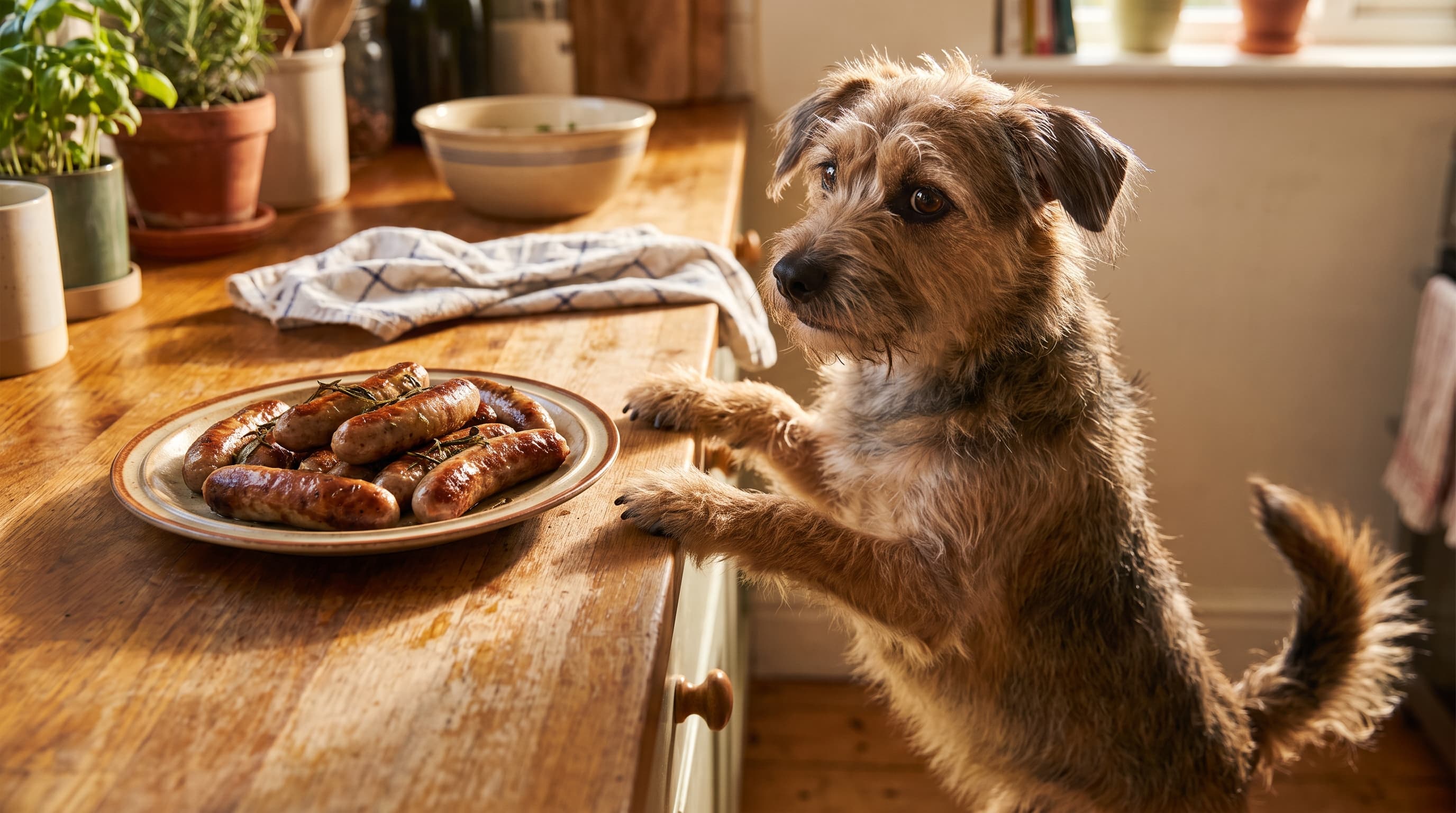

Can dogs eat sausage? Not really — a stray bite of plain cooked sausage won't usually harm a healthy dog, but sausage is a poor choice as a treat. It is high in fat and salt and most recipes contain onion and garlic, which are toxic to dogs. Raw sausage adds a risk of parasites and bacteria, so it's best avoided altogether.
Is Sausage Safe for Dogs?
Sausage sits firmly in the "not recommended" category. The problem isn't the meat itself but everything that comes with it. Commercial sausages are processed, fatty, heavily salted, and almost always seasoned with ingredients dogs should never eat. Veterinary sources are blunt about it: PetMD states plainly that dogs should not eat sausage. A single small piece by accident is rarely an emergency, but making sausage a regular treat sets your dog up for real problems over time.
It helps to separate the two questions owners really mean when they ask this. "Will one bite hurt my dog right now?" — usually not, if it was plain and small. "Is sausage a good food to give my dog?" — no. Keeping those apart is the key to responding calmly when your dog snags a scrap while also knowing not to make it a habit.
Why Sausage Is Bad for Dogs
Onion and garlic toxicity
This is the biggest hidden danger. Most sausages contain onion and garlic in some form — fresh, cooked, or powdered. Both belong to the allium family, which the ASPCA lists among people foods that cause gastrointestinal irritation and red blood cell damage in dogs. Onions are especially potent; the AKC explains that onions contain N-propyl disulfide, a compound that damages a dog's red blood cells and can cause hemolytic anemia. Powdered forms are more concentrated than fresh, so seasoned sausages are riskier than they look.
Too much fat
Sausage is a fatty food, and a sudden hit of rich, greasy fat can trigger pancreatitis, a painful and potentially serious inflammation of the pancreas that veterinary sources associate with fatty meals. Over the long term, high-fat treats also drive weight gain and obesity.
Too much salt
Processed sausages are loaded with sodium. While a little salt is fine, large amounts can cause excessive thirst and, in bigger doses, sodium ion poisoning. The Pet Poison Helpline notes that salt overdose can cause vomiting, diarrhea, tremors, seizures, and in severe cases death.
What About Raw Sausage?
Raw sausage is the riskiest form. It can harbor Salmonella, E. coli, and the parasite that causes trichinosis, all of which can make your dog (and your household) sick. The seasonings that make sausage dangerous cooked are just as present raw. There is no upside to feeding raw sausage, so skip it entirely.
Different Types of Sausage, Ranked
- Breakfast sausage & Italian sausage: Heavily seasoned with onion, garlic, salt, and often fennel or spice. Avoid.
- Hot dogs & Vienna sausages: Very high in salt and additives; not toxic in a single small bite but a poor treat. Limit strictly.
- Summer sausage & salami: Cured, extremely salty and fatty, often with garlic. Avoid — see our note on salami and dogs.
- Plain cooked pork or chicken sausage, no seasoning: The least-bad option; a tiny plain piece occasionally is unlikely to harm a healthy adult dog, but there are far better treats.
How Much Sausage Is Too Much?
There's no precise "safe" amount, because it depends on your dog's size, the type of sausage, and the seasonings involved. As a rule of thumb, treats of any kind should make up no more than about 10% of your dog's daily calories, and sausage is a poor way to spend that budget given its fat and salt load. A 10-pound dog reaches a harmful dose of onion or salt far faster than an 80-pound dog, so small breeds are at higher risk from the exact same bite. The safest number to remember is zero as a regular treat — and "just a tiny plain piece, rarely" if you're going to share at all.
Seasonings and Casings to Watch
The seasoning blend is what turns ordinary meat into a hazard. Beyond onion and garlic, many sausages include leeks, chives, and shallots (all allium-family), plus heavy salt, nitrates, chili or cayenne, nutmeg, and sometimes xylitol-sweetened glazes or sauces in prepared dishes — xylitol is highly toxic to dogs. Natural casings are generally digestible in small amounts, but large chunks of casing or a whole sausage swallowed quickly can pose a choking hazard or, in small dogs, a risk of intestinal blockage. Toothpicks and skewers left in cocktail sausages are an underrated emergency-room culprit, too.
Why "A Little Bit" Adds Up
One greasy bite rarely causes a crisis, but sausage's downsides are cumulative. Regularly sharing fatty, salty scraps nudges dogs toward obesity, pancreatitis, and heart-straining sodium intake, and it teaches begging behavior that's hard to unlearn. Dogs with existing conditions — pancreatitis history, heart disease, kidney disease, or a sensitive stomach — are especially vulnerable, and for them even small amounts of sausage can trigger a flare. If your dog has any chronic health issue, treat sausage as strictly off-limits.
What to Do If Your Dog Ate Sausage
Don't panic over one small, plain piece — watch for vomiting, diarrhea, lethargy, or loss of appetite over the next day or two. Be more concerned if your dog ate a large amount, ate heavily seasoned or onion/garlic-containing sausage, or is a small dog (toxic doses are reached faster by body weight). Call your veterinarian or a pet poison hotline right away if you see pale gums, weakness, rapid breathing, repeated vomiting, or signs of belly pain. When in doubt, phone your vet with your dog's weight and how much they ate.
This is general information, not veterinary advice. Always contact your veterinarian if you're worried about something your dog ate.
The Nutritional Problem With Sausage
Look at a sausage from a canine-nutrition standpoint and the picture is unflattering. It's calorie-dense and dominated by saturated fat, which crowds out the balanced nutrition a dog actually needs and stresses the pancreas. Sodium content is typically several times higher than what's appropriate for a dog. Cured and processed sausages frequently contain nitrates and preservatives, and many carry seasonings ranging from merely unhelpful to outright toxic. Unlike a plain protein such as boiled chicken breast, sausage delivers very little that benefits your dog and a great deal that works against them. There's simply no nutritional argument for it in a dog's diet.
Healthier Treat Alternatives
If you want to reward your dog with meat, there are safer ways to do it. Offer small pieces of plain, cooked, unseasoned lean chicken, turkey, or lean beef with no oil, butter, salt, onion, or garlic. Dog-formulated treats, freeze-dried single-ingredient meat treats, or dog-safe veggies like carrots, green beans, and cucumber satisfy the same "special snack" instinct without the fat and toxic seasonings. A few tips for treating the right way: keep all treats to under about 10% of daily calories, cut everything into small pieces to prevent choking, introduce new foods one at a time so you can spot any tummy upset, and always keep fresh water available. When you want to share "human food," reach for plain cooked lean protein or crunchy vegetables instead of anything off the deli counter.
Frequently Asked Questions
Can dogs eat a small piece of cooked sausage?
A single small bite of plain, fully cooked, unseasoned sausage is unlikely to harm a healthy adult dog. But because most sausage contains onion, garlic, salt, and fat, it should never be a regular treat.
Is sausage toxic to dogs?
Sausage isn't inherently toxic, but the onion and garlic seasonings in most sausages are toxic to dogs, and the high fat and salt content can cause pancreatitis and sodium problems. That combination makes sausage unsafe as a routine food.
Can dogs eat raw sausage?
No. Raw sausage can contain Salmonella, E. coli, and parasites that cause trichinosis, plus the same harmful seasonings as cooked sausage. Avoid feeding raw sausage entirely.
Can puppies eat sausage?
No. Puppies have sensitive digestive systems and lower body weights, so the salt, fat, and seasonings in sausage are even riskier for them. Stick to a complete puppy diet and puppy-safe treats.
What should I do if my dog ate a lot of sausage?
Watch closely for vomiting, diarrhea, weakness, pale gums, or belly pain, and contact your veterinarian or a pet poison helpline — especially if the sausage was seasoned with onion or garlic or your dog is small. Have your dog's weight and the amount eaten ready.
Are hot dogs safer than sausage for dogs?
Not really. Hot dogs are also high in salt, fat, and additives and sometimes contain garlic or onion powder. A tiny plain piece occasionally won't hurt most dogs, but they're not a healthy treat.
Keep Exploring
Want more "can my dog eat this?" answers? See our guides on salami, pizza, and french fries for more common table-food questions. For a steady stream of dog nutrition tips and safe-treat ideas, subscribe to the Daily Wag newsletter.