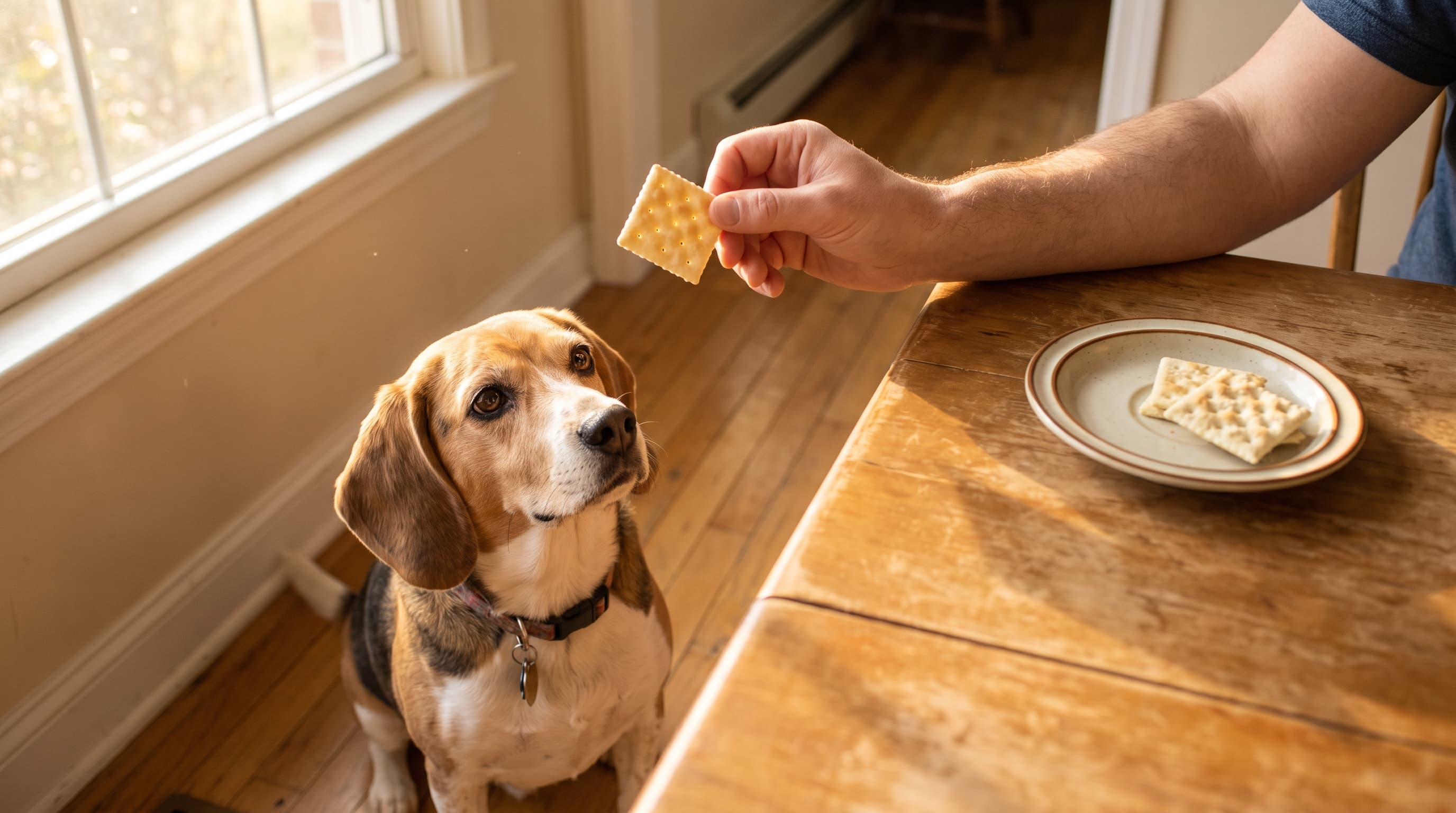

Dogs can eat a saltine cracker or two without harm, but saltines are not a healthy or recommended snack. They're high in sodium and deliver empty calories with virtually no nutritional value. A few plain crackers on a rare occasion won't hurt a healthy dog, but making them a habit risks excess salt intake, weight gain, and digestive upset.
Saltine crackers are a pantry staple, so it's no surprise they end up in a begging dog's sights. Maybe you dropped one on the floor, or you're wondering if a bland cracker could settle an upset tummy. Either way, here's a clear, vet-informed look at whether dogs can eat saltine crackers, how much is too much, and what to reach for instead.
Are Saltine Crackers Safe for Dogs?
In small amounts, plain saltine crackers are generally not toxic to dogs. As Dogster explains, "in most instances, crackers are safe for dogs, but that doesn't mean we should split a pack with them." The key words are small amounts and plain. Saltines contain no ingredients that are outright poisonous, but they aren't doing your dog any favors either.
The bigger picture is that crackers are a processed human food built for human taste—salty, carb-heavy, and low in the nutrients dogs actually need. A dog on a complete, balanced diet gets nothing beneficial from a saltine. So while the occasional cracker is fine, it belongs firmly in the "rare treat" category, not the daily routine.
What's Actually In a Saltine Cracker?
To understand why saltines rank as a poor treat, it helps to look at what goes into them. A standard saltine is made from refined white flour, vegetable oil (or shortening), yeast or baking soda, and salt—often with a salted top. That's a short list, but almost none of it benefits a dog. Refined white flour is a fast-digesting carbohydrate with little fiber, the added fat contributes extra calories, and the salt is the real red flag for canine health.
Some flavored or "everything" style saltines go further, adding onion powder, garlic powder, or other seasonings. This matters because onions and garlic are genuinely toxic to dogs, even in powdered form. If a cracker is anything other than plain, it's safest to skip it entirely. Whenever you share human food with your dog, reading the ingredient label first is a simple habit that prevents accidental exposure to harmful additives.
The Sodium Problem: Why Salt Matters for Dogs
The single biggest concern with saltines is right there in the name: salt. Dogs are far more sensitive to sodium than people are. According to Dial A Vet, "saltine crackers are surprisingly salty, and dogs are much more sensitive to sodium than humans," and too much can cause "dehydration, electrolyte imbalances, or even sodium poisoning in severe cases."
To put numbers on it, just five saltine crackers can contain up to 140 mg of sodium. For a small dog, that adds up fast. In large quantities, excess salt can lead to sodium ion poisoning. The Pet Poison Helpline warns that a salt overdose can cause "gastrointestinal distress (e.g., vomiting, diarrhea), neurological signs (e.g., stumbling gait, disoriented behavior, tremor, seizure, collapse), and death." That's an extreme outcome tied to large amounts, but it underscores why salty snacks should be limited. For a deeper look, our guide on dogs and consuming salt breaks down safe sodium levels.
How Many Saltine Crackers Can a Dog Eat?
There's no precise "safe number" because it depends heavily on your dog's size, health, and overall diet. As a general rule of thumb:
- Small dogs: No more than a small piece of one cracker, and only rarely.
- Medium to large dogs: One or two plain crackers on an occasional basis is unlikely to cause harm in a healthy dog.
- Dogs with health conditions: Dogs with heart disease, kidney disease, or on sodium-restricted diets should skip saltines entirely—check with your vet first.
If you're going to share, unsalted or low-sodium crackers are a better choice than regular saltines. And crackers should never replace a portion of your dog's balanced meals—treats of any kind should make up only a small fraction of daily calories.
Can Saltine Crackers Settle a Dog's Upset Stomach?
You may have heard that bland crackers help a nauseous dog, the way they sometimes help people. This is largely a myth for dogs. While plain, bland carbohydrates can be part of a recovery diet, the added salt in saltines makes them a poor choice for a dog that's already vomiting or dehydrated—extra sodium is the last thing an unsettled stomach needs.
Vets more commonly recommend a bland diet of plain boiled chicken and white rice, or plain canned pumpkin, for short-term digestive upset. If your dog's stomach issues last more than a day or come with lethargy, repeated vomiting, or diarrhea, contact your veterinarian rather than reaching for the cracker box.
Are Saltines Safe for Puppies?
Puppies deserve extra caution. Their small size means the sodium in even one or two crackers represents a much bigger share of their daily limit than it would for an adult dog. Puppies also have developing digestive systems that handle rich or processed foods poorly, and they're building lifelong eating habits—so introducing salty human snacks early sets a precedent you'll want to avoid. Stick to a complete puppy food and puppy-appropriate treats, and save the experimenting for dog-safe fruits and vegetables in tiny amounts once your vet gives the green light.
Signs Your Dog Has Had Too Much Salt
If a dog eats a large quantity of saltines (say, half a sleeve off the counter), watch for signs of salt overload. Reported symptoms include:
- Excessive thirst and frequent urination
- Vomiting or diarrhea
- Lethargy or weakness
- Loss of appetite
- In severe cases, tremors, disorientation, or seizures
Make sure fresh water is always available, and if you notice these signs after a big salty binge, call your vet or a poison control line. The ASPCA maintains an Animal Poison Control Center (888-426-4435) for exactly these situations.
Healthier Snack Alternatives to Saltines
If your dog loves a crunchy treat, there are far better options than a salty cracker. Consider:
- Carrot sticks—crunchy, low-calorie, and rich in fiber and vitamins.
- Apple slices (no seeds or core) for a sweet, hydrating crunch.
- Cucumber or green beans for a refreshing, low-sodium snack.
- Plain air-popped popcorn (unsalted, unbuttered) in small amounts.
- Commercial dog treats formulated for canine nutrition.
These deliver the satisfying crunch dogs enjoy without the sodium load. If you're curious about other human snacks, our guides on whether dogs can eat crackers in general, graham crackers, and potato chips cover the details, portion sizes, and risks for each. As the AKC notes about bread, many plain human carbs are safe "in moderation"—but they're fillers, not nutrition.
Frequently Asked Questions
Can dogs eat saltine crackers?
Yes, in very small amounts a healthy dog can eat a plain saltine cracker without harm. But they're high in sodium and offer no nutritional value, so they should only be an occasional treat—never a regular part of your dog's diet.
How many saltine crackers are too many for a dog?
It depends on size, but even a handful can push a small dog's sodium intake too high. One or two crackers for a larger dog on rare occasions is generally fine; a large amount, like half a sleeve, can cause salt overload and warrants a call to your vet.
Are unsalted saltine crackers better for dogs?
Yes. Unsalted or low-sodium crackers remove the main risk—excess salt—so they're a safer choice than regular saltines. They're still just empty carbs, though, so keep portions tiny and infrequent.
Can saltines help a dog with an upset stomach?
Not really. The salt makes saltines a poor choice for a nauseous or dehydrated dog. Vets more often recommend plain boiled chicken and rice or plain pumpkin. See your vet if stomach issues persist beyond a day.
What should I do if my dog ate a lot of saltine crackers?
Provide plenty of fresh water and watch for excessive thirst, vomiting, diarrhea, lethargy, or tremors. If you see concerning signs or your dog ate a large quantity, contact your veterinarian or an animal poison control line promptly.
Can dogs with heart or kidney disease have saltines?
No—dogs with heart disease, kidney disease, or any condition requiring a sodium-restricted diet should not have saltine crackers at all. The salt content can worsen these conditions. Always follow your veterinarian's dietary guidance for a dog with a chronic health issue, and choose vet-approved treats instead.
The Bottom Line
Dogs can technically eat saltine crackers, but they shouldn't make a habit of it. High sodium, empty calories, and zero nutritional benefit make saltines a poor treat choice. A plain cracker now and then won't hurt a healthy dog, but crunchy veggies or dog-formulated treats are far better everyday options. When in doubt—especially for dogs with heart or kidney concerns—check with your veterinarian.
Want more straight answers to your "can my dog eat this?" questions? Subscribe to the Daily Wag newsletter for weekly dog nutrition and safety tips delivered to your inbox.