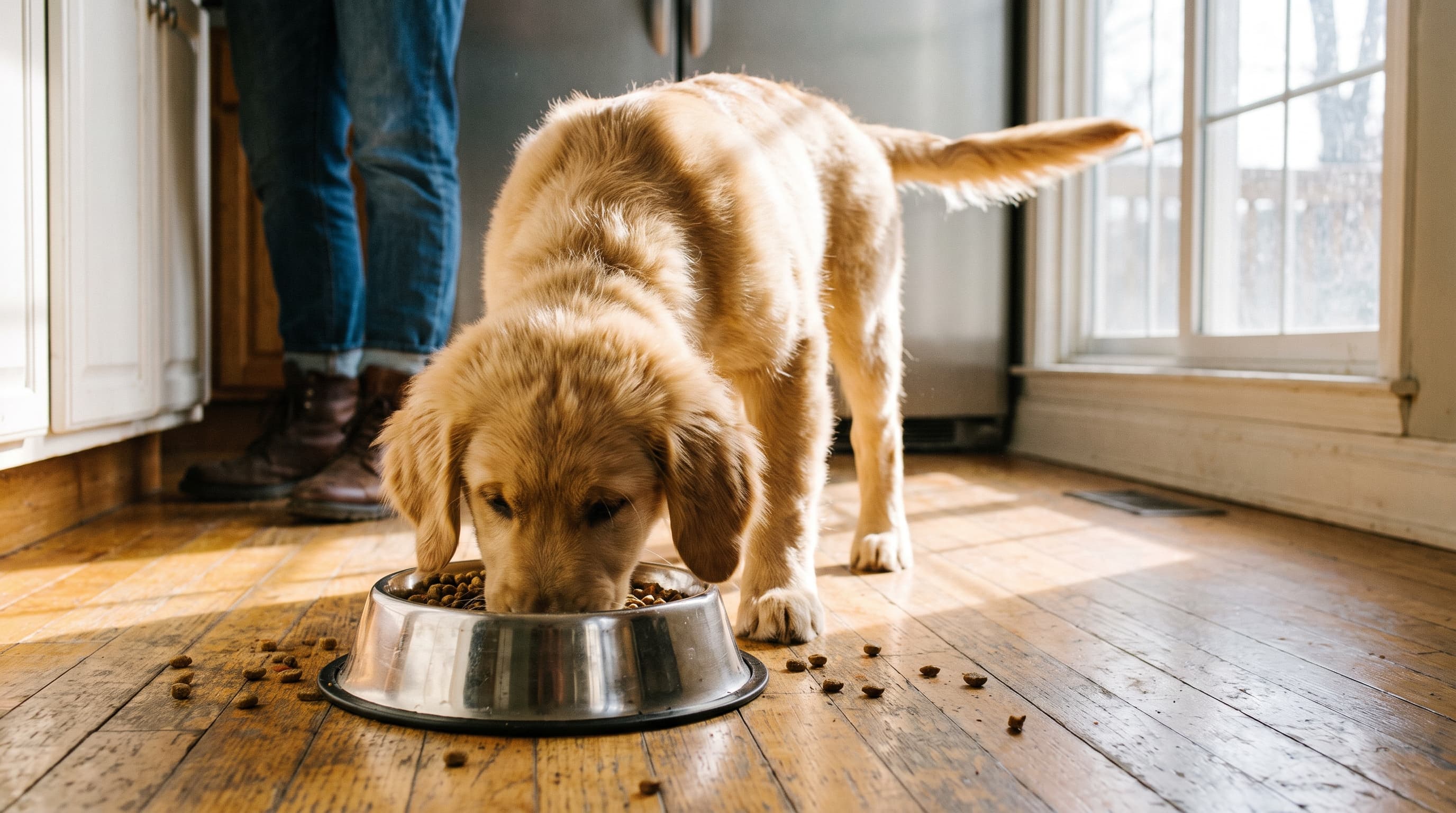
The Best Large Breed Puppy Food: 10 Vet-Informed Picks for 2026
The best large breed puppy food is a formula labeled for the growth of large-size dogs (70+ lbs adult weight), with controlled calcium (roughly 1.0–1.8% on a dry-matter basis), a balanced calcium-to-phosphorus ratio near 1.2:1, and moderate calories to prevent too-fast growth. Feeding one supports steady bone development and lowers the risk of joint problems in big-breed puppies.
Raising a large or giant breed puppy—a Labrador, German Shepherd, Golden Retriever, Great Dane, or Rottweiler—isn't just "regular puppy food in a bigger bowl." These pups grow for 12–24 months and are uniquely vulnerable to skeletal problems if they take in too much calcium or grow too quickly. Below, we explain what actually matters nutritionally, then round up 10 trusted large-breed puppy foods to consider for 2026. Always confirm current formulas and feeding amounts on the live packaging, since recipes change.
Why Large Breed Puppies Need Special Food
Big puppies have big growth demands—but faster is not better. Unlike adult dogs, puppies can't fully regulate how much calcium they absorb from food. According to VCA Animal Hospitals, excess calcium in a large-breed puppy's diet can cause skeletal malformations and abnormal bone development, because their bodies absorb the surplus rather than excreting it.
The Purina Institute reinforces this: complete and balanced large-breed growth diets already provide calcium in a safe range, so adding calcium supplements is unnecessary and potentially harmful. Overfeeding calories is the other major risk—excess energy accelerates growth and increases the load on developing joints, raising the chance of conditions like hip and elbow dysplasia. The goal is steady, lean growth, not the biggest puppy on the block.
What to Look For on the Label
When you compare large breed puppy foods, focus on these fundamentals:
- An AAFCO large-breed growth statement. Look for wording like "formulated for growth, including growth of large-size dogs (70 lbs or more as an adult)." AAFCO caps calcium in these formulas at 1.8% on a dry-matter basis for safety.
- Controlled calcium. Experts generally point to roughly 1.0–1.8% calcium on a dry-matter basis for large-breed pups—lower than what's allowed for small breeds. The Dog Food Advisor notes that too much calcium is linked to a higher risk of hip dysplasia in large-breed puppies.
- A balanced calcium-to-phosphorus ratio. Aim for a ratio near 1.2:1, with a safe window of about 1.1:1 to 1.4:1, per Vet Help Direct.
- Quality animal protein and moderate fat. The American Kennel Club suggests large-breed puppy foods with around 26% protein and about 15% fat to support lean growth without over-fueling it.
- DHA for brain and vision development, plus omega fatty acids for skin and coat.
If you want to go deeper on protein, our guide to choosing the right protein level in dog kibble is a helpful companion read.
The 10 Best Large Breed Puppy Foods for 2026
The foods below are widely trusted, carry a large-breed growth formulation, and are formulated with the controlled calcium and balanced minerals big puppies need. This isn't a strict ranking—the best choice depends on your puppy's size, preferences, and any guidance from your vet.
1. Purina Pro Plan Puppy Large Breed Chicken & Rice
A perennial favorite among breeders and vets, this formula pairs real chicken as the first ingredient with DHA from fish oil for brain and vision development. It's specifically balanced for large-breed growth and is one of the most consistently recommended options for big puppies.
2. Hill's Science Diet Puppy Large Breed Chicken & Brown Rice
Backed by extensive research, Hill's Science Diet offers a large-breed puppy recipe with an optimal calcium level for controlled bone growth, plus high-quality protein and antioxidants. A reliable, vet-endorsed choice for owners who value a clinically focused brand.
3. Royal Canin Large Puppy
Royal Canin's large-breed puppy line is engineered around big-dog growth, with a tailored calorie content and a kibble shape designed for larger jaws. It supports digestive health and immune development during the critical growth window, making it a popular vet-clinic pick.
4. Blue Buffalo Life Protection Formula Large Breed Puppy
This recipe leads with deboned chicken and adds Blue's signature "LifeSource Bits"—a blend of antioxidants, vitamins, and minerals. With no chicken by-product meals, corn, wheat, or soy, it appeals to owners who prefer a more natural ingredient list while still meeting large-breed growth standards.
5. Eukanuba Puppy Large Breed
Eukanuba's large-breed puppy formula emphasizes bone and joint support, including glucosamine and DHA, with animal protein as the foundation. It's built to fuel active, fast-growing pups while keeping mineral levels appropriate for big breeds.
6. IAMS Large Breed Puppy
A budget-friendlier mainstream option, IAMS Large Breed Puppy uses real chicken first and includes tailored calcium levels for strong bones plus DHA for cognitive development. A dependable everyday choice for owners who want a trusted brand at a lower price point.
7. Wellness Complete Health Large Breed Puppy
Wellness offers a carefully balanced large-breed puppy recipe with deboned chicken, whole grains, glucosamine, and omega fatty acids. Its focus on whole-food ingredients and controlled minerals makes it a solid pick for the health-conscious owner.
8. Diamond Naturals Large Breed Puppy Lamb & Rice
A strong value option, Diamond Naturals delivers pasture-raised lamb, probiotics, and guaranteed levels of the calcium and phosphorus large-breed puppies need. It's a good alternative for pups who do better on lamb than chicken.
9. Nutro Ultra Large Breed Puppy
Nutro Ultra features a trio of proteins (chicken, lamb, and salmon) alongside a blend of superfoods. It's formulated for large-breed growth with appropriate calcium and DHA, appealing to owners who like variety in protein sources.
10. Orijen Puppy Large
For those who prefer a high-protein, biologically focused diet, Orijen Puppy Large packs a rich variety of fresh animal ingredients. Because it's protein-dense, it's worth reviewing the calcium content and feeding amounts with your vet to keep big-breed growth steady rather than rapid.
How Much and How Often to Feed a Large Breed Puppy
Portion size depends on your puppy's current weight, expected adult weight, and the specific food's calorie density, so start with the feeding chart on your bag and adjust to keep your pup lean. As a general rhythm, feed three meals a day until around 6 months of age, then transition to two meals daily. Large and giant breeds typically stay on puppy (growth) food longer than small breeds—often until 15–24 months—because their skeletons are still developing.
Use a body-condition check rather than the scale alone: you should be able to feel (but not see) the ribs, and your puppy should have a visible waist from above. If your pup is getting pudgy or growing very fast, cut portions slightly. Never add calcium, bone meal, or "growth" supplements to a complete large-breed puppy food unless your veterinarian specifically directs it. For more on the first months at home, see our 6 puppy parenting tips and our guide on how to train a puppy.
Common Feeding Mistakes to Avoid
- Feeding adult or all-life-stages food too early. Many aren't calibrated for controlled large-breed growth. Stick with a large-breed puppy formula.
- Free-feeding. Leaving food out all day encourages overeating and rapid growth. Use measured meals.
- Adding calcium supplements. A balanced formula already has the right amount; extra can harm developing bones.
- Switching foods abruptly. Transition over 7–10 days to avoid stomach upset.
- Storing food poorly. Fats can go rancid—see our guide to common dog food storage mistakes.
Frequently Asked Questions
When should a large breed puppy switch to adult food?
Most large and giant breeds should stay on large-breed puppy (growth) food until roughly 15–24 months, when they reach skeletal maturity. Smaller large breeds may switch closer to 12–15 months. Your veterinarian can advise based on your dog's breed and growth.
Can large breed puppies eat regular puppy food?
It's not recommended. Standard or small-breed puppy foods can contain more calcium and calories than a big puppy should have, which raises the risk of skeletal problems. Choose a formula labeled for the growth of large-size dogs.
How much calcium does a large breed puppy need?
Experts generally point to about 1.0–1.8% calcium on a dry-matter basis, with AAFCO capping large-breed growth formulas at 1.8%. A complete large-breed puppy food already provides a safe amount, so supplementation isn't needed.
Is grain-free food good for large breed puppies?
Not necessarily. The FDA has investigated a potential link between some grain-free diets and heart disease (DCM) in dogs. Unless your vet recommends grain-free for a specific reason, a well-formulated recipe with wholesome grains is a safe, proven choice.
How do I know if my puppy is growing too fast?
Signs include rapid weight gain, a chunky body condition, or bowing/lameness in the legs. Keeping your puppy lean and feeding measured portions of a controlled-calorie large-breed formula helps promote slow, steady growth. Ask your vet if you're concerned.
The Bottom Line
Choosing the right large breed puppy food is one of the most important early decisions you'll make for a big dog. Prioritize a large-breed growth formula with controlled calcium, a balanced calcium-to-phosphorus ratio, quality protein, and moderate calories—then feed measured portions to keep your puppy lean and growing steadily. Any of the 10 foods above is a strong starting point, but recipes and your puppy's needs change over time.
A note on your puppy's health: This article is for general educational purposes and isn't a substitute for professional veterinary advice. Nutritional needs vary by breed, size, and individual health. Before choosing or changing your large-breed puppy's diet—or if you have any concerns about growth or joints—please consult your veterinarian, who can recommend the best food and feeding plan for your dog. For more foundational feeding guidance, read our expert advice on feeding dogs.