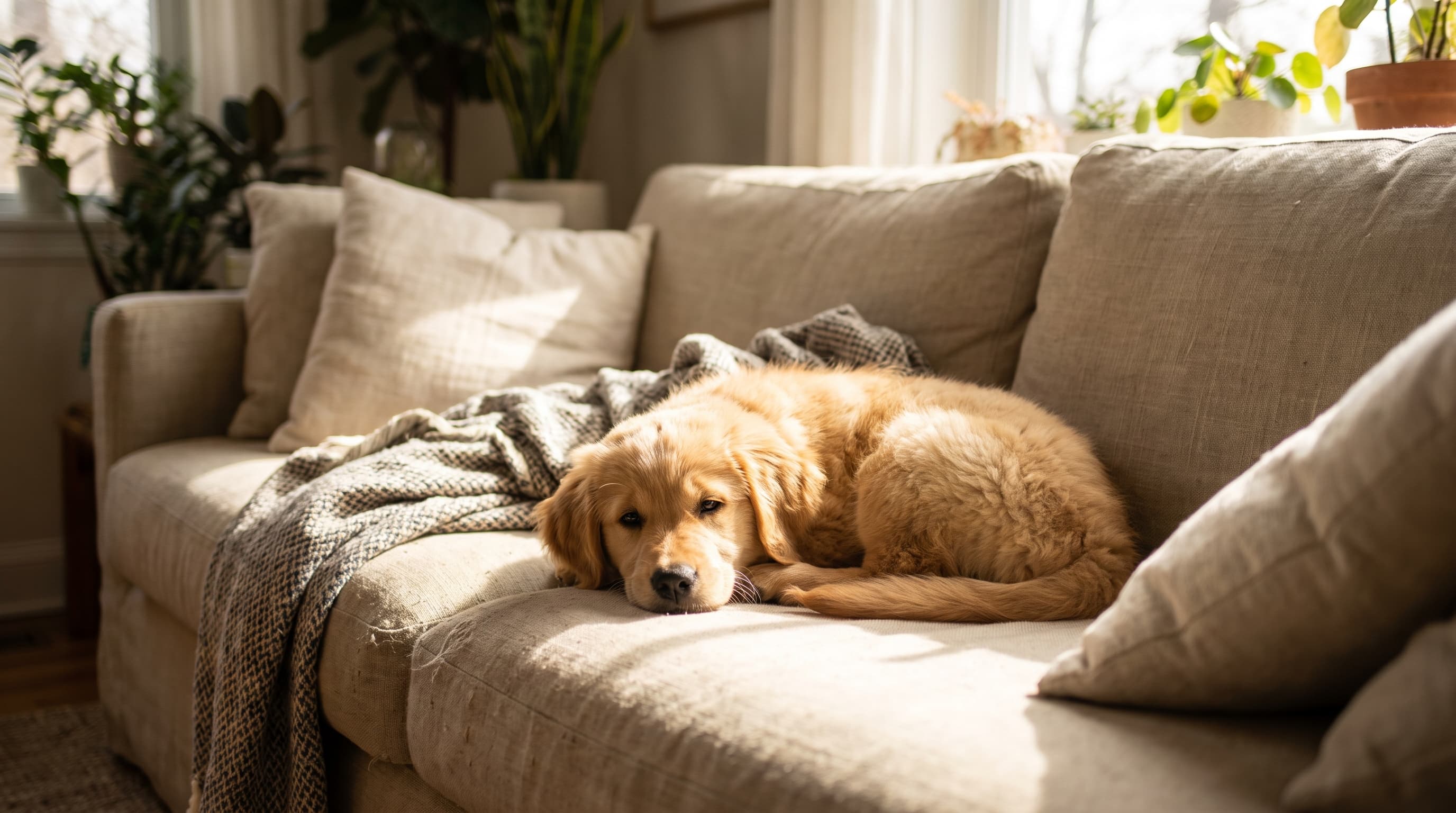
Dog Hiccups 101: Causes, Remedies, and When to See a Vet
Dog hiccups are usually harmless, involuntary spasms of the diaphragm triggered by eating or drinking too fast, excitement, or a sudden chill. They make a soft, rhythmic "hic" sound and typically pass on their own within a few minutes. Hiccups are especially common in puppies. See a vet if an episode lasts more than an hour or comes with breathing trouble, coughing, or vomiting.
What Are Dog Hiccups and Why Do They Happen?
A hiccup is a sudden, involuntary contraction of the diaphragm, the dome-shaped muscle beneath the lungs that drives breathing. When the diaphragm spasms, it causes a quick intake of air that is abruptly cut off by the closing of the vocal cords (the glottis), which produces the familiar "hic" sound. According to the American Kennel Club, this is the same basic mechanism behind hiccups in people, so a hiccuping dog is experiencing something very ordinary.
Most cases trace back to a handful of everyday triggers:
- Eating or drinking too fast. Gulping food or water means swallowing air along with it. That extra air can build up as gas and irritate the diaphragm, as Brown Veterinary Hospital notes.
- Excitement or stress. A burst of fast, irregular breathing during play, greetings, or anxious moments can set off a spasm.
- A sudden chill or temperature change. Cold air or a rapid shift in temperature is a well-known trigger, particularly in young dogs.
- Stomach upset or gas. Overeating, a diet change, or an irritated stomach can all press on or irritate the diaphragm.
- Environmental irritants. Smoke, strong perfumes, or household chemicals can affect a dog's airway and contribute to episodes.
Interestingly, veterinarians don't fully understand why any mammal hiccups. One leading theory is that hiccups are a leftover reflex from the womb, where fetal "breathing" motions help exercise the developing respiratory muscles. That may be part of why puppies hiccup so much more than adult dogs.
Are Dog Hiccups Normal?
In the vast majority of cases, yes. Occasional hiccups are a normal, healthy part of canine life, and most episodes resolve on their own very quickly, especially once you address the underlying cause like fast eating. PetMD describes them as a common, benign occurrence that rarely requires any intervention.
What separates "normal" from "worth watching" is duration and company. A short bout of hiccups in an otherwise happy, playful dog is nothing to worry about. Hiccups that drag on for an hour or more, happen many times a day for several days, or arrive alongside other symptoms are the ones that deserve a closer look, a topic we cover in detail below.
How to Get Rid of Dog Hiccups
Because hiccups almost always stop by themselves, the goal is gentle help, not a dramatic cure. The old human tricks, holding your breath or getting startled, don't translate to dogs and can frighten them. Instead, try these calm, low-risk approaches:
- Encourage slow, calm drinking. A small amount of water can help reset irregular breathing. Make sure your dog laps it slowly rather than gulping.
- Offer a gentle belly or chest rub. Getting your dog to lie down and relax with a soft massage can ease the diaphragm and calm their breathing rhythm.
- Redirect with light activity. A short, leisurely walk or a bit of gentle play can shift their breathing pattern and distract them.
- Slow down the next meal. If fast eating is the culprit, a slow-feeder bowl, a puzzle feeder, or splitting food into smaller portions can prevent the next round. Rest after eating helps too.
Just as important is what not to do. Never scare your dog on purpose, pull on their tongue, blow in their face, or hold them upside down. These "remedies" are stressful, can cause injury, and don't work. If the hiccups aren't bothering your dog, the safest choice is often simply to wait them out.
Puppy Hiccups: Why They Happen So Often
If you have a puppy, get comfortable with hiccups, you'll probably see a lot of them. Puppies hiccup far more frequently than adult dogs, and it's almost always completely normal. The AKC notes that puppies commonly hiccup when they've eaten or drunk quickly, or when they're tired, excited, or cold.
Several factors make young dogs so prone to them: their bodies and internal muscles are still developing, they tend to eat and play with enthusiastic abandon, and their energy swings from zoomies to deep naps in minutes. Hiccups typically become less frequent as a puppy matures. For a deeper dive tailored to young dogs, see our full guide to puppy hiccups and what they mean.
Puppy hiccups follow the same rules as adult ones: brief episodes are fine, but reach out to your vet if they last a long time, happen constantly, or come with vomiting, coughing, or signs your puppy feels unwell.
Hiccups vs. Reverse Sneezing: How to Tell the Difference
One of the most common mix-ups among dog owners is confusing hiccups with reverse sneezing, and the two are genuinely different events. Knowing which is which helps you respond calmly and describe it accurately to your vet.
Hiccups are rhythmic, soft, and repetitive, a steady "hic... hic... hic" driven by the diaphragm. Your dog's belly or body may give a small jerk with each one, and they usually don't seem distressed.
Reverse sneezing is louder and more dramatic. According to VCA Animal Hospitals, the dog rapidly pulls air in through the nose, making a snorting or honking sound, often while standing with the neck extended and head tilted back. Cornell University's Riney Canine Health Center explains that reverse sneezing (medically, paroxysmal respiration) is triggered by irritation in the nasopharynx and often has no identifiable cause.
The good news is that both are usually harmless. VCA notes that most reverse sneezing episodes last less than a minute, cause no lasting harm, and leave the dog completely normal before and after. As with hiccups, gently stroking the neck or offering something to lick can help an episode pass. If reverse sneezing becomes frequent, severe, or is paired with nasal discharge, a vet visit is worthwhile to rule out allergies, infection, or a foreign object.
When Are Dog Hiccups a Warning Sign?
Hiccups are almost always benign, but on rare occasions they can point to something that needs veterinary attention. The key is to watch how long they last and what else is going on. Contact your veterinarian if your dog's hiccups:
- Last longer than an hour, or keep returning frequently over several days
- Change into a wheezing sound, or cause irregular or labored breathing
- Come with vomiting, drooling, coughing, or difficulty swallowing
- Are paired with lethargy, loss of appetite, or an obvious change in behavior
As CareCredit's veterinary resource and Brown Veterinary Hospital both point out, persistent or symptomatic hiccups can occasionally be linked to respiratory issues like asthma or bronchitis, gastrointestinal problems, or other underlying conditions. These situations are uncommon, but they're the reason it pays to know your dog's normal baseline. If you're ever unsure whether a symptom crosses the line, our guide to the 12 signs your dog needs a vet visit can help you decide, and it's smart to know how to prepare for an emergency vet visit before you ever need one.
Never try to diagnose or medicate a persistent problem at home. A quick call to your vet is always the safest way to sort a harmless hiccup from something that needs care.
How to Help Prevent Dog Hiccups
You can't eliminate hiccups entirely, and you don't need to, but a few simple habits can cut down on the most common triggers:
- Slow down mealtimes. Slow-feeder bowls, puzzle feeders, or hand-feeding portions discourage the fast gulping that causes so many episodes.
- Serve smaller, more frequent meals. Splitting food across the day reduces overeating and the gas that can irritate the diaphragm.
- Keep water calm and available. Steady access to water discourages frantic, air-swallowing drinking.
- Manage excitement and temperature. A short warm-up before intense play and avoiding sudden chills can help sensitive dogs, especially puppies.
On a lighter note, dogs can react oddly to cold in other ways too, if you've ever wondered whether your pup can get an ice-cream headache, take a look at whether dogs can get brain freeze.
Frequently Asked Questions About Dog Hiccups
How long do dog hiccups usually last?
Most episodes last only a few minutes and resolve on their own. Hiccups that continue for more than an hour, or that keep recurring throughout the day, are worth mentioning to your veterinarian.
Are dog hiccups painful?
No. Hiccups are not painful and most dogs seem unbothered by them, often continuing to play or nap right through an episode. If your dog appears distressed, in pain, or is struggling to breathe, that's a different situation and warrants a vet call.
Why does my puppy get hiccups so often?
Puppies hiccup frequently because their bodies are still developing and they tend to eat, drink, and play with great enthusiasm. It's typically normal and usually decreases as they grow. Persistent or symptomatic hiccups still deserve a vet's input.
Can I give my dog anything to stop hiccups?
Do not give human hiccup medications or any medicine without your veterinarian's guidance. Stick to gentle, safe measures like calm sips of water, a soothing belly rub, or a short walk, and let most episodes pass on their own.
How can I tell hiccups from reverse sneezing?
Hiccups are soft, rhythmic "hic" sounds from the diaphragm, often with a small body jerk. Reverse sneezing is a louder, snorting or honking sound made as the dog rapidly pulls air in through the nose, usually with the neck extended. Both are generally harmless, but frequent reverse sneezing is worth a vet check.
When should I take my dog to the vet for hiccups?
See your vet if hiccups last more than an hour, recur frequently over several days, turn into wheezing or breathing trouble, or come with vomiting, coughing, lethargy, or loss of appetite.
The Bottom Line
For most dogs, hiccups are a harmless, even endearing quirk, a passing diaphragm spasm that clears up on its own within minutes. Slowing down meals, keeping things calm, and simply waiting them out will handle the great majority of cases. The rare exceptions are hiccups that linger, return relentlessly, or travel with other symptoms, and those are always worth a conversation with your veterinarian.
A note on veterinary advice: This article is for general informational purposes only and is not a substitute for professional veterinary care. It does not provide diagnosis or dosing guidance. If your dog's hiccups are persistent, severe, or accompanied by breathing difficulty or other worrying symptoms, contact your veterinarian promptly. When in doubt, always err on the side of a professional exam.
Want more practical, vet-informed dog care tips like these delivered to your inbox? Subscribe to the Daily Wag newsletter for friendly, trustworthy guidance that keeps your best friend happy and healthy.