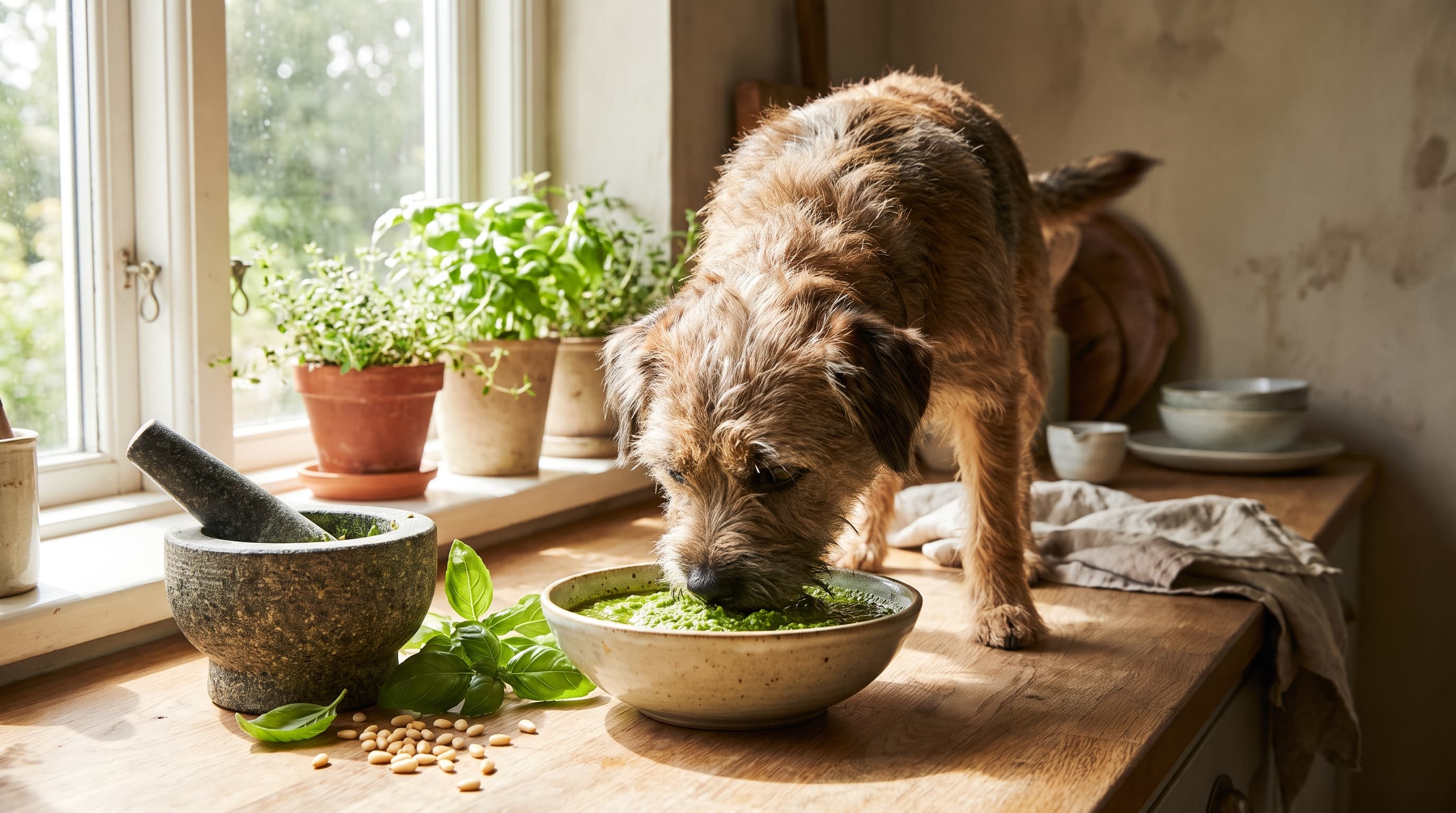

Can Dogs Have Pesto? What's Safe and What's Toxic
No, dogs should not have pesto. Traditional pesto is made with garlic and often onion powder, both of which are toxic to dogs and can damage their red blood cells. Pesto is also high in fat, salt, and cheese. A single stray lick rarely causes an emergency, but pesto is never a safe food to share, and a meaningful amount warrants a call to your vet.
Is Pesto Safe for Dogs?
Pesto is a classic Italian sauce, and it is delicious for people. For dogs, it is a different story. The problem is not one single ingredient but a stack of them, and the most dangerous one, garlic, is baked into nearly every recipe. That is why veterinarians place pesto firmly on the "do not share" list alongside sauces like alfredo and marinara that hide garlic and onion.
Store-bought and restaurant pesto are the biggest concern because they tend to contain concentrated garlic and onion powder, plus extra salt as a preservative. Dried and powdered allium ingredients are actually more potent by weight than fresh cloves, because removing the water concentrates the toxic compounds, according to VCA Animal Hospitals. Green pesto, red (sun-dried tomato) pesto, pesto pasta, and pesto chicken all carry the same underlying risk.
The short version: there is no "dog-safe serving" of real pesto. If you want your dog to enjoy the flavor of an herb they can actually have, plain fresh basil is a much better bet, which we cover below.
What's in Pesto That's Toxic to Dogs?
Traditional pesto blends basil, garlic, pine nuts, Parmesan cheese, olive oil, and salt. Here is how each ingredient stacks up for a dog.
Garlic (the biggest danger)
Garlic belongs to the Allium family along with onions, chives, and leeks. These plants contain sulfur compounds that cause oxidative damage to a dog's red blood cells, which can lead to a form of anemia known as Heinz body anemia. The Merck Veterinary Manual notes that garlic is roughly three to five times more toxic than onion, so it does not take much. The ASPCA Animal Poison Control Center lists garlic as toxic to dogs, cats, and horses.
Onion
Many jarred pestos include onion powder. Onion causes the same red-blood-cell damage as garlic through the same Allium mechanism, and the ASPCA's list of people foods to avoid flags the whole Allium group for gastrointestinal irritation and anemia.
Cheese and salt
Parmesan is high in fat and sodium, and many dogs are lactose intolerant. Too much salt can cause increased thirst, vomiting, and in extreme cases sodium poisoning. Cheese is not toxic in the way garlic is, but it is a common trigger for upset stomachs, which is why we treat it cautiously in our guide to whether dogs can eat cheese.
Olive oil and pine nuts
Olive oil is not toxic, but the high overall fat content of pesto can trigger pancreatitis, a painful inflammation of the pancreas. Pine nuts are not considered toxic to dogs either, but they are very high in fat and can contribute to stomach upset when eaten in quantity.
Basil
Basil itself is the one good actor in the recipe. Plain fresh or dried basil is safe for dogs in small amounts. The trouble is that in pesto, basil is bound up with all of the ingredients above, so the sauce as a whole is unsafe.
What Should I Do if My Dog Ate Pesto?
Try not to panic, but do act. What happens next depends on how much your dog ate, how big your dog is, and exactly what was in the pesto.
- Check the label or recipe. Note whether it contained garlic, onion, or onion powder, and roughly how much your dog ate.
- Weigh the amount against the dog. A single lick off a plate is very different from a small dog eating a bowl of pesto pasta.
- Call a professional right away for anything more than a taste. Contact your veterinarian, the ASPCA Animal Poison Control Center at (888) 426-4435, or the Pet Poison Helpline at (800) 213-6680. They can tell you whether your dog needs to be seen.
- Do not wait for symptoms. As the American Kennel Club explains, garlic damage can develop over several days, so getting ahead of it matters.
- Do not induce vomiting on your own unless a veterinary professional specifically tells you to.
This article is general information, not a diagnosis or a treatment plan. Only your veterinarian can decide what your individual dog needs.
Symptoms of Garlic and Onion Toxicity in Dogs
One of the trickiest things about Allium toxicity is the delay. Heinz bodies and oxidative damage can begin within 24 hours, but the outward clinical signs of anemia often do not appear for one to several days after your dog eats garlic or onion, according to the Merck Veterinary Manual. That delay is exactly why a "wait and see" approach is risky.
Signs to watch for include:
- Vomiting, diarrhea, drooling, or loss of appetite
- Lethargy, weakness, or reluctance to exercise
- Pale or yellowish (jaundiced) gums
- Rapid breathing or an elevated heart rate
- Reddish or dark-colored urine
- Collapse in severe cases
Certain breeds, including Japanese breeds such as the Akita and Shiba Inu, may be especially sensitive to Allium toxins, per the Pet Poison Helpline. If you see any of these signs, treat it as an emergency and call your vet immediately.
Dog-Safe Basil and Pesto Alternatives
The good news is that you can give your dog the herby treat without the toxic parts. Since basil is the safe ingredient in pesto, lean into it and skip the rest.
- Plain fresh basil leaves. Washed, finely chopped, and offered in small amounts, basil is a safe, aromatic garnish with antioxidants. Skip concentrated basil essential oil, which is far too potent.
- A "dog pesto" made without garlic, onion, cheese, or salt. Blend basil with a splash of water or dog-safe broth and a spoonful of plain pumpkin. If you want to try that, see our guide to whether dogs can eat pumpkin for portioning.
- Other dog-friendly greens and veggies. Many vegetables make safer toppers than a garlicky sauce; our roundup of the healthiest human foods for dogs is a good place to start.
Whatever you add, keep treats and table foods to about 10% of your dog's daily calories, and introduce new foods slowly.
Pesto-Adjacent Foods to Watch Out For
Pesto is rarely served alone, and the dishes around it often carry the same risks. Be cautious with:
- Garlic bread and garlic knots. These are a double hit of garlic plus butter and salt. See our full breakdown of whether dogs can eat garlic bread.
- Pesto pasta and pesto chicken. The pasta or protein may seem harmless, but it is coated in the sauce you are trying to avoid.
- Jarred sauces and dressings. Marinara, alfredo, and many salad dressings sneak in garlic or onion powder.
Frequently Asked Questions
Can dogs have a little bit of pesto?
There is no established "safe" amount of true pesto because of the garlic and onion content. A single accidental lick is unlikely to cause an emergency in a healthy medium or large dog, but pesto should never be offered as a treat. When in doubt, call your vet or a poison line.
My dog ate pesto pasta. What now?
Note how much they ate and whether the sauce contained garlic or onion, then call your veterinarian or a pet poison line for advice based on your dog's size. Do not wait for symptoms, since Allium toxicity can take days to show.
Is basil pesto worse than sun-dried tomato pesto?
Both are risky. The common thread is garlic (and often onion), which appears in green basil pesto and red sun-dried tomato pesto alike. Neither is safe to share.
Is plain basil safe for dogs?
Yes. Plain fresh or dried basil is safe in small amounts and offers some antioxidants. The danger in pesto comes from garlic, onion, salt, and fat, not the basil itself. Avoid concentrated basil essential oil.
How much garlic is toxic to dogs?
Garlic is far more potent than onion, and powdered forms are especially concentrated, so even small amounts can be a problem. Because safe thresholds vary with a dog's size and health, we do not publish dosing here. If your dog ate garlic, contact your vet rather than guessing.
What are the first signs my dog got sick from pesto?
Early signs are often gastrointestinal, such as vomiting, diarrhea, drooling, or loss of appetite, sometimes followed a day or more later by weakness, pale gums, or dark urine as anemia develops. Any of these warrants an immediate call to your vet.
The Bottom Line
Pesto belongs on your plate, not in your dog's bowl. The garlic and onion that make it delicious for us are toxic to dogs, and the fat, salt, and cheese add extra risk. Reach for plain basil or a garlic-free "dog pesto" instead, and if your dog gets into the real thing, call your veterinarian or a pet poison line right away. When it comes to Allium toxicity, acting early beats waiting every time.
This article is for general information only and is not a substitute for professional veterinary advice. Always consult your veterinarian about your individual dog, and contact your vet or a pet poison line immediately in an emergency.
Love this kind of "can my dog eat that?" guidance? Subscribe to the Daily Wag newsletter for vet-informed food safety tips, treat ideas, and dog-care news delivered straight to your inbox.