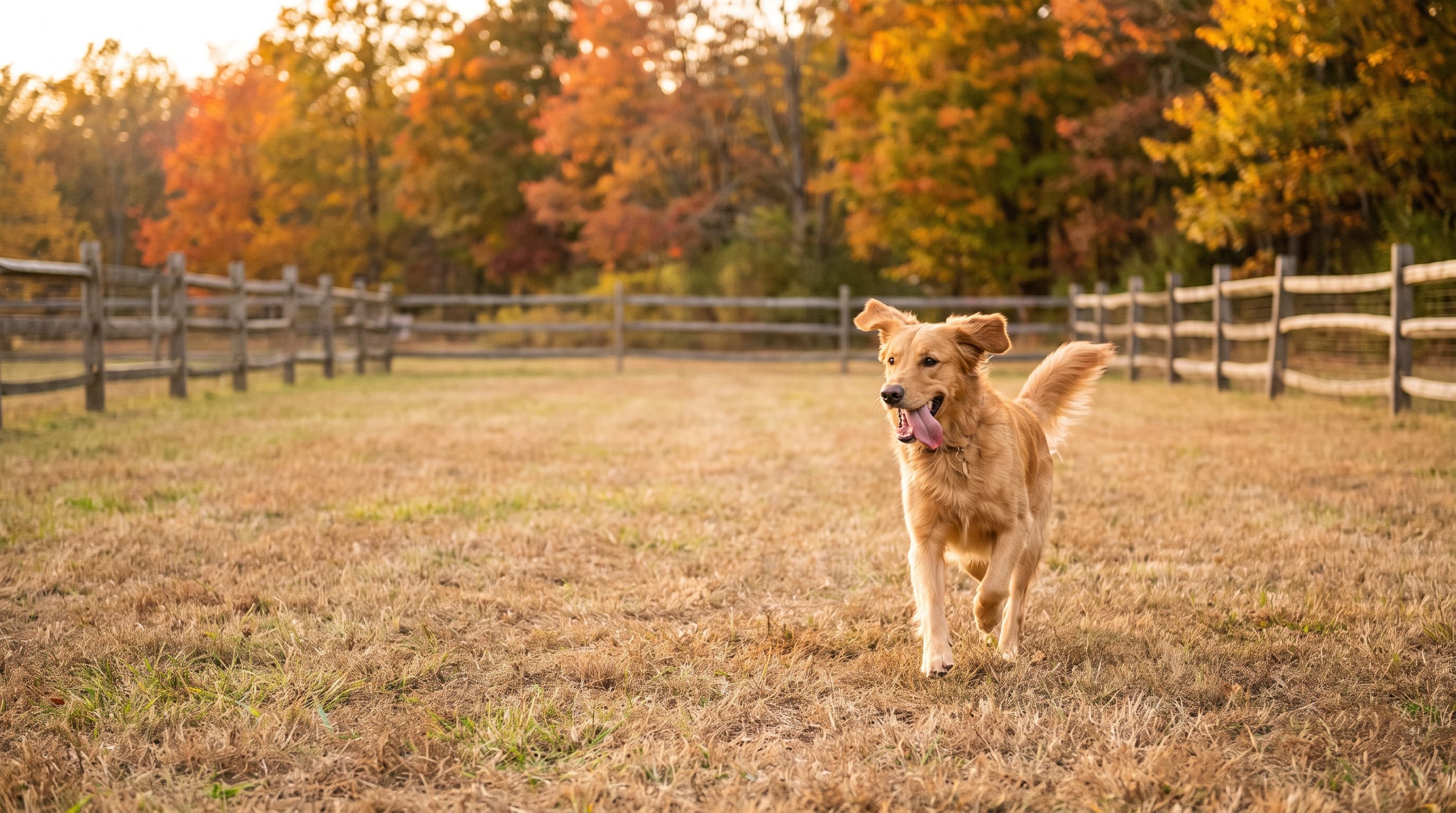

Every dog owner has watched it happen: you unclip the leash in a safe, open field, and your dog transforms into a blur of legs and flapping ears, ripping across the grass for no reason other than the pure joy of going fast. What if you could put a number on that? Thanks to Fast CAT, the American Kennel Club's timed 100-yard dash, you can — and it turns out the sport that measures your dog's zoomies is now the fastest-growing competition in the AKC. This summer, trials are running at clubs in nearly every state, and any dog over a year old, purebred or mixed, is welcome on the start line.
What Is Fast CAT, Exactly?
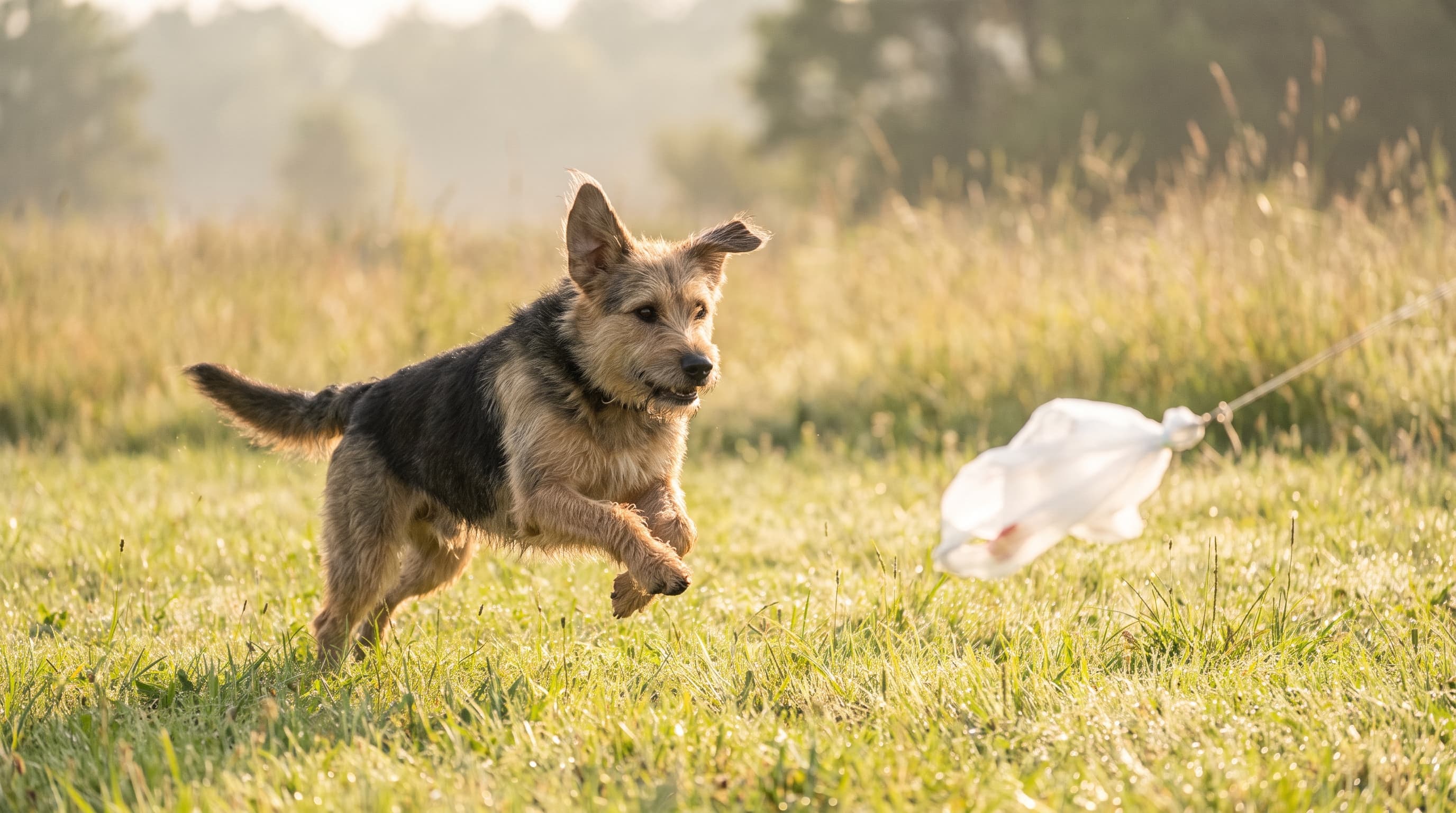
Fast CAT stands for Coursing Ability Test, and the "Fast" is not marketing — it's the whole point. Each dog runs a timed straight race of 100 yards, one at a time, chasing a white plastic bag pulled along a pulley system. That lure can whip down the straightaway at speeds up to 50 mph, which is more than enough to trigger the deep, ancient chase instinct hiding inside even the most couch-loving pet.
There's no obedience component, no jumps, no weave poles, and almost no training required. A dog is released at the start by one handler and caught at the finish by another, and an electronic timer clocks the run to the nearest hundredth of a second. That time is converted to miles per hour. To put it in human terms: a dog that covers the 100 yards in 10 seconds is moving at 20.46 mph — already a hair faster than the average human sprinter. Plenty of dogs go much, much faster.
Just How Fast Is "Fast"?
At the 2025 AKC Fast CAT Invitational in Wilmington, Ohio, roughly 200 breeds were ranked by top speed, and the leaderboard reads like a who's-who of built-for-speed dogs. Greyhounds topped the list at 36.45 mph, with the winning Greyhound, Fritz, having averaged nearly 38 mph in other competitions. Whippets came in a whisker behind at 36.30 mph, followed by large mixed-breed "All American Dogs" at 31.84 mph and Borzoi at 31.56 mph.
But here's the part that hooks everyday owners: the family dog sprawled on your kitchen floor probably runs faster than you'd guess. The Labrador Retriever — America's most popular breed for decades — clocked 29.10 mph, tying the Border Collie for tenth overall. German Shepherds hit 28.15 mph, Golden Retrievers ran 27.02 mph, and even the famously un-aerodynamic French Bulldog managed 22.93 mph, which still beats a sprinting human. In other words, your dog doesn't need to be a sighthound to post a number worth bragging about.
Why a Dachshund Can Out-Point a Greyhound
If raw speed were everything, short-legged and small breeds would never stand a chance — so Fast CAT built in a clever equalizer. Titles are earned through points, and points are calculated by multiplying a dog's speed by a height-based handicap. Dogs 18 inches and taller run at a 1.0 multiplier. Dogs between 12 and 18 inches get a 1.5 handicap. And dogs under 12 inches — think Dachshunds, Corgis, and terriers — earn a 2.0 multiplier, effectively doubling their score.
That system means a determined Dachshund flying low to the ground can rack up points faster than a Greyhound and climb the title ladder right alongside the big dogs. Those titles stack up quickly: 150 points earns a BCAT, 500 points a DCAT, and 1,000 points the coveted FCAT, after which dogs collect FCAT2, FCAT3, and beyond for every additional 500 points. It's a structure designed so that the joy of the chase — not the length of the legs — is what gets rewarded.
Why the Sport Is Exploding Right Now
The AKC calls Fast CAT its fastest-growing sport, and the reasons aren't hard to spot. Whole Dog Journal notes it offers "the fewest barriers to entry of almost any dog sport" and requires little to no prior training because it taps into pure instinct. There are no months of drilling, no specialized gear to buy, and no need for your dog to be a certain breed or size.
Summer is peak season, with outdoor trials filling weekends across the country, and the sport has become a social event as much as a competition — owners trading tips, cheering each other's dogs, and celebrating a shy rescue's first confident sprint. For reactive or nervous dogs, running solo down an empty lane can be a genuine confidence-builder, one that channels prey drive into something safe and structured instead of a squirrel-fueled leash explosion on your morning walk.
How to Get Your Dog Their First Run
Getting started is refreshingly simple. Your dog needs to be at least 12 months old and either AKC-registered or enrolled in the AKC Canine Partners program (its PAL number path for mixed breeds), and can't be lame or, for intact females, in season. Many clubs verify soundness with a quick trot inspection to check for limping before your dog runs.
Cost is modest: many events offer "fun runs" or puppy bumps for around $10, while official runs typically range from $20 to $35 each, with day-of registration usually costing a little more than pre-registration. A crate with a cover helps manage the excitement of a field full of amped-up dogs. Beyond that, the pre-race routine is exactly what you'd do before any athletic effort — as the Whole Dog Journal advises, "walk your dog around, jog a bit, or do some canine conditioning exercises to get her ready to run her fastest."
A Few Summer Safety Notes
Because Fast CAT season overlaps with the hottest months, a little caution goes a long way. Run your dog in the cooler morning or evening blocks when possible, bring plenty of water, and give a proper warm-up and cool-down to protect muscles and joints — a full-tilt sprint is hard on a cold body. Flat-faced breeds like French Bulldogs and Pugs should be watched especially closely for overheating, since they struggle to shed heat efficiently. And if your dog has any orthopedic issues, a quick check-in with your vet before that first all-out dash is never a bad idea.
The best thing about Fast CAT is that there's no losing. Whether your dog posts a Greyhound-humbling 30 mph or a wobbly, joyful 15, the reward is the same: the sheer, uncomplicated delight of a dog doing exactly what it was born to do. If you've been looking for a new way to burn off your dog's summer energy — and to finally answer the question of just how fast those zoomies really are — this might be the weekend adventure you've both been waiting for. For more ways to get your dog moving and exploring, keep browsing Sidewalk Dog for the activities, gear, and dog-friendly spots that make every season a little more fun.