
Ilana Paikoff did what careful dog owners do. Before leaving her three-year-old Goldendoodle, Toby, with a home-based boarder for a summer trip, she asked to meet in person. The boarder, Lynette Raesly of Lewisville, Texas, drove to Paikoff's house in Plano and spent about an hour and a half with the family and the dog. Paikoff felt good about it. Raesly picked Toby up the next day.
That night, Paikoff couldn't reach her. The next morning, Toby's AirTag was pinging from somewhere off the boarder's property.
"I texted her for two days, and I didn't hear anything back from her," Paikoff told CBS News Texas. "My parents went over there and banged on the door, and there was nothing. The windows were covered. They were boarded up." Only after police got involved did Raesly reply — to say she had lost him. A friend of the family later found Toby's body in a nearby field.
Newly released court documents show Raesly is now facing a felony animal cruelty charge. The details in those documents are the part every dog owner should sit with — because they were all knowable in advance.
What investigators found inside the house
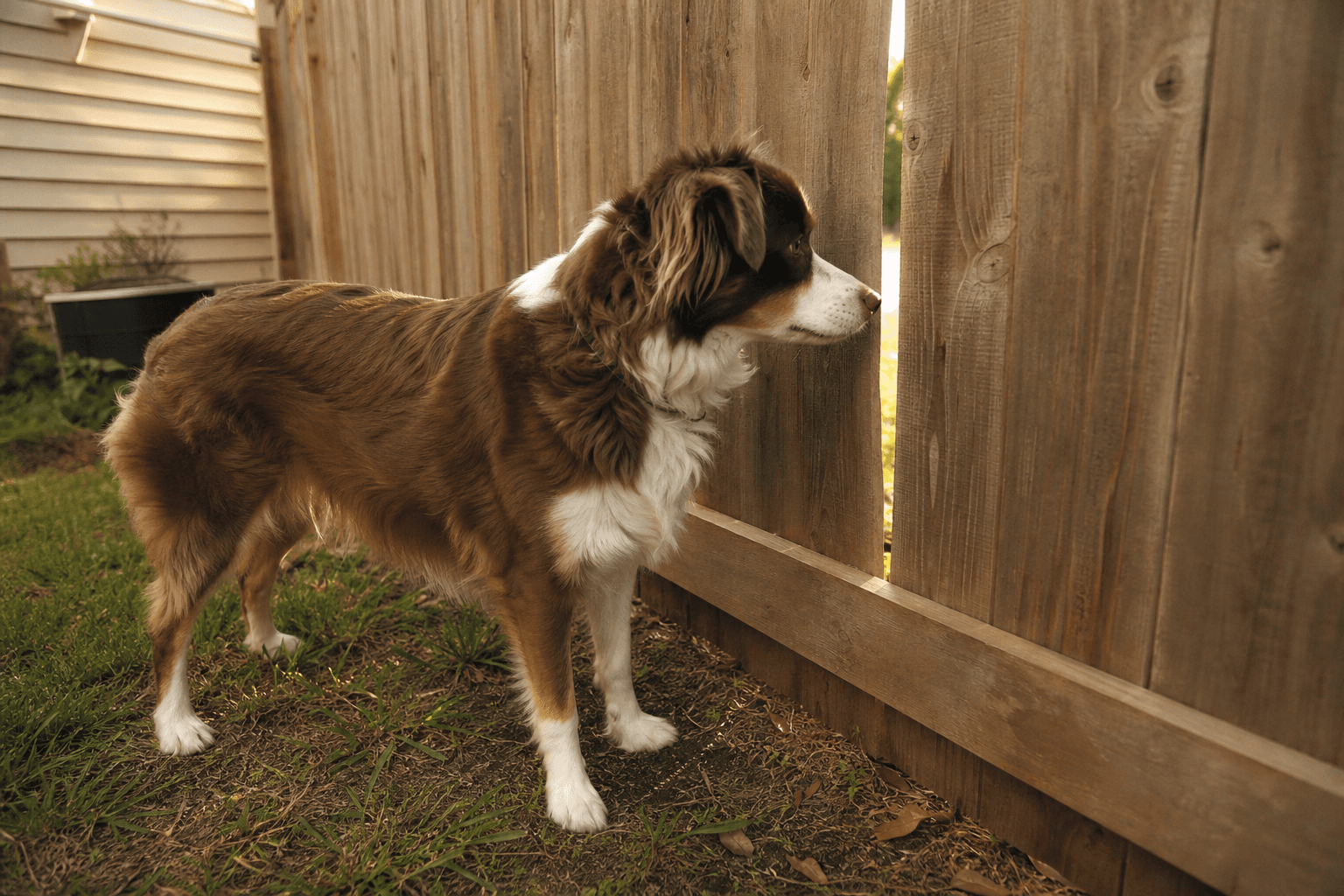
Lewisville police executed a search warrant at the home Raesly used for her boarding business, Klink's Canine Resort. Inside, investigators found 13 dogs, cages, conditions they described as unsanitary and unsafe, and no air conditioning — in North Texas, in the middle of summer. Outside, they noted a large gap in the fence.
"The investigators believe Toby escaped an unsecured yard; he was unsupervised and later found deceased," Lewisville police officer Elizabeth Mayes said.
Officers also spoke with a neighbor who described ongoing problems with dogs getting loose from the property. According to the neighbor, they were not always recovered. Investigators wrote that after Toby got out, Raesly made minimal attempts to find or secure him.
None of that showed up in a meet-and-greet at the client's house. That's the uncomfortable lesson: the step most owners think is the safeguard — meeting the person, at length, with the dog present — isn't the whole safeguard.
This isn't an isolated case
Two more recent cases give a sense of the pattern:
- In May 2026, the Hays County Sheriff's Office charged the owner and an employee of EZ Dog Stay and Play near Kyle, Texas, after two dogs died of heatstroke in the rear cargo area of a van with no adequate air conditioning or ventilation. Investigators said former employees had warned the owner beforehand, and that the business advertised "kennel-free" boarding options that did not exist.
- In Hollywood, Florida, police opened an investigation in late July 2026 after a four-year-old French Bulldog named Prince died overnight at a sitter booked through Rover. Rover deactivated the sitter's account without appeal, refunded the stay, and offered to cover eligible vet and aftercare costs, noting safety incidents are "extremely rare" on its platform.
Two things are true at once: the overwhelming majority of boarding stays go fine, and the failure mode when they don't is catastrophic and fast — a gap in a fence, a hot van, an unlatched gate.
The regulatory gap nobody tells you about
Here's what surprises most owners: no federal agency inspects the place your dog boards. The USDA licenses breeders, dealers, and exhibitors under the Animal Welfare Act; boarding-only operations, daycares, groomers, and trainers fall outside it. Oversight comes from state and local law instead — and it varies enormously.
Some states run real programs. Colorado's Pet Animal Care and Facilities Act requires any facility boarding, grooming, breeding, or selling pet animals to be licensed and inspected by the state Department of Agriculture — roughly 2,200 licenses, 3,000 inspections, and 750 complaint investigations a year, with about 590 licensees in the boarding/training category. Kansas requires a kennel operator license for each premises. Maine licenses boarding kennels for $125 a year and requires posted notice of the hours a responsible person is on site.
Elsewhere, the trigger is a local kennel permit that only kicks in above a certain number of dogs on the property — often three or four — with fees typically $35 to $350. Someone keeping a handful of client dogs in a residential house may be under that threshold: unlicensed, uninspected, and entirely legal until something goes wrong. "Licensed" has a different answer in every county, so you have to ask out loud.
How to actually vet a boarder or sitter
UC Davis Veterinary Medicine's guidance to clients is blunt on the first point: visit the facility before you book. If someone won't show you where your dog will sleep, that's the answer to every other question. Here's the checklist.
Before you book
- See the actual housing area — not the lobby, not a photo. Does it look and smell clean? Real ventilation and working climate control? Enough room for your dog to move around?
- Ask what vaccines they require. UC Davis lists rabies, distemper, and parvovirus, and specifically flags Bordetella for boarding dogs. Facilities with strict requirements belong at the top of your list; if they require nothing, ask exactly how they quarantine new arrivals.
- Ask for the license and proof of insurance, then check with your city or county clerk whether a kennel license is even required there. Ask when they were last inspected.
- Walk the fence line yourself if it's a home setup. Look for gaps, gate latches that don't self-close, and anything a panicked dog could push through. This is the exact failure in the Lewisville case.
- Ask who is physically on site overnight, and get a name. In the Kyle case, investigators said the owner falsely claimed to live on the property — which mattered because the facility had no fire suppression. Ask about that too.
- Ask staff-to-dog ratio and playgroup policy, and how many dogs will be there. Is a human in the yard the whole time, or are dogs let out and left? Thirteen dogs in a private home with no A/C is a number that should have been sayable in advance.
- Ask the emergency plan in specifics: which veterinary hospital, how far, who transports, who authorizes treatment, who pays up front, and what happens after hours.
- Ask your vet and your trainer for referrals. They know the good local operators and hear about the bad ones first. Some clinics board, and some vet techs sit on the side — a strong option for dogs on medication.
While you're gone
- Put a tracker on the collar. An AirTag is how Paikoff knew something was wrong before anyone told her. It's the cheapest insurance in this entire article.
- Agree on a check-in schedule in writing — a photo at a set time each day. Silence should be a defined red flag, not something you talk yourself out of.
- Leave written medication instructions in original labeled bottles, plus your vet's info, a local emergency backup, and signed treatment authorization with a dollar limit.
- Name a local human — friend, neighbor, family — who can physically go to the address if you can't reach the sitter. Paikoff's parents did exactly this.
Red flags that end the conversation
- Won't let you see the dogs' housing area
- Vague or shifting answers about how many dogs are there, or who's on site at night
- No vaccine requirements and no quarantine protocol
- No written emergency vet plan
- Covered or boarded-up windows, or a yard you're not allowed to walk
- Slow or absent responses before you've booked — that pattern doesn't improve once your dog is there
Why summer is when this bites
Heat is not a side note. UK VetCompass studies found a fatality rate of about 14% among dogs treated for heat-related illness in primary care in 2016, rising to roughly 27% among dogs seen at emergency clinics in 2022. Risk ran highest for older, heavier, and flat-faced dogs — and severity was worst when a dog couldn't escape the heat source, such as confinement in a vehicle. A hot van and a house with no air conditioning are both that situation.
Demand is also at an all-time high, which means more brand-new operators. Pet Sitters International's 2026 State of the Industry Survey put average U.S. pet-sitter gross revenue at $112,423 in 2025, up 12% from 2023, with 68% of sitters expecting more growth. About 70% of bookings now run through apps. A five-star profile is a review of past stays — not an inspection.
If something goes wrong
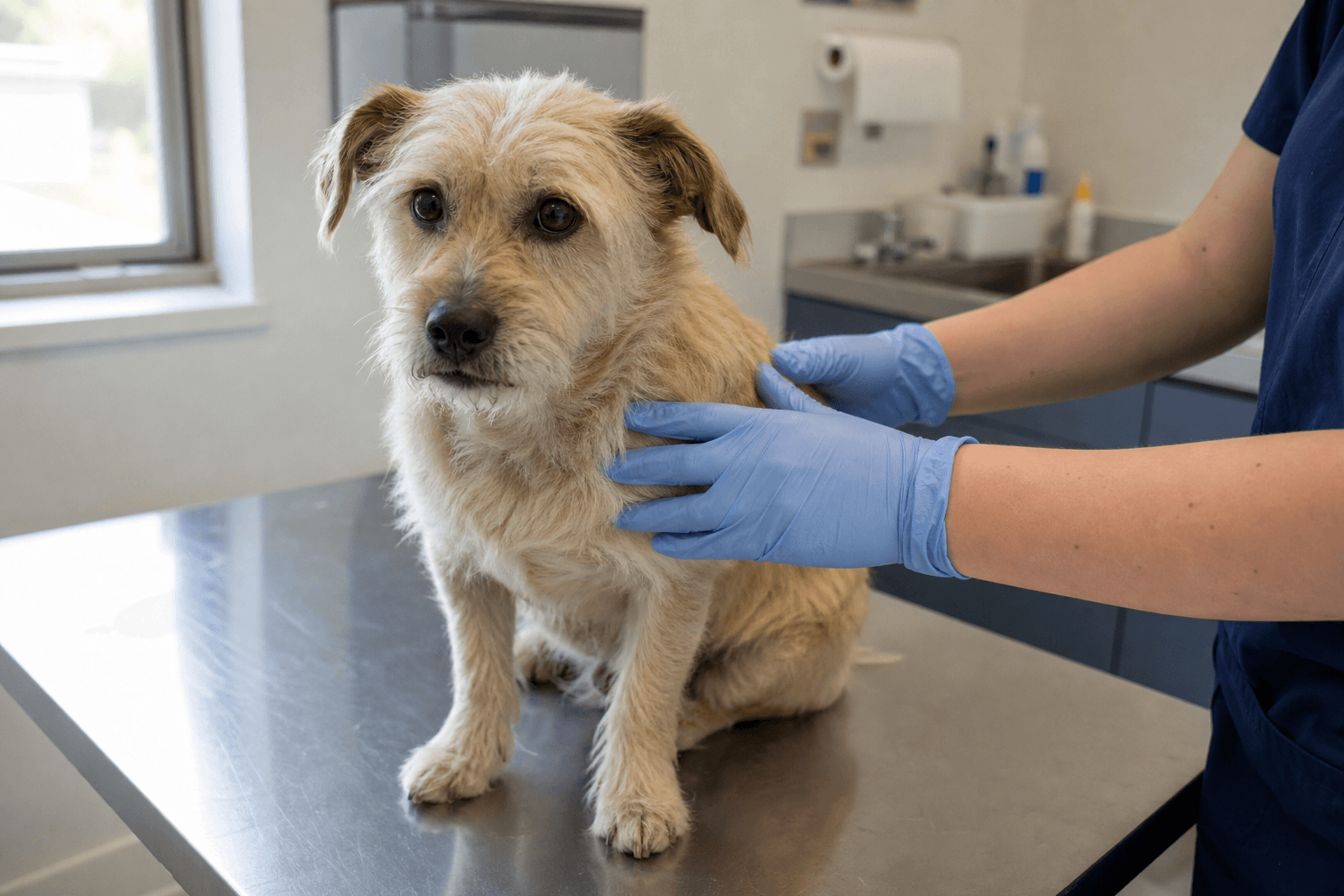
Document everything immediately: screenshots of every message, the booking record, tracker history, photos, and a written timeline. Call your local police and animal control — the felony charge in Lewisville came out of a police investigation and a search warrant, not a platform complaint. Ask your vet for records and, if the cause of death is unclear, about a necropsy. File with the platform's trust and safety team in writing too, but don't treat that as a substitute for law enforcement. And speak up early: in Lewisville, a neighbor had watched dogs go missing long before anyone official knew.
The bottom line
Toby's family met the boarder, talked with her for 90 minutes, and still lost their dog. The meeting wasn't wrong — it just wasn't enough. Seeing the space, walking the fence, getting overnight coverage and the emergency plan in writing, and clipping a tracker to the collar are what turn a good feeling into an actual safeguard. Ten extra minutes of questions is a small price for the summer your dog comes home fine.
Taking your dog with you instead? Our dog-friendly city guides cover patios, parks, trails, and hotels that welcome dogs — plus how to choose a last-minute sitter and how to spot kennel cough after a stay. Find your next adventure at Sidewalk Dog — the best trips are the ones where everybody comes home happy.