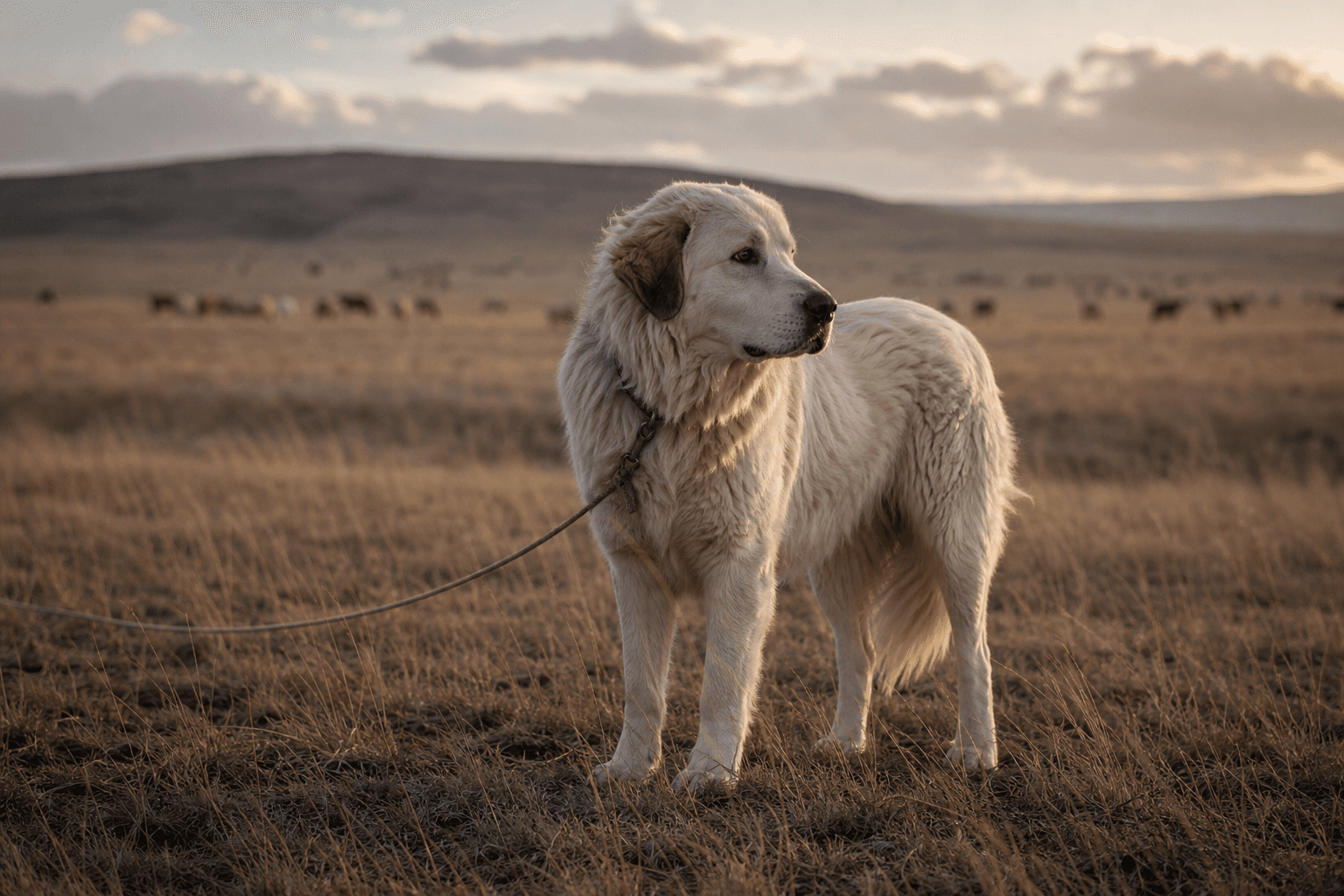

On a Thursday night in late August, a two-year-old livestock guardian dog named Tango arrived at his new home north of Casper, Wyoming. By Friday evening, roughly 24 hours later, he was gone — last seen around 7:30 p.m. heading north into open rangeland, with no confirmed sightings for days.
Tango is a 120-pound Great Pyrenees, Maremma, and Anatolian mix, bred by centuries of selection to patrol enormous territory on his own judgment. Kendra Green, who raised him from eight weeks old, had made the hard decision to rehome him after he and his brother started fighting. The search that followed involved Wyoming Game and Fish, local law enforcement, a private plane, and the family driving backroads for four straight days.
On Wednesday morning, they found him about three miles from the last reported sighting — skinny, hungry, and torn up from a fight with something, but alive, according to Cowboy State Daily. He's headed back to Gillette.
The happy ending is where most coverage stops. The part worth keeping is the sentence a livestock-guardian-dog expert told the family early in the search: because Tango disappeared so soon after being rehomed, "he has no reason to ever return to there because he doesn't know it."
That is the single most underrated fact in dog adoption. A dog who bolts from a home he has lived in for years usually loops back. A dog who bolts from a home he's had for a day has no home to loop back to.
The first two weeks are statistically the riskiest of a dog's life
Shelter research keeps landing on the same window. A two-year survival analysis of 6,212 adoptions at RSPCA Queensland shelters, published in Animals, found that returns spiked hard in the first 14 days after adoption — roughly two-thirds of all returns happened in that window — before flattening out at an overall return rate just under 15%. A separate Virginia Tech thesis analyzing five years of intake data across three shelters found returned dogs had a 66% likelihood of being relinquished within the first 30 days. Published estimates put post-adoption return rates between 7% and 15%.
Escapes track the same curve, for the same reason: the dog has no map, no routine, and no reason to believe this place is home.
The physiology backs it up. A 2023 study in Scientific Reports tracked nocturnal activity and urinary cortisol in shelter dogs before and after adoption. Dogs did rest better in a home than in a kennel — but their cortisol didn't drop significantly until seven days after adoption. For the first week, the dog on your couch is still running a stress response, whatever their body language suggests.
One more caution. Researchers have documented a "honeymoon period," where a newly adopted dog shows few problem behaviors at first and more of them weeks later. A quiet dog on day two is not a settled dog. Often it's a shut-down one — and shut-down dogs bolt through the first open door.
About the "3-3-3 rule"
You've seen the meme: three days to decompress, three weeks to settle, three months to feel at home. It's a useful reminder that adjustment takes time, and Whole Dog Journal has argued persuasively that it's also a formula, and dogs don't run on formulas. Some dogs need a week. Some need six months. Treat the numbers as a floor for your patience, not a schedule your dog is obligated to follow.
The first 72 hours: a containment checklist
Before anything else, assume your new dog is an escape artist until proven otherwise. Nearly every setup below costs under $50.
Day 0 — before the dog gets out of the car
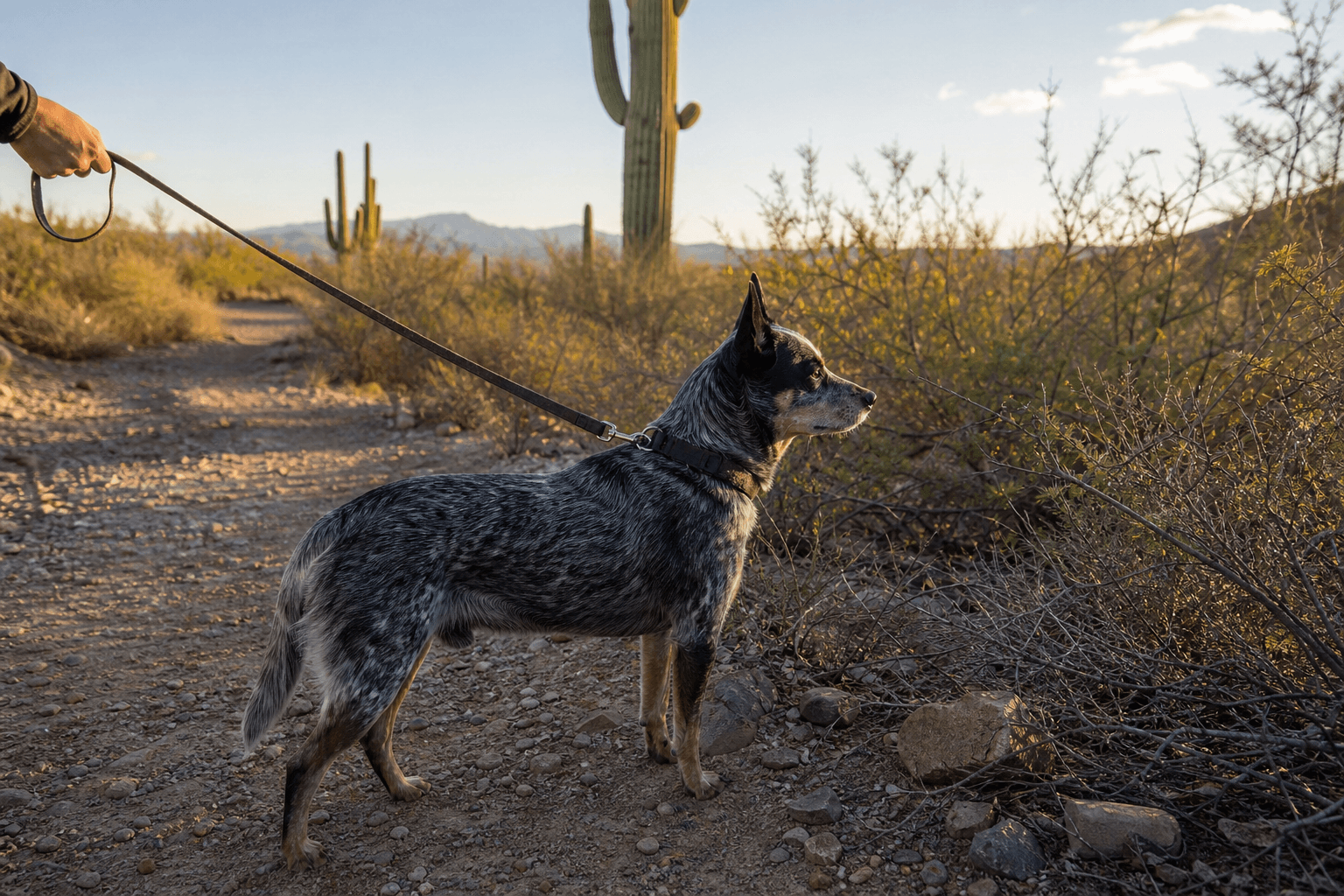
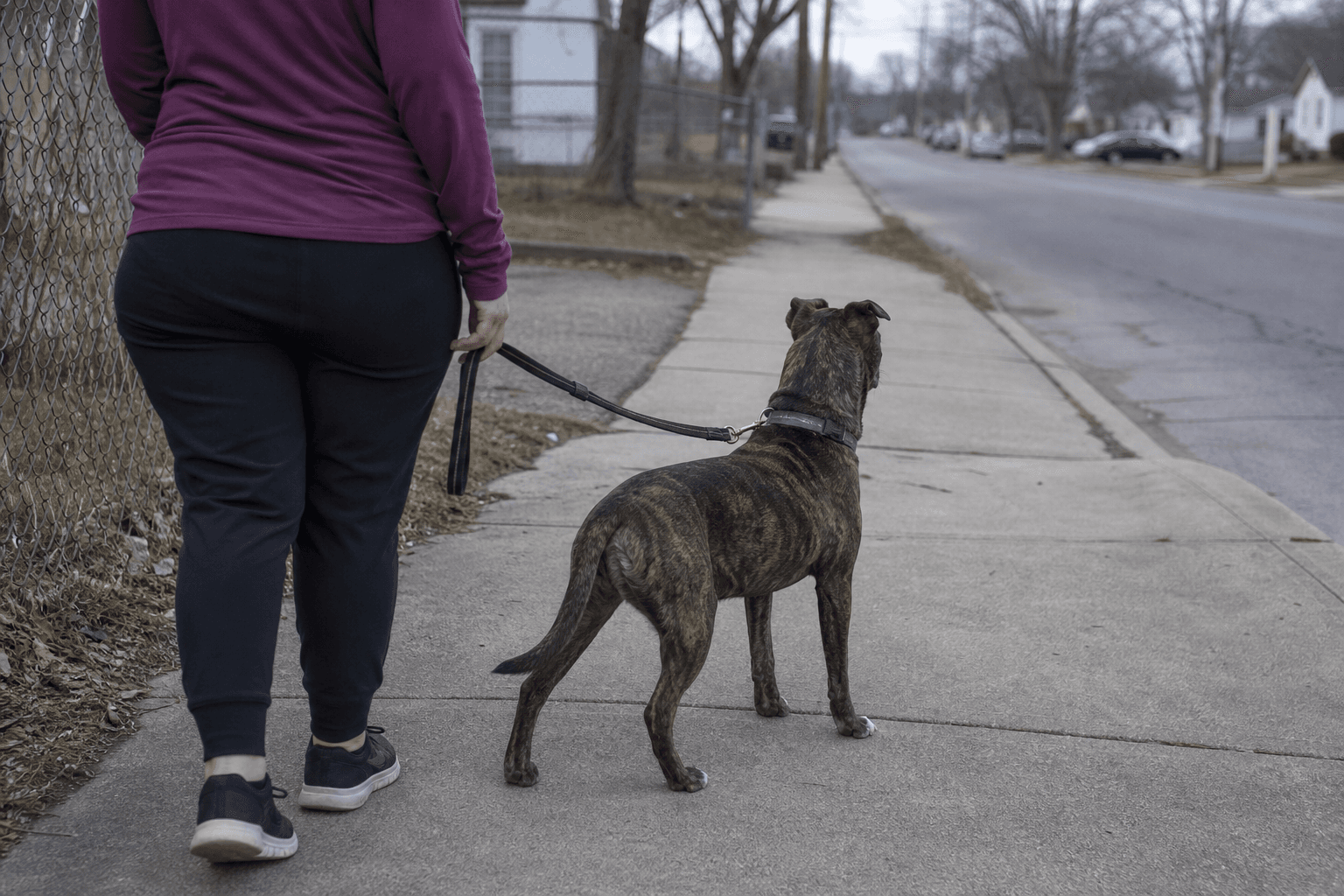
- Double-leash for every single potty trip. A properly fitted martingale collar and a Y-front harness, each with its own leash, each held or clipped separately. Flat buckle collars slip over the heads of frightened dogs; this is the single most common escape in the first week.
- Leash on before the car door opens. Attach in the vehicle, not in the driveway.
- Update the microchip that day. Not next week. Confirm the chip number in writing from the rescue or previous owner, look it up in the AAHA Universal Pet Microchip Lookup, and register it to you with a phone number you answer. A chip registered to a former owner two states away is a dead end.
- Physical ID tag with your cell number, on the collar, before the dog enters the house.
Days 1–3 — the containment audit
- Walk your fence line and mean it. Look for gaps at gate hinges, low spots where a dog can dig, and any section under five feet for a medium-to-large dog. Padlock or carabiner every gate — including the one the meter reader uses.
- No off-leash yard time yet, even fenced. Use a long line (15–30 feet) and stay outside with the dog for at least the first week.
- Airlock your front door. A baby gate or exercise pen a few feet inside the entry, so a bolt attempt hits a barrier before it hits the street. Crate or gate the dog before deliveries and guests.
- Give them a den. A crate or quiet room with the door open, in a low-traffic corner. Let them retreat. Don't follow them in.
- Skip the welcome party. No dog park, no group greetings, no pet store trip, no visitors. Same few people, same route, same feeding times.
- Take a clear, well-lit photo from the side and the front the day the dog arrives. If they go missing, you'll need it in the first hour, not the third.
The transition steps almost nobody takes
- Send the dog's bed and blanket unwashed to the new home. Familiar scent is real information to a dog.
- Send two weeks of the same food. A diet switch on top of a home switch buys you a GI upset in week one.
- Do a handoff at the new home, not a parking lot, and let the previous owner stay 30–60 minutes so the dog sees the new space as a place their person walked into calmly.
- If you're the one rehoming: put the destination address, the chip number, a photo, and a "please call me first" agreement in writing, and check in at 24 hours, 72 hours, and one week. Green's family found out Tango was missing because they stayed in contact.
If your new dog does get out
The instinct is to run after them, shouting their name. Both halves of that instinct are wrong.
Kat Albrecht, the former police bloodhound handler who founded the Missing Animal Response Network, has spent decades documenting why: dogs in flight mode are flooded with cortisol and hyper-reactive to sound and motion. Once several people have shouted at and walked toward a panicked dog, calling becomes a trigger that makes them bolt — from strangers and from their own owner.
Do this instead:
- Don't chase and don't call. Sit or crouch sideways, avoid direct eye contact, yawn, and toss high-value food (rotisserie chicken, hot dogs) a few feet away from you. Let the dog choose to close the distance.
- Search the first hour hard, near the escape point. Dogs following a scent meander and double back close by; dogs in panic can cover several miles at a run. A newly rehomed dog is usually the second type.
- Feed the scent trail home. Put the dog's crate, unwashed bedding, and a bowl of strongly aromatic food outside the door they escaped from.
- Call every shelter within a 30-mile radius daily, file a found-and-lost report at each, and give them the microchip number.
- Post oversized neon signs at intersections, not small flyers. Add a geo-targeted lost-pet post and the neighborhood apps, and ask people to report sightings rather than approach.
The reframe
Adoption day feels like an ending. To your dog, it's a disorientation event — new smells, new sounds, no map, and no idea whether the people who left are coming back. Every choice you make in the first 72 hours is either building a reason to stay or leaving a door open.
Go slow. Double-clip the leash. Register the chip. The bond arrives on its own schedule.
When your dog is ready to start exploring the world with you, our city guides are full of low-key patios, quiet trails, and off-peak parks that make good first outings — and the rest of Sidewalk Dog is here for everything that comes after.