
Across the country, the countdown is on. According to district calendars compiled for the 2026–27 school year, Monday, August 10, 2026 is the single most common first day of school among the 100+ largest U.S. and Canadian districts. Georgia districts started as early as August 3. Florida is mostly August 10, Tennessee August 11–12, Texas August 12. Northern districts — Minneapolis and St. Paul (September 8), Seattle (September 2), New York City (around September 10) — get a few more weeks.
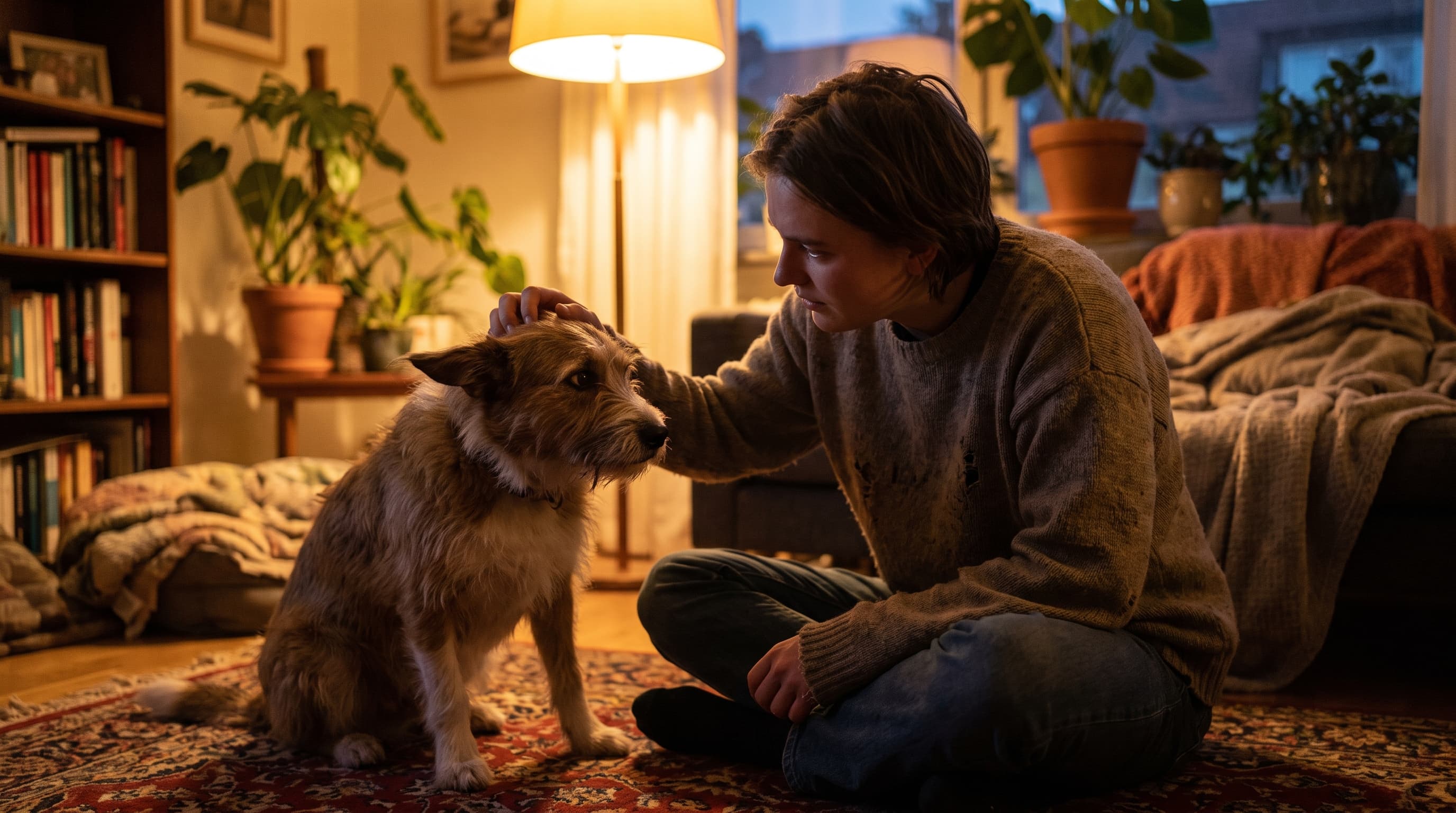
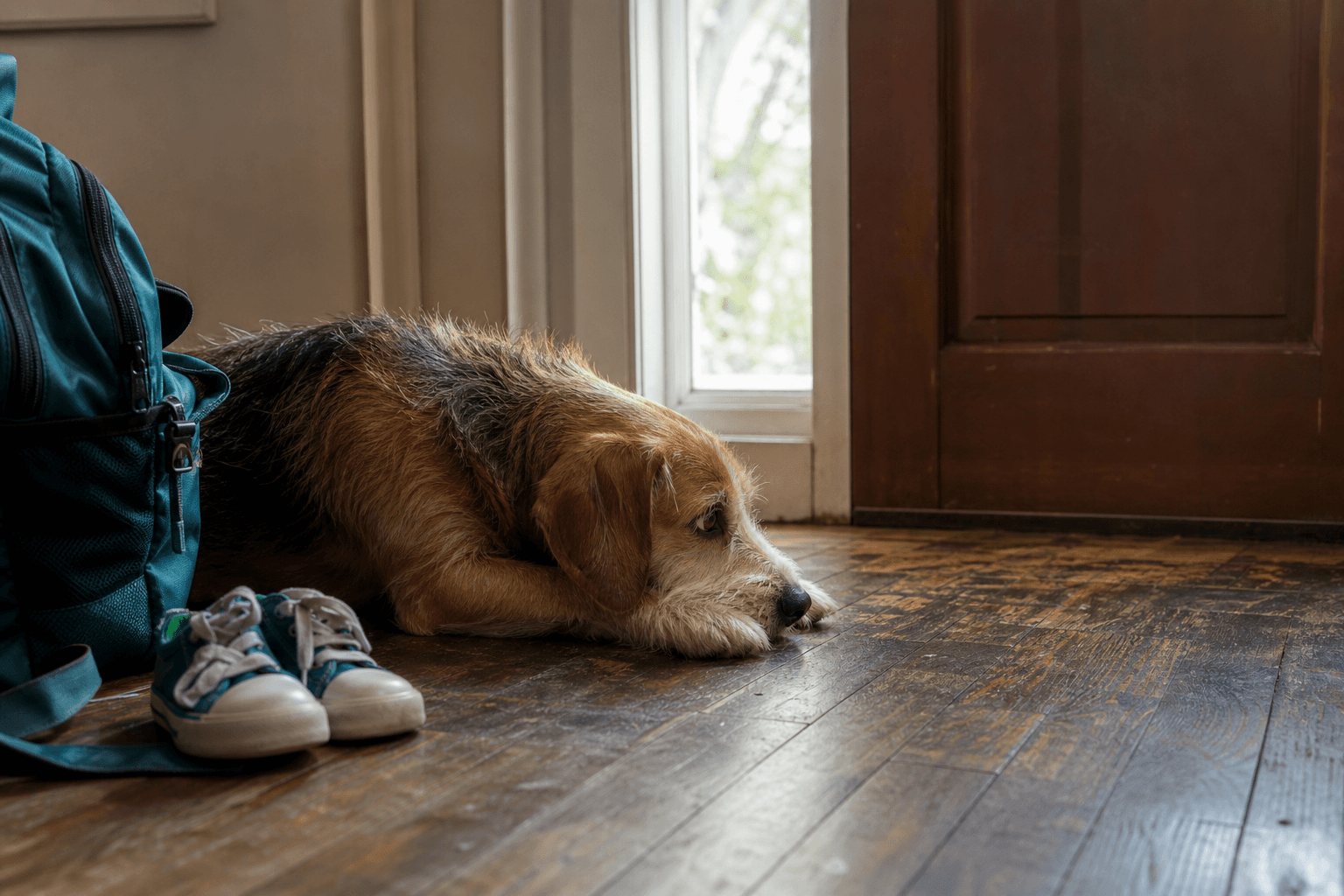
Whatever your date is, your dog has no idea it's coming. For ten to twelve weeks, your dog has had company nearly every waking hour: kids home, late nights on the couch, someone always in the kitchen. Then one Monday morning, the door closes and the house goes silent for eight hours.
Veterinary behaviorists see the fallout every August. The good news: the week before the first day is the single highest-leverage window you get all year. Here's what to do with it.
Why the back-to-school transition hits dogs so hard
Dr. Amy Pike, a board-certified veterinary behaviorist at the Animal Behavior Wellness Center in Virginia, told Scary Mommy that the biggest mistake families make is assuming the dog will simply adjust. “Ideally, we should prepare them well in advance of a major transition,” Pike said. “We need to get them back on the school routine schedule, which includes an earlier wake-up time and more time spent home alone.”
Pike also notes that many dogs actually prefer the school year: “Most dogs really thrive off of structure and predictability, and the school year is often much more structured and routine than the summers.” The dogs who struggle are the ones with low resilience to change, and those with existing separation-related behavior.
That's the core distinction worth understanding. What most people call “separation anxiety” is a spectrum. On one end is a dog who's mildly bored and out of routine. On the other is a genuine panic disorder — and panic is not something a dog can be corrected out of.
How common is it, really?
Here's where the honest answer matters, because the numbers you see online are all over the map. A 2024 analysis in the Journal of Veterinary Behavior using mini C-BARQ survey data from 43,517 dogs produced a headline figure that 85.9% of U.S. dogs showed moderate-to-severe separation anxiety. A re-assessment published in the same journal in November 2025 argued those methods exaggerated severity, and that reanalyzing the same dataset more conservatively puts separation-related behavior at about 9.3% of dogs.
Other research lands in between. The UK's Generation Pup longitudinal study found separation-related behavior in 46.9% of puppies at six months old — higher than most owner-report studies, partly because researchers reviewed video rather than relying on what owners noticed. As those authors point out, the quiet signs (panting, lip-licking, pacing, drooling, shutting down entirely) happen when nobody is home to see them.
So: probably not 86% of dogs. Probably more than owners realize. The practical takeaway is to stop guessing and get data on your own dog.
Step one: point a camera at your dog
Before you change anything, film a normal absence. Any phone on a shelf, a laptop webcam, or a $30 pet camera will do. Leave for 30 to 45 minutes and watch the footage.
What you're looking for is when the distress starts and what it looks like:
- Active signs: barking, whining, howling, scratching at the door or crate, destruction concentrated around exits, attempts to escape
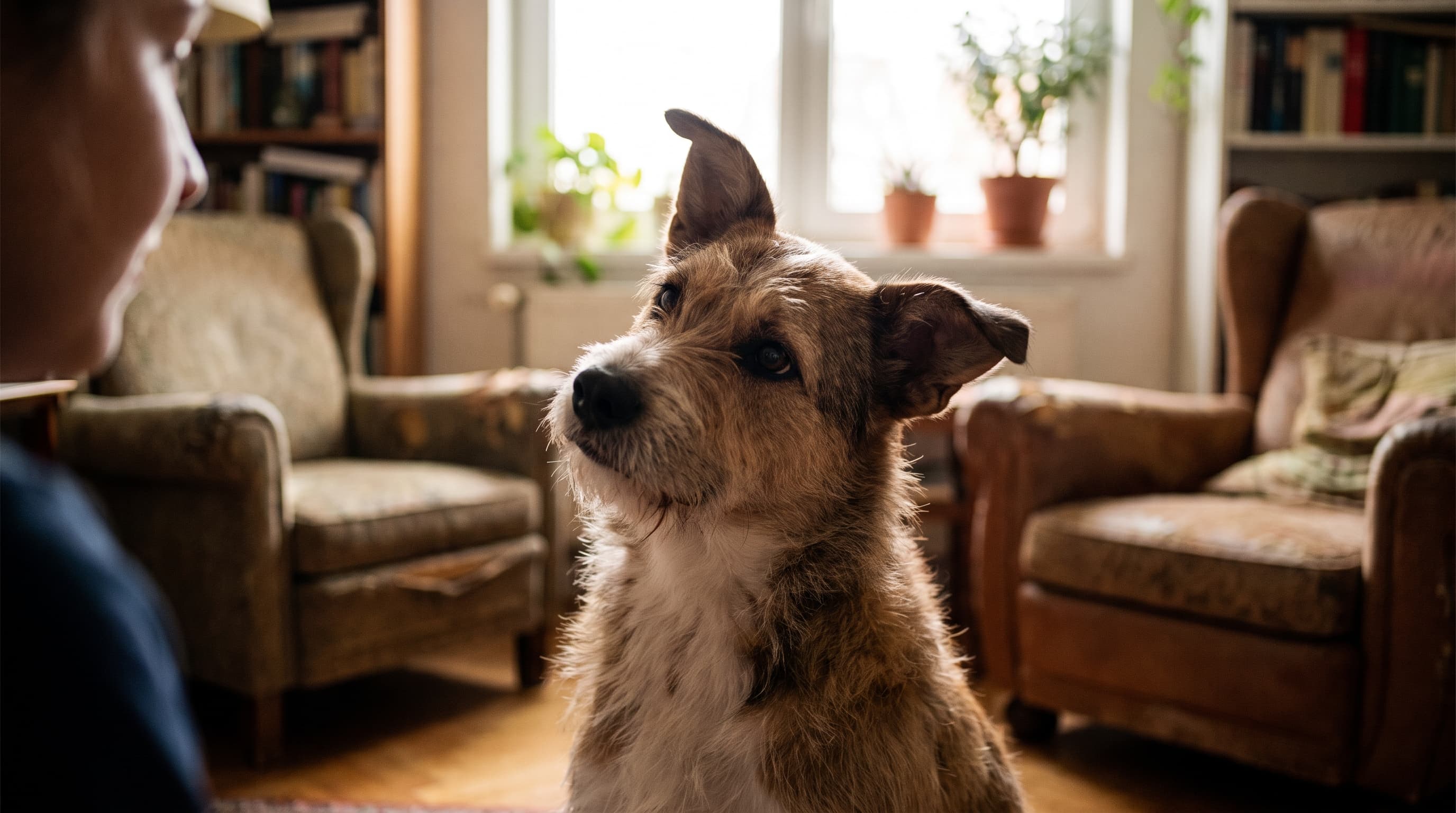
- Passive signs (easy to miss): panting with no heat or exercise to explain it, drooling, repetitive lip-licking, pacing the same path, trembling, refusing food or a favorite chew, lying rigid and staring at the door
- Physical signs: house soiling in an otherwise reliably trained dog, vomiting or diarrhea while alone
Timing matters enormously. A dog who settles after five minutes and sleeps for the rest of the day is fine. A dog who is still panting and pacing 40 minutes in, or whose distress escalates, is telling you something real. A dog who panics within seconds of the door latching is a veterinary conversation, not a training project.
One important rule-out: destruction, barking, and accidents can just as easily mean boredom, an incompletely house-trained dog, confinement anxiety about a crate specifically, noise sensitivity to something outside, or an underlying medical problem. GI disease and pain are both documented comorbidities. Separation anxiety is a diagnosis of pattern, not a catch-all label for bad behavior while you're out.
Your five-day back-to-school plan
Days 1–2: Move the clock, not the dog
Start waking, feeding, and walking on the school-year schedule now — earlier alarm and all. Dogs anchor hard to feeding and walk times, and shifting those by 90 minutes on day one of school is its own stressor stacked on top of the absence. Move it in 20–30 minute increments over a couple of days.
Days 2–4: Practice absences on purpose
This is the part almost everyone skips. Leave the house for real, in short doses, several times a day: 5 minutes, then 15, then 30, then 45. Go get coffee. Sit in the car. The goal is to break the association between “everyone leaves” and “something terrible is happening,” while your dog is still succeeding.
Evidence here is encouraging but modest. A double-blind trial published in late 2025 tested prevention advice given to new puppy owners and found that puppies whose owners actually did more gradual alone-time habituation showed less passive anxious behavior on video. Notably, the same study found puppies with a radio or TV on showed more passive anxious behavior, not less — a useful reminder that background noise is a comfort item for some dogs and irrelevant or irritating for others. Test it, don't assume it.
Day 3: Defuse the departure cues
Your dog started reading the signs long before you reached the door: the shoes, the keys, the specific zipper sound of a backpack. Pick up your keys and sit back down. Put your shoes on and make dinner. Do the whole exit routine and then don't leave. Repeat until it means nothing.
Keep goodbyes and homecomings boring — the trial above found that calm, low-drama departures and reunions were associated with more settled behavior while alone. It feels cold. It works better than a big emotional send-off.
Day 4: Build the alone-time routine
Give the absence a job. A frozen stuffed Kong, a lick mat, a snuffle mat, or a puzzle feeder that only appears when you leave turns the departure into a predictor of something good. For food-motivated dogs this is the highest-return, lowest-cost intervention there is.
Also front-load exercise. A hard morning walk or a game of fetch before the bus comes does more for an afternoon of calm than anything you can buy. If your dog needs a real outlet, a mid-day walker or two days a week of daycare during the transition month can carry a lot of weight — and our city guides are a good place to start looking for options near you.
Day 5: Do a dress rehearsal
Run a full school morning: real alarm, real breakfast, kids out the door, you out the door for two to three hours. Film it. Compare it to your baseline video from earlier in the week. If it looks better, you're on track. If it looks the same or worse, make the call in the next section before Monday.
When it's more than a routine problem
True separation anxiety is a panic disorder, and there is a real treatment framework for it. The Today's Veterinary Practice clinical algorithm describes a five-part plan: environmental management, relationship-building social cues, tools that support the plan, systematic desensitization and counterconditioning, and — when indicated — medication.
On that last point, be clear-eyed in both directions. Medication is not a shortcut or a moral failure; it's what makes behavior modification possible in a dog too panicked to learn. Three products are FDA-approved for canine separation anxiety: Reconcile (fluoxetine), Clomicalm and CaniQuell (both clomipramine). Vets also use faster-onset situational medications — trazodone, gabapentin, clonidine — alongside daily serotonin-enhancing drugs. One detail from that algorithm that owners frequently get wrong: situational medications often need to be given up to two hours before you leave, not as you're walking out the door.
Dosing, combinations, and drug interactions are a veterinarian's call, full stop. What you can bring to that appointment is your video. It's the most useful thing you can hand a vet or a board-certified veterinary behaviorist, and it turns a vague “he's anxious” into a diagnosable picture.
Escalate if you see: distress that begins within seconds of your leaving, self-injury or bloodied paws and mouth from escape attempts, refusal to eat all day, or any risk of your dog getting out of the house. Those aren't “work on it slowly” situations.
What not to do
- Don't punish the chewing, barking, or accidents. You'd be punishing a panic attack after the fact, and it reliably makes anxiety worse.
- Don't get a second dog to fix it. Separation-related behavior is usually about a specific attachment to you; the research is clear that another dog is not a treatment.
- Don't force crating a dog who panics in a crate. Confinement anxiety is a separate problem, and a crate can turn distress into injury.
- Don't rely on a supplement alone. Pheromone diffusers, calming chews, and thundershirts can help at the margins as adjuncts. None of them is a plan.
- Don't skip the vet visit if signs came on suddenly in an adult dog. New-onset changes can be pain, cognitive decline, or GI disease wearing a behavior costume.
The part that's easy to forget
A qualitative study of veterinarians, behaviorists, and trainers across Denmark, Sweden, and Norway, published in Scientific Reports in January 2026, identified “changes to routine and environment” as one of six recurring themes behind separation problems — right alongside co-occurring behavioral difficulties and physical health in flux. Back-to-school week is exactly that kind of change, arriving on a known date, which makes it one of the rare canine behavior risks you can actually see coming.
Five days of deliberate prep is a small price for a dog who spends September napping instead of panicking. And if your dog is one of the many who quietly loves the school year — earlier walks, predictable meals, a quiet house to sleep in — you'll know that from the footage too.
Sidewalk Dog is here for the whole year with your dog, not just the easy weeks. For dog-friendly patios, parks, and trails to fill those newly quiet afternoons, browse Sidewalk Dog and our city-by-city guides.