
If you feed your dog canned Pedigree High Protein Chopped Chicken & Duck Flavor, walk to your pantry before you finish reading this. Mars Petcare has recalled two lots of the 13.2-ounce cans because they may hide sharp metal and plastic foreign material — and the strangest part of the story is how those cans reached American shelves in the first place. The company says the affected batches were never supposed to be sold at all. They had already been flagged for destruction.
What was recalled, and how to spot it
The recall, issued July 2, 2026, covers a single product: Pedigree Can High Protein Chopped Chicken & Duck Flavor, 13.2 oz, made by Mars Petcare US. Only two production lots are affected, and they are identified by codes printed on the bottom of each can:
- Lot code 613C3KKCFC
- Lot code 613C1KKCFC
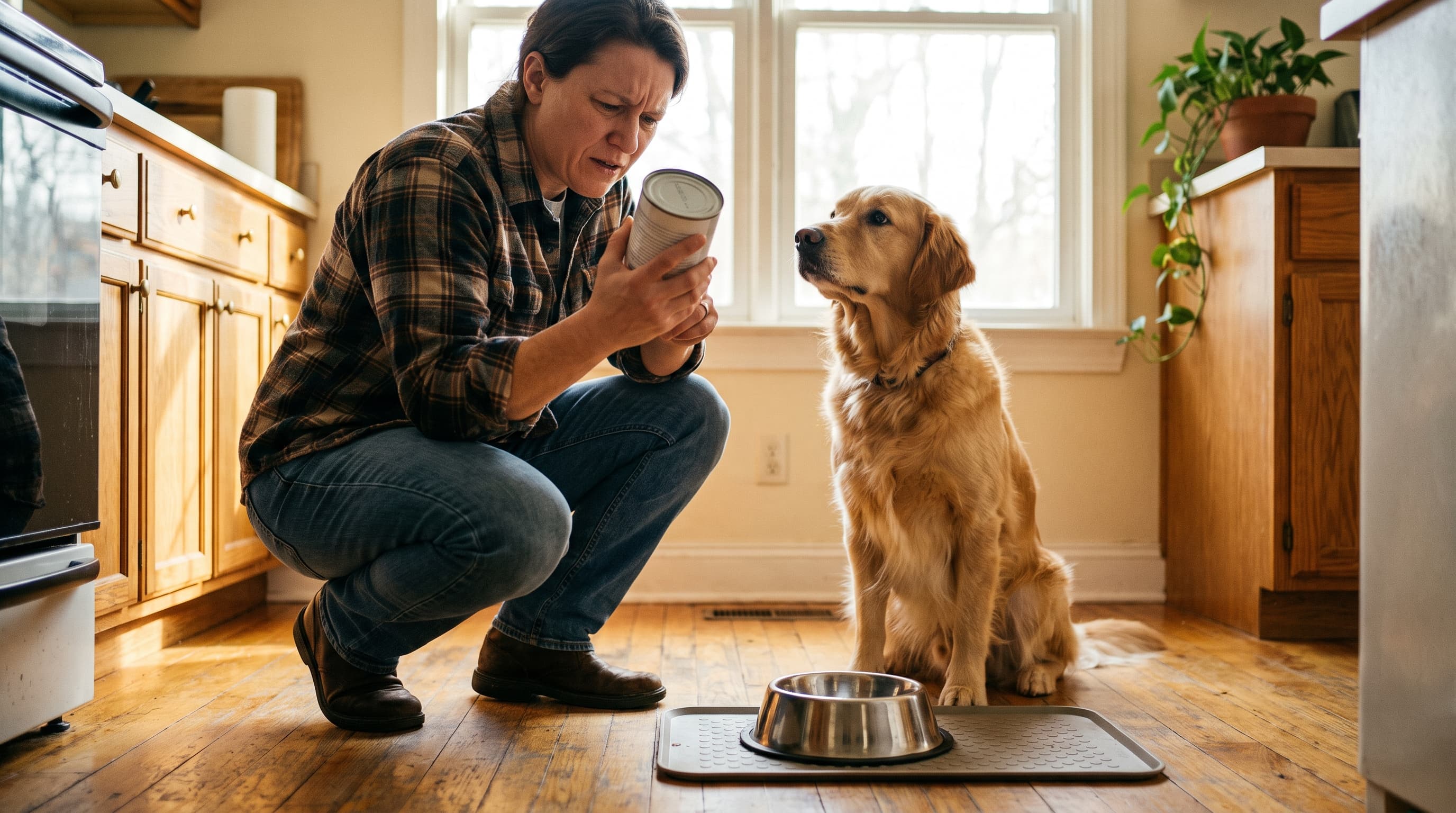
Those codes are the only reliable way to tell a recalled can from a safe one, so don't rely on the label art alone. The Hawaii Department of Health, one of several state agencies that amplified the alert, urged owners to check every High Protein can and its label to make sure it isn't part of the recalled run. If you buy this food by the case, check each individual can — mixed cases are exactly how a stray recalled lot slips into a home unnoticed.
Why sharp fragments are a serious risk
This isn't a "might upset their stomach" recall. Metal and plastic shards can cause choking, lacerations, or blockages in the gastrointestinal tract. A dog that swallows a sharp fragment may not show anything is wrong until the damage is already done. Watch for drooling, pawing at the mouth, refusing food, retching, vomiting, blood in the stool, a hunched or painful belly, or sudden lethargy. Any of those signs after your dog ate this food is a reason to call your veterinarian right away — and to bring the can (and its lot code) with you.
As of the recall announcement, Mars said it had received no reports of pet illness or injury tied to these lots. That's genuinely good news, but it reflects a snapshot in time, not an all-clear. Recalls are issued precisely to keep that number at zero.
The part that makes this recall unusual
Most pet-food recalls follow a familiar script: a routine test flags a problem, and the maker pulls product from stores. This one is different. According to Mars, the two lots failed the company's own quality checks and were shipped to a third-party vendor to be destroyed. The company later discovered that the product had instead been fraudulently diverted and sold into the U.S. marketplace — cans that were supposed to be scrapped ended up on shelves and in shopping carts.
Mars said it is "working with authorities to determine how these products entered the marketplace." For dog owners, the practical takeaway is uncomfortable but simple: a product passing through the normal retail system isn't always proof it cleared the manufacturer's safety gate. That's a good argument for keeping receipts, saving lot codes, and taking recall notices seriously even when a product "looked fine."
What to do right now
If you find a can matching either lot code, here's the short checklist:
- Stop feeding it immediately. Don't finish the case, and don't "use it up" to avoid waste — the risk isn't worth a few dollars of food.
- Don't donate it. Shelters and rescues can't safely use recalled product either. Discard it where other animals can't reach it.
- Contact Pedigree. Consumer Care is reachable at 1-800-525-5273 or through pedigree.com/update for a replacement or refund.
- Snap a photo of the can, the lot code, and your receipt before you toss it. You'll want the record if you need it later.
- Wash up. Clean any bowls, scoops, and surfaces the food touched, and wash your hands — good hygiene practice with any recalled food.
If your dog already ate from a recalled can and seems fine, don't panic — but do call your vet and describe what happened. They may advise watchful waiting or an exam depending on your dog's size and how much was eaten. When minutes matter, our practical guide to getting fast veterinary care can help you move quickly instead of scrambling.
A summer of pet-food recalls: keep your guard up
The Pedigree recall didn't land in a vacuum. This has been a busy stretch for pet-food safety alerts. Regulators and brands have also been wrestling with a wave of contamination warnings in the raw and frozen dog food category, where pathogens rather than physical fragments are the concern. One frozen raw brand, Raaw Energy, saw its recall expand across nine states after samples tested positive for Listeria monocytogenes, Salmonella, and Campylobacter, with several pets reported ill.
Those bacterial recalls carry a wrinkle worth remembering: contaminated pet food can make people sick too, especially young children, older adults, and anyone with a weakened immune system. Even a pet that looks perfectly healthy can shed bacteria onto bowls, floors, and hands. Whether the hazard is a metal shard or a microbe, the defensive playbook is the same — know what's in your dog's bowl, and know where to check when a headline breaks.
Build a two-minute recall habit
You don't need to become a full-time food-safety detective. A few small habits catch almost everything:
- Photograph lot codes when you open a new case or bag, so you're not squinting at a crushed can weeks later.
- Bookmark an official recall feed — the FDA's pet-food recall page and the AVMA's alerts are updated as notices are issued.
- Sign up for brand alerts from the companies you actually buy, so a notice reaches your inbox before it reaches your dog.
- Rotate slowly and watch closely after any diet change, so you'd notice an off can or an off day quickly.
The bottom line
The Pedigree High Protein Chopped Chicken & Duck recall is narrow — two lots, one product — but the how-it-happened twist is a reminder that even trusted, familiar brands can end up on shelves through a broken link in the supply chain. Check your cans for lot codes 613C3KKCFC and 613C1KKCFC, set aside anything that matches, and call Pedigree for a replacement. Then take the extra ninety seconds to photograph the lot codes on whatever your dog eats next. It's the cheapest insurance in the pantry.
At Sidewalk Dog, we keep an eye on the recalls, research, and everyday news that actually affect life with your dog — so you can spend less time worrying and more time walking. Bookmark us and check back before your next food run.