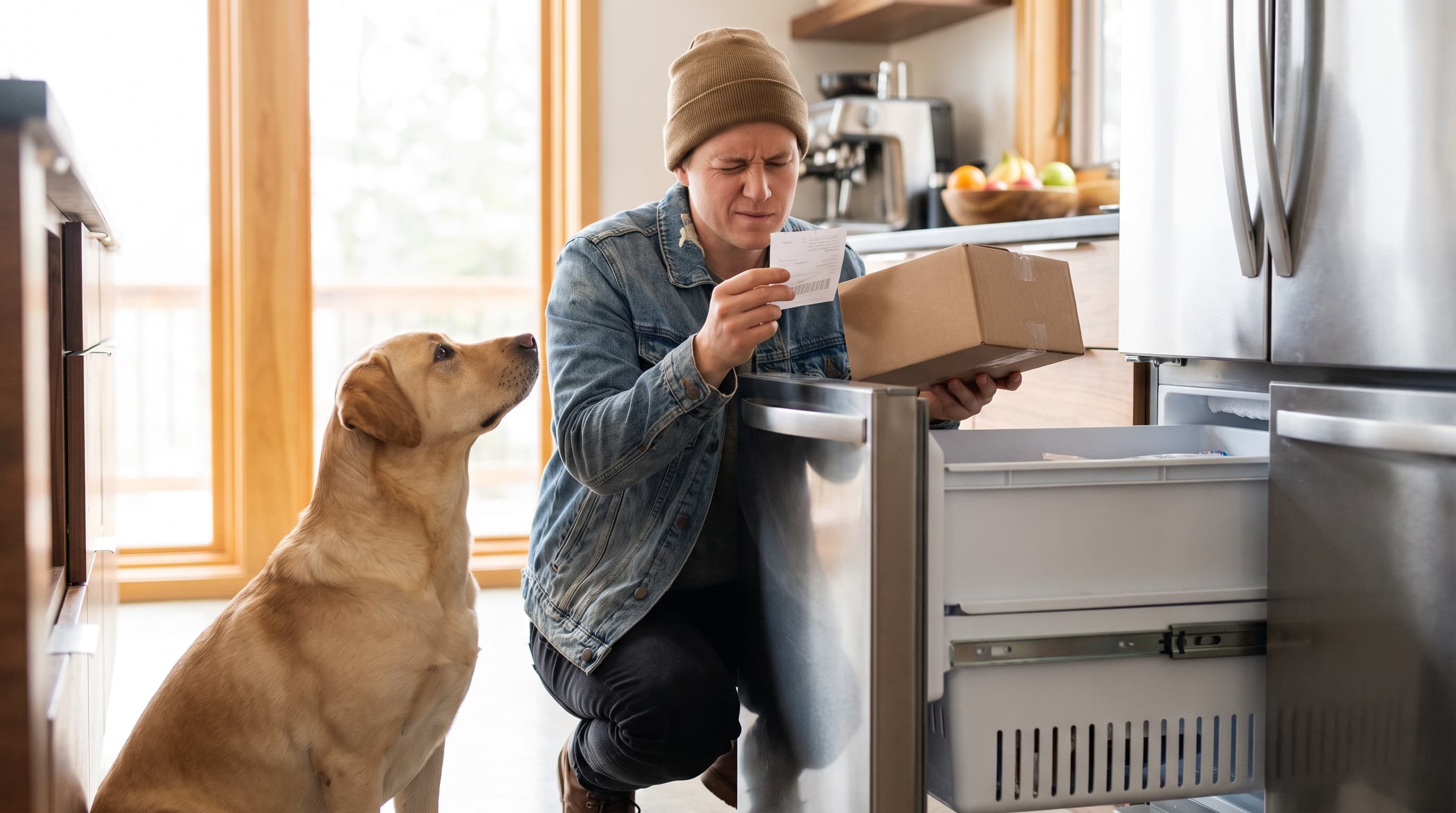

Two frozen raw dog food brands have been pulled from shelves in the span of two weeks, both for the same reason: bacteria the U.S. Food and Drug Administration does not allow in any pet food at all. If you keep raw or lightly cooked dog food in your freezer, this is the week to read the fine print on the bag.
On August 28, Portland-based Northwest Naturals recalled two frozen raw products after FDA testing turned up Salmonella and Listeria monocytogenes. Roughly two weeks earlier, Connecticut's Oma's Pride recalled a frozen raw chicken formula tied to three reports of dogs getting sick. Neither recall means every raw feeder needs to panic — but both come with specific lot numbers, and both carry a human health risk that is easy to overlook.
What was recalled, and how to spot it
Recalls only help if you can match them to the bag in your freezer. Here is exactly what to look for.
Northwest Naturals (recalled August 28, 2026)
Northwest Naturals, based in Portland, Oregon, recalled two frozen products distributed to retail stores nationwide:
- Frozen Raw Diet for Dogs, Chicken Recipe — 6 lb. bag, Lot B-19, Best By 01/25/2028, UPC 087316380392. This product tested positive for both Listeria monocytogenes and Salmonella.
- Frozen Chicken Recipe — 2 lb. bag (sold as cat food and a dog protein topper), Lot B-5, Best By 01/26/2028, UPC 087316384956. This one tested positive for Salmonella.
The recall covers 19 cases (684 lbs.) of the dog diet and 53 cases (1,272 lbs.) of the topper. The company says no illnesses have been reported, and it is asking owners to call 1-866-637-1872 or email [email protected] with questions.
Oma's Pride (recalled mid-August 2026)
Oma's Pride, out of Avon, Connecticut, recalled 639 bags of its Woof Complete Canine Chicken Recipe, a 6-pound frozen raw dog food, over possible Salmonella. The affected bags carry Lot BB012729 with an expiration date of January 27, 2029. The food shipped to stores in Arizona, California, Indiana, Kentucky, Louisiana, Maryland, New Jersey, Nevada, New York, Pennsylvania and Virginia, plus direct-to-consumer online orders. Unlike the Northwest Naturals recall, this one is tied to three dogs reported ill — the reason it landed on regulators' radar in the first place.
If your bag matches either description, the guidance from both companies is the same: stop feeding it, throw it out (or return it), sanitize anything it touched, and contact the company for a refund or replacement.
Why raw food keeps showing up on the recall list
Two recalls in two weeks is not a coincidence — it reflects how the raw category is regulated. The FDA holds pet food to a zero-tolerance standard for Salmonella, Listeria monocytogenes and certain strains of E. coli: these bacteria are not permitted in any pet food, whether it is kibble, canned or raw. Because raw and lightly cooked diets skip the high-heat "kill step" that cooked foods go through, they are simply more likely to trip that standard.
The numbers back that up. In an FDA Center for Veterinary Medicine study of 196 raw pet food samples, 15 tested positive for Salmonella and 32 for Listeria monocytogenes — while dry and canned foods in the same study came back with little or no contamination. That is the core trade-off of feeding raw, and it is worth understanding whether or not your current brand is on this month's list.
One dangerous myth is worth killing here: freezing does not sterilize food. Both of these recalled products are frozen, and cold storage keeps bacteria dormant rather than dead. The FDA treats freezing as a way to store raw meat, not a way to make it safe. If a pathogen was present when the food was packed, it is still present when it thaws in your dog's bowl.
The part owners miss: the risk to people
It is easy to read a dog food recall as a dog problem. It is also a human one. The FDA warns that owners who handle contaminated raw pet food can infect themselves by transferring bacteria from the food — or from a licked hand, bowl or scoop — to their own mouth. Households with infants, adults over 65, pregnant people or anyone with a weakened immune system are the most vulnerable.
In people, Salmonella and Listeria can cause nausea, vomiting, diarrhea and fever; more serious Listeria cases can bring on headache, confusion and loss of balance. In dogs, watch for lethargy, decreased appetite, vomiting, and diarrhea that may be bloody. Unsettlingly, a dog can carry and shed these bacteria while looking perfectly healthy, quietly passing them to other pets and family members. If your dog seems off after a meal, don't wait it out — pale gums, for instance, can be an early warning sign of trouble, and our visual guide to pale gums in dogs can help you tell the difference between "tired" and "call the vet."
What to do this week
Whether or not your brand is affected, a recall wave is a good prompt to tighten up your routine:
- Check your freezer tonight. Pull every bag of frozen raw or gently cooked food and compare the lot number and best-by date to the details above. The brand name alone isn't enough — recalls are lot-specific.
- Don't taste-test the trash. If a bag matches, seal it in a bag before tossing it so other animals (and wildlife) can't get into it, then disinfect the trash area.
- Sanitize like you mean it. The FDA recommends washing hands for at least 20 seconds and cleaning bowls, scoops and prep surfaces with hot, soapy water — a diluted bleach solution (about one tablespoon per quart of water) is even better for surfaces.
- Feed with clean hands, before and after. The FDA's safe-handling tips also suggest using a dedicated scoop, keeping pet food away from human food prep areas, and refrigerating or discarding leftover wet food promptly.
- Keep hydration up if your dog gets sick. Vomiting and diarrhea drain fluids fast; if your dog is under the weather, make sure fresh water is always available and know how long a dog can safely go without water before it becomes an emergency.
Should you rethink raw?
Plenty of owners feed raw thoughtfully and never have a problem, and this article isn't a verdict on the diet. But it is a reminder that the convenience of a freezer full of raw food comes with a handling responsibility that kibble doesn't. If you feed raw, build recall-checking into your routine the way you'd check a car seat's safety notices: sign up for FDA recall alerts, keep your bag's packaging until it's finished, and treat every batch like it could be the one.
At Sidewalk Dog, we track the news that actually changes what happens in your kitchen and on your walks — not just the headlines. Bookmark Sidewalk Dog and check back, because the next recall alert is a lot easier to act on when you already know exactly where your dog's food came from.